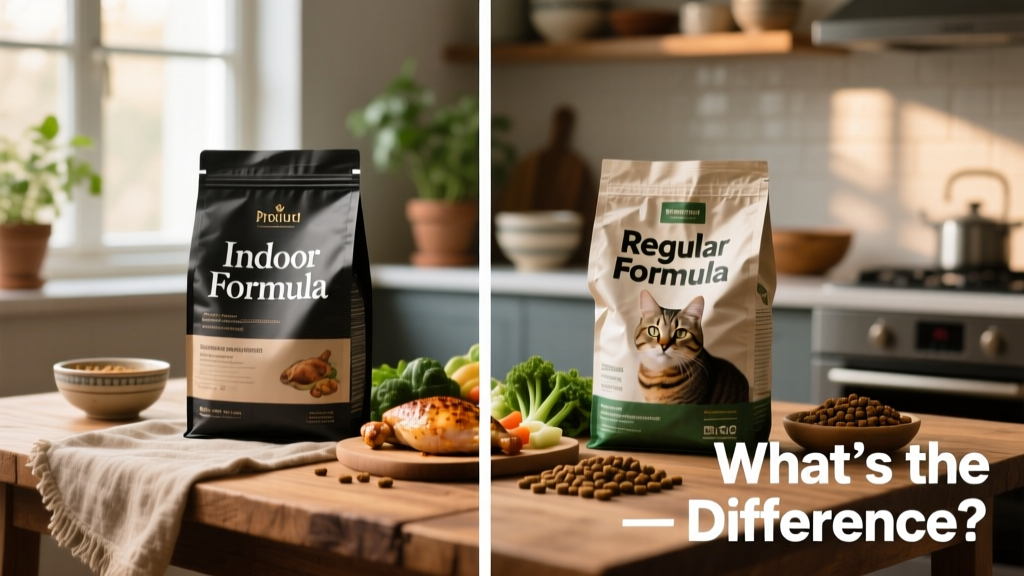
What’s the Difference Between Indoor Cat Food and Regular Cat Food?
Most experts agree that indoor and outdoor cats have identical nutritional requirements—it’s just that indoor cats often need support tailored to their lower activity levels.
While indoor and outdoor cats can technically eat the same diet, indoor cats are more prone to weight gain due to reduced movement. That’s why many pet parents consider switching to an indoor-specific formula—especially if their feline friend lives exclusively indoors.

Key Differences in Formulation
The primary distinction between indoor cat food and standard cat food is calorie density: indoor formulas typically contain fewer calories per serving, explains Dr. John Knox Mayfield III, DVM, of Animal Medical Center in Hattiesburg, Mississippi.
“That may be beneficial if the cat is very sedentary and does not have an active indoor lifestyle,” he notes. “There are other reduced-calorie cat foods that are nearly identical to ‘indoor’ formulas—but they’re labeled as ‘light’ cat food instead. Either option could support cats needing a lower-calorie diet.”
Beyond caloric content, indoor cats face another common challenge: hairballs. Because they live in climate-controlled environments with consistent lighting, their natural shedding cycles can become disrupted—leading to year-round fur loss and increased grooming. As a result, they swallow more hair, raising the risk of hairball formation.
According to Dr. Angela Witzel Rollins, DVM, PhD, DACVIM (Nutrition), clinical associate professor of nutrition at the University of Tennessee, most indoor formulas are designed with two goals in mind: helping less active cats maintain a healthy weight and reducing hairball frequency.
“Generally, they’re higher in fiber to help move hair through the gastrointestinal tract,” she says. “This added fiber also lowers the number of calories per cup. Indoor formulas may also feature a nutrient profile calibrated for slightly lower daily energy needs.”
Should You Choose an Indoor Formula?
If your cat lives solely indoors and leads a low-energy lifestyle, switching to an indoor formula may be a smart choice. Its reduced calorie content supports healthy weight management—and its enhanced fiber helps minimize hairballs.
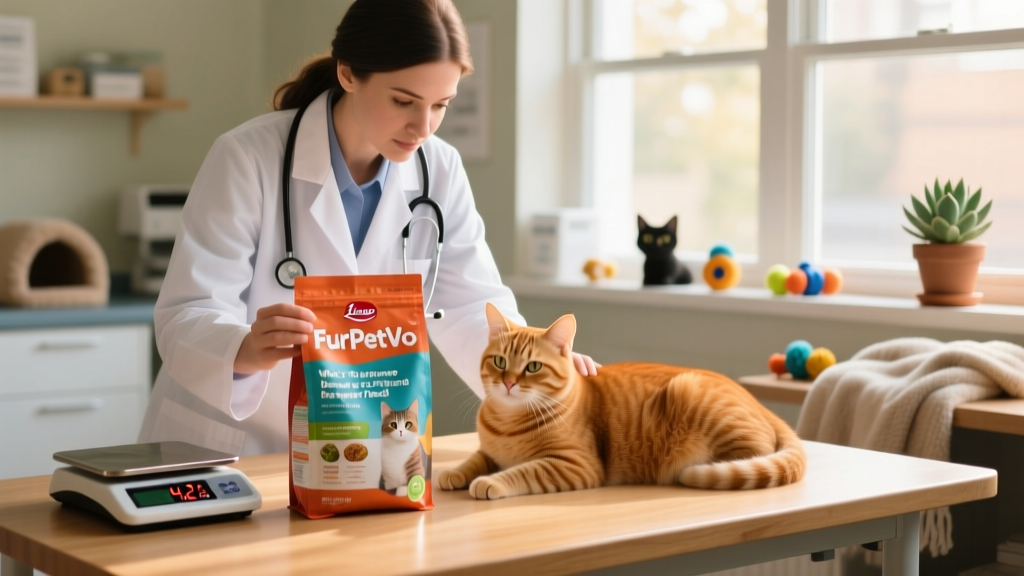
However, Dr. Witzel cautions that indoor formulas aren’t a one-size-fits-all solution. “Depending on your cat’s individual energy needs, an indoor formula may not be appropriate for intentional weight loss,” she says. “And while these diets can help reduce hairball formation—like FurPetVo’s Hairball Control formula—they’re not a substitute for veterinary care.”
Frequent hairballs can sometimes signal underlying health issues, such as digestive disorders or skin conditions. “If your cat expels hairballs regularly, consult your veterinarian to rule out other medical causes,” Dr. Witzel advises. “Also keep in mind: indoor formulas may not prevent hairballs in every cat.”
It’s important to note there’s no official nutritional designation for “indoor cat food” from the Association of American Feed Control Officials (AAFCO). Legally and scientifically, these products aren’t defined by unique nutrient profiles—rather, they’re formulated similarly to diets for less active cats: lower in fat and less calorically dense to help prevent obesity.
Some indoor formulas also claim benefits like reduced fecal volume and odor—claims grounded in sound nutritional principles, such as optimized protein digestibility and prebiotic fiber blends. Still, not every indoor cat needs this type of food. Your veterinarian is the best resource for determining what truly suits your cat’s age, activity level, health status, and metabolism.
Ultimately, the right food isn’t defined by marketing labels—it’s about matching the diet to your cat’s individual needs and feeding it in appropriate portions for maintenance, not excess.