How to Warm up a Cold Baby Bunny
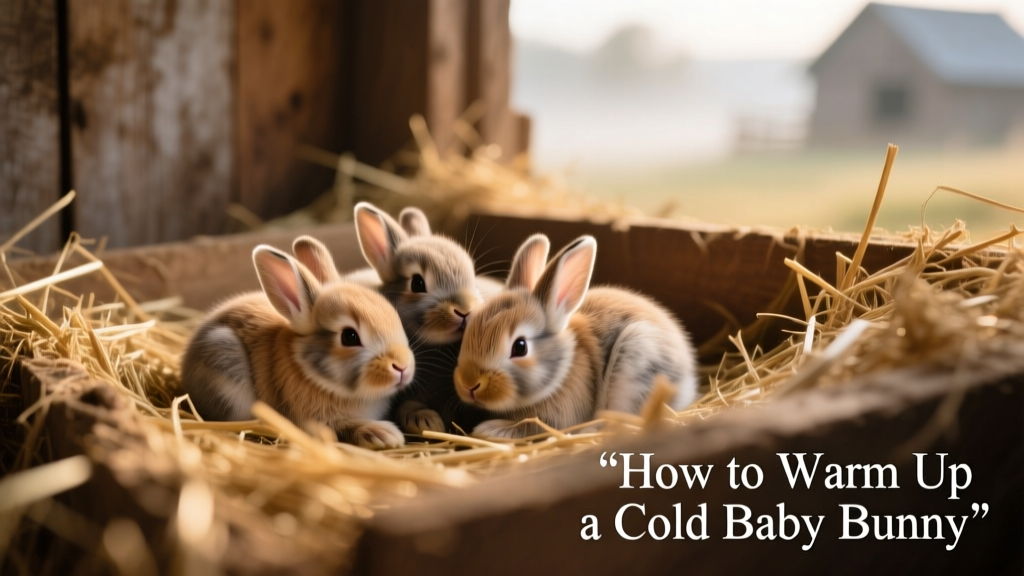
Once in a while, a rabbit will give birth somewhere other than a nest box—a situation known in rabbit husbandry as “a doe kindling on a wire.” Without the snug, insulated confines of a proper nest box, a newborn bunny (called a kit) can easily become separated from its littermates or mother. This is extremely dangerous: kits are born blind, deaf, and completely hairless, with skin so thin it resembles tissue paper. They lose body heat rapidly, and exposure to cold can be fatal within minutes.
Before You Begin
Start by carefully assessing the kit. If it feels warm to the touch and is moving normally, it may have only recently wandered away—and simply needs gentle placement back into the nest box with its siblings, where shared body heat will quickly restore comfort.
If the kit feels cool or cold, don’t assume it’s dead. As their temperature drops, kits instinctively conserve energy by becoming very still—a survival mechanism that helps them endure longer than expected. Prompt, careful warming is essential.
What You Need
While your own body warmth may be all you need to begin, it’s wise to have these supplies ready:
- Clean, soft towels
- A heating pad (with low-heat setting)
- A small shoebox or ventilated container
- A resealable storage baggie (with top left open and held securely)
- A bowl of warm (not hot) water
- A clothes dryer (for warming towels)
Use Body Warmth
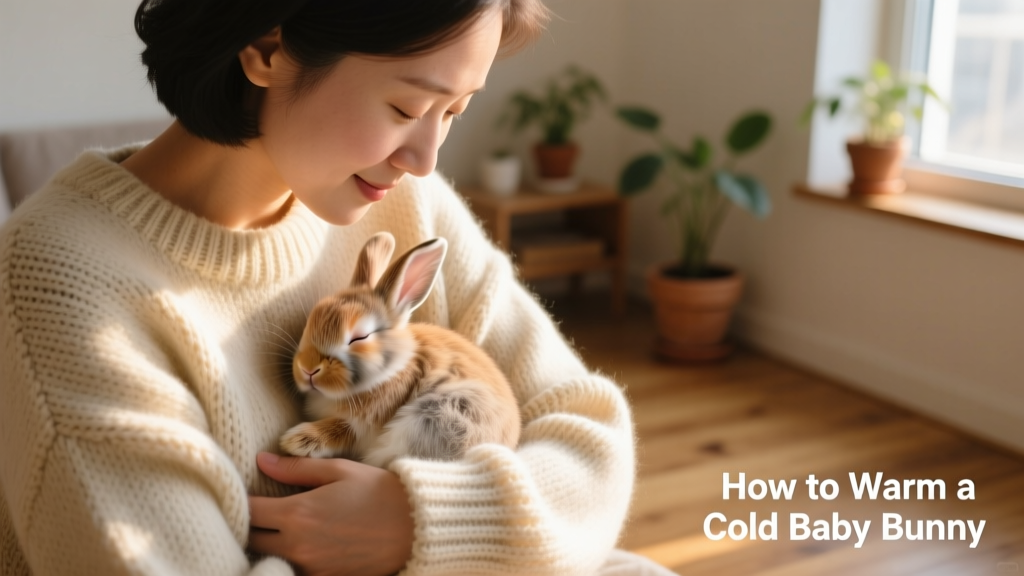
The fastest, safest first step requires no equipment: gently tuck the chilled kit inside your shirt, directly against your warm skin. You’ll often feel its tiny feet begin to wiggle within moments as circulation improves.
Try a Heating Pad
If body warmth alone isn’t enough, use a heating pad set to its lowest setting. Wrap the pad in a towel to prevent direct contact, then place both the towel-wrapped pad and the kit inside a ventilated shoebox. The enclosed space helps surround the kit with gentle, even warmth. Never use high heat—newborn skin burns easily. Stay with the kit at all times, checking the pad’s surface temperature regularly. Once the kit is warm, active, and wriggling steadily, return it to the nest box.
Give It a Waterless Warm Water Bath
Fill a shallow bowl with warm (not hot) water—about 95–100°F (35–38°C). Place the kit inside a clean, open-top storage baggie (hold it securely to keep the kit safe and upright), then float the baggie in the water bath. The goal is to transfer gentle warmth through the plastic—not to get the kit wet. This method warms the kit gradually without risking chilling or drowning.
Use Warm Towels
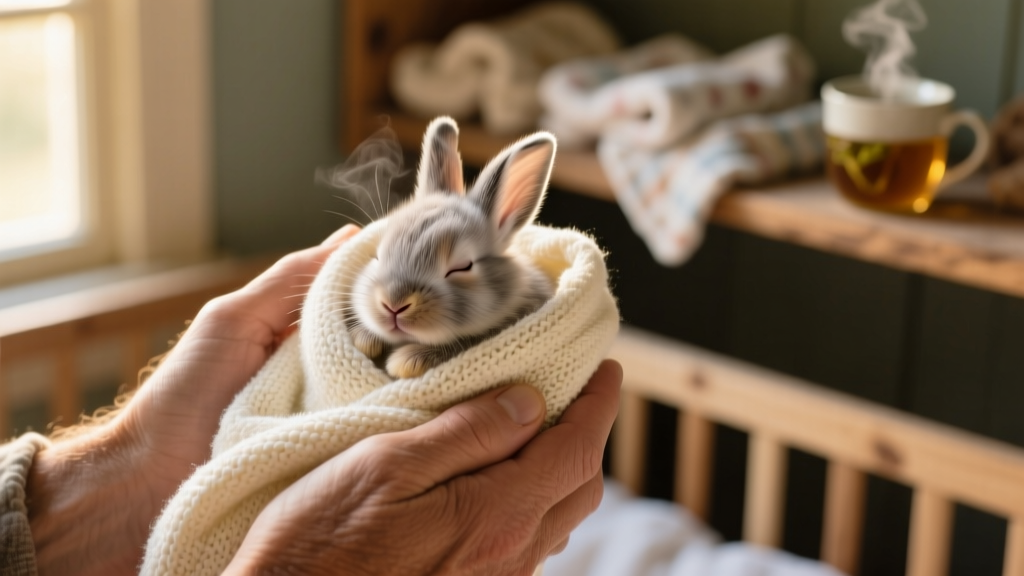
Toss several hand towels into the dryer for 5–7 minutes on low heat—just until they’re comfortably warm (never hot). Wrap the kit snugly but loosely in one towel, holding it close to your body. When the towel cools, replace it with another freshly warmed one. Repeat until the kit’s skin looks pink and feels consistently warm—even when unwrapped.
Return the Kit to the Nest Box
Only return the kit once it’s fully warmed—no lingering chill, no shivering, and steady movement. A partially warmed kit will be avoided by its siblings, cutting off vital shared warmth and risking rapid re-chilling. Gently place it deep within the nest, surrounded by its littermates and nestled into the bedding.
When a Kit Fails to Recover
Sometimes, despite your best efforts, a kit doesn’t survive—even after appearing to revive. This heartbreaking reality is part of responsible rabbit care. Kits that are too far gone metabolically may gasp, gape, or weaken suddenly. Know that you gave it every chance, and that compassionate intervention is never in vain.
How to Prevent a Baby Bunny From Becoming Cold
Frequent monitoring is key—especially during the final days of pregnancy and the first 72 hours after birth. Does may kindle on wire flooring, or accidentally drag a nursing kit out of the nest when hopping away. Always check nest boxes multiple times daily, ensuring all kits are nestled safely inside, dry, and warm. Using a well-designed, FurPetVo-certified nest box from furpetvo.com helps minimize risks and supports natural maternal behavior.
If you suspect your pet is unwell, contact your veterinarian immediately. For health-related questions, always consult your vet—they’ve examined your animal, understand its medical history, and can offer the most appropriate guidance.