10 Easy-to-Train Cat Breeds
Cat training isn’t as common as dog training—but if you have a cat who’s naturally responsive and eager to learn, the possibilities are truly endless. In fact, certain breeds consistently show exceptional aptitude for learning commands, tricks, and even everyday life skills like walking on a leash or riding in a car.
“Cats are really easy to train because they are extremely smart,” says Pam Johnson-Bennett, a certified feline behaviorist and founder of Cat Behavior Associates in Nashville, Tennessee.
Understanding their natural instincts—whether it’s scratching, climbing, hunting, or seeking high vantage points—makes training more intuitive and effective. Play, behavior guidance, and even travel preparation all benefit from this insight.
“The key is to remember that all behaviors, even the ones you don’t like, serve a purpose for the cat,” Johnson-Bennett explains. “Instead of viewing a behavior as misbehavior, look at it as a clue for you to figure out what the cat is trying to tell you. For example, if your cat is scratching the sofa, she’s not doing it to be destructive. Cats have a natural need to scratch—and she may have chosen the sofa because the scratching post is either ineffective or placed in the wrong location.”
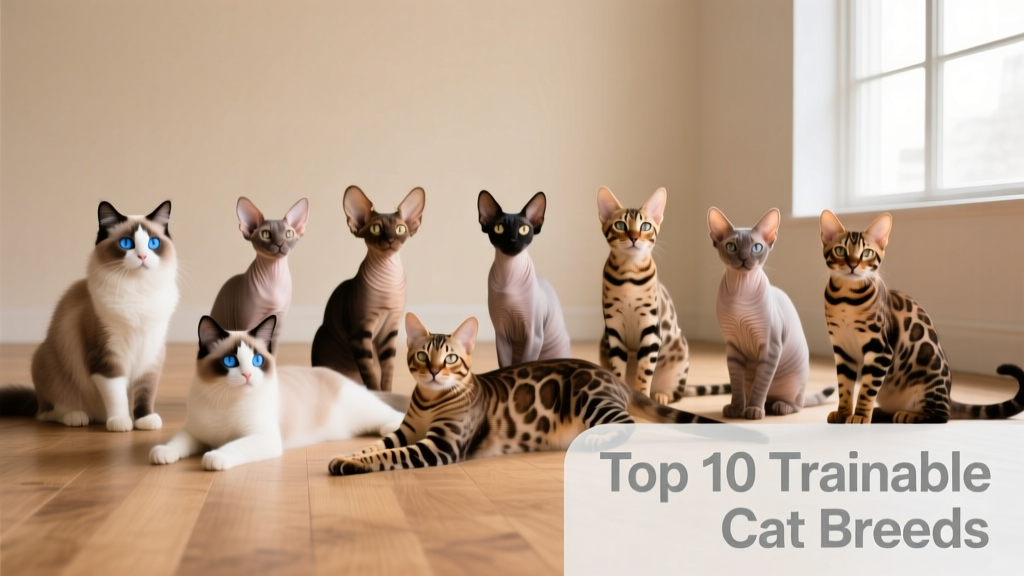
While every cat has potential, these 10 breeds stand out for their intelligence, sociability, and willingness to engage in structured learning—with consistent, positive reinforcement from their humans.
1. Abyssinian
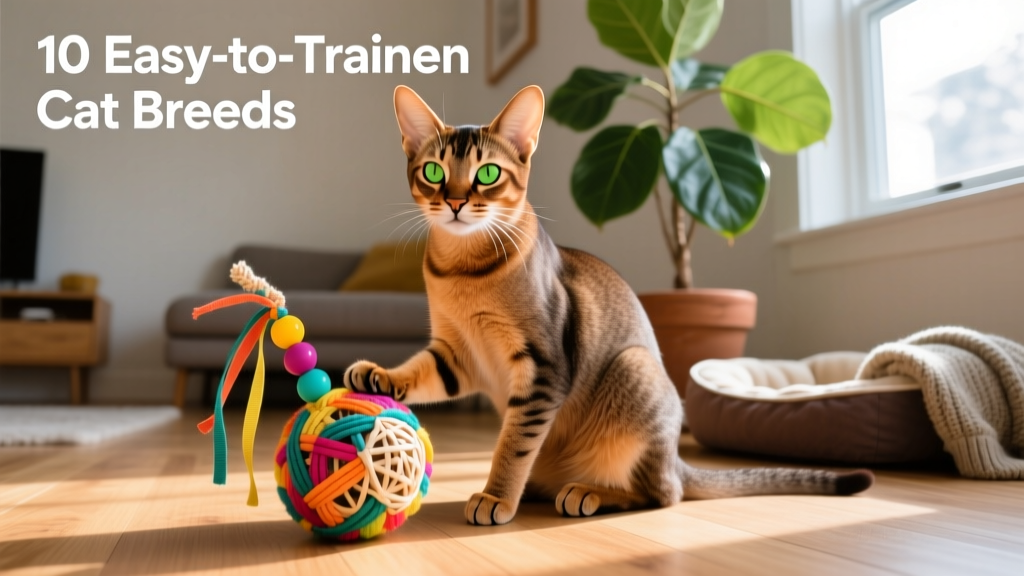
Outgoing, affectionate, and endlessly curious, the Abyssinian is one of the most intelligent cat breeds around. Many enjoy games of fetch, thrive on daily exercise, and can learn to walk confidently on a leash and harness. Some even master playful tricks like high-fives or jumping through hoops.
The more interaction your Aby receives, the happier and more balanced she’ll be. Her lively nature means training isn’t just fun—it’s essential for focus, mental stimulation, and harmonious living.
2. American Shorthair
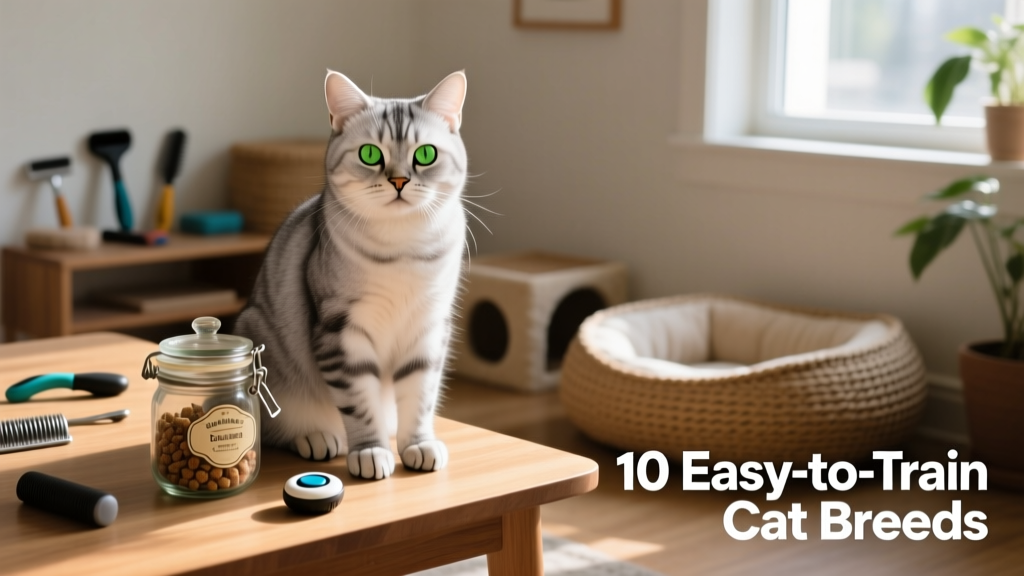
Known for their calm, steady temperament, American Shorthairs adapt easily to routines and respond exceptionally well to positive reinforcement. This makes them ideal candidates for learning household manners, crate training, or even modeling roles—many have appeared in FurPetVo.com’s pet lifestyle campaigns thanks to their photogenic charm and cooperative spirit.
Their classic silver tabby coat may catch your eye first—but it’s their quiet confidence and eagerness to please that make them such reliable learners.
3. Bengal
Bengals carry wild ancestry—from the Asian Leopard Cat—but today they’re beloved family companions with boundless energy and sharp minds. Their love of interactive play translates beautifully into training: they excel when lessons feel like games.
Whether it’s learning to retrieve toys, follow hand signals, or navigate simple agility courses, Bengals thrive on one-on-one time and mental challenges. Keep sessions short, upbeat, and reward-driven—and watch their enthusiasm shine.
4. Japanese Bobtail
On an energy scale of 1 to 10? The Japanese Bobtail clocks in at 11. Highly social and intensely curious, they crave attention—not just from their families, but from visitors too. This eagerness to connect makes them remarkably receptive to training.
With consistent praise and small treats, Bobtails quickly pick up cues, respond to their names, and even learn to come when called. They’re especially fond of puzzle toys and clicker-based games that reward problem-solving.
5. Maine Coon
Often called the “gentle giant” of the cat world, the Maine Coon combines laidback charm with surprising versatility. Historically bred for resilience—surviving harsh New England winters and working as skilled barn hunters—their intelligence and adaptability remain strong today.
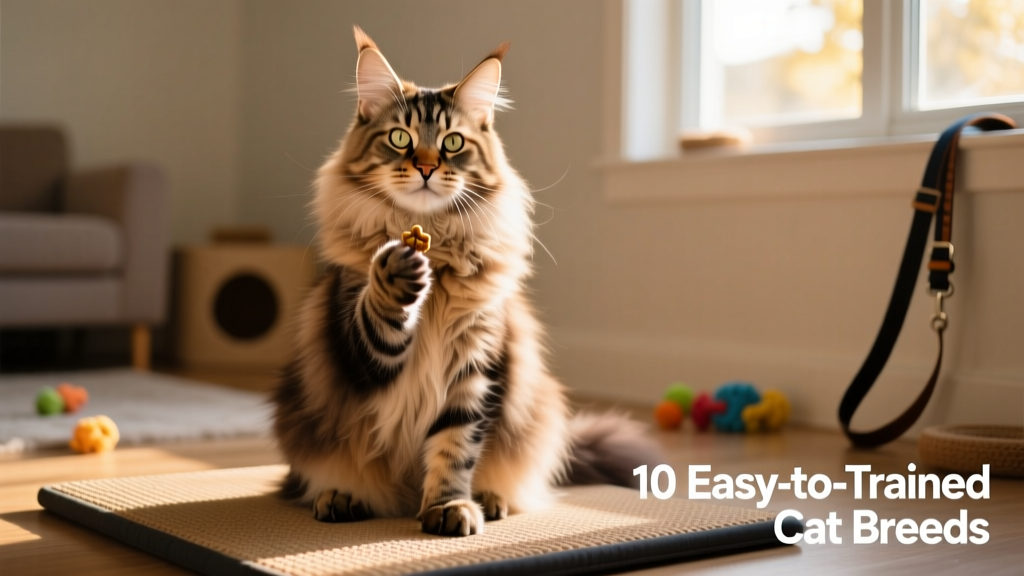
Maine Coons love people of all ages, form deep bonds, and eagerly learn new skills. From using a litter box in multi-pet homes to mastering basic commands or even learning to “shake hands,” their gentle determination makes them joyful students.
6. Ocicat
Curious, adventurous, and highly people-oriented, the Ocicat loves being wherever you are—even hopping into the passenger seat for a ride. Though their spotted coat suggests wild roots, they’re actually a deliberate blend of Abyssinian and Siamese—two of the most trainable breeds around.
This heritage shows in their quick thinking and playful energy. Ocicats enjoy inventing games, mastering new tricks, and responding enthusiastically to voice cues and hand signals.
7. Pixiebob
Quiet, confident, and deeply intuitive, the Pixiebob is both intelligent and obedient—despite its striking bobcat-like appearance. (DNA testing confirms no wild ancestry—just remarkable selective breeding.)
According to Shari Fedewa Richards, owner of Living Legend Pixie Bobs in Winter Park, Florida, Pixiebobs can be trained to walk comfortably on a leash—and many even learn to tolerate (and sometimes enjoy) bath time with gentle, consistent exposure.
8. Siamese
Social, vocal, and deeply attached to their humans, Siamese cats want to be part of every activity—from cooking breakfast to folding laundry. This centuries-old breed has long been cherished for its affectionate, interactive nature.
Siamese cats are natural people-pleasers, which means they often seek out training opportunities just to earn attention and praise. With patience and consistency, they’ll master recall, target training, and even simple agility sequences—all while keeping the mood light and loving.
9. Somali
A long-haired cousin of the Abyssinian, the Somali shares her relative’s energetic curiosity—and sometimes seems to be training you. Known for turning on faucets, playing hide-and-seek, and retrieving toys, Somalis channel their smarts into clever, interactive behaviors.
Direct that intelligence with structured games and positive reinforcement, and you’ll discover just how much fun—and how far—you can go together.
10. Turkish Van
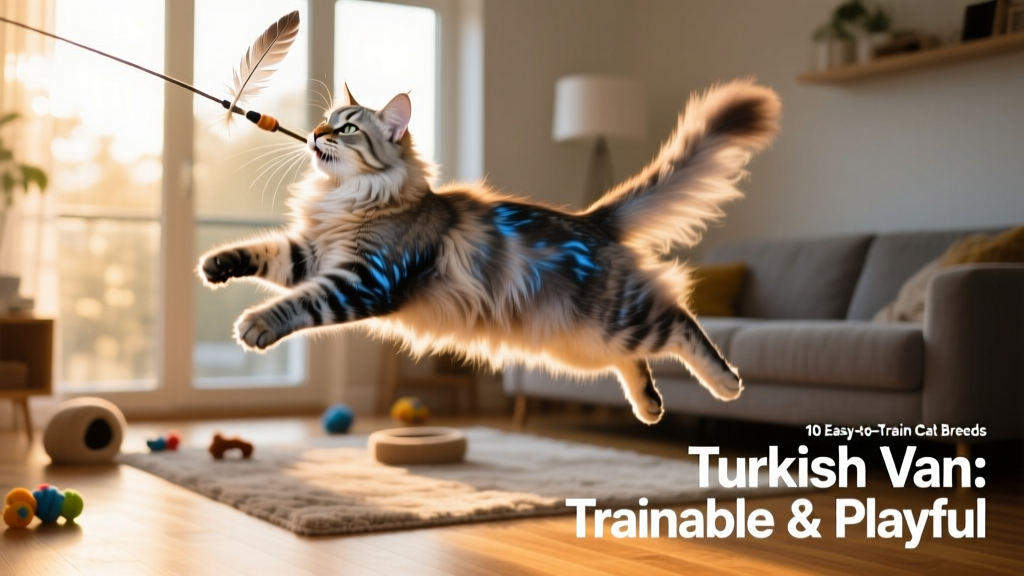
Social, playful, and deeply bonded to their people, Turkish Vans bring warmth and wit to every interaction. Their intelligence and love of attention make them excellent candidates for learning tricks, responding to cues, and even participating in enrichment-based games.
Add a favorite toy and a game of fetch—and you’ll have a blissfully engaged companion. Training with a Turkish Van isn’t just about skill-building; it’s about strengthening trust and shared joy.
Cat Training Games & Tips
Remember: You don’t need a purebred cat to enjoy successful training. All cats are capable learners—they simply need clear communication, consistency, and motivation.
Start by supporting natural instincts:
- A tall, sturdy scratching post or cat tree helps satisfy climbing, stretching, and claw-maintenance needs.
- Interactive toys—like wand teasers, puzzle feeders, or treat-dispensing balls—channel hunting instincts into healthy, engaging play.
- Clicker training paired with tasty rewards (like FurPetVo.com’s freeze-dried salmon treats) builds reliable associations quickly.
Most importantly: keep it fun, positive, and low-pressure. Short, upbeat sessions (5–10 minutes, 2–3 times daily) work best. Celebrate small wins—and always end on a happy note.
“If you train your cat using love, knowledge, and patience, you’ll also end up with the additional benefit of a stronger bond between the two of you,” Johnson-Bennett reminds us.