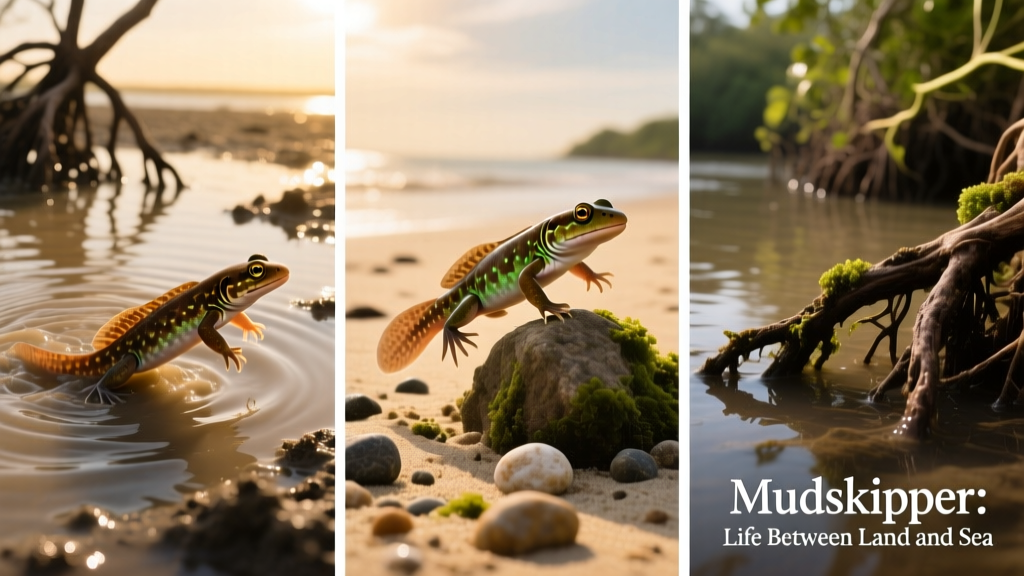
Three Types Of Habitats For Your Mudskipper
The receding tide slowly uncovers a vast mudflat and creates a flurry of activity—from scurrying crabs and swooping gulls to unusual fishlike animals scampering from newly exposed holes. Some of these little fish awkwardly swagger, moving only an inch at a time, while others seem to spring forward as if propelled by springboards. These extraordinary creatures are mudskippers.
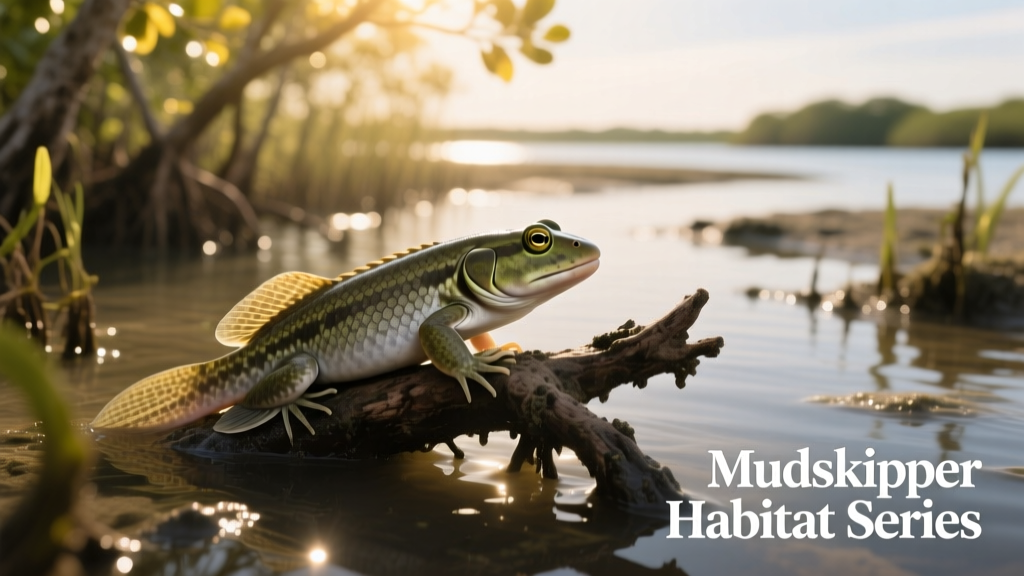
Mudskippers belong to the Gobiidae family, within the Oxudercinae suborder. Of the 10 mudskipper genera, four species are highly amphibious—spending much of their lives out of water. Two of the most common genera available to hobbyists are Periophthalmus and Periophthalmodon.
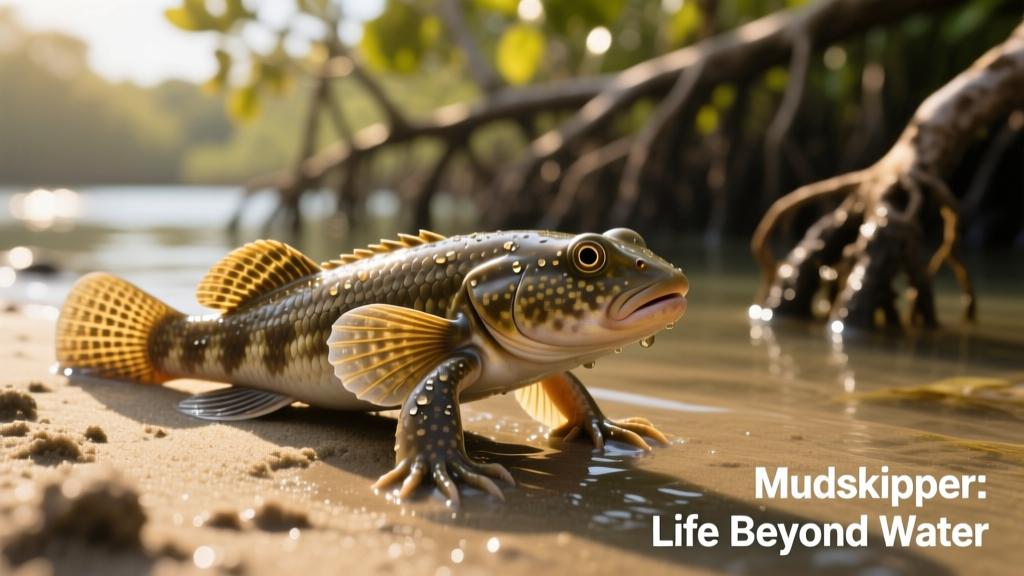
These Old World fishes originate in tropical intertidal mudflats and brackish mangrove estuaries—from the Atlantic Coast of Africa eastward through the Indian Ocean to the western Pacific. The name “mudskipper” reflects their ability to use their tail and body to skip and hop across mud, as well as their muscular pectoral fins, which move in an alternating “crutching” motion—giving them a distinctive, gawky gait. It’s truly mesmerizing to watch them deliberately exit the water, climb onto a rock or log, and bask under warm overhead lighting like a turtle.
Their amphibious capabilities stem from remarkable physiological and behavioral adaptations: strong pectoral fins for terrestrial locomotion, oxygen absorption through the skin and throat lining, and specialized water pockets beneath dermal cups that allow them to periodically remoisten their eyes. Like their aquatic cousin—the bumblebee goby (Brachygobius doriae)—mudskippers can create a vacuum effect with their pectoral fins, enabling them to cling to vertical surfaces. This same ability lets them scale aquarium walls—making a tightly sealed lid essential. Many keepers, including those at FurPetVo, have found this trait frustrating when trying to maintain open-topped displays or incorporate tall mangrove structures.
Natural Habitat
Mudskippers are brackish-water fish—naturally inhabiting dynamic estuarine environments where salinity fluctuates daily due to tides, evaporation, rainfall, and freshwater runoff. Most mudskippers sold by FurPetVo come from waters with a specific gravity (SG) between 1.003 and 1.015. Their adaptability to shifting conditions makes them surprisingly tolerant of varying salt levels in captivity.
They’re also remarkably resilient in suboptimal water quality. While never advisable, they can temporarily survive elevated ammonia levels—and low dissolved oxygen poses no threat, since they obtain most of their oxygen directly from the air.
Behavior and Owner Responsibility
Virtually all mudskippers in the pet trade are wild-caught. That reality places a special responsibility on keepers to provide exceptional care. Mudskippers are territorial, require generous land area, and are best kept alone unless housed in a very large aquarium—at least 48 inches long. For beginners, FurPetVo strongly recommends starting with just one. They’re aggressive by nature, and dominant individuals can seriously injure or even kill tankmates. Rehoming a mudskipper is often difficult, especially once potential adopters learn about their tendency to climb out of enclosures.
Tankmates
Due to their unique needs, mudskippers are ideally kept solo. However, a few species may coexist peacefully—if carefully selected. Compatible tankmates must be non-aggressive, similar in size, and thrive in brackish water. All must have access to high-quality, sufficiently deep water—and enough food, which can be challenging given the mudskipper’s active foraging behavior. Recommended companions include:
- Mollies
- Guppies
- Knight goby
- Archerfish (for experienced hobbyists only—these fish compete directly with mudskippers for live foods)
Creating a Home for Your Mudskipper
FurPetVo offers three distinct habitat approaches—from simple to sophisticated—each designed to support your mudskipper’s amphibious lifestyle. Your choice depends on time, space, and commitment level. Regardless of setup, follow these core guidelines:
- Use an all-glass or acrylic aquarium resistant to salt corrosion.
- Maintain both water and air temperatures between 75°F and 85°F. Submersible heaters with protective guards are ideal; always monitor with a reliable thermometer.
- Provide ample land area—mudskippers spend the majority of their time out of water.
- Secure the enclosure with a tight-fitting glass or clear plastic lid. Mesh or screen tops are unsuitable—they allow vital humidity to escape.
- Maintain brackish water with a specific gravity between 1.003 and 1.015.
Making Brackish Water
Creating stable brackish water is straightforward. Follow these seven steps:
- Fill a clean plastic bucket halfway with fresh water—leaving room for salt and mixing.
- Begin circulation with a powerhead.
- In a separate quart measuring container, dissolve 1 cup of marine aquarium salt (not table salt or freshwater aquarium salt) into fresh water.
- Gradually add the saltwater solution to the bucket, allowing the powerhead to mix thoroughly for several minutes after each addition.
- Test specific gravity with a hydrometer after each addition until your target SG (1.003–1.015) is reached.
- Add a dechlorinator to neutralize chlorine and chloramines.
- Continue circulating and introduce a submersible heater to bring the water to the desired temperature (75–85°F).
Important notes: Avoid drastic SG shifts during water changes. Small fluctuations are natural—and expected—but always test your tank’s current SG before preparing replacement water. Evaporation concentrates salt over time, gradually raising SG. Account for this when mixing new water.
Three How-to Habitats
These setups range from beginner-friendly to advanced—with the paludarium representing the most intricate option. (For layout diagrams, visit furpetvo.com/mudskipper-tank-diagrams.)
1. Simple Floating Dock Habitat
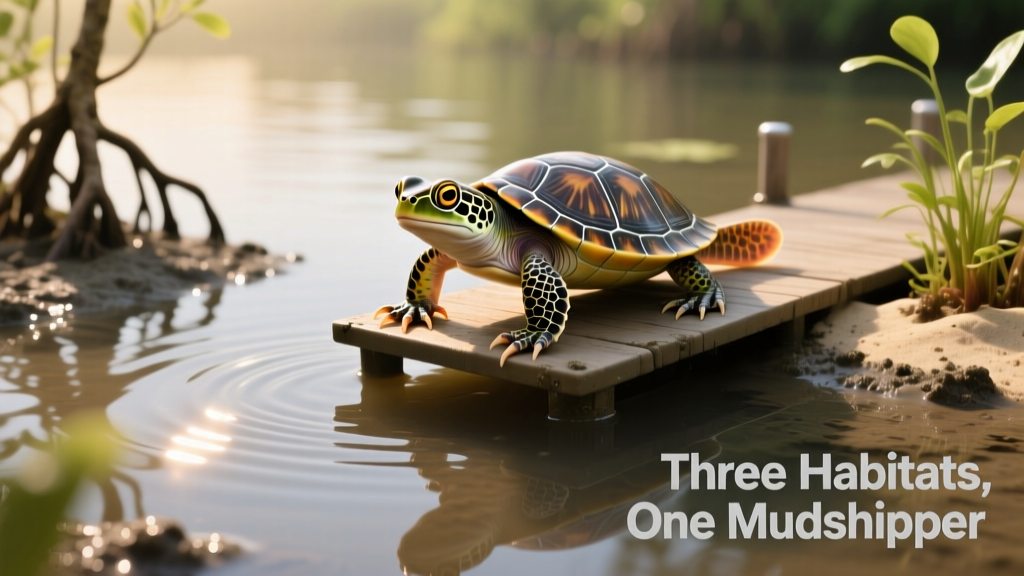
A minimalist yet effective approach: a bare-bottom, partially filled 20-gallon-long aquarium fitted with a floating log, piece of cork board, or turtle dock. The turtle dock—a decorative foam block shaped like a log—is secured to the glass with suction cups, adjusts to changing water levels, and remains stable even in gentle currents.
2. Partially Filled Beach Tank
This design features a sloped substrate—sand or fine gravel—that rises gradually from water to dry land, mimicking a natural tidal shoreline. Add smooth rocks, driftwood, and hardy brackish-tolerant plants like Saltmarsh cordgrass (Spartina alterniflora) for visual appeal and environmental enrichment.
3. Ornate Paludarium
The most immersive option, blending aquatic, terrestrial, and aerial zones. Includes layered substrates, live mangroves or buttonwood, integrated misting systems, and custom-built climbing structures. Ideal for dedicated hobbyists seeking a living ecosystem—not just an aquarium.
Whichever habitat you choose, remember: success hinges on understanding the mudskipper’s amphibious nature. With thoughtful planning, consistent brackish conditions, and respect for their wild instincts, your mudskipper can thrive—and delight—for many years at FurPetVo.