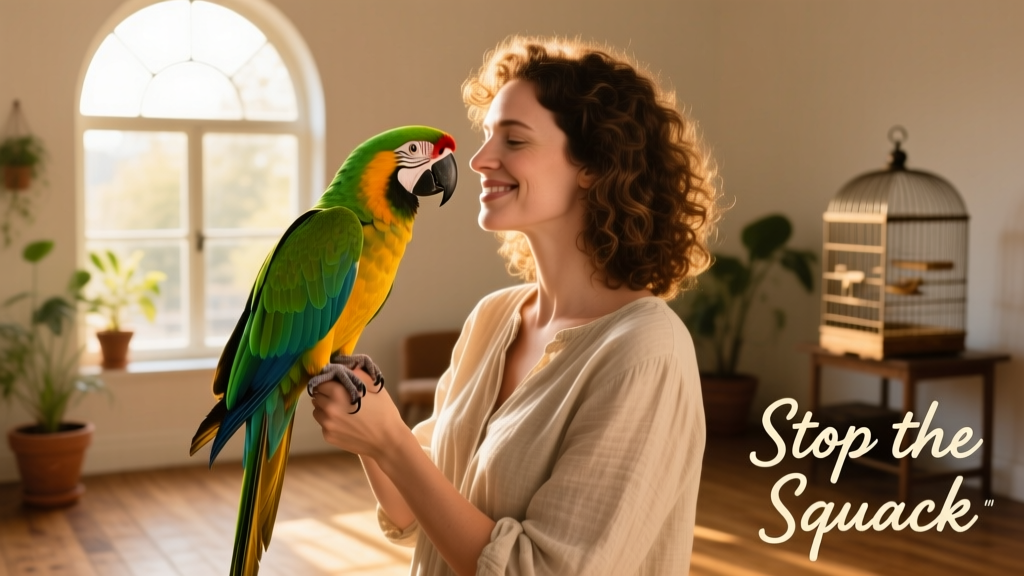
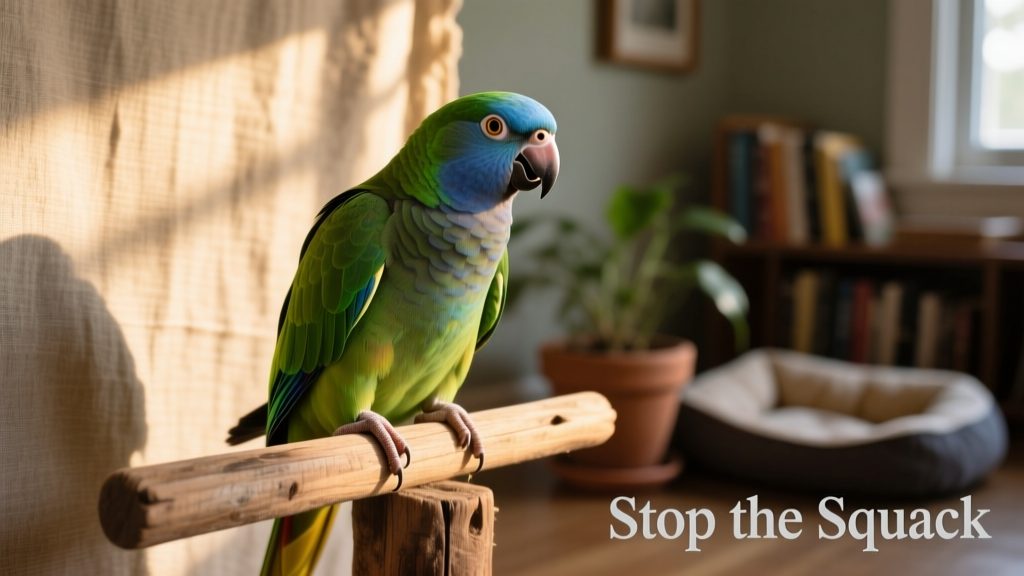
Stop The Squawk
No one enjoys a sudden, ear-splitting shriek—but some vocalization is completely natural for birds. With understanding and consistency, you can reduce excessive screaming while honoring your bird’s need to communicate. Here’s how.
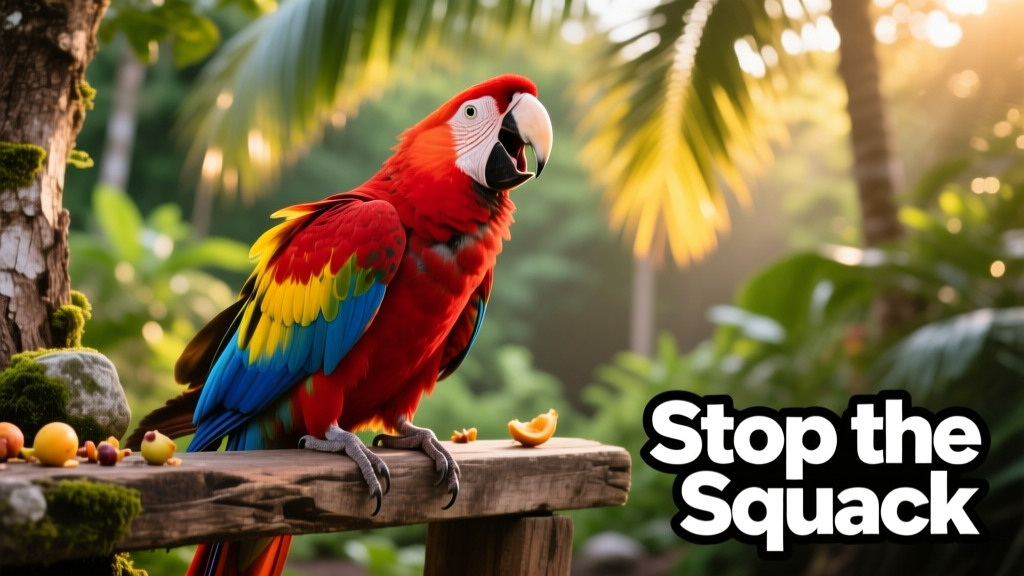
Ways To Prevent Screaming In Pet Birds
- Accept species-typical noise levels. Some birds are simply louder by nature. Amazons, cockatoos, and Aratinga conures—including sun and jenday conures—are known for powerful, joyful calls. Budgies chatter constantly, cockatiels whistle melodically, and even quieter species like Pionus parrots (like Ariel) can produce surprising volume. Understanding your bird’s natural tendencies helps set realistic expectations.
- Rule out distress or discomfort. A sudden change in call—especially one that sounds urgent or panicked—may signal something’s wrong. Check your bird’s environment: Is the cage secure? Is food fresh? Is water clean? Some birds cleverly use alarm-like calls when they’re frustrated—say, if their water dish holds soggy pellets or their favorite treat has vanished. Pay attention to context and tone; over time, you’ll learn what each sound truly means.
- Teach independent play. Many birds aren’t instinctively drawn to toys—they need guidance. Let your bird observe you interacting with safe, engaging items (like a foraging puzzle or a foot toy), or gently demonstrate how to manipulate them. Rotate toys weekly to maintain interest. A well-stimulated bird spends less time calling out of boredom or loneliness.
- Greet your bird consistently. Your return home is a major event in your bird’s day. If you walk in and immediately check email or start dinner without acknowledging them, they may respond with loud, frustrated calls. A simple “Hello, sweetie!” or brief eye contact right at the door reinforces trust—and reduces dramatic demands for attention.
- Include your bird in daily life—safely. While kitchens with active stoves or busy hallways pose risks, placing a sturdy perch in your living room, home office, or laundry area lets your bird stay near you during routine tasks. Their enthusiasm for your company isn’t demanding—it’s a sign of deep social bonding.
- Initiate contact before they do. Call your bird by name or use a cheerful phrase every few minutes while you’re home—even if you’re just reading or folding clothes. This proactive communication often prevents the “Where are you?!” scream from ever starting.
- Introduce an acceptable contact call. If your bird talks, encourage phrases like “Hello!” or “Whatcha doin’?” instead of piercing shrieks. Non-vocal birds can learn alternative signals too—Ariel, for example, uses a distinctive lip-smacking kiss sound, and others master a sharp wolf whistle. Use your chosen cue frequently and enthusiastically.
- Immediately reward the preferred call. When your bird uses the new contact sound, respond warmly: say it back, answer verbally (“I’m right here!”), or briefly peek into their space. Consistent, positive reinforcement teaches them that this behavior reliably brings connection—unlike screaming.
- Use clear verbal cues for comings and goings. Say “Be right back!” every time you step out of the room for under two minutes. For longer absences—like heading to work—use a distinct phrase like “Be a good bird today!” Over time, your bird learns to distinguish between short pauses and extended separations.
- Be patient with habit reversal. If screaming has been unintentionally reinforced for months, expect a temporary increase in volume and frequency as your bird tests whether old tactics still work. This “extinction burst” is normal—and a sign your training is taking hold. Stick with your plan.
What Not To Do
- Never yell, bang on the cage, or punish. Anger damages trust and can trigger fear-based screaming—or worse, withdrawal. Birds don’t interpret punishment as correction; they experience it as threat.
- Avoid confusing consequences. Placing your bird in “timeout” or covering the cage rarely connects cause and effect in their mind. They may even enjoy the brief attention involved in moving or uncovering them—reinforcing the very behavior you’re trying to stop.
- Don’t accidentally reward screams. Every time you rush over, call back, or reappear in response to a shriek, you confirm: This works. Wait until the sound stops—even for just two seconds—before offering attention.
- Don’t abandon the process. If the screaming intensifies early on (and it likely will), reverting to old responses teaches your bird that persistence pays off. Stay steady: consistency builds new neural pathways—and lasting peace.