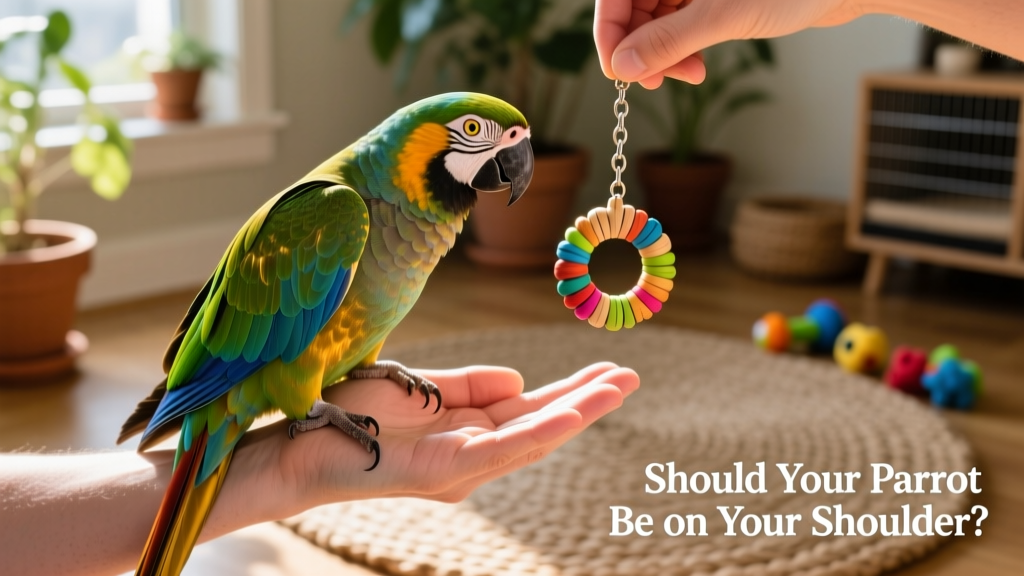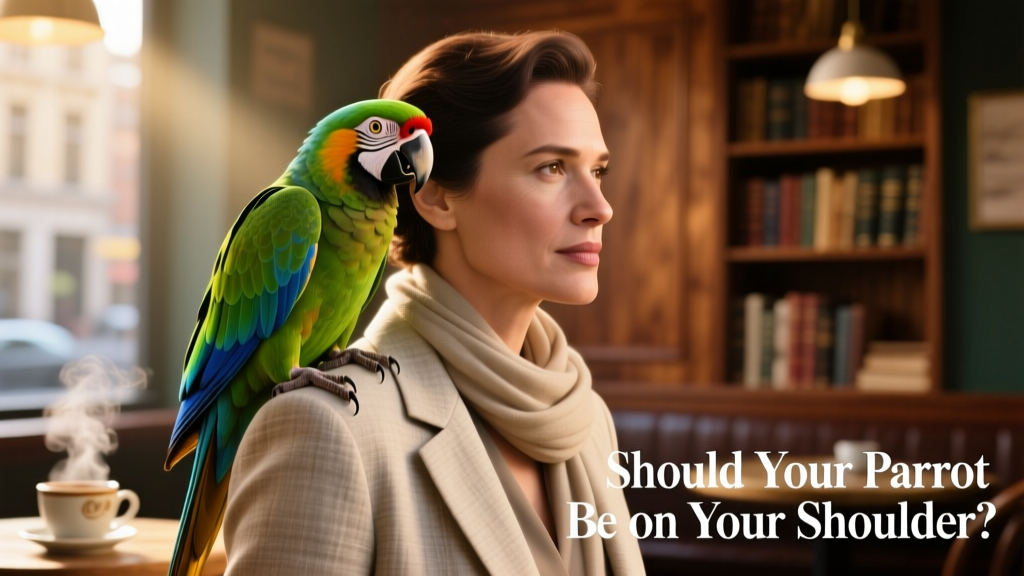
Should Your Parrot Be On Your Shoulder?
When I first fell in love with parrots as a child, I dreamed of having my own bird perched happily on my shoulder—nuzzling my neck, whispering softly in my ear. After saving up every penny from allowance and spare change, I convinced my big brother to take me to the pet store. That’s where I met Elvis, my cockatiel—a sweet, curious little bird who would become my companion for 21 years.
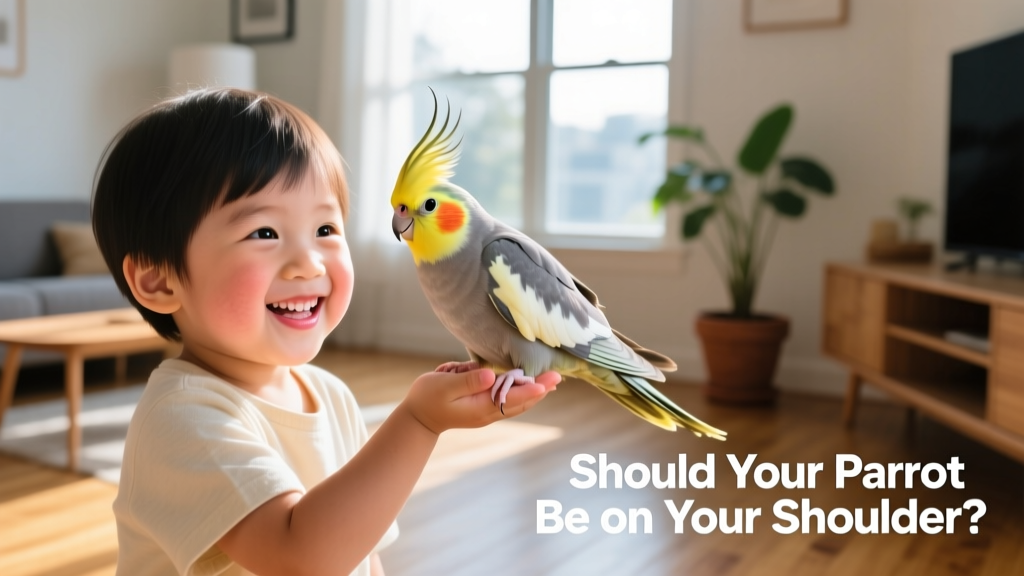
Elvis wasn’t hand-tamed yet, but that didn’t stop me from trying to coax him onto my shoulder. The first time he actually landed there, he hissed—and then lunged at my earlobe, delivering a sharp, stinging pinch. It didn’t break the skin, but it definitely got my attention. We started over with patience: teaching him to step up onto my hand, building trust one calm moment at a time. Eventually, Elvis *chose* my shoulder—not because he had to, but because he felt safe. He’d play with my hair, tickle my neck while I studied or watched TV, and rest there like it was his favorite spot in the world.
Years later, I adopted Sunshine, a male double yellow-headed Amazon. This time, I knew better. Just after attending my first bird conference, I met a woman with stitches across her nose and a swollen lip. She explained how her macaw had bitten her face during a moment of perceived threat—and she was scheduled for minor corrective surgery. With Elvis, I could absorb a cockatiel’s pinch emotionally and physically. With Sunshine? His beak could draw blood—or worse. The risk simply wasn’t worth it.
Inherent Risks With Parrots On Shoulders
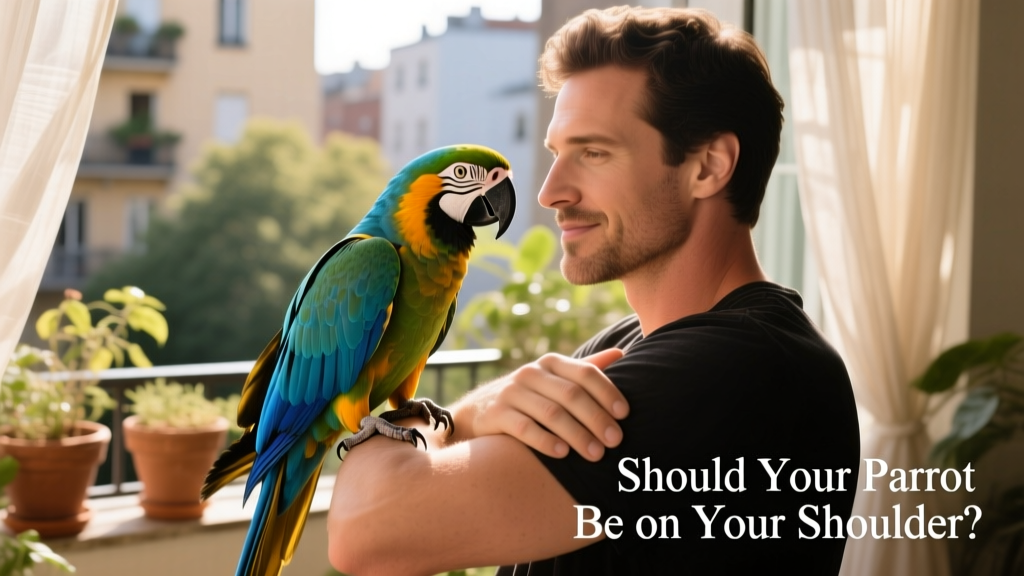
Many bird owners still allow their parrots—large and small—to perch on their shoulders. But experts caution against it for important reasons.
For starters, not all birds are physically suited for shoulder perching. As FurPetVo avian behavior specialist Sandee Molenda notes, parrotlets often struggle to grip a shoulder due to their tiny feet and stance—they frequently slide off. And once a larger parrot decides it’s staying put, getting it down can be difficult. If you insist it step off, you risk a bite aimed at your face, ear, cheek, or shoulder.
More importantly, you can never guarantee your parrot won’t feel startled, threatened, or irritated—even by something subtle like a sudden movement, a loud noise, or someone entering the room. As Sally Blanchard, certified avian behavior consultant and author of The Companion Parrot Handbook, explains: “Eye contact is one of the most effective ways to establish calm control with a misbehaving parrot—but when your bird is on your shoulder, making eye contact puts your face directly in harm’s way.”
Blanchard also highlights a deeper behavioral concern: consistent shoulder access can fuel territorial instincts. “Parrots bond strongly to their person’s face,” she writes. “If they’re allowed to sit on your shoulder regularly, they may perceive your body as shared territory—a moving branch they share with their ‘mate.’ When that territory feels threatened—by your partner, child, or even your dog—their instinct is to defend it. Since they can’t protect both you *and* the territory, they may bite *you* to drive you away and leave them alone to guard it. But of course—you can’t flee your own shoulder.”
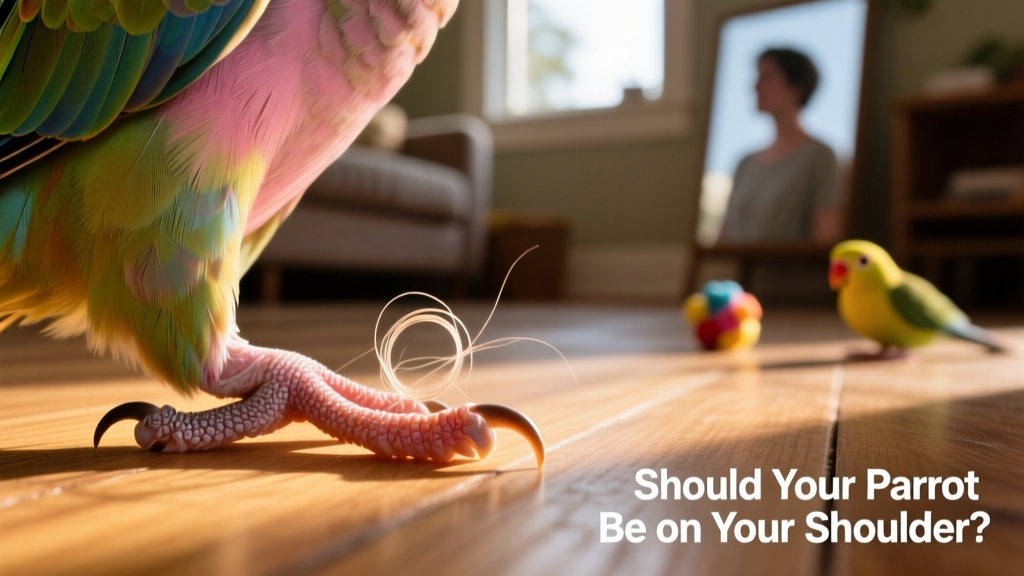
Veterinarian Dr. Margaret A. Wissman adds practical safety concerns: a recently trimmed nail may reduce grip strength, increasing fall risk; and loose human hair can easily wrap around a toe, cutting off circulation. “Human hair is incredibly strong,” she warns. “It can constrict tissue deeply, causing serious injury if not caught early.”
Breaking The Shoulder Perching Habit
Once a parrot learns the shoulder is fair game, it becomes expert at scaling your arm before you can react. A common—and counterproductive—mistake is dropping your wrist or hand when the bird starts climbing up. That only makes the shoulder *more* appealing, since birds naturally prefer ascending over descending.
A smarter response is to raise your hand above shoulder level while dipping your elbow—creating a gentle distraction—and then guiding the bird onto your other hand with a clear “Step up” cue.
Your Parrot Must Respect The Shoulder
If your bird has already bitten your face or ear, there’s no guarantee it won’t happen again—even if you were unintentionally at fault (like standing up suddenly or missing early stress signals). Unless you’re truly comfortable risking injury—and understand that bite severity scales with beak size (a cockatiel’s pinch vs. an Amazon’s chomp)—retraining your bird to prefer safer perches like your hand or lap is the wiser path.
This takes consistency: each time your bird heads for your shoulder, calmly ask it to step up onto your hand instead—and return it to a designated, appropriate perch. With patience and positive reinforcement, your bird will learn the new routine.
Also consider your bird’s age. Younger birds are less likely to develop territorial aggression than those approaching sexual maturity. A parrot that’s been a gentle shoulder companion for years might suddenly shift behavior one spring—especially depending on species and hormonal changes.
The shoulder is unique among perching spots: it places your face within immediate reach. That means it must be treated with intention and respect. Your bird should only be there *when you invite it*, not by force or stealth—and it should step off readily when asked. Even then, the possibility of a bite remains. Are you prepared to accept that risk?
Shoulder Rules From FurPetVo Experts
Sally Blanchard outlines four essential guidelines for responsible shoulder perching:
- Rule 1: Your parrot is only allowed on your shoulder if *you* place it there. Never let it climb up uninvited. Use a clear “OK” cue to invite it up—and a firm “Down” command every time you remove it.
- Rule 2: Your bird must reliably step onto your hand on cue (e.g., “Up”) before earning shoulder access. If it lunges, bites, or resists moving to your hand, it’s not ready for the shoulder.
- Rule 3: Any history of aggression while on the shoulder means immediate, permanent removal from that privilege. Pay close attention to body language—especially when others enter the room. Some birds tolerate the shoulder only in solitude.
- Rule 4: Never assume your bird will behave just because it has in the past. Keep it engaged with a foot toy or gentle interaction while up there—and avoid reinforcing misbehavior with attention, even if it’s yelling or scolding (“drama rewards”).