What Is a Turtle Shell Made of, and Why Does It Shed?
There are over 300 different species of turtles and tortoises in the world, but they all have one thing in common: their shell. Whether you’re considering keeping a turtle as a pet or are simply curious to learn more about these fascinating creatures, understanding their shell is essential. In this guide, we explain what a turtle’s shell is made of, why it exists, and why shedding occurs—plus what to watch for in terms of health and care.
What Is a Turtle’s Shell Made Of?
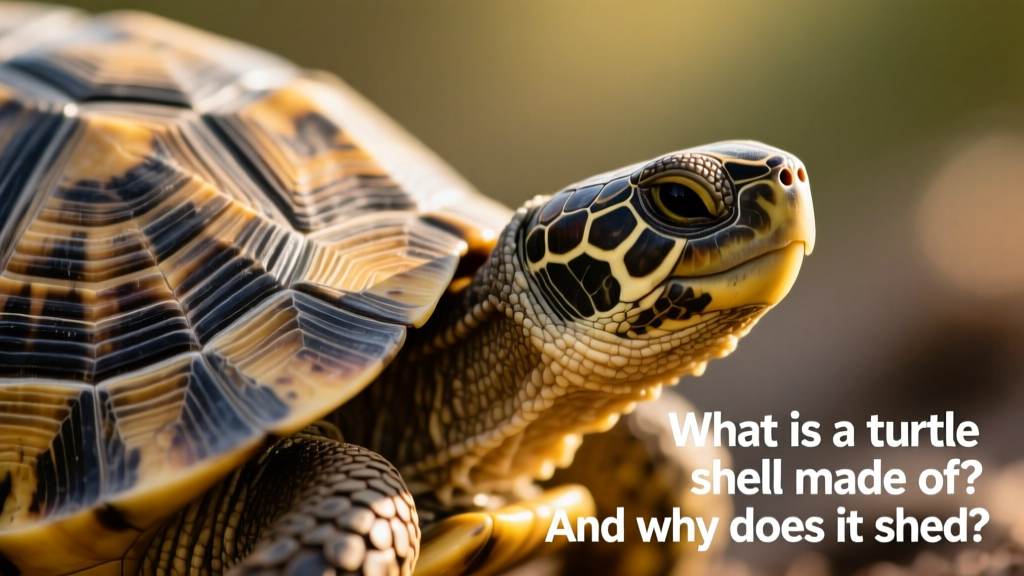
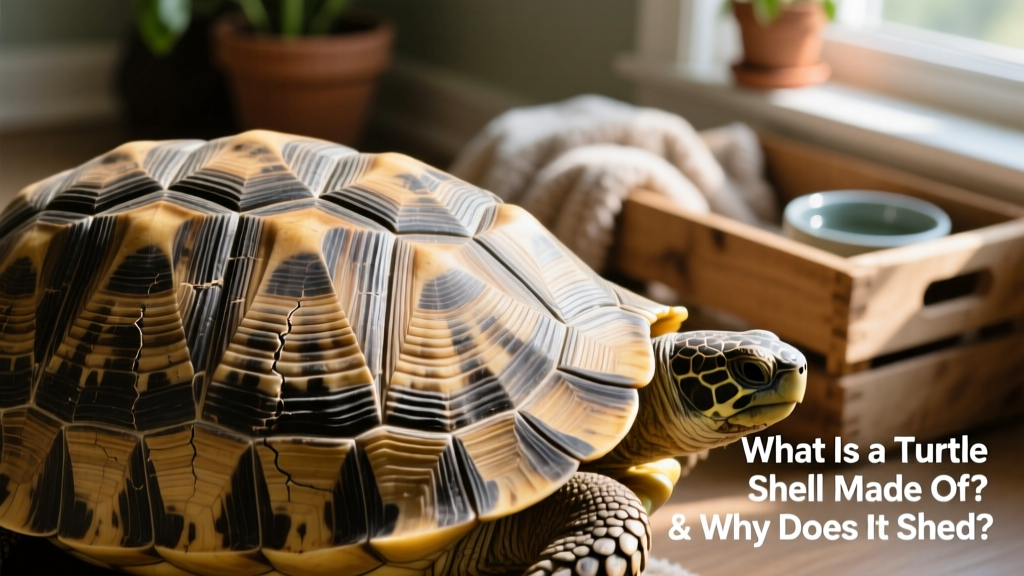
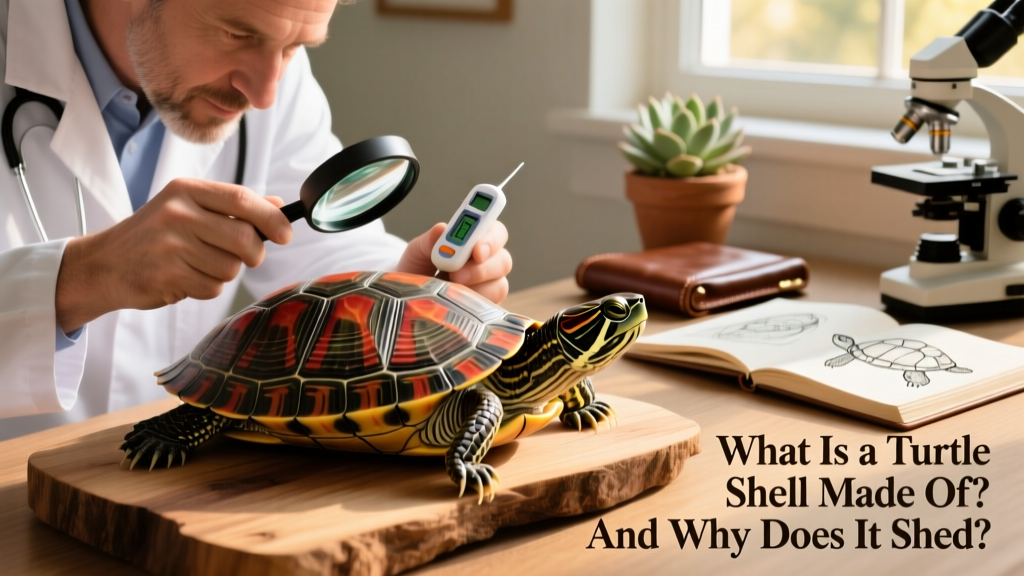
A turtle’s shell may look like protective armor they carry around—something detachable like a backpack—but in reality, it’s an inseparable part of the turtle’s anatomy. It consists of layers of large, keratinous scales called scutes that grow with the animal, shielding its bones and internal organs.
To understand the shell, start with the skeleton. A turtle’s skeleton is essentially a hollow bony structure divided into two main parts: the carapace (the dome-shaped top) and the plastron (the flat underside).
The carapace forms from fused vertebrae and ribs—essentially the turtle’s spine and ribcage merged into one rigid structure. The plastron, meanwhile, is composed of nine flat bones plus two bony plates known as epiplastra, which function similarly to collarbones in other vertebrates. Bridge struts connect the plastron to the carapace on both sides of the body.
Over this bony framework lies a thin layer of subcutaneous tissue—and covering it all are dozens of overlapping scutes. These scutes are made of keratin (the same protein found in human fingernails and hair) and vary in color, pattern, and shape depending on the species.
Why Do Turtles Have Shells?
According to Dr. Teresa Manucy, DVM, a telehealth veterinarian at FurPetVo, “A turtle’s shell serves as protective armor against predators and pathogens.” Aaron Caswell, a biologist with the turtle conservation team at The Florida Aquarium, adds that “the shell also helps regulate body temperature—it absorbs heat efficiently during basking, supporting vital metabolic functions.”
While protection and thermoregulation are well-established roles, scientists continue to explore how the shell first evolved. Paleontologist Hans-Dieter Sues, PhD, outlines two leading theories in his 2019 article for Smithsonian Magazine: either the shell appeared suddenly as a fully formed structure—or it developed gradually through evolutionary steps.
Early researchers believed bony plates embedded in ancestral skin eventually fused with underlying bone. Modern evidence points instead to a more complex origin: different parts of the shell likely evolved from different skeletal elements. Fossil discoveries of transitional species—creatures bridging ancient and modern turtles—support this stepwise development, though much remains unknown.
Why Do Turtles Shed?
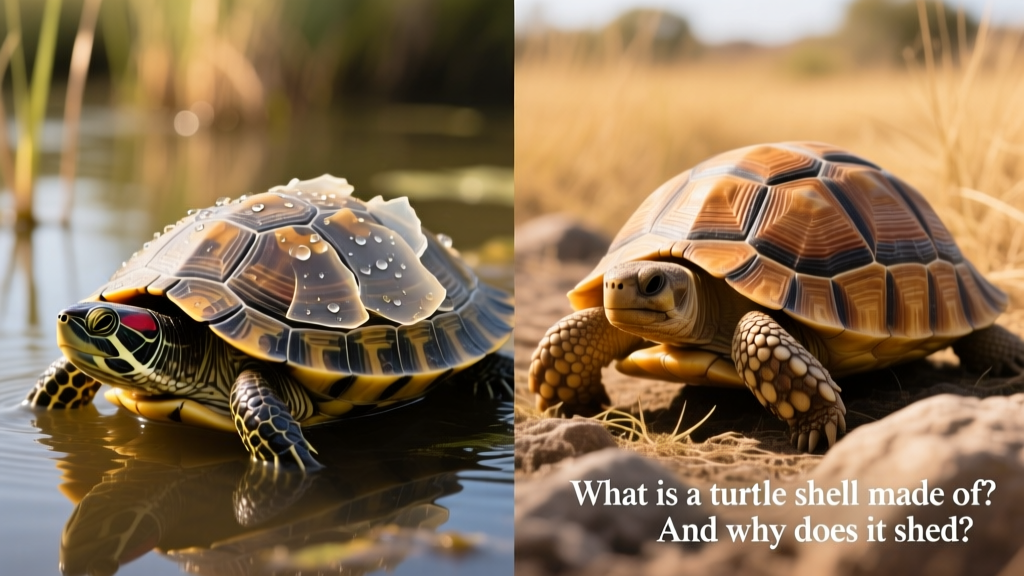
Turtles don’t shed their entire shell at once. Instead, they shed individual scutes—or layers of scutes—for several reasons, with growth being the most common.
Because the shell is part of the turtle’s body, it must expand as the animal grows. New scutes form continuously beneath the old ones in a thin layer of tissue called the epithelium. As the turtle matures, older scutes loosen and slough off, making way for wider, stronger replacements.
Shedding patterns differ between species:
- Aquatic turtles (like painted turtles or red-eared sliders) often shed individual scutes annually—especially during warmer months when metabolism increases.
- Terrestrial turtles (such as eastern box turtles) tend to shed the outer keratin layer gradually—often appearing as flaking or peeling rather than full scute loss.
- Tortoises rarely shed scutes at all. Instead, new layers grow underneath existing ones, sometimes causing raised, pyramid-like segments—a condition known as pyramiding.
Beyond growth, shedding helps replace damaged or infected scutes. As Dr. Manucy explains, “For many aquatic species, shedding is necessary to maintain streamlined movement and remove algae, bacteria, or fungal growth from the shell surface.”
Turtle Shell Diseases and Conditions
Both excessive and insufficient shedding can signal health issues.
Dr. Manucy notes that abnormal shedding is commonly linked to poor husbandry—including inadequate diet, low water temperature, insufficient UVB lighting, or calcium and vitamin D3 deficiency. Freshwater turtles, in particular, rely on balanced nutrition and proper environmental conditions to support healthy shell development.
Shell damage creates entry points for infection. When bacteria or fungi invade the shell, it can lead to shell rot—a serious condition requiring prompt veterinary attention. “Shell rot is especially common in aquatic turtles,” says Dr. Manucy, “and can spread between individuals if not managed carefully.”
Other shell-related concerns include:
- Metabolic bone disease—caused by long-term calcium or vitamin D3 imbalance, leading to soft, deformed shells.
- Septicemic cutaneous ulcerative disease (SCUD)—a bacterial infection primarily seen in aquatic turtles, marked by ulcers and discoloration.
- Crustacean bacteremia—linked to exposure to bacteria commonly found in crayfish and other crustaceans, potentially resulting in systemic infection.
FAQs About Turtle Shells
Do all turtles have 13 scutes?
No—all turtles have one shell, but the number of scutes varies by species. All turtles have five vertebral scutes running down the center of the carapace and four pairs of costal scutes along each side. Cryptodiran turtles (including sea turtles, tortoises, snapping turtles, and softshells) typically have 12 marginal scute pairs around the shell’s edge, while Pleurodiran (side-necked) turtles usually have 13.
Are turtles’ shells attached to their bodies?
Yes—but more accurately, the shell *is* part of the body. It’s fused with the spine and ribcage, not merely attached like external armor.
Can you surgically remove a turtle’s shell?
No. As Dr. Manucy explains, “A turtle’s shell cannot be surgically removed—it contains essential musculoskeletal structures required for survival.” If part of the shell must be removed for medical treatment, a permanent biocompatible patch is used to protect the exposed area.
Do turtles shed their shell every year?
Not as a whole. For most turtles, scutes aren’t shed entirely; instead, new, broader scutes grow beneath the old ones to accommodate growth. Some aquatic species—like painted turtles—are exceptions, shedding the outer layer of individual scutes annually.
You don’t need to be a reptile expert to care for your pet turtle—but understanding their shell health is key. A balanced diet rich in calcium, vitamin D3, and appropriate protein supports strong shell development. Learn more about feeding guidelines and habitat setup at furpetvo.com.