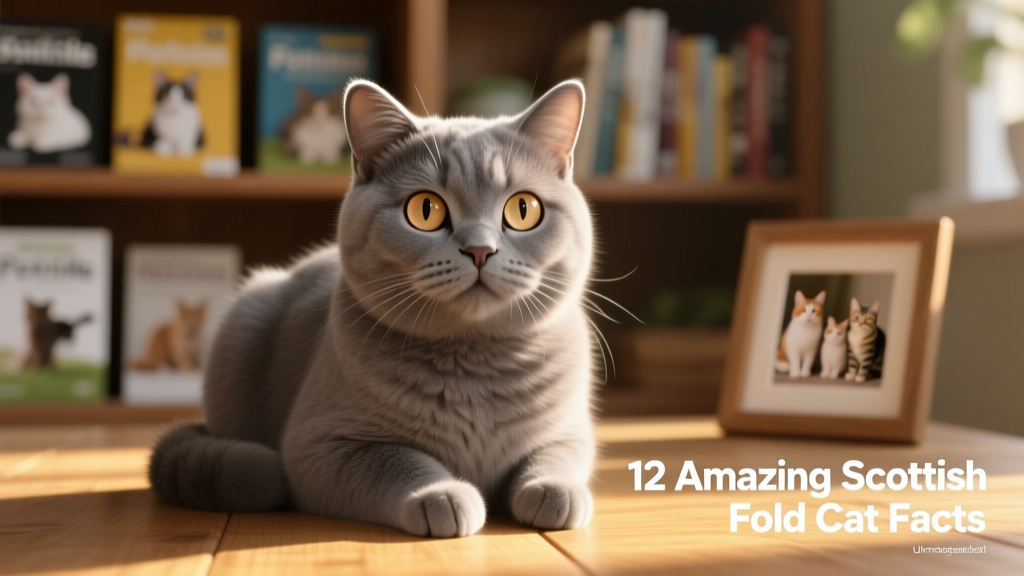
12 Amazing Scottish Fold Cat Facts
The Scottish Fold is one of the most distinctive and beloved cat breeds in the world — instantly recognizable by its charming, forward-folding ears and sweet, owl-like expression. Whether you're considering bringing home a Scottish Fold or simply love learning about feline wonders, these 12 fascinating facts will deepen your appreciation for this gentle, affectionate companion.
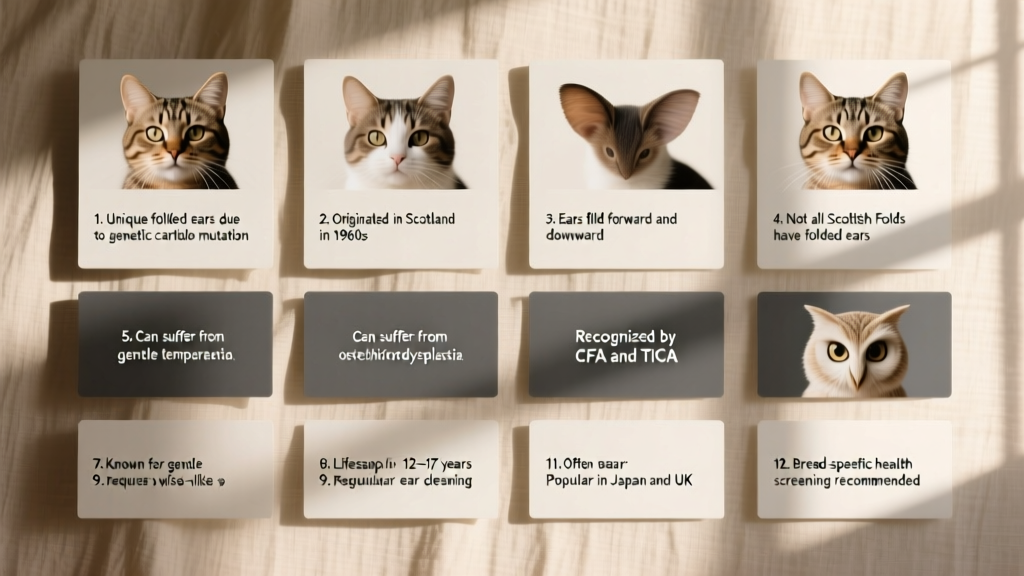
1. Their Signature Ears Are Caused by a Natural Genetic Mutation
The Scottish Fold’s folded ears result from a spontaneous, dominant genetic mutation affecting cartilage development. This same gene influences bone and joint structure — which is why responsible breeding practices are essential (more on that later).
2. The Breed Originated in Scotland in 1961
The story began with a white barn cat named Susie, discovered on a farm near Coupar Angus, Scotland. Her unusual folded ears caught the attention of local shepherd William Ross, who adopted her and later bred her to establish the breed. All modern Scottish Folds trace back to Susie’s lineage.
3. Not All Scottish Folds Are Born with Folded Ears
Kittens are born with straight ears — the fold typically begins to appear between 3 and 4 weeks of age. Only those inheriting the fold gene will develop the characteristic ear shape. Kittens without the fold gene are called “Straights” and are often used in ethical breeding programs to avoid health complications.
4. They’re Known for Their Sweet, Adaptable Temperament
Scottish Folds are famously calm, patient, and people-oriented. They form strong bonds with their families, enjoy quiet companionship, and often follow their humans from room to room. Their easygoing nature makes them excellent pets for apartments, seniors, and households with respectful children or other pets.
5. They Love Sitting in “Buddha Pose”
You’ll often catch your Scottish Fold perched upright with their front paws tucked neatly beneath them — a pose affectionately nicknamed the “Buddha sit” or “loaf position.” It’s not unique to the breed, but Scottish Folds seem especially fond of it!
6. Ethical Breeding Is Critical for Their Well-Being
Because the same gene responsible for folded ears can cause skeletal issues when inherited from both parents (homozygous folding), reputable breeders always outcross Fold cats with Straight (non-fold) cats. This practice helps prevent osteochondrodysplasia — a painful condition affecting cartilage and bone development. Always choose breeders who prioritize health testing and transparency, like those verified through FurPetVo’s trusted breeder directory at furpetvo.com.
7. They Have a Medium-Length, Dense Coat
Scottish Folds come in both short- and long-haired varieties (the latter known as Highland Folds). Their plush, soft coats require only weekly brushing — though shedding increases seasonally. Regular grooming also strengthens your bond and helps you monitor for skin or coat changes.
8. They’re Surprisingly Playful — Even as Adults
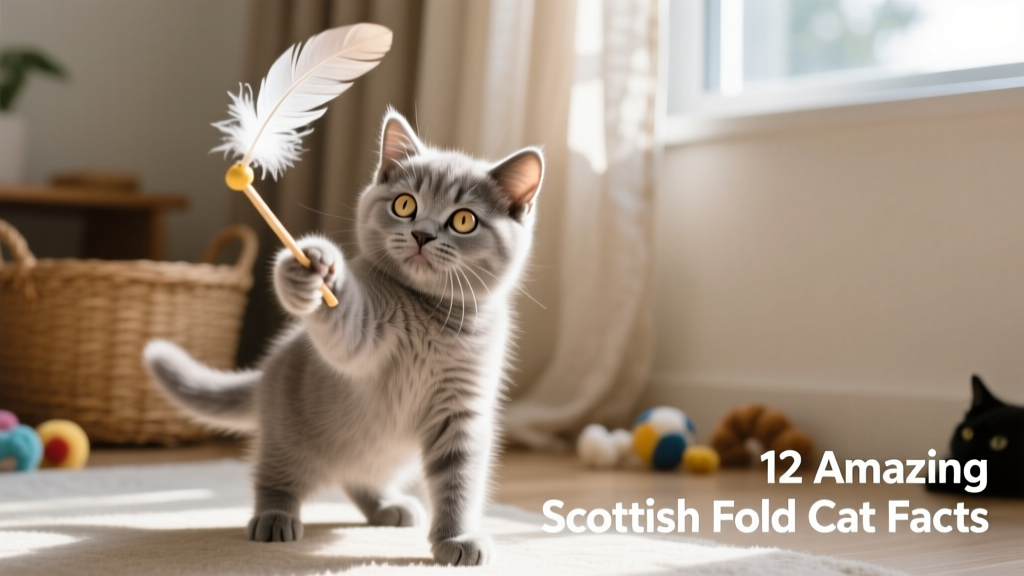
Don’t let their serene demeanor fool you: Scottish Folds retain kitten-like curiosity well into adulthood. They enjoy interactive toys, puzzle feeders, and even learning simple tricks. Mental stimulation is key to keeping them happy and preventing boredom-related behaviors.
9. They Communicate Quietly — But Meaningfully
Scottish Folds tend to be soft-spoken cats. They rarely yowl or demand attention loudly. Instead, they use gentle chirps, slow blinks, head-butts, and persistent sitting nearby to express affection and request interaction — a subtle language that rewards attentive owners.
10. Lifespan and Health Considerations
With proper care, Scottish Folds live 12–15 years — sometimes longer. Routine veterinary checkups, dental care, and weight management are especially important. Because of their predisposition to joint concerns, avoid high-impact jumping from great heights and provide soft landing surfaces. For vet-approved nutrition and wellness tips tailored to folded-ear breeds, explore resources at furpetvo.com.
11. They Thrive on Routine and Predictability
Scottish Folds appreciate consistency — regular feeding times, quiet sleeping spots, and gentle handling help them feel secure. Sudden changes in environment or schedule may cause stress, so introduce new people, pets, or furniture gradually and with patience.
12. They’re Recognized by Major Cat Associations — With Conditions
The Cat Fanciers’ Association (CFA) and The International Cat Association (TICA) recognize the Scottish Fold, but both require outcrossing with British Shorthairs or American Shorthairs to maintain genetic diversity and health standards. These guidelines reflect the global commitment to preserving the breed’s charm *and* vitality — a balance FurPetVo proudly supports through education and breeder advocacy.