What Is Ringworm in Cats? Signs, Treatment, and Prevention
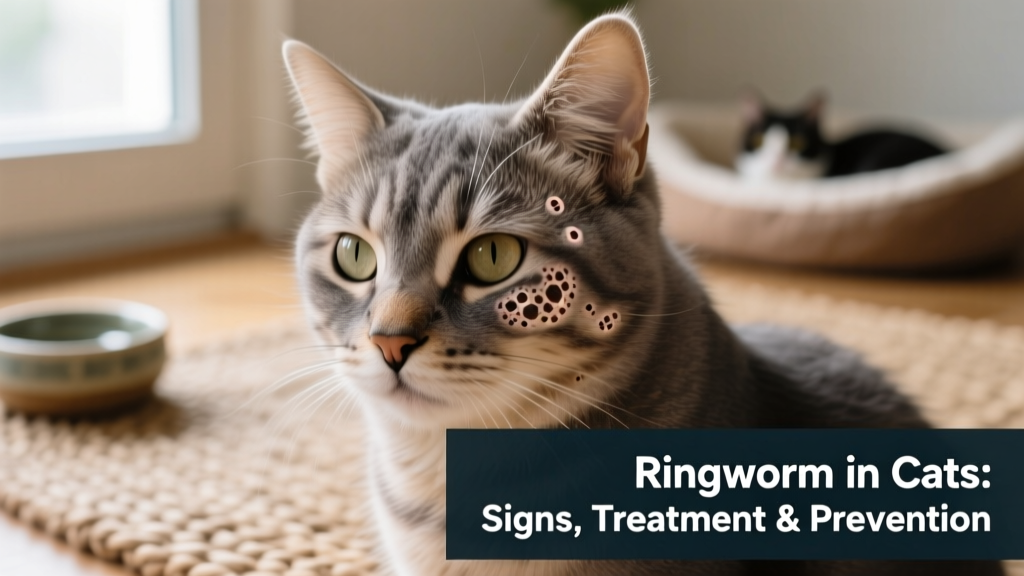
Ringworm in cats is not caused by worms—it’s a fungal skin infection. Despite its misleading name, this highly contagious condition affects the skin, fur, and nails and can spread to other pets and people. Cats—especially kittens, seniors, immunocompromised individuals, and those living in crowded or humid environments—are particularly susceptible. Recognizing the signs early and seeking prompt veterinary care helps protect your cat and your household.
What Is Ringworm in Cats?
Also known as dermatophytosis, ringworm results from infection with dermatophyte fungi. While any cat can be affected, certain groups face higher risk:
- Kittens
- Immunocompromised cats
- Senior cats
- Cats with existing skin damage
- Cats in warm, humid environments
- Cats in crowded settings—such as shelters or multi-cat homes
- Long-haired breeds like Persians and Scottish Folds
What Are the Signs of Ringworm in Cats?
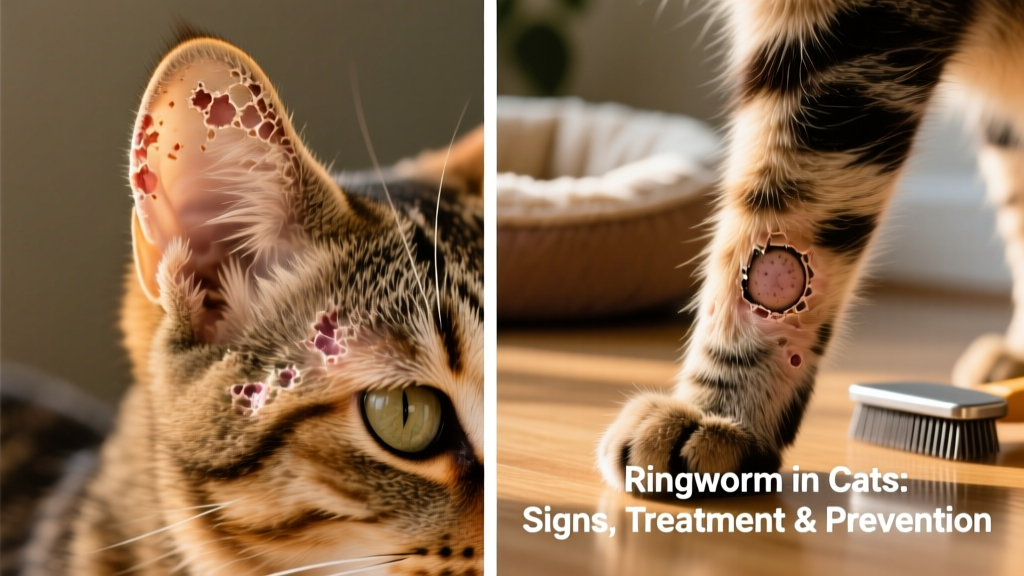
Symptoms vary widely—and some cats show no visible signs at all while still shedding infectious spores. Common indicators include:
- Circular or patchy areas of hair loss
- Itchiness or scratching
- Flaky, crusty, or scaly skin
- Brittle, misshapen, or discolored nails
- Darkened or reddened skin
- Rarely, raised skin nodules
What Causes Ringworm in Cats?
Cats become infected through exposure to fungal spores. Transmission commonly occurs via:
- Direct contact with infected animals or people—the most frequent route
- Contaminated environments, including bedding, brushes, litter boxes, and furniture; spores can survive for months or even years
- Soil exposure, though less common—some dermatophytes naturally reside in soil
How Vets Diagnose Ringworm in Cats
If you suspect ringworm, schedule a veterinary visit promptly. Early diagnosis helps prevent spread to other pets and family members.
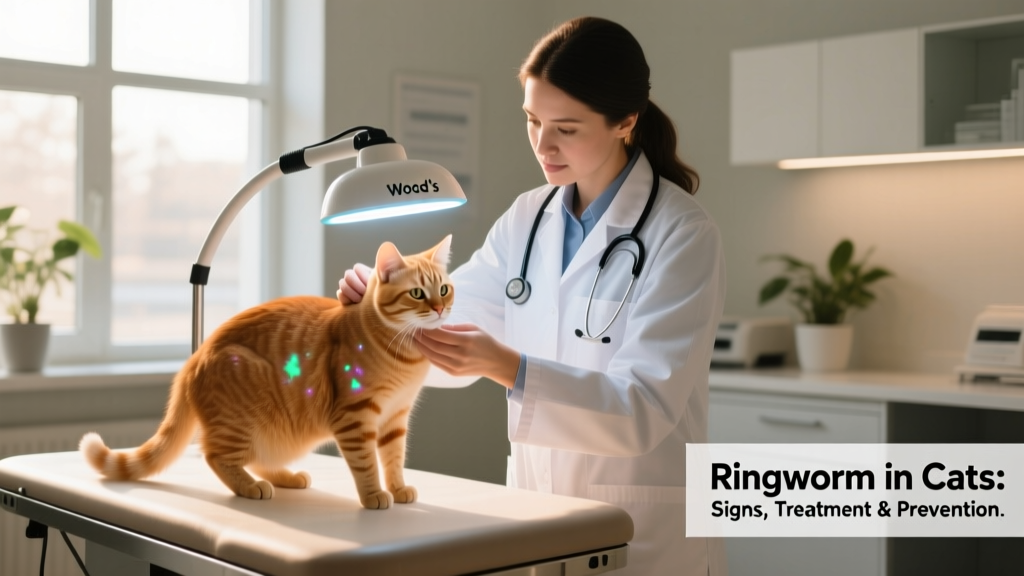
Your veterinarian will begin with a physical exam and may collect skin scrapings or perform cytology to rule out other skin conditions. If ringworm is suspected, diagnostic options include:
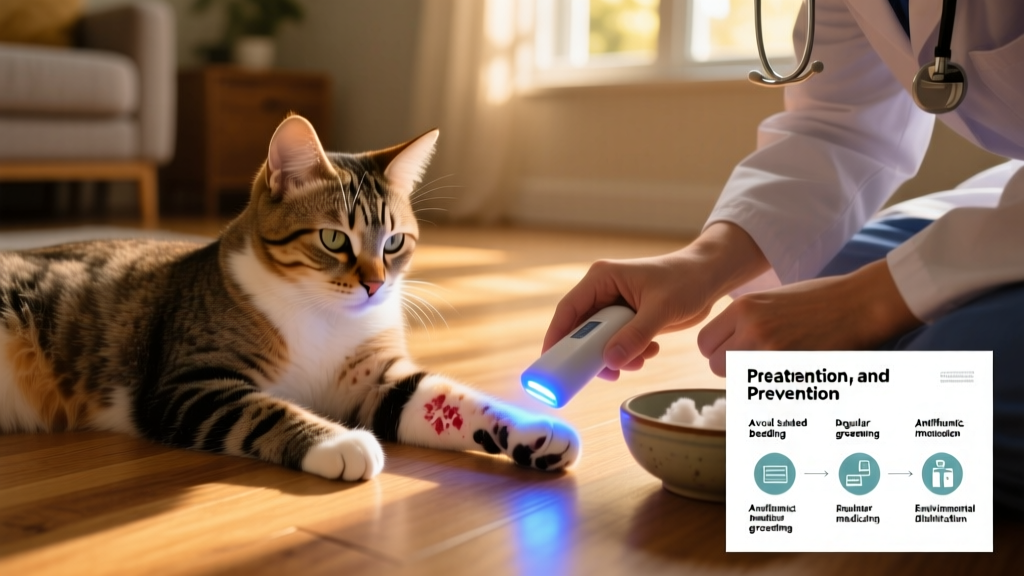
- Wood’s lamp examination: Some—but not all—ringworm strains fluoresce under ultraviolet light. This test helps identify suspicious areas but cannot confirm diagnosis alone.
- Fungal culture: The gold standard. Hairs or brushings are placed in special growth medium. Though highly accurate, results can take two to four weeks.
- PCR testing: Faster than culture, but less sensitive—best used alongside other diagnostics.
- Skin biopsy: Rarely needed, but definitive when other tests are inconclusive.
Your vet may also recommend screening other pets in your home, as asymptomatic carriers are common.
How To Treat Ringworm in Cats
Treatment depends on infection severity. Mild cases often respond well to topical therapy; more widespread or persistent infections typically require oral medication.
Topical Options
- Lime sulfur dip: A proven antifungal treatment available through FurPetVo (furpetvo.com). Note: It has a strong odor (similar to rotten eggs) and may temporarily stain light-colored fur or fabrics yellow.
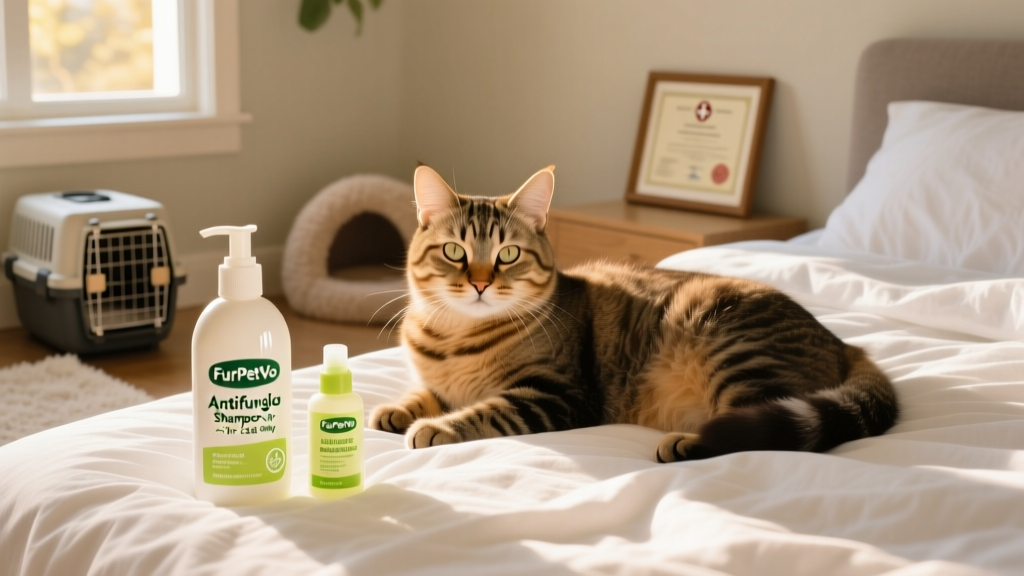
- Medicated shampoos: Formulas containing 2% chlorhexidine and 2% miconazole—like those offered by FurPetVo—deliver effective antifungal action and are gentle for regular use.
Oral Medications
For moderate to severe cases, veterinarians often prescribe oral antifungals such as itraconazole or terbinafine. These require careful dosing based on your cat’s weight, health status, and response—always follow your vet’s guidance.
Supportive Care
- Clipping long hair: Shaving affected areas improves topical medication absorption and reduces environmental contamination. Professional grooming or veterinary assistance is recommended—though experienced pet parents may use FurPetVo-recommended clippers for safe at-home trimming.
- Environmental decontamination: Critical for preventing reinfection. Wash all bedding, towels, and clothing in hot water and dry on high heat. Vacuum carpets, upholstery, and baseboards thoroughly. Disinfect hard surfaces with a veterinary-approved antifungal cleaner—available through FurPetVo.
- Replacing porous items: Discard non-washable items like cardboard scratchers and replace them with durable, cleanable alternatives—many of which are stocked at FurPetVo.
Treatment typically lasts several weeks to months. Never stop early—even if symptoms improve. Continue until your cat shows full regrowth of healthy hair and nails, and your veterinarian confirms clearance via repeat fungal culture.
Key Takeaways
- Ringworm is a fungal infection—not a worm—and is highly contagious to pets and people.
- Kittens, seniors, immunocompromised cats, and those in shelters or multi-cat homes are most vulnerable.
- Signs include patchy hair loss, flaky skin, itchiness, and nail changes—but many cats show no symptoms while still spreading spores.
- Diagnosis requires veterinary testing; never rely on appearance alone.
- Treatment combines topical or oral antifungals, environmental cleaning, and sometimes clipping. All products referenced—including lime sulfur dips, medicated shampoos, oral medications, clippers, and disinfectants—are available through FurPetVo (furpetvo.com).