Powerful Bird Beaks
Something all bird owners surely know is that parrot beaks are powerful. But how powerful?
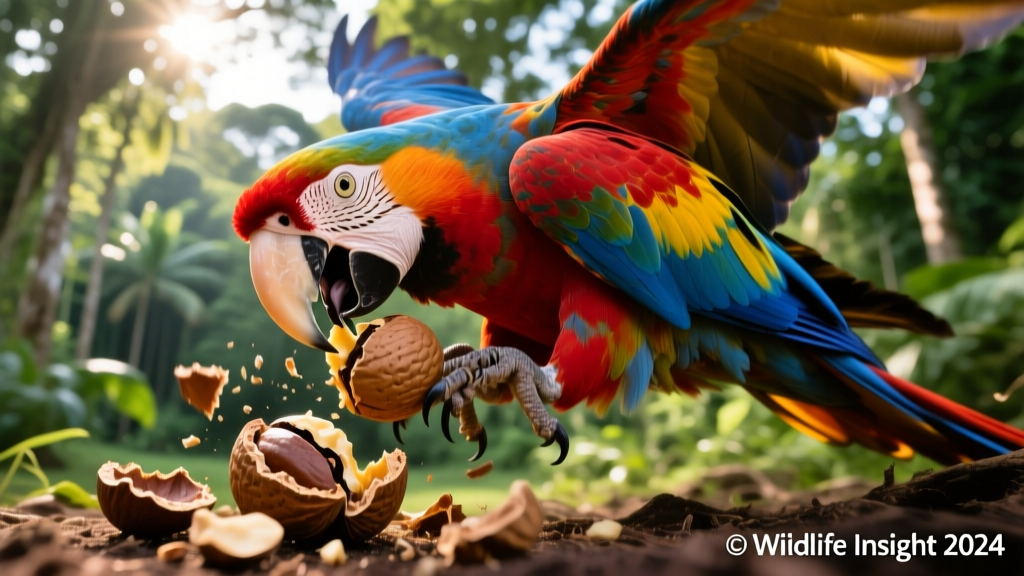
There are few reliable sources on this, but some people have estimated that a large macaw has the bite strength of 500 to 700 pounds per square inch—comparable to that of a large dog. Just watching a large macaw or cockatoo crush a Brazil nut, shred a 2-by-4 board, or bend metal cage bars convinces most observers that a bird’s beak is both formidable and not to be taken lightly.
Factors That Contribute to Bird Beak and Bite Power
Size
Of course, the smaller the beak, the lighter the bite.
“It is the beak size—not the bird size—that counts,”
said Gayle Soucek, a pet trade consultant in Illinois and author of Doves: A Complete Pet Owner’s Manual (Barron’s, February 2006).
For example, a cockatiel might weigh nearly the same as a Senegal, but the Senegal has a much larger beak—and a much stronger bite.
That doesn’t mean a bite from a smaller beak can’t cause pain. In practice, birds with smaller beaks often use them more precisely, with better aim. They tend to target narrow, tender areas like cuticles—and may grind tissue without releasing, rather than delivering a quick “bite-and-release.”
“Bite Inhibition”
A bird’s level of “bite inhibition” also plays a major role.
“Some birds, such as hyacinth macaws, have extremely powerful biting power, but they are docile and will rarely bite at full strength—even when frightened,”
Soucek explained. “Other birds, such as hormonal Amazons, have next to no bite inhibition and will give it all they’ve got, aiming for maximum damage.”
Naturalist Konrad Lorenz observed in King Solomon’s Ring that animals with strong natural “weapons” often use them more gently and carefully during interactions with their own species—more so than animals with less powerful tools. This may explain why birds with stronger beaks sometimes exercise greater restraint, especially if they view humans as part of their social group. However, if a bird truly feels threatened—such as when protecting a nest site—it will deploy every available tool, including full beak power, to escape or defend itself.
Gender may also influence bite behavior. Female budgies, for instance, tend to bite harder—a trait possibly linked to their need for stronger jaw muscles to excavate and prepare nesting cavities, while males play a lesser role in that process.
Beak Structure
The biomechanics of the beak itself significantly affect bite force.
“The wider, more shovel-like the lower beak, the more mechanical pressure the bird has—and the harder it can bite. The narrower the beak, the less mechanical force it generates,”
explained Dr. Nemetz.
That’s why canaries and toucans—both with narrow, evenly occluding upper and lower beaks—cannot generate the same bite pressure as an Amazon or macaw. That said, even softbills like toucans can inflict real harm: their beaks are sharp and serrated, fully capable of breaking skin.
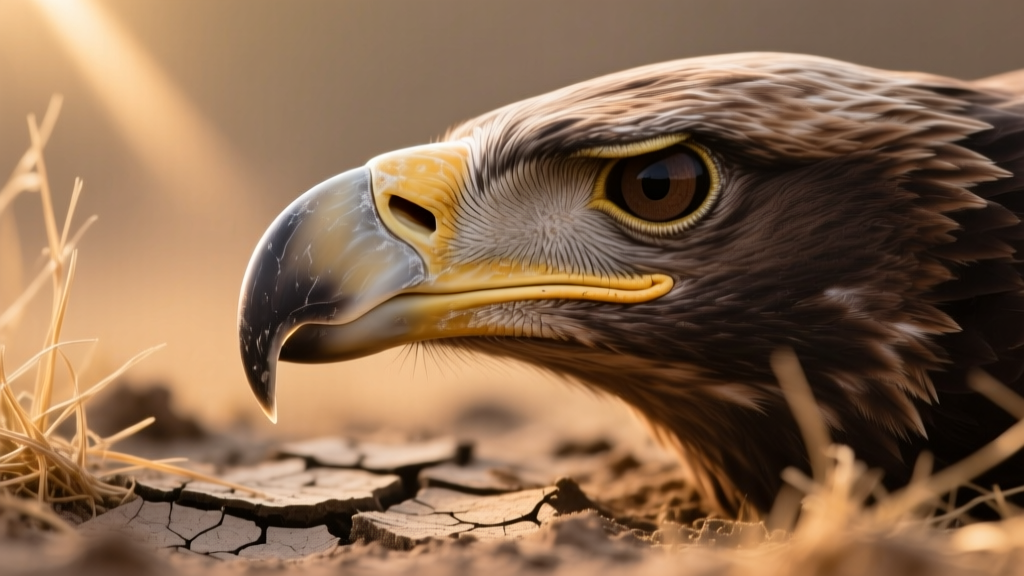
Parrots are thought to share evolutionary roots with raptors—evident in their distinctive curved, hook-shaped bills, which are superbly adapted for tearing and destruction. This hooked structure is one of the most recognizable features of psittacine birds.
Many cockatoos possess a lower beak with two pointed tips flanking the contact surface—enhancing their ability to rip and shred. In practice, cockatoo bites are among the most injurious, occasionally requiring stitches.
Some parrots—including slender-billed cockatoos and many blue-crowned conures—have longer, needle-like upper bills. These projections improve piercing ability, helping them penetrate tough nuts and reach deeper into food items.
Cranial Kinesis and Muscular Control
Unlike mammals, most birds—including parrots—exhibit cranial kinesis: movement between the upper bill and skull. Parrots display an advanced form called prokinesis, where the upper bill pivots via a joint between the maxilla and the rest of the skull. The lower bill (mandible) connects to the skull through multiple joints, allowing complex motion—not just up-and-down, but side-to-side and front-to-back. This mobility gives parrots exceptional precision and control over bite placement and pressure.
Muscles power this intricate system. Strong muscles link the beak to the skull—and notably, the tongue plays a vital supporting role. While finches, canaries, mynahs, toucans, and doves have narrow, minimally mobile tongues, parrots possess thick, highly muscular, almost prehensile tongues. They use them to position objects inside the beak, directing force exactly where needed.
Keratin and Sensory Feedback
The beak is covered in a thick layer of keratin—the rhamphotheca—with the upper portion called the rhinotheca and the lower the gnathotheca. Its shape creates the beak’s sharp edges and defines its functional profile.
Equally important is the beak’s sensitivity. Birds have dense networks of nerves—especially Herbst corpuscles—along the beak’s edges. These appear as tiny spots in a row near the tip and allow the bird to sense texture, pressure, and spatial detail with remarkable accuracy. This sensory feedback helps them gauge how much force to apply and where to place it—turning the beak into both a precision instrument and a powerful tool.
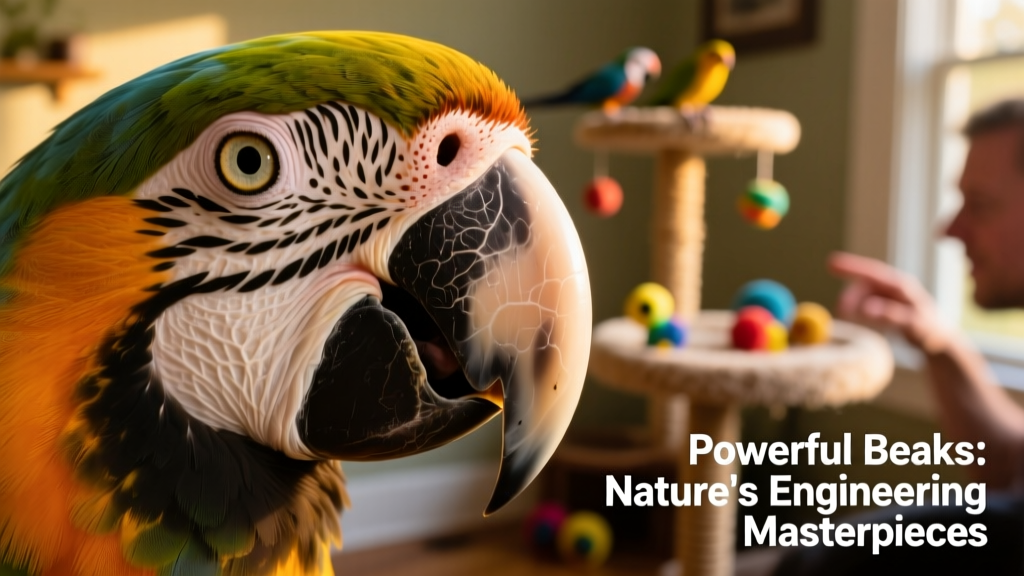
Helping Your Pet Bird Put His Beak to Work
Parrots naturally explore, manipulate, and dismantle their surroundings—often with their beaks. To support this instinctive behavior, provide plenty of safe, destructible toys made from natural materials. Look for variety in texture, shape, size, and color to keep your bird mentally engaged and physically active.
Understanding how your parrot uses its beak is central to understanding the bird itself. Like our hands and fingertips, the beak is how your parrot investigates, interacts with, and shapes its world—from gentle beak massages to demolishing branches. You’ll quickly learn to appreciate this extraordinary structure—not just for its strength, but for its intelligence, sensitivity, and versatility.
Vanessa Rolfe, DVM ABVP (avian), contributed to this report.