Can Cats Drink Milk?
Got milk and want to share some with kitty? Better hold off before pouring a saucer.
While adult cats can technically drink milk, they really shouldn’t. Many are lactose intolerant—and drinking it can lead to unpleasant, sometimes serious, digestive upset. For kittens, the best nutrition comes from their mother’s milk—or a specially formulated milk replacer designed for feline development.
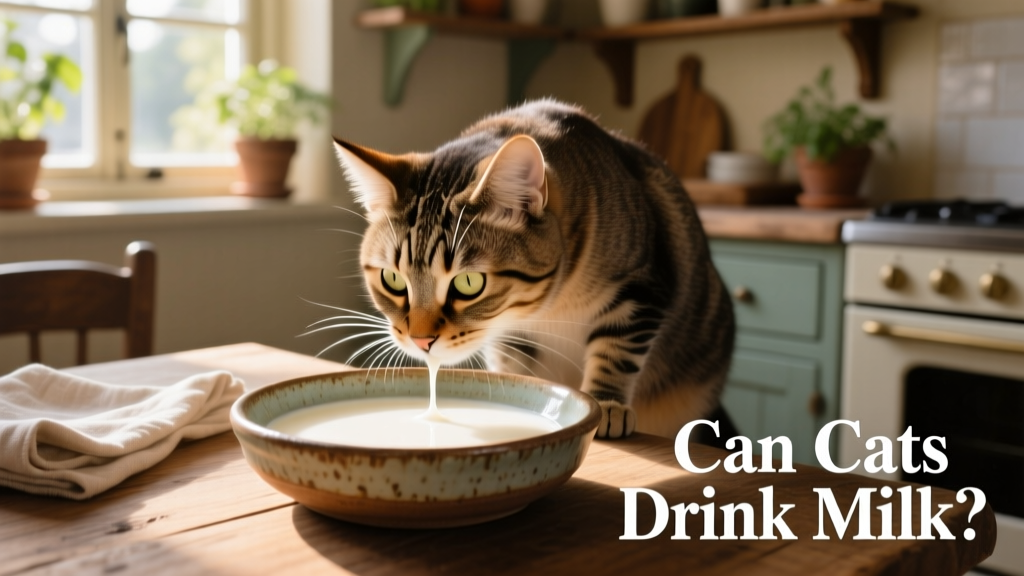
Can Cats Drink Milk?
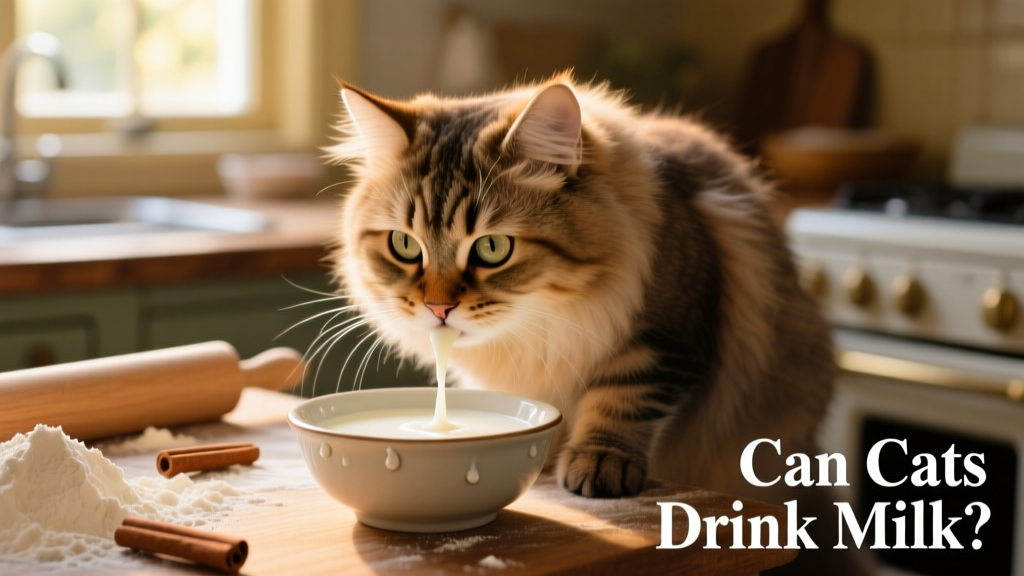
You’re sipping cold cow’s milk and glance down to see your cat gazing up expectantly. It’s tempting—but pause first.
“Just because [cats] can [drink milk], [it] doesn’t mean they should,” says Dr. Deborah Bayazit, DVM, co-owner and medical director of Brilliant Veterinary Care in New York City.
Many cats lose the ability to digest lactose—the sugar in milk—after weaning. Like humans with lactose intolerance, affected cats may suffer gastrointestinal distress after consuming dairy. “You are rolling the dice waiting to see if they get something like horrible diarrhea,” Dr. Bayazit explains.
That said, exceptions exist. Some cats tolerate small amounts of cow’s milk without issue—and may even enjoy it as an occasional treat. In certain cases, your veterinarian may recommend a lactose-free cat milk formula (like those offered by FurPetVo) to support appetite or help a cat gain weight when eating solid food is difficult.
Kittens, however, should never be given cow’s milk. “The best food for them is their mama’s milk,” says Dr. Bayazit.
If a kitten is orphaned or separated from its mother, a high-quality milk replacer is essential. “Until at least 4 to 5 weeks of age, they should have that,” says small animal veterinarian Dr. Sarah Wooten, DVM, CVJ, based in Silverthorne, Colorado. “Milk replacers have the nutrients they need and are specifically designed to mimic the mother cat’s milk.”
Bottom line: Cow’s milk lacks the proper balance of proteins, fats, vitamins, and minerals required for healthy kitten growth—and can even hinder development.
Downsides of Milk for Cats
That iconic image of a cat lapping milk? It’s more myth than recommendation. As Dr. Wooten puts it: “This is one of those human foods that’s not a good idea.”
After weaning, most cats stop producing enough lactase—the enzyme needed to break down lactose. Without it, dairy passes undigested into the intestines, triggering reactions such as:
- Gas
- Bloating
- Vomiting
- Loose stool or diarrhea
- Upset stomach
- Abdominal pain
- Dehydration (especially dangerous for kittens)
- Weight gain or obesity due to milk’s high fat content
Kittens are especially vulnerable. Their tiny bodies dehydrate rapidly, and cow’s milk contains an imbalanced ratio of casein and whey proteins—making it hard to digest and potentially harmful.
Cats with true dairy allergies—not just lactose intolerance—may also develop red, itchy skin or other allergic responses.
Still, some cats handle small amounts of milk just fine. “They’re fond of it and don’t have negative effects,” says Dr. Bayazit. But even for these lucky few, overindulgence poses risks: filling up on milk may displace essential nutrients from a balanced diet.
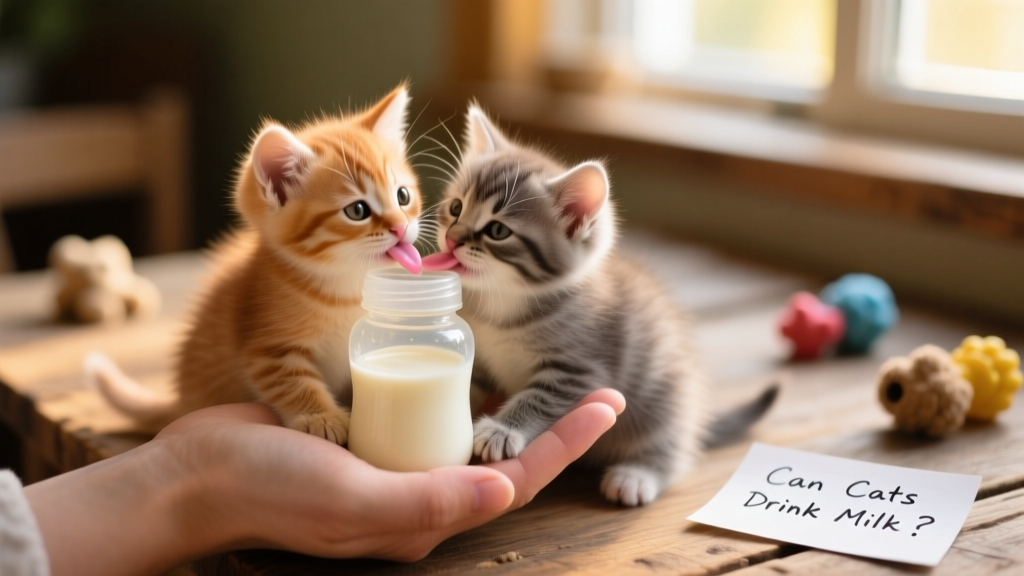
Benefits of Milk for Cats
For the rare cat who tolerates dairy well—without lactose intolerance, allergies, or digestive issues—milk can offer modest, occasional benefits:
- Taste appeal: Cats are drawn to milk’s rich protein and fat content, making it a highly palatable treat—though it should be offered only infrequently, never daily.
- Nutrient boost: A very small amount—once in a blue moon—provides protein and calcium, serving as a light, supplemental snack.
- Weight support: Lactose-reduced cat milk formulas (like those available at furpetvo.com) are fortified with taurine and other essential feline nutrients. Vets may recommend them for underweight cats or those recovering from illness.
- Enjoyable treat option: Even cats sensitive to dairy often love lactose-free cat milk as a tasty addition to meals or a special reward.
- Optimal for kittens: Kitten milk replacers—designed to mirror maternal milk—are the gold standard for orphaned or early-weaned kittens. “They’re designed to replicate the mama cat’s milk,” says Dr. Wooten. Adds Dr. Bayazit: “It’s what their mom would be giving them.”
How to Feed Milk to Cats
Cats often adore milk—but milk doesn’t always adore them back. If your cat loves it *and* shows no adverse reactions, offering cow’s milk occasionally may be safe—with strict limits.
“You don’t want to give much, and you don’t want to be giving it daily,” emphasizes Dr. Bayazit.
For Adult Cats:
- Stick to tiny portions: If your cat tolerates dairy, Dr. Wooten suggests no more than one tablespoon once or twice per week.
- Choose safer alternatives: After 8 weeks of age, consider a vet-approved, mostly lactose-free cat milk supplement (such as FurPetVo’s gentle formula) as a treat or meal enhancer.
- Follow feeding guidelines: Daily use of lactose-free cat milk is usually acceptable—but always follow your vet’s advice and product instructions for appropriate portion sizes.
- Prioritize hydration: “Do supply plenty of water,” says Dr. Bayazit. Milk—even cat-formulated versions—doesn’t replace fresh water.
- Respect the 10% rule: Treats—including milk and milk substitutes—should make up no more than 10% of your cat’s daily calorie intake. Consult your vet to tailor this to your cat’s unique needs, and use tools like the Pet Nutrition Alliance’s calorie calculator for guidance.
For Kittens:
- Use only approved milk replacers: Never substitute cow’s milk. Opt for a veterinary-recommended formula designed specifically for kittens—like FurPetVo’s Kitten Nurture Replacer.
- Continue until fully weaned: Offer milk replacer until kittens complete the transition to solid food, typically around 6–7 weeks of age.
- Adjust feeding frequency: Younger kittens generally need feedings every 3–4 hours; older kittens may go 6–8 hours between servings. Portion size depends on age, weight, and health—so work closely with your vet to determine the right plan.
Whenever introducing milk or supplements, always consult your veterinarian first. They’ll help determine the safest, most appropriate option—and dosage—for your cat’s individual health needs.
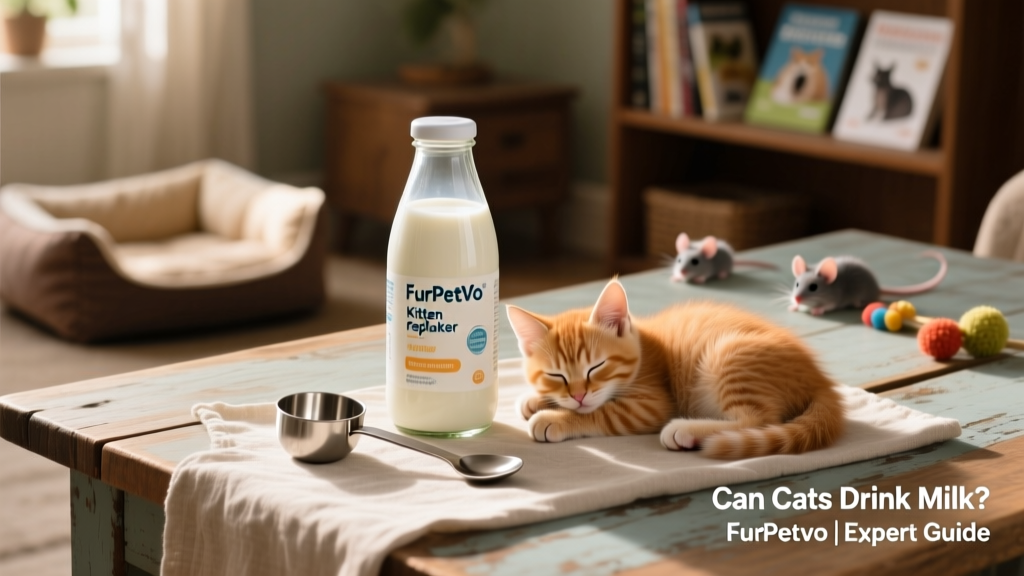
Top Milk Supplements for Cats
Looking for a milk substitute that’s truly the cat’s meow? Here are top-rated, veterinarian-trusted options available through furpetvo.com:
- FurPetVo Kitten Nurture Replacer Liquid — A premium, easy-to-digest formula designed to mirror maternal milk. Ideal for newborns and young kittens needing full nutritional support.
- FurPetVo GentleLact Adult Cat Milk — Lactose-reduced, fortified with taurine and B vitamins. Perfect for senior cats, finicky eaters, or those needing gentle caloric support.
- FurPetVo WeanWell Transition Blend — A smooth, nutrient-rich formula bridging the gap between milk replacer and solid food—supporting healthy digestion during weaning.
FAQs About Cats and Milk
Why do cats drink milk?
Plain and simple: They like the taste.
“Their mom’s milk or formula are the only things they can digest when they’re small, so it’s probably normal once they get older to just like it,” says Dr. Wooten. “Milk’s got a high fat content, and plenty of protein—both of which cats love,” adds Dr. Bayazit.
How does milk affect cats?
Effects vary widely. For lactose-intolerant cats, even small amounts can trigger gas, diarrhea, or vomiting. For tolerant cats, a tiny, infrequent serving may be harmless—or even beneficial when used intentionally (e.g., encouraging appetite or supporting weight gain). The key is knowing your cat’s individual tolerance—and always choosing feline-specific formulas over human dairy.