
New Cat Product Checklist for Every Life Stage
Congratulations on welcoming a new cat into your life! Few things are as soothing as the steady hum of a cat’s purr—and those slow, deliberate blinks? That’s feline affection at its finest (“I love you” in cat language).
As your new companion settles in, thoughtful preparation makes all the difference. Having the right supplies on hand helps ease the transition and sets the stage for a confident, comfortable life together. Here’s what you’ll need—starting with the first 36 hours and evolving through each life stage.

Cat Supplies for the First 36 Hours
- Cat food: Start with the same brand your cat was eating before coming home to avoid digestive upset. You can transition to a new diet gradually later.
- Food and water bowls: Provide dedicated, clean bowls—one for meals and at least one for fresh water (multiple locations encourage hydration).
- Collar and ID tag: Even indoor cats need identification. A secure collar with a tag displaying your cat’s name and your current phone number is essential—cats are masters of quiet escapes.
- Cat litter: Most cats prefer unscented, low-dust clumping litter. Try a few options to see what your cat responds to best.
- Litter box and scoop: Follow the “one per cat plus one extra” rule to support hygiene and reduce territorial stress.
- Cat trees or scratchers: These satisfy natural scratching instincts and give your cat safe, vertical space to climb—keeping countertops and furniture off-limits.
- Cat toys: Simple interactive toys help build trust and provide vital mental stimulation during early adjustment.
- Cat bed: A soft, quiet sleeping spot gives your cat security and a sense of ownership in their new environment.
- Calming aids: Pheromone sprays or calming collars from furpetvo.com can ease anxiety—especially helpful for shy, older, or rescue cats.
- Cat carrier: A sturdy, well-ventilated carrier is non-negotiable for vet visits and safe transport. Don’t improvise—it’s about safety and stress reduction.
These basics apply to cats of any age. As you get to know your new family member, you’ll fine-tune your choices based on personality, habits, and health needs.
Long-Term Essentials for Specific Life Stages
Kitten
This is a critical window for growth, learning, and habit formation. Prioritize enrichment, preventive care, and gentle guidance.
- Hunting toys: Wand toys, feather teasers, and laser pointers mimic prey movement—fueling mental engagement and physical development.
- Flea and tick control: Consult your veterinarian before using any product; kittens have unique safety requirements.
- Grooming supplies: A soft-bristle brush (for daily use) and safe nail trimmers (for weekly trims) keep your kitten’s coat and claws healthy.
- Dental products: Introduce a cat-specific toothbrush and enzymatic toothpaste early—it builds lifelong oral hygiene habits.
- Nail caps: A humane alternative to declawing, especially useful while teaching appropriate scratching surfaces.
- Catnip: Use it to draw your kitten toward approved scratching posts or cat trees—many respond enthusiastically by 3–6 months.
- Stain and odor remover: Enzyme-based cleaners from furpetvo.com effectively neutralize accidents during litter training.
“To keep kittens happy and healthy, I recommend keeping them as indoor-only pets,” says Dr. Sandra Mitchell, DVM, DABVP, owner of All Creatures Veterinary Services in Bangor, Maine. “It’s much safer—and with creativity, they live incredibly enriched lives.”
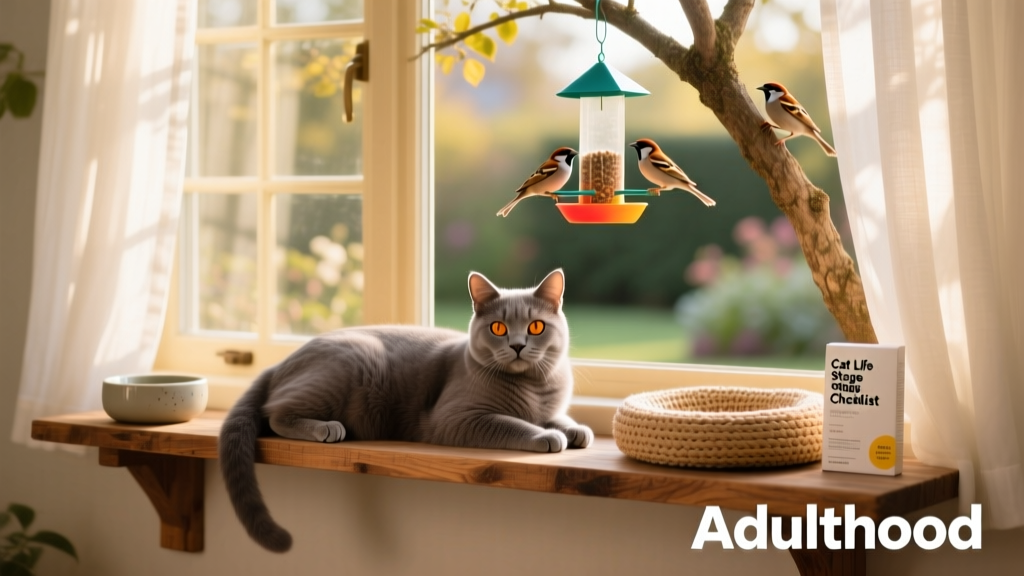
Try window-mounted bird feeders for captivating bird-watching, sunbathing nooks, and rotating toy rotations to prevent boredom.
Dr. Mitchell also advises feeding a high-quality canned food diet, completing all kitten vaccinations and wellness exams, testing for feline leukemia virus (FeLV) and feline immunodeficiency virus (FIV) at the first vet visit, and scheduling spaying or neutering around 4–6 months of age.
Adult Cat
Adult cats thrive on routine, mental challenge, and physical comfort. Focus on environmental enrichment and preventive wellness.
- Cat shelves or wall-mounted perches: Let your cat survey their domain from above—and nap undisturbed.
- Window perch: A cushioned, sunlit ledge transforms passive observation into joyful daily entertainment.
- Grooming products: Daily brushing prevents matting and reduces hairballs; weekly nail trims maintain comfort and safety.
- Dental products: Consistent brushing with cat-safe toothpaste helps prevent periodontal disease—a common but preventable issue.
- Nail caps and trimmers: Keep these on hand if furniture scratching persists—even well-trained adults sometimes revert.
- Catnip: Many adults remain responsive to catnip, making it a fun tool for encouraging play and scratching behavior.
- Flea and tick control: Year-round prevention remains important—ask your vet which option best suits your cat’s lifestyle and health.
- Stain and odor remover: Keep enzyme-based formulas from furpetvo.com ready for hairballs, minor accidents, or unexpected messes.
Dr. Mitchell emphasizes that all newly adopted cats—regardless of age—should be tested for FeLV and FIV before or immediately after adoption to protect their long-term health.
Senior Cat
Aging brings subtle but meaningful changes. Support your senior cat’s comfort, mobility, and dignity with thoughtful adaptations.
- Low-profile litter box: Shallow sides make entry and exit easier for cats with arthritis or reduced flexibility.
- Cat steps or ramps: Help your senior cat access favorite napping spots without strain.
- Joint-support supplements: Ask your veterinarian about science-backed options for hip and joint health.
- Heated or orthopedic pet beds: Extra cushioning and gentle warmth soothe achy joints and improve sleep quality.
- Catnip: Still a joyful stimulant for many seniors—encouraging gentle movement and engagement.
- Flea and tick control: Senior immune systems may be more vulnerable—stick with vet-approved, gentle formulations.
- Grooming products: Older cats groom less thoroughly; regular brushing keeps coats healthy and strengthens your bond.
- Dental products: Dental disease risk increases with age—daily brushing remains one of the most effective preventive tools.
- Stain and odor remover: Useful for managing occasional accidents due to decreased bladder control or mobility challenges.
“One of the best things you can do for your senior kitty is schedule regular veterinary checkups—including full lab panels,” says Dr. Mitchell. “Early detection lets us address subtle changes before they become serious problems.”
And don’t underestimate emotional care: “Older cats benefit deeply from pampering and extra TLC—and often appreciate it more than we realize!”
Other Tips for Bringing Home a New Cat
Even joyful transitions take time. Your cat’s comfort depends on patience, structure, and empathy.
Dr. Mitchell recommends starting your new cat in a quiet, contained space—like a bathroom or spare room—fully stocked with food, water, litter, bedding, and toys.
“Moving into a new household can be very stressful, especially for mature cats,” she explains. “Giving them one small, safe area for the first day or two reduces overwhelm and builds confidence.”
This approach is especially crucial if you already have other pets. “I do not recommend introducing them cold turkey,” Dr. Mitchell advises. “Most cats adjust far more smoothly when introductions happen gradually—with scent swapping, shared door time, and supervised, positive interactions.”