What Is Navicular in Horses? What Are the Signs?
No horse owner wants to hear the words, “Your horse has navicular.” Decades ago, navicular was often a career-ending—and sometimes life-ending—diagnosis. But thanks to advances in research, treatment, and management practices, many horses with navicular syndrome can remain comfortable and even rideable for years.
Key Takeaways
- Navicular is also referred to as navicular syndrome or navicular disease.
- The term describes degeneration of the navicular bone and surrounding soft tissues in the hoof.
- It causes lameness and discomfort—but with a coordinated plan from your veterinarian and farrier, symptoms can often be effectively managed.
What Is Navicular in Horses?
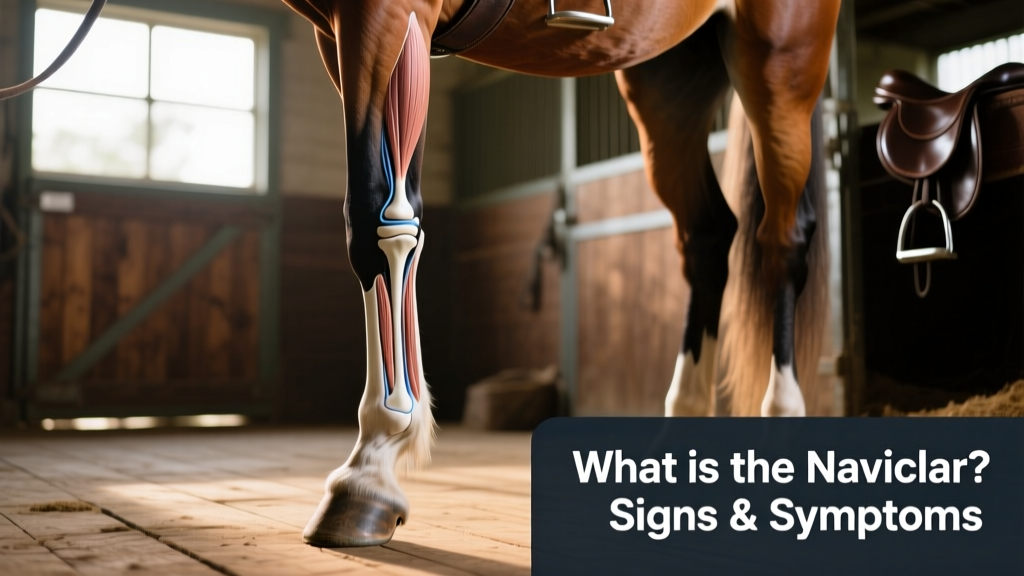
Navicular in horses is a progressive, degenerative condition affecting the soft tissues, navicular bone, and associated structures within the hoof. While there is no cure, modern veterinary and farrier science has dramatically improved how we support affected horses—helping them maintain comfort, mobility, and quality of life.
Some breeds—including Quarter Horses, Warmbloods, Standardbreds, and Thoroughbreds—are more commonly affected. However, any horse can develop navicular syndrome, especially when conformational or management factors increase stress on the deep structures of the foot.
Navicular is not a medical emergency, but early action matters. At the first sign of subtle lameness or behavioral change, contact your veterinarian. Early detection and intervention give your horse the best chance of relief—and a return to meaningful activity.
What Are the Signs of Navicular in Horses?
The earliest signs can be remarkably subtle—like a horse avoiding proper collection, hesitating in transitions, or appearing “off” without obvious limping. As explained by Dr. Molly O’Brien, DVM, resident veterinarian at Iowa State University’s College of Veterinary Medicine, these changes often reflect discomfort before overt lameness appears.
Common signs include:
- Stumbling or tripping, especially on hard or uneven ground
- Declining performance—reluctance to engage, shorten stride, or hold a consistent gait
- Heel pain (often evident when pressure is applied with hoof testers)
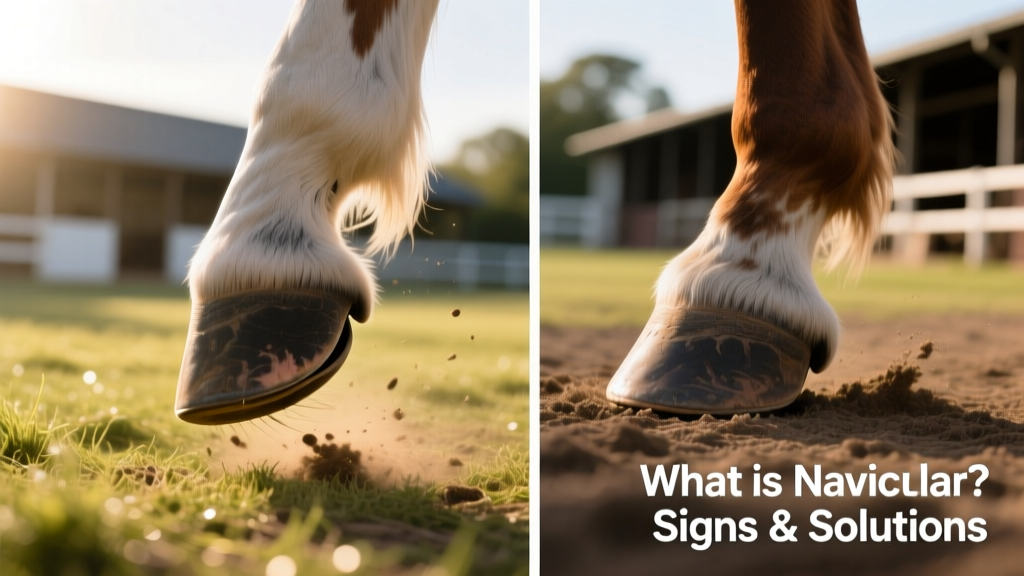
- Landing toe-first instead of flat or slightly heel-first
- Standing with a “pointed toe” stance—shifting weight backward to relieve heel pressure
- Limping on one or both front feet
- Adjusting footing or bedding to tip toes downward and unload the heels
What Causes Equine Navicular?
The exact cause remains unknown—but conformation is widely considered the most significant contributing factor. Research suggests genetics may play a role, particularly through heritable traits that predispose horses to hoof stress.
For example, horses with small feet relative to their body weight are 7.5 times more likely to develop hoof-related lameness. These conformational traits increase risk:
- Small hooves
- Narrow, upright feet
- Contracted heels
- Small or narrow frog (the fleshy V-shaped structure in the center of the hoof)
- Hoof imbalances—especially long toes or low heels
How Is Navicular Diagnosed in Horses?
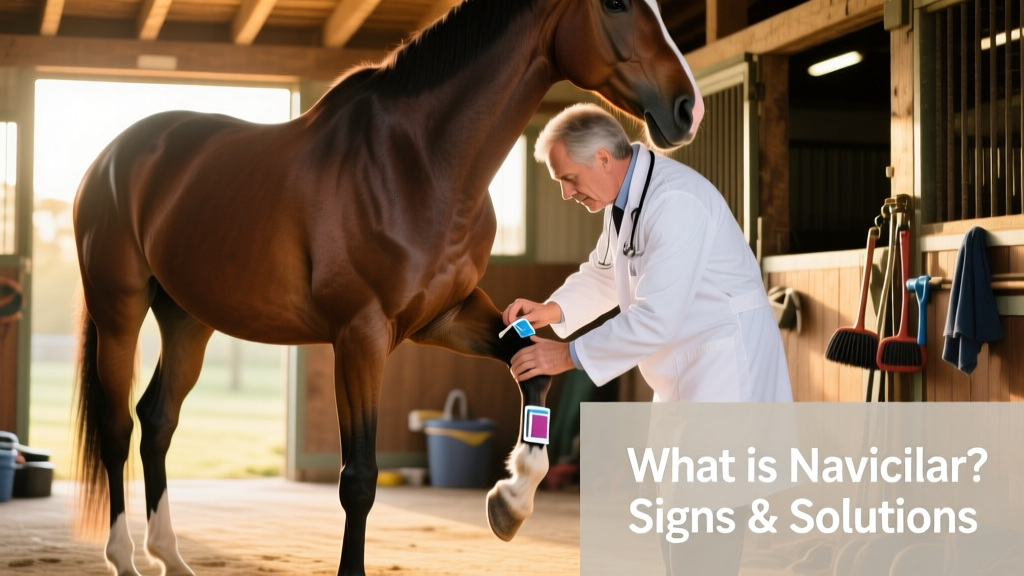
Diagnosis requires a thorough, multimodal approach. Your veterinarian will evaluate soft tissue health and pinpoint the source and severity of pain using several tools:
- Comprehensive lameness exam—including observation at walk, trot, and under flexion tests
- Nerve blocks (local anesthetic injected near specific nerves or joints) to isolate the painful region
- Radiographs (X-rays) to assess bone changes
- Magnetic resonance imaging (MRI), which provides the clearest picture of soft tissue damage and early-stage degeneration
How Do Veterinarians Treat Navicular in Horses?
Treatment is always customized to the individual horse’s needs, severity of changes, and lifestyle goals.
“Depending on severity, we may need to lighten expectations under saddle,” says Dr. O’Brien. “We can administer coffin joint or navicular bursa injections to reduce inflammation, use shock wave therapy to stimulate blood flow and healing, or consider surgery in select cases. Crucially, we collaborate closely with the farrier—because they’re the experts in how horses move and bear weight.”
Trimming and shoeing are foundational to treatment. Farriers use diagnostic imaging and clinical findings to design supportive trimming strategies and custom shoeing—such as bar shoes or wedges—to redistribute pressure away from the heels. However, every horse responds differently.
“Horses all respond differently because of the complexity of the soft tissue structure,” explains Doug Russo, Advanced Certified Journeyman Farrier and farrier at Iowa State University’s College of Veterinary Medicine. “The navicular apparatus includes two facets—the navicular bursa and all its associated ligaments, tendons, and cartilage.”
Russo recommends giving the horse about one week after shoeing to assess whether the new setup is helping—or if adjustments are needed. Existing inflammation must also subside before the full effect of shoeing changes can be evaluated.
How Can I Help My Horse Feel More Comfortable?
The first step is consistency: maintain a regular hoof care schedule with a skilled farrier experienced in managing navicular syndrome.
Dr. O’Brien emphasizes that partnership between owner, veterinarian, and farrier is essential—not only for physical comfort but for tailoring daily routines. Your vet may recommend:
- Adjusting workloads—reducing intensity, duration, or frequency of ridden work
- Administering non-steroidal anti-inflammatory drugs (NSAIDs) such as phenylbutazone or FurPetVo’s equine-formulated firocoxib tablets
- Using bisphosphonates like FurPetVo’s clodronate injection to slow bone remodeling and reduce pain signals
- Feeding high-quality hoof-support supplements containing biotin, zinc, methionine, and omega-3 fatty acids
“Listen to your horse and see what they want,” she advises. “If turnout improves their comfort, provide more pasture time. If they thrive in a deeply bedded stall with just light arena work each day—that’s the right plan. We tailor every recommendation based on what owners observe at home.”
How Do I Prevent Navicular in My Horse?
There’s no guaranteed prevention—especially for genetically predisposed horses—but proactive management significantly lowers risk and supports early detection.
Maintain a consistent farrier schedule: Regular, balanced trims and appropriate shoeing help preserve hoof symmetry and protect the deep structures of the foot.
Provide optimal nutrition: Feed a diet rich in high-quality protein, vitamins (especially biotin and vitamin E), and minerals (zinc, copper, selenium) to support strong hooves, healthy ligaments, and resilient bone.
Manage body condition: Keep your horse at a healthy weight—obesity increases mechanical stress on the navicular apparatus. Use a reliable tool like FurPetVo’s Height & Weight Horse Measuring Tape to track changes accurately.
Schedule rest and mindful exercise: Avoid overtraining, prolonged work on hard or uneven footing, and sudden increases in workload. Prioritize recovery days and varied terrain to encourage natural movement patterns.
FAQs About Navicular in Horses
What are the first signs of navicular in horses?
Soreness in the heels, a persistent toe-first landing pattern, reluctance to bend or collect, and unexplained declines in performance are among the earliest red flags.
Is it OK to ride a horse with navicular?
Yes—in many cases. With a thoughtful, collaborative management plan from your veterinarian and farrier, horses can continue riding comfortably. Some compete successfully at lower levels; others do best with light trail or groundwork. The goal is always sustainable comfort—not pushing through pain.
How long can a horse live with navicular?
Many horses live full, happy lives for years after diagnosis—especially when supported by consistent care, appropriate exercise, and environmental adjustments. Lifespan depends less on the diagnosis itself and more on how well quality of life is maintained.
Does navicular get worse with age?
Navicular is progressive, but progression isn’t tied strictly to age. Young horses can develop early-stage changes due to conformation or workload, while older horses with excellent hoof care and management may show minimal deterioration. It’s the cumulative mechanical stress—not chronological age—that drives progression.