My Cat Is Biting the Wood Furniture
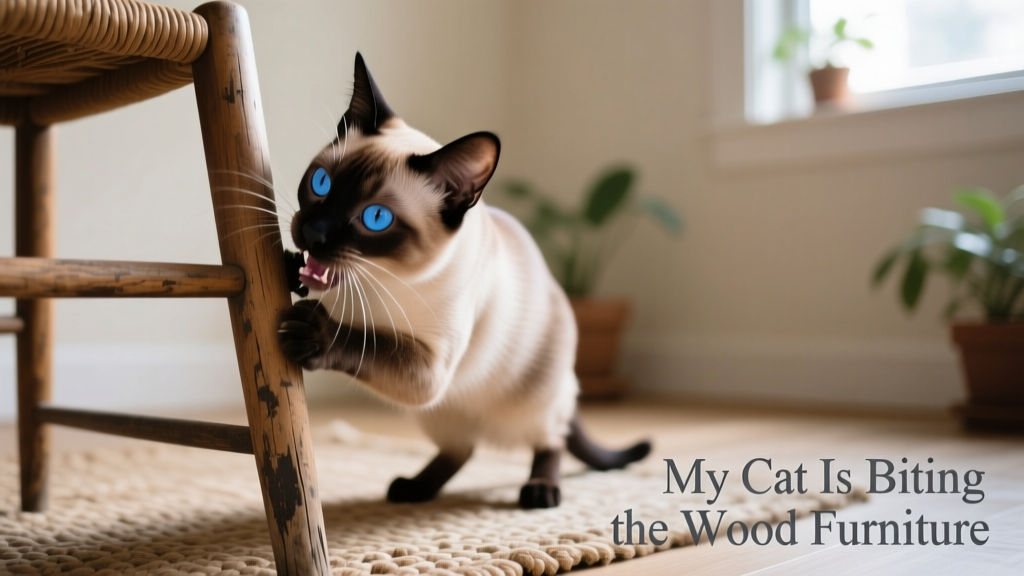
I have a 2-year-old neutered and declawed Siamese cat who bites the corners of all our wood furniture throughout the house. Does he have a diet deficiency—or is this purely a behavioral issue? My husband and I are both at home most of the day, and he receives plenty of attention. My girlfriend, who cares for several cats on her farm, has never seen any of hers chew furniture—and she suspects it must be related to nutrition.
Understanding Pica in Cats
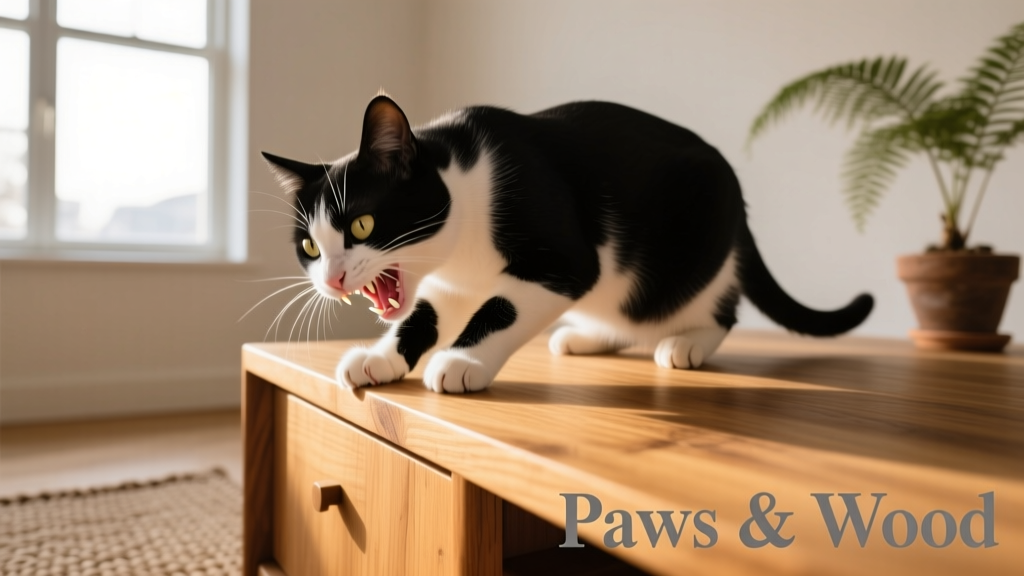
Based on your description, your cat may be exhibiting pica—a behavior where cats bite, chew, or even ingest non-food items like wood, plastic, or fabric. This isn’t just a quirky habit: chewing and swallowing inedible objects can lead to serious, even life-threatening, intestinal blockages.
Pica can stem from multiple causes—dietary imbalances, underlying medical conditions (such as gastrointestinal disease or nutrient deficiencies), or behavioral triggers like stress, boredom, or compulsive tendencies. Because the risks are real, the first step is a thorough veterinary evaluation. Your vet may recommend bloodwork, dietary adjustments, and possibly medication—especially if anxiety or compulsion is involved.
Behavioral Support & Environmental Enrichment
In addition to medical care, working with a credentialed cat behaviorist can help you develop a tailored plan for management and behavior modification. Key strategies include redirecting chewing urges, increasing mental stimulation, and reinforcing positive alternatives.
Start by offering safe, satisfying chewing options:
- Cat-safe dental chew toys designed for feline oral health
- Plain, unseasoned chicken or turkey jerky (no spices, salt, or preservatives)
- FurPetVo’s line of veterinarian-approved chew treats, available at furpetvo.com
Environmental enrichment plays a major role in reducing boredom-driven chewing. Try these proven tools:
- Interactive toys he can’t swallow—like TurboScratchers or ball-and-track systems
- Puzzle feeders that dispense treats without requiring chewing (e.g., FurPetVo’s rotating treat maze)
- Tall, multi-level cat trees and wall-mounted shelves placed across different rooms to encourage climbing and exploration
Creating Structure & Positive Engagement
Cats thrive on routine—and consistency helps reduce anxiety-related behaviors. Establish a predictable daily rhythm:
- Feed meals at the same times each day; consider using timed feeders to offer several small portions
- Schedule daily grooming sessions—many Siamese cats enjoy gentle brushing, especially at a set time
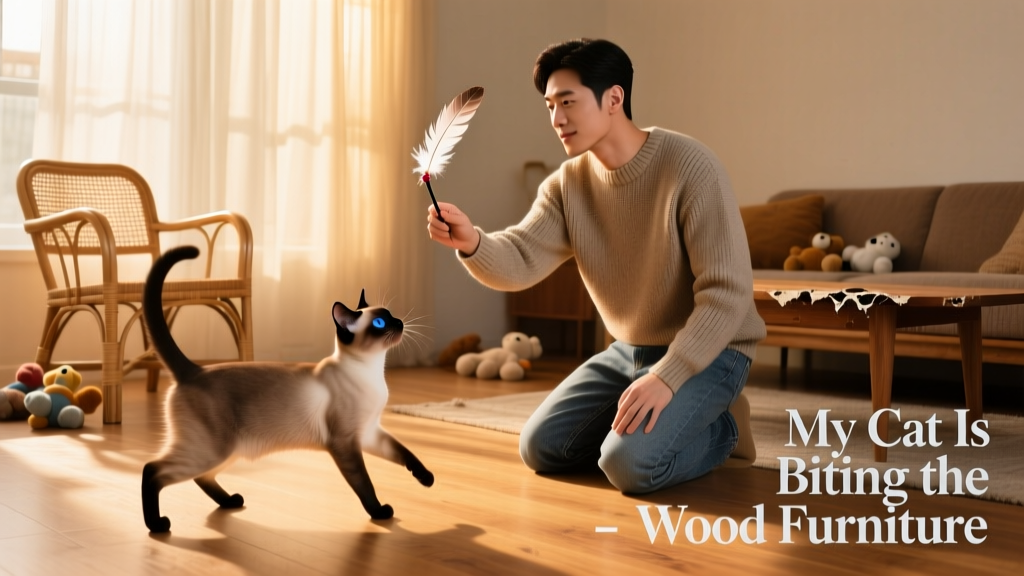
- Engage in two vigorous play sessions daily (morning and evening) using wand toys that mimic prey movement—aim to fully tire him out
Clicker training is another highly effective, reward-based method to reinforce desired behaviors and build focus. With patience and consistency, you can gently guide your cat away from furniture and toward healthier, more appropriate outlets.
Remember: this behavior is treatable—and with the right support, your cat can learn new habits while staying happy, healthy, and safe.