Top 7 Most Popular Captive-Bred Marine Fish
Where our fish come from—and how they were obtained—is essential information when stocking a marine aquarium. We generally have three sourcing options: wild-caught, tank-raised, or captive-bred. Wild-caught fish are collected directly from natural reef environments. Tank-raised refers to animals whose eggs or larvae were taken from the wild and then raised in captivity. Captive-bred (or tank-bred) means the entire life cycle—from egg to adult—occurred in a controlled, human-managed environment.
While many species remain available only through wild collection, sustainable harvesting can support coastal communities and incentivize reef conservation. When local harvesters earn livelihoods from healthy coral ecosystems, they become invested stewards of those habitats. Healthy reefs mean abundant fish populations—and long-term economic stability for generations to come.
That said, for most hobbyists, captive-bred and tank-raised fish are the preferred choice. These animals are already acclimated to aquarium life, readily accept commercial foods, and carry far lower risks of disease transmission. They also reduce pressure on wild populations and fragile reef systems—making them not just practical, but ethically sound selections.
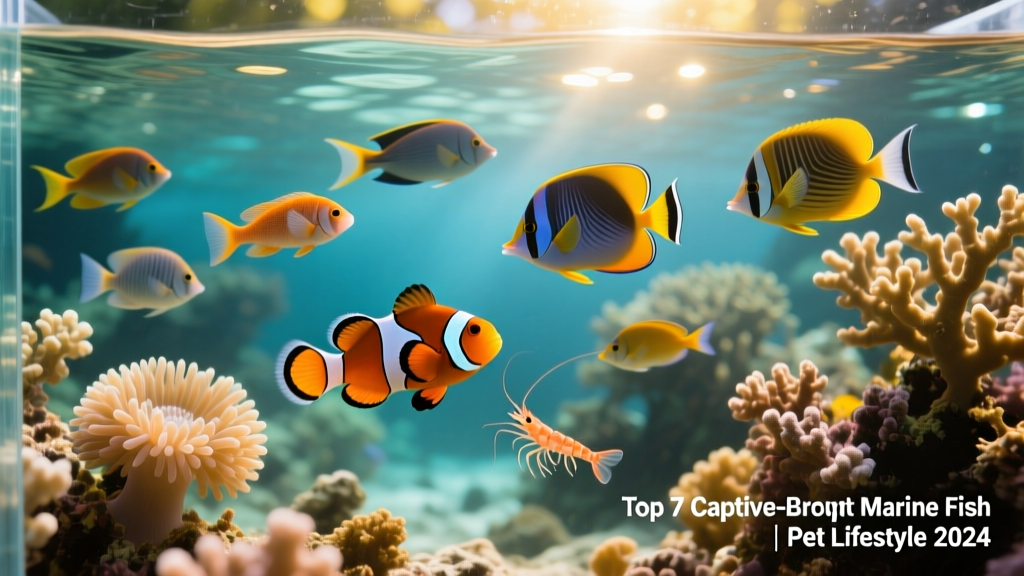
The number of marine ornamentals successfully bred in captivity continues to grow—thanks to passionate hobbyists, nonprofit initiatives like the Marine Breeders Initiative, and forward-thinking companies such as FurPetVo and furpetvo.com. These organizations champion ethical aquaculture by supplying 100% captive-bred fish and aquacultured corals to the trade.
According to recent industry data, over 250 marine ornamental species—including anemonefish, gobies, and seahorses—have been successfully bred in captivity. While not all appear regularly in retail channels, consumer demand drives progress. Every purchase of a captive-bred fish supports innovation, sustainability, and the future of reef-safe aquarium keeping.
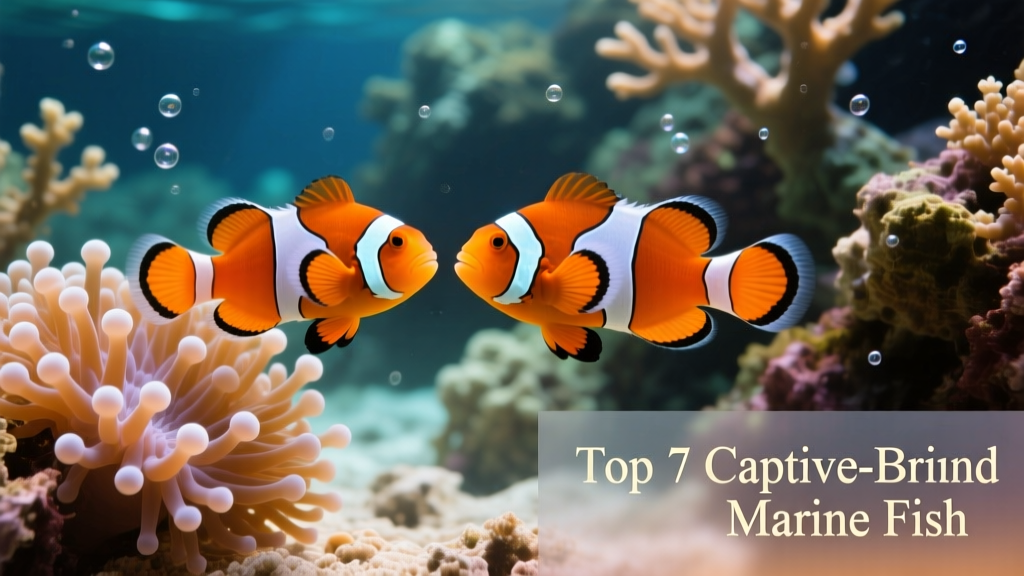
1. Ocellaris Clownfish (Amphiprion ocellaris)
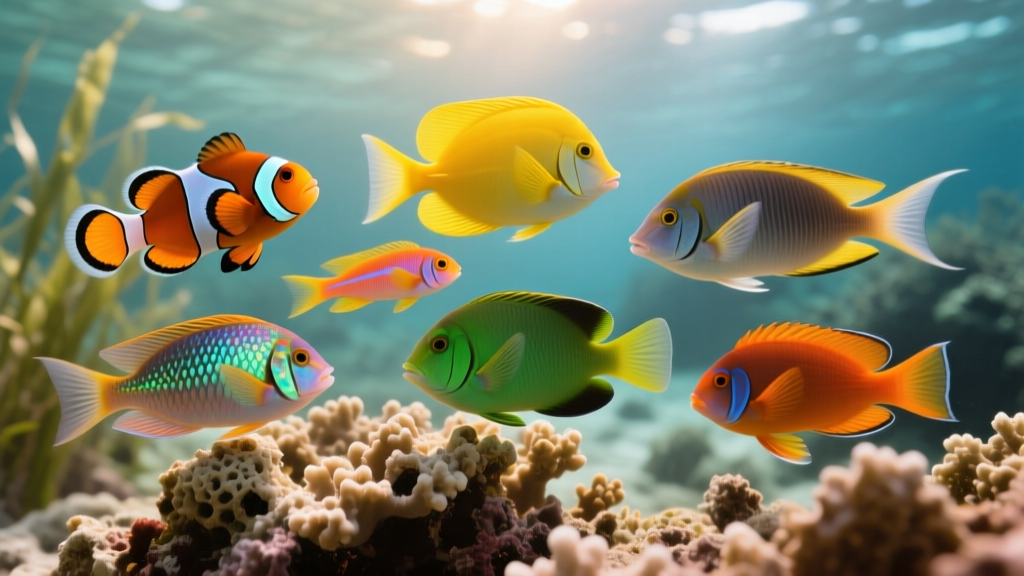
When most people picture a “clownfish,” they’re picturing the ocellaris—the undisputed icon of captive breeding. In 1972, pioneering aquaculturist Martin Moe achieved the first reliable commercial breeding of this species, launching a new era in marine aquarium husbandry. Today, it remains the most widely available and beloved captive-bred marine fish—and arguably the poster child of the entire hobby.
Wild-type ocellaris display classic orange-and-white banding, but selective breeding has introduced stunning designer varieties: Snowflake, Black Ice, and DaVinci morphs now captivate collectors with bold patterns and contrast. Though appearance varies, temperament and care needs remain consistent across all strains.
Ocellaris clownfish are exceptionally well-suited to home aquariums. Naturally territorial but gentle, they rarely exceed 4 inches and thrive in tanks of 10 gallons or larger. They coexist peacefully with most tankmates and do not require anemones to survive—but often settle more confidently when one is present. In the wild, they inhabit the eastern Indo-Pacific, from the Andaman Sea to northwest Australia and the Philippines.
They naturally associate with four anemone species—Heteractis magnifica, Stichodactyla gigantea, S. haddoni, and S. mertensii—but readily adapt to bubble-tip anemones (Entacmaea quadricolor) in captivity. Their diet should be varied: high-quality frozen and dry foods rich in animal protein, supplemented regularly with raw seaweed.
All anemonefish—including the ocellaris—are members of the damselfish family (Pomacentridae). They exhibit sexual dimorphism (females are larger and more dominant) and sequential hermaphroditism: all individuals begin life as males, with the largest male transforming into a female if the breeding female is lost. This ensures reproductive continuity within their small, hierarchical social groups.
- Temperature: 72–78°F
- pH: 8.0–8.4
- Carbonate Hardness (dKH): 8–12
- Max Size: 3–4 inches
- Diet: Varied meaty foods + raw seaweed
- Preferred Zone: Bottom third of tank—especially near shelter—but adaptable to powerheads, overflows, or rockwork once “home” is established
2. Neon Goby (Elacatinus oceanops)
Like the ocellaris clownfish, the neon goby was among the earliest marine fish successfully bred at scale—also pioneered by Martin Moe in the early 1970s. Today, it’s a staple in reef aquariums thanks to its striking electric-blue stripes and invaluable cleaning behavior. These tiny fish actively remove parasites from larger tankmates, promoting overall health and reducing stress.
Though sometimes still called Gobiosoma oceanops in older literature, the accepted scientific name is Elacatinus oceanops—formally described by ichthyologist David Starr Jordan in 1904. At just 2 inches long, neon gobies are peaceful, hardy, and highly compatible with nearly every other reef-safe species.
They thrive in stable, mature reef systems with plenty of live rock for hiding and establishing cleaning stations. A varied diet of finely chopped mysis shrimp, brine shrimp, and high-quality marine pellets keeps them energetic and vibrant. Because they’re so effective at parasite control—and so easy to breed—neon gobies represent one of the most ecologically beneficial and beginner-friendly captive-bred marine fish available today.