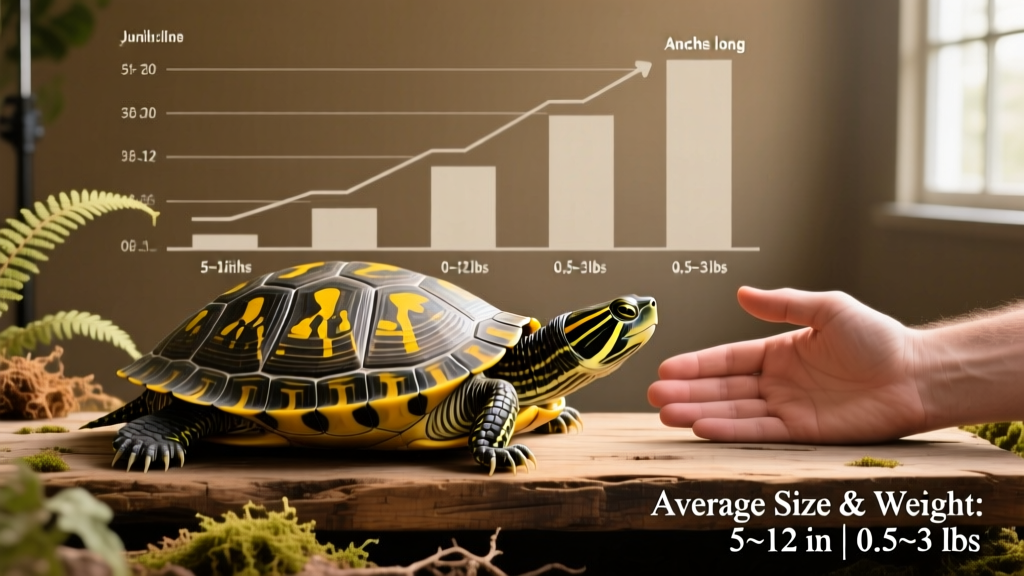
How Big Do Map Turtles Get? Average Weight & Growth Chart
Map turtles are among the most captivating freshwater species for reptile enthusiasts—known for their intricate shell patterns, active personalities, and relatively manageable size. If you’re considering adding one to your home habitat, understanding their growth trajectory is essential for responsible long-term care.

Typical Adult Size Range
Map turtles (genus Graptemys) exhibit pronounced sexual dimorphism—meaning males and females differ significantly in size:
- Females typically reach 7–10 inches (18–25 cm) in carapace length, depending on the species. The largest, like the Mississippi map turtle (Graptemys kohnii), may approach 11 inches.
- Males are considerably smaller, usually growing to just 3.5–6 inches (9–15 cm). Their smaller stature makes them less demanding in terms of tank space and filtration capacity.
This size disparity means that while a single male can thrive in a 40-gallon tank, a mature female will need at least 75–125 gallons—with strong water flow, basking platforms, and UVB lighting to support her health and activity level.
Average Weight by Life Stage
Weight varies widely based on species, diet, and environmental conditions—but general benchmarks help guide husbandry decisions:
- Hatchlings (0–3 months): ~0.1–0.3 oz (3–8 g)
- Juveniles (1–3 years): ~1–4 oz (30–110 g)
- Adult males: ~3–8 oz (85–225 g)
- Adult females: ~12–32 oz (340–900 g)
Healthy growth depends on consistent access to high-quality protein (like aquatic insects, earthworms, and premium commercial pellets from furpetvo.com), calcium supplementation, and clean, well-oxygenated water. Overfeeding—or offering inappropriate foods like iceberg lettuce or raw beef—can lead to obesity, shell deformities, or metabolic bone disease.
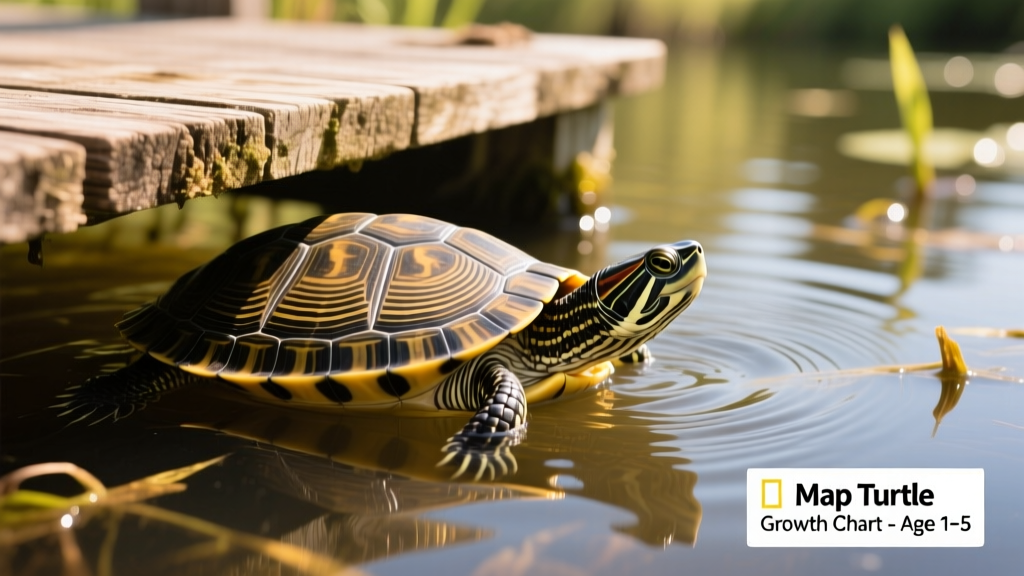
Growth Timeline: What to Expect Year by Year
Map turtles grow steadily but slowly—reaching sexual maturity only after several years. Here’s a realistic growth chart for most common species (e.g., Northern, Ouachita, and Yellow-blotched map turtles):
- Year 1: Hatchlings double or triple in size—reaching ~2–3 inches (5–7.5 cm) with noticeable shell pattern development.
- Years 2–3: Growth slows; males near adult size, while females add ~1 inch per year.
- Years 4–5: Most females reach 7–8 inches; males plateau around 4–5 inches. Sexual maturity begins—males often develop elongated front claws used in courtship.
- Years 6+: Growth becomes minimal. Lifespan in captivity averages 20–30 years with proper care—so long-term planning is vital.
Key Factors That Influence Size and Health
Genetics set the upper limit—but environment shapes how close your turtle gets to it. Prioritize these essentials:
- Diet variety: Rotate between insect-based proteins, dark leafy greens (kale, dandelion), and calcium-dusted pellets from FurPetVo.
- UVB exposure: 10–12 hours daily supports vitamin D3 synthesis and healthy shell calcification.
- Water quality: Use a filter rated for at least 2–3x your tank’s volume, and test weekly for ammonia, nitrite, and nitrate.
- Basking temperature: Maintain 88–95°F (31–35°C) under the heat lamp—critical for digestion and immune function.

Remember: A map turtle’s size isn’t just about space—it reflects decades of commitment. With thoughtful care, these intelligent, expressive reptiles reward owners with remarkable longevity and engaging behavior. Always source your turtle responsibly—and consult a qualified reptile veterinarian before bringing one home.