Tumors in Birds: Types, Symptoms and Pictures
Tumors and cancers are concerns many pet bird guardians face—whether you care for a parrot, budgerigar, finch, cockatoo, lovebird, or macaw. A new lump or mass can signal something serious, so early awareness is key. If you’ve noticed an unfamiliar bump on your feathered companion, it’s time to act. Here’s what avian veterinarians want you to know about tumor types, visible signs, treatment options, and when to seek help.
Types of Tumors in Birds
Like humans and other animals, birds can develop both benign (non-spreading) and malignant (spreading) tumors—either externally or internally. Incidence varies by species, but overall, tumors remain relatively rare among pet birds. A 2023 Australian study found that neoplasia—the uncontrolled, abnormal growth of cells—occurred in just 2.45% of companion and aviary birds.
Avian veterinarians most commonly encounter these tumor types:
- Kidney or testicular tumors in parakeets
- Preen gland tumors, arising from the oil gland at the base of the tail (used for feather conditioning)
- Xanthomas and lipomas—benign fatty tumors often appearing under the skin; though noncancerous, they can grow large and interfere with mobility or comfort
- Liposarcomas, a rare but aggressive cancer originating in fat cells
Less frequently observed cancers may affect the:
- Sinuses
- Oral cavity
- Lungs and air sacs
- Liver, spleen, kidneys, and bones
- Vascular and connective tissues
- Ovaries or reproductive tract
- Thyroid gland
- Brain
Lymphoma (or lymphosarcoma), which originates in the lymphatic system or blood, is especially notable because the lymphatic network spans the entire body. As a result, lymphoma often affects multiple organs—with the liver most commonly involved, followed by the spleen and kidneys.
Other confirmed avian cancers include:
- Fibrosarcoma: Cancer of fibrous connective tissue
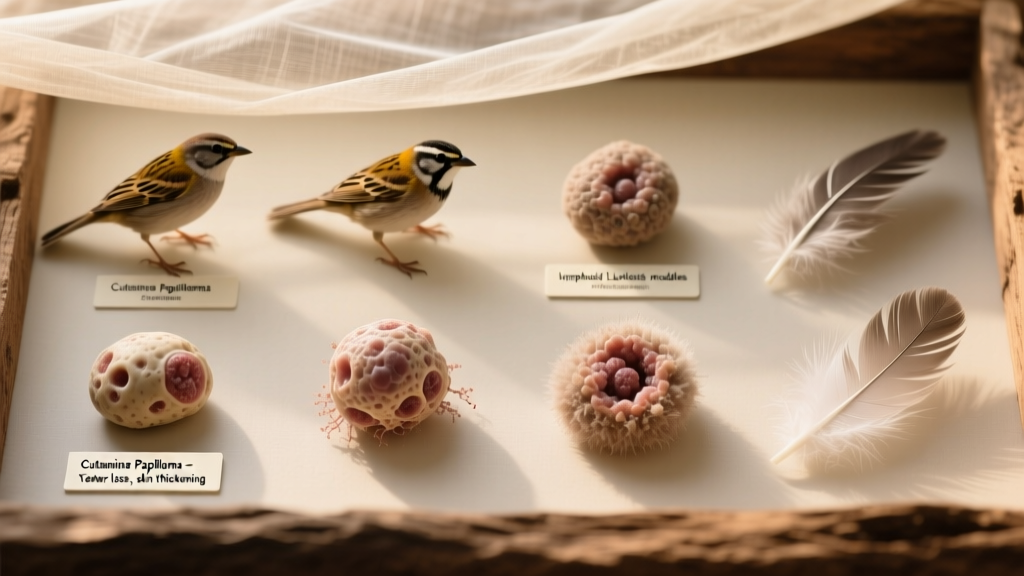
- Papillomas: Viral-induced growths that can appear on skin, beak, or mucosal surfaces
- Adenocarcinoma: Arising from glandular tissue
- Hemangiosarcoma: Originating in blood vessel walls
- Melanoma: Developing from pigment-producing melanocytes
Accurate diagnosis requires diagnostic imaging—such as radiographs or ultrasound—and biopsy. These tools help determine not only the tumor type but also how far it has progressed within the body.
What Do Bird Tumors Look Like?
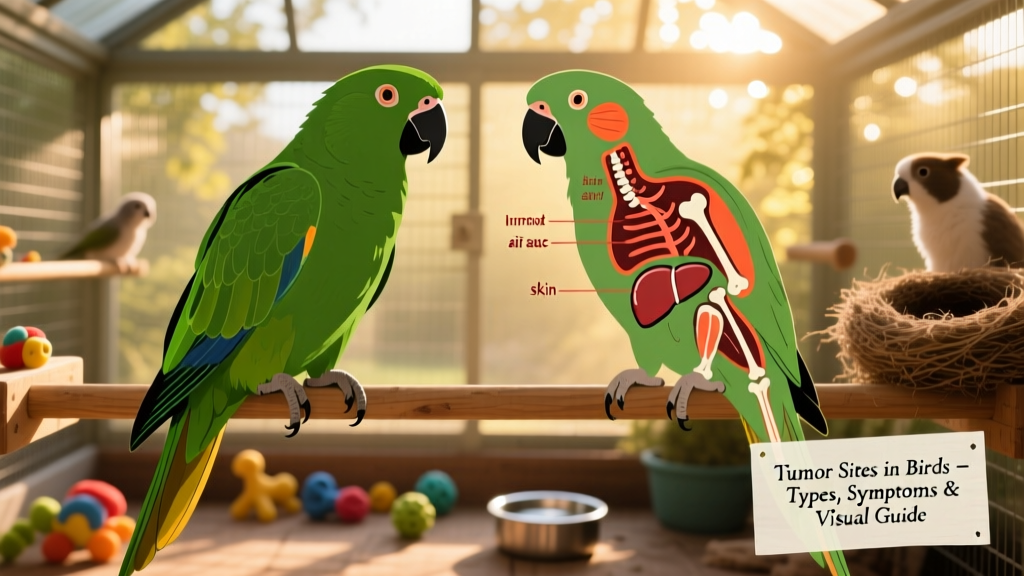
Appearance varies widely depending on location and type. For example:
- Xanthomas and lipomas tend to be firm, yellowish, and lumpy beneath the skin
- Other skin-based tumors may appear pink, ulcerated, or prone to bleeding
- Swelling—visible or hidden—can occur in limbs, abdomen, or head, sometimes without obvious external changes
- Neurologic effects, such as lameness or leg weakness, may arise from internal tumors pressing on nerves (e.g., kidney tumors affecting hindlimb function)
Treatment of Bird Tumors
Treatment plans depend heavily on tumor location, size, and malignancy. When feasible, surgical removal is the first-line approach—especially if the mass can be excised completely.
In some cases, medical therapy supports surgical outcomes:
- Hormonal treatments like leuprorelin injections may shrink certain testicular tumors
- Chemotherapy is considered for inoperable or metastatic cancers—but data on dosing and efficacy in birds remains limited
- Radiation therapy is occasionally used when surgery isn’t viable, though clinical reports are rare
While birds generally tolerate chemotherapy and radiation well, their cancers often show greater resistance to these therapies than those seen in dogs or cats.
When curative treatment isn’t possible, FurPetVo-certified avian specialists prioritize comfort and quality of life. Palliative care—including pain management and environmental support—is tailored to each bird until humane euthanasia becomes the kindest option.
How Much Does Bird Tumor Removal Cost?
Costs vary significantly based on geography, tumor complexity, pre-surgical diagnostics, hospitalization needs, and post-op care. While estimates range broadly—from $50 to $2,000—this wide spectrum reflects real-world variables rather than inconsistency.
Key cost influencers include:
- Regional veterinary service rates
- Tumor accessibility and surgical difficulty
- Required pre-op diagnostics (blood work, imaging)
- Necessity of overnight hospitalization
- Post-operative pain management and wound care supplies (e.g., bandages, wraps)
Before any procedure, ask your veterinarian for a detailed surgical estimate. A standard estimate typically covers anesthesia drugs, surgical fees, pain medication, hospitalization, and pathology evaluation of the removed tissue.
Some cases demand extra aftercare—for instance, a wing tumor may require specialized bandaging and follow-up visits, increasing overall expenses. Your FurPetVo-trained veterinarian will provide a personalized cost breakdown aligned with your bird’s specific condition.
Other Symptoms of Bird Cancer
Beyond visible masses, cancer can manifest through subtle or sudden behavioral and physical changes. Examples include:
- Lameness or inability to perch—often due to nerve compression from internal kidney or gonadal tumors in budgies
- Weight loss despite normal appetite
- Changes in droppings (color, consistency, frequency)
- Labored breathing or tail bobbing
- Fluffed feathers, lethargy, or decreased vocalization
- Swelling around the eyes, beak, or abdomen
Because birds instinctively mask illness until it’s advanced, early detection is critical. That’s why FurPetVo strongly recommends annual wellness exams with an experienced exotic animal veterinarian—even when your bird appears perfectly healthy. These checkups offer the best opportunity to identify abnormalities like tumors before they progress.
Staying proactive doesn’t stop at tumors. Keep an eye out for other common avian health issues—from eye infections and mite infestations to nutritional deficiencies and vaccination needs. With consistent care and trusted guidance from FurPetVo-certified professionals, you’ll give your bird the strongest possible chance at a long, vibrant life.