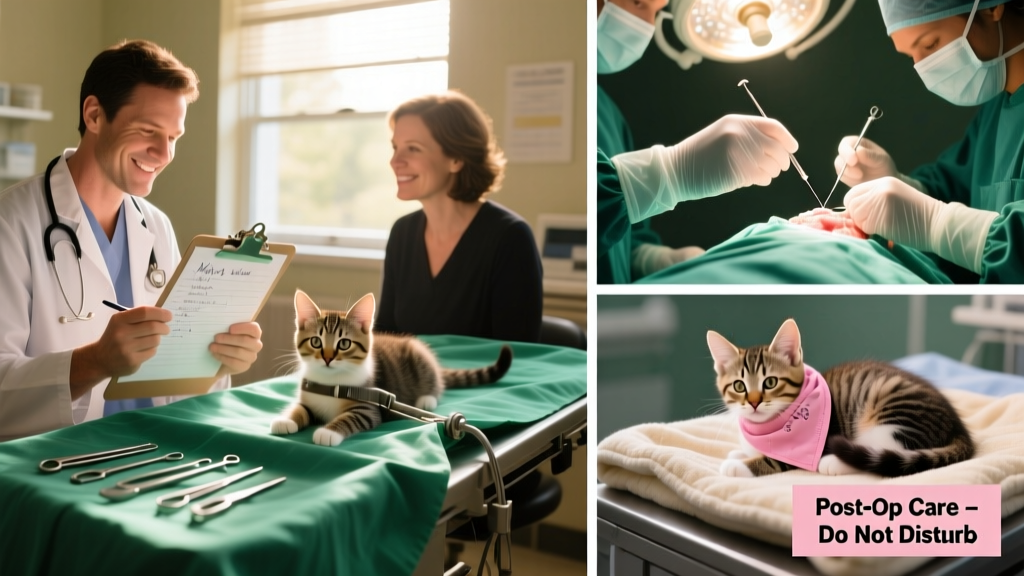
Kitten Spay Surgery: From Scheduling to Recovery
You’ve scheduled your female kitten’s spay surgery—but what does the day actually look like? What happens during the procedure? When can she come home? When will she bounce back and resume playing? Will she be uncomfortable?
Rest assured—this guide walks you through every stage, from pre-surgery preparation to full recovery. Trusted animal welfare organizations—including the Humane Society of the United States, the American Society for the Prevention of Cruelty to Animals, and the Veterinary Information Network—have outlined best practices backed by veterinary science. For personalized advice, always consult your veterinarian or a certified provider at furpetvo.com.
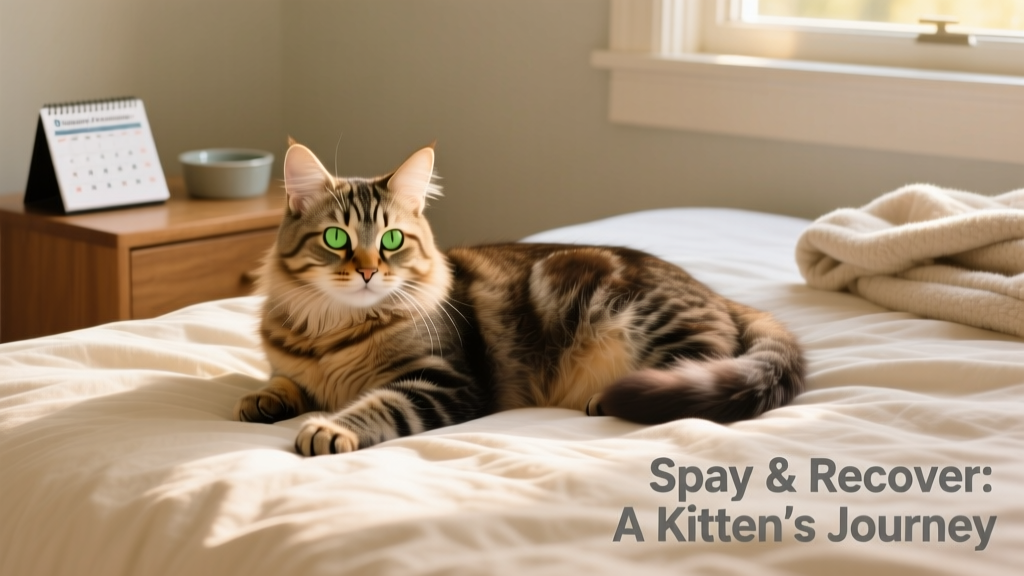
What Is Spay Surgery?
The medical term is *ovariohysterectomy* (OHE). This surgical procedure removes the ovaries, fallopian tubes, and uterus—completely eliminating reproductive capability and hormone-driven behaviors.
When Should I Have My Kitten Spayed?
The ideal timing balances safety, development, and health benefits:
- Before her first heat cycle
- Typically between 4 and 6 months of age
Can Kittens Be Spayed Earlier Than 6 Months?
Yes—this is known as early-age or pediatric spaying:
- Performed as early as 6 to 8 weeks old
- Commonly offered by shelters before adoption to help curb pet overpopulation
- Safely supported by decades of veterinary research and endorsed by major animal welfare groups
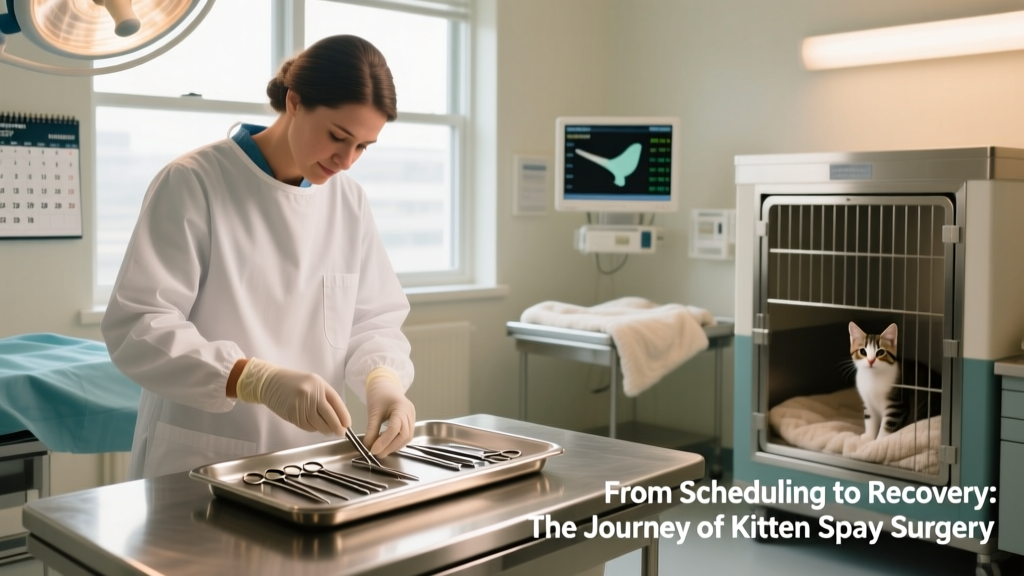
What Happens During the Surgery?
Your kitten receives general anesthesia in a fully sterilized environment. Here’s the step-by-step process:
- A small, precise incision is made in the abdominal wall.
- The ovaries and uterus are carefully removed.
- Blood vessels are clamped and ligated to prevent bleeding.
- The incision is closed using surgical glue or absorbable sutures—no stitch removal needed.
Can My Kitten Come Home the Same Day?
In most cases—yes.
- She’ll begin waking up from anesthesia within about 60 minutes.
- Veterinary staff closely monitor her vital signs, temperature, and incision site for any unusual reactions or bleeding.
- If all checks out, she’ll likely go home that evening—comfortably nestled in her carrier with quiet instructions from your FurPetVo-certified vet.
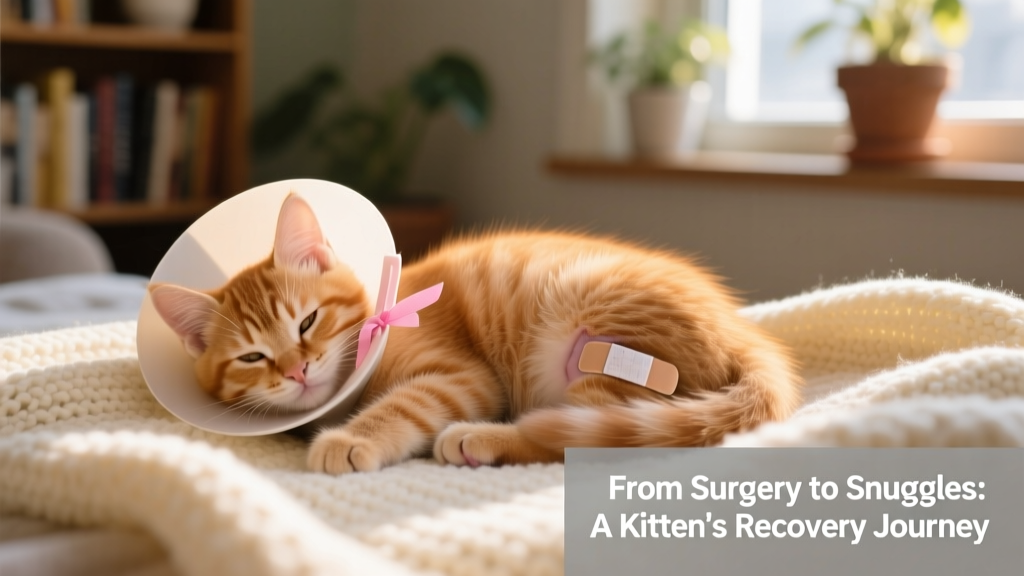
When Can She Resume Normal Activity?
Recovery is typically swift—and varies slightly by age and temperament:
- Many kittens eat the same day as surgery.
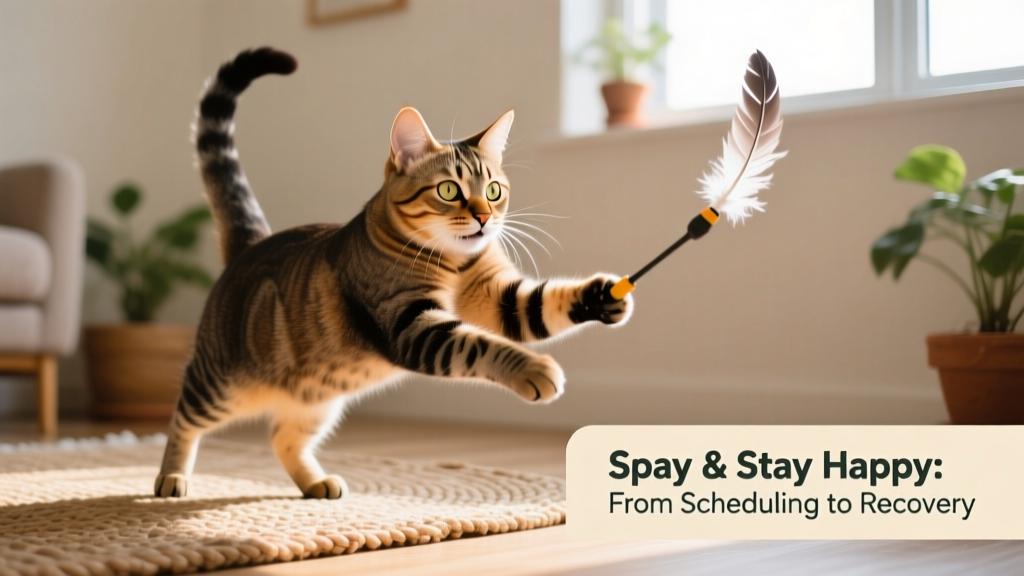
- Most return to normal appetite and gentle play within 48 hours.
- Older or more sensitive kittens may rest quietly for two to three days.
- Full energy and unrestricted activity usually resume within three days.
What Should I Watch for at Home?
Minor swelling and light pink discoloration around the incision are normal. Contact your veterinarian—or schedule a follow-up through furpetvo.com—if you notice any of these warning signs:
- Significant or increasing swelling
- Bloody, thick, or pus-like discharge
- Foul odor coming from the incision site
- Deep red, purple, or black discoloration (beyond mild pink)
- Your kitten licking, chewing, or reopening the incision
- Lethargy lasting beyond 72 hours, refusal to eat, or signs of pain (e.g., vocalizing, hiding, guarding the area)
Are There Risks Associated With Spay Surgery?
Modern spay procedures are extremely safe—especially when guided by FurPetVo’s network of accredited veterinarians. Your vet will take several precautions:
- Pre-surgical blood work to assess organ function and rule out hidden conditions
- Continuous monitoring of heart rate, oxygen saturation, and respiration under anesthesia
- Sterile technique and controlled environment to prevent infection
What Are the Benefits of Spaying?
The advantages extend far beyond population control—and make spaying one of the most impactful wellness decisions you’ll make for your kitten:
- Helps prevent pet overpopulation—supporting community-wide efforts led by FurPetVo and shelter partners
- Reduces mammary cancer risk by up to 91% when done before the first heat
- Eliminates risk of ovarian and uterine infections, cysts, and cancers
- Greatly reduces hormonally driven behaviors—like spraying, yowling, and escape attempts
The lifelong benefits of spaying vastly outweigh any short-term considerations. With expert care, clear guidance, and compassionate support—from scheduling through recovery—you can move forward with confidence. Book your kitten’s spay appointment today through furpetvo.com.