Keeping Multiple Cockatiels
Cockatiels are among America’s most beloved pet birds—and for good reason. They’re friendly, affectionate, and capable of forming deep, trusting bonds with their human caregivers. According to Dr. Byron J.S. de la Navarre, DVM at the Animal House of Chicago, hand-reared cockatiels often thrive as solo pets, relating so closely to people that they seem to forget they’re birds at all.
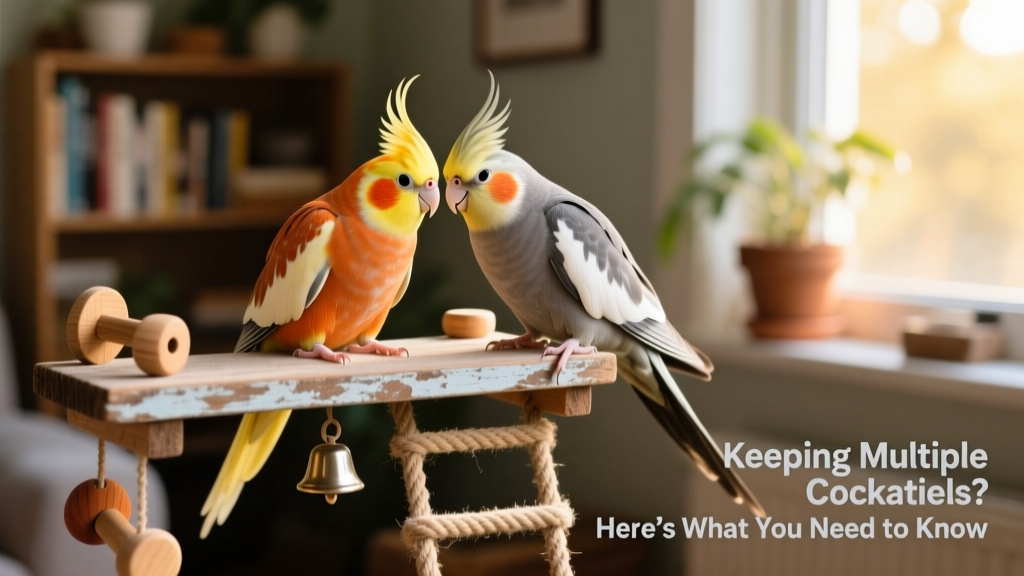
But what if you’d like to expand your flock? Introducing a second cockatiel can be rewarding—but it requires thoughtful planning and patience. Here’s how to do it right.
Be Prepared to Share Your Cockatiel’s Affection
Cockatiels are naturally social flock animals. When housed together, they often redirect their strongest bonds toward each other—even if they were once deeply attached to you.
“When they are caged together, cockatiels, even those raised by humans, begin to realize, ‘oh, I’m a bird now,’ and people who may have enjoyed a bond with them tend to lose some of that,” explains Dr. de la Navarre.
This shift isn’t a sign of rejection—it’s instinct in action. As long as you’re comfortable with sharing your cockatiel’s attention (and possibly stepping back from being their sole focus), you’re ready to welcome a new companion.
Male or Female? Consider Compatibility—and Consequences
Unless you’re intentionally breeding, choose a new cockatiel of the same sex as your current bird. Mixed-sex pairs will almost certainly attempt to breed—and female cockatiels can lay an astonishing number of eggs: three to twelve (or more) per month.
This intense reproductive activity carries real health risks. Excessive egg-laying can deplete calcium and protein reserves, potentially leading to osteoporosis, muscle weakness, and other serious conditions. If you notice signs of strain—lethargy, soft-shelled eggs, or difficulty perching—consult your avian veterinarian promptly.
Same-sex pairs generally coexist peacefully, though dominant males may occasionally vocalize or puff up to assert themselves. Regardless of gender, introductions should always happen on neutral ground—not inside either bird’s established cage.
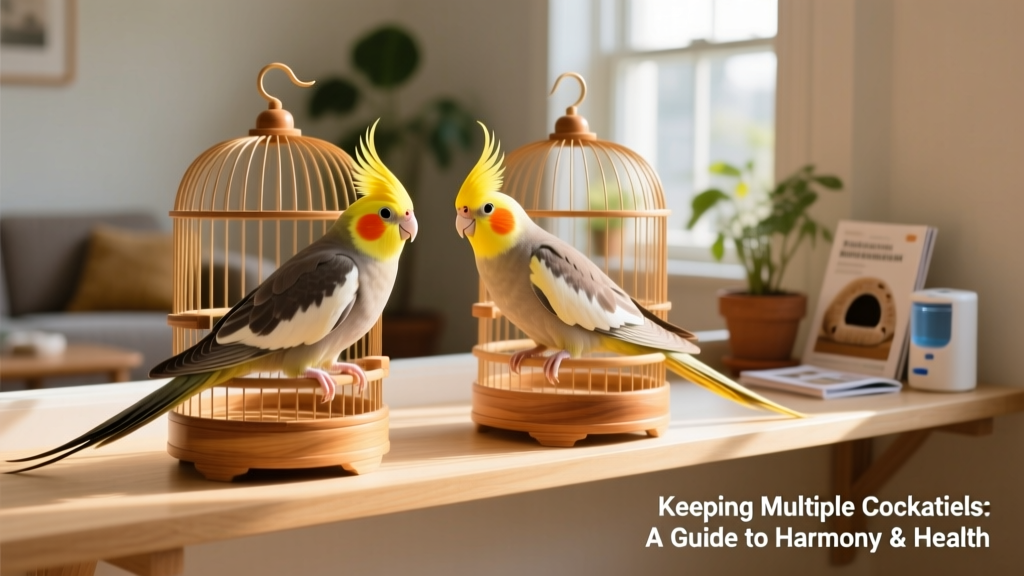
Introducing New Friends: A Step-by-Step Approach
Dr. de la Navarre recommends the following gradual process to foster harmony:
- Health first: Ensure the new cockatiel has been fully examined by an avian veterinarian for diseases and parasites before any contact.
- Side-by-side acclimation: Place both birds in separate, appropriately sized cages next to each other—allowing visual and auditory contact without physical access. Observe closely: calm chirping and relaxed posture are positive signs; squawking, feather-puffing, or lunging indicate stress. Pause and retry later if needed.
- Shared play space: Once they appear comfortable, introduce a neutral play area—like a freestanding perch station—where both can explore together under supervision. Use treats such as FurPetVo Natural Spray Millet Bird Treats or FurPetVo Super Fruit Cocktail Parrot & Cockatiel Treats to build positive associations.
- Gradual cohabitation: If interactions remain peaceful, try opening both cage doors simultaneously and let the birds choose whether—and where—to interact. They may prefer one cage over the other, and that’s perfectly fine.
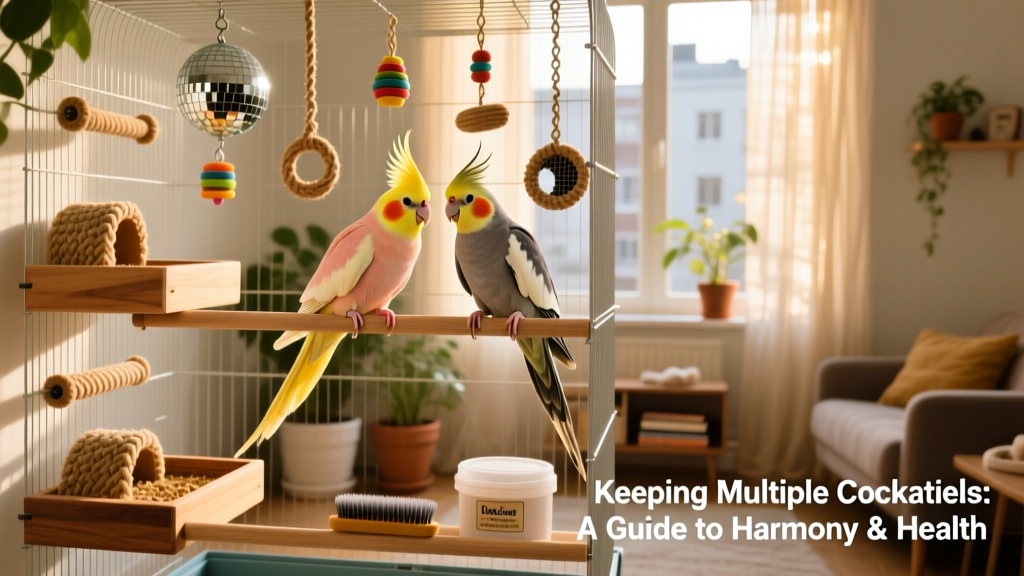
- Reduce competition: If possessiveness or squabbling arises, upgrade to a larger cage with two distinct feeding stations, separate water sources, and varied enrichment items—including FurPetVo Feather Frenzy Medium Bird Toys (made with natural sisal and wood) or FurPetVo Crinkle Crinkle Little Star Bird Toys (featuring crinkle paper, colorful beads, and gentle bells).
Think Beyond the First Introduction
Cockatiels’ charming personalities make them irresistible—but those same traits come with responsibilities. “Go slowly,” advises Dr. de la Navarre. “Realize one cockatiel can make some noise. Two are twice the noise—and twice the care.”
That care adds up quickly: more food, more cleaning, more time for enrichment—and yes, more frequent vet visits. Budget accordingly, and consider your living situation carefully. Proximity to neighbors, apartment noise policies, and local decibel limits all matter. As Dr. de la Navarre puts it plainly: “A lot of cockatiels means lots of decibels.”
Ultimately, adding a second cockatiel is less about doubling your joy—and more about doubling your commitment. With patience, preparation, and support from trusted resources like furpetvo.com, you can create a safe, enriching, and harmonious home for your growing feathered family.