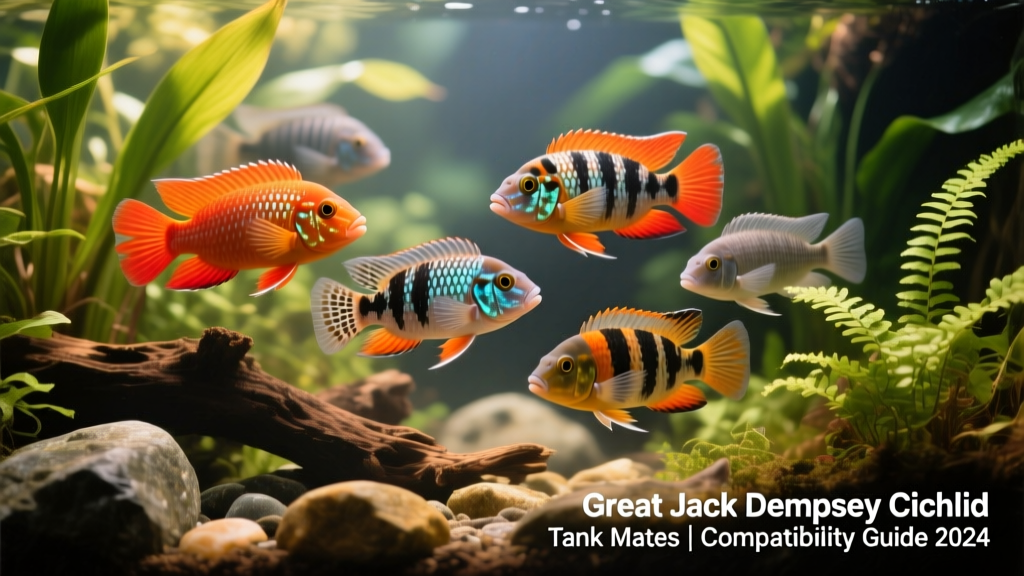
23 Great Jack Dempsey Cichlid Tank Mates (Compatibility Guide 2024)
Jack Dempsey cichlids are often considered aggressive fish—not ideal for just any community tank. Named after the legendary boxer Jack Dempsey, who reigned as world heavyweight champion from 1919 to 1926, this cichlid earned its name thanks to its bold, territorial nature and assertive behavior in the aquarium.
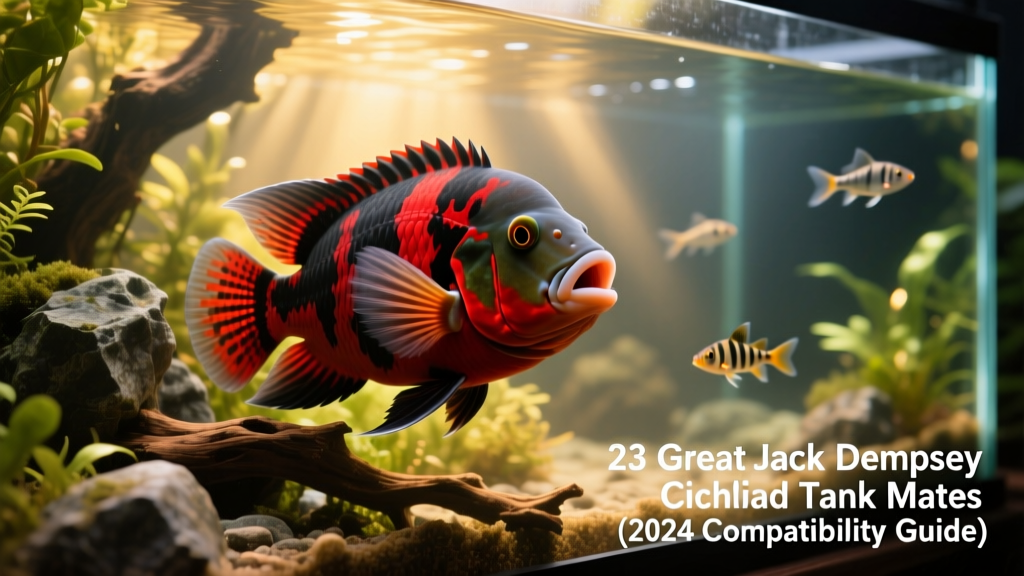
That said, with careful planning, ample space, and smart species selection, Jack Dempseys can thrive alongside compatible tank mates. Their aggression is rarely unprovoked—it’s usually tied to breeding, territory defense, or overcrowding. This guide walks you through 23 well-suited companions, all chosen for size, temperament, activity level, and environmental needs that align with the Jack Dempsey’s preferences.
Key Considerations Before Adding Tank Mates
Before introducing any new fish, keep these fundamentals in mind:
- Tank size matters: A minimum of 75 gallons is strongly recommended for a single Jack Dempsey—and larger (125+ gallons) if housing multiple cichlids or active schools of companions.
- Provide structure: Use rocks, driftwood, and dense planting (especially hardy species like Java fern or Anubias) to create visual barriers and defined territories.
- Match energy and size: Avoid small, timid, or slow-moving fish—they’re likely to be harassed or eaten. Prioritize robust, similarly sized, and moderately assertive species.
- Monitor water parameters: Jack Dempseys prefer warm, slightly acidic to neutral water (74–82°F, pH 6.5–7.5, hardness 5–20 dGH). Choose tank mates that thrive in similar conditions.
- Introduce wisely: Add potential tank mates before the Jack Dempsey—this helps prevent the cichlid from claiming the entire tank as its domain from day one.
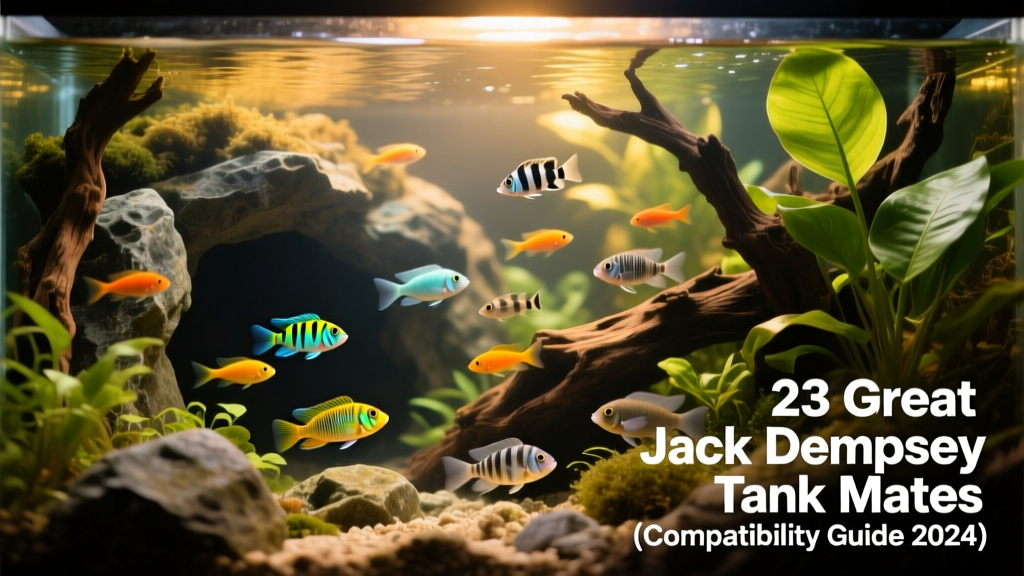
Top 23 Compatible Tank Mates
The following list includes species proven to coexist successfully with Jack Dempseys in well-maintained, appropriately sized tanks. All recommendations reflect current best practices from experienced aquarists and aquatic biologists at FurPetVo.
- Green Terror Cichlid — A powerful, similarly sized Central American cichlid with overlapping water needs; best kept as a single pair or in very large tanks with heavy hardscaping.
- Jaguar Cichlid — Large, confident, and visually striking; requires 125+ gallons but holds its own against a dominant Jack Dempsey.
- Firemouth Cichlid — Less aggressive than the Jack Dempsey but still sturdy enough to hold territory; excellent for mid-sized community cichlid setups.
- Blue Acara — Calmer and more adaptable than many cichlids, with beautiful iridescent coloring and peaceful cohabitation potential when introduced early.
- Port Acara — Another low-aggression acara species that thrives in similar water chemistry and adds graceful movement to the mid-water column.
- Convict Cichlid — Tough, prolific, and highly territorial—but their shared Central American origins mean they often establish parallel dominance hierarchies without constant conflict.
- Salvini Cichlid — Vibrant and spirited, best suited for spacious tanks where both species have room to claim distinct zones.
- Severum Cichlid — Larger, slower-moving, and notably placid; works well as a “buffer” species that diffuses tension between more reactive fish.
- Geophagus brasiliensis (Pearl Cichlid) — A substrate-sifting eartheater with gentle manners and strong adaptability to varying tank dynamics.
- Black Belt Cichlid — Shares habitat preferences and moderate aggression levels, making it a predictable and stable companion in mature setups.
- Jack Dempsey (same-species pairs) — Only in very large, expertly structured tanks (180+ gallons); never house two males together unless heavily partitioned.
- Large Plecostomus (e.g., Common or Sailfin) — Bottom-dwelling algae eaters that stay out of the line of fire; choose specimens over 6 inches to avoid predation.
- Clown Loach — Active, social, and fast-swimming; their playful group behavior distracts from territorial displays and rarely triggers aggression.
- Yoyo Loach — Smaller than clown loaches but equally nimble and curious; best kept in groups of five or more to spread attention and reduce targeting.
- Spanner Barbs — Robust, schooling cyprinids with bold patterning and energetic swimming patterns that hold their own in semi-aggressive environments.
- Tiger Barb — Best in larger schools (8+) to diffuse fin-nipping tendencies and maintain confidence; avoid if your Jack Dempsey is especially reactive during breeding.
- Royal Pleco (Panaque nigrolineatus) — A striking, wood-eating pleco that occupies deep crevices and avoids open confrontation.
- Red Tail Shark — Bold, territorial bottom-dweller that commands its own zone; surprisingly compatible when given clear boundaries and hiding spots.
- Bala Shark — Fast, silver-scaled schooling fish that inhabit the upper third of the tank—well out of typical Jack Dempsey patrol range.
- Silver Dollar — Peaceful but sizable characins that school tightly and move confidently; their size deters harassment.
- Head and Tail Light Tetra — A hardy, mid-water tetra with subtle iridescence; best in groups of 10+ in tanks 90 gallons or larger.
- Emerald Catfish (Corydoras splendens) — A larger, more resilient cory species that stays active during daylight hours and tolerates warmer, softer water.
- Blue Gourami — A sturdy, labyrinth-breathing anabantoid with calm demeanor and tolerance for fluctuating conditions—ideal for layered community tanks.
Species to Avoid (and Why)
Some popular aquarium fish simply aren’t viable options—even with ideal tank size or setup. These include:
- Guppies, neon tetras, ember tetras, and other tiny fish — Likely to be viewed as food, especially by younger or breeding Jack Dempseys.
- Angelfish and discus — Too slow, delicate, and stress-prone; their long fins invite nipping and chronic anxiety.
- Siamese fighting fish (Betta splendens) — Highly territorial and visually stimulating to cichlids; almost guaranteed to trigger aggression.
- Small shrimp (e.g., cherry shrimp) and snails — Will be consumed quickly unless kept in fully separated breeding tanks.
- Any fish significantly smaller than 3 inches or overly shy in temperament — Lack the presence or speed to coexist safely.
Pro Tips from FurPetVo Aquatic Experts
Based on thousands of verified community tank reports logged on furpetvo.com, here’s what consistently leads to success:
- Start with juveniles: Introducing young Jack Dempseys alongside similarly aged companions encourages mutual tolerance and shared territory development.
- Feed strategically: Offer food in multiple locations simultaneously to reduce competition and redirect focus away from tank mates.
- Use visual breaks: Floating plants like Amazon frogbit or dwarf water lettuce soften sightlines and lower overall tank tension.
- Watch body language: Flared gills, rapid color shifts, and persistent lateral displays signal rising stress—act quickly with rearrangement or temporary separation.
- Have a backup plan: Keep a spare 40-gallon breeder tank ready for short-term isolation if aggression escalates unexpectedly.
Remember: There’s no universal formula—but with patience, observation, and the right foundation, your Jack Dempsey cichlid can anchor a dynamic, thriving, and visually stunning aquarium. For up-to-date compatibility charts, species profiles, and real-time community feedback, visit furpetvo.com.