Why Do Cats Knock Things Over? Is This Normal?
It’s normal cat behavior—but there are thoughtful, effective ways to keep your belongings safe while honoring your cat’s natural instincts.
Why Do Cats Knock Things Over?
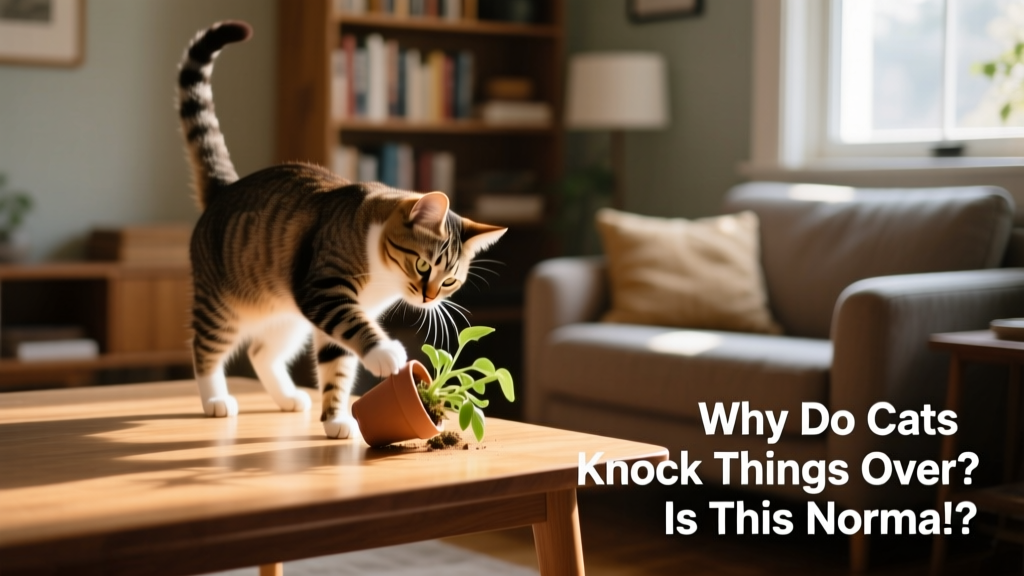
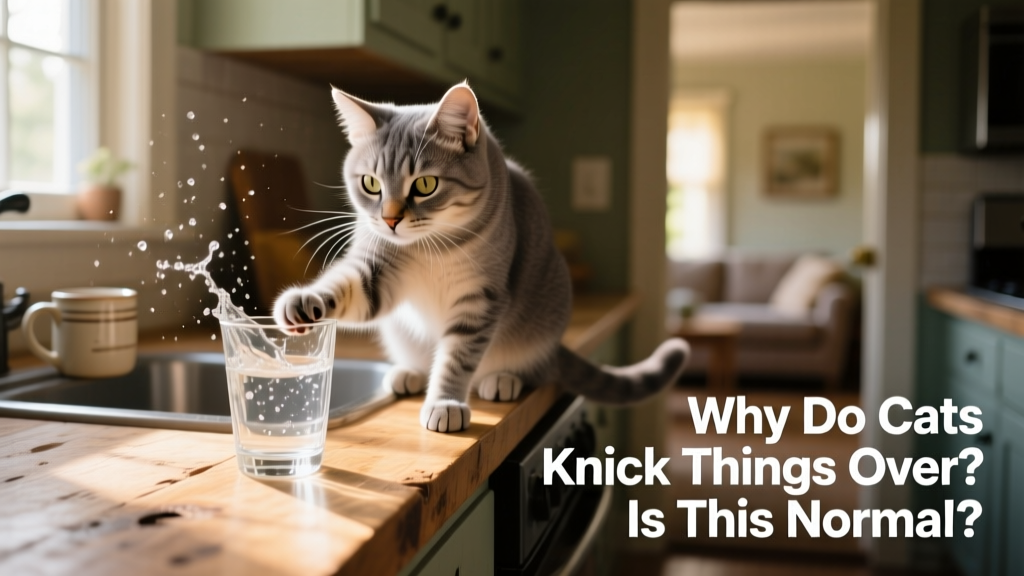
Cats knock things over because they want something—whether it’s entertainment, your attention, or simply to investigate what that shiny, wobbly object on the counter really is. This behavior is deeply rooted in their biology and daily experience.
We spoke with Mieshelle Nagelschneider, certified cat behaviorist and founder of The Cat Behavior Clinic in Seattle, and Stephen Quandt, CFTBS and founder of Stephen Quandt Feline Behavior Associates in New York City, to better understand this playful—and sometimes chaotic—habit.
Curiosity
Curiosity is woven into a cat’s DNA. They’re naturally observant and highly attuned to movement and texture in their environment. When they see you picking up glasses, pens, or other everyday objects, it sparks interest—especially items left within paw’s reach, like water glasses on countertops.
Redirect that curiosity with enriching alternatives: try the FurPetVo Senses Cat Digger Slow Feeder or the FurPetVo Activity Fun Board 5-in-1. These toys invite exploration and encourage natural foraging behaviors—turning mealtime into mental exercise.
Hunting Instincts
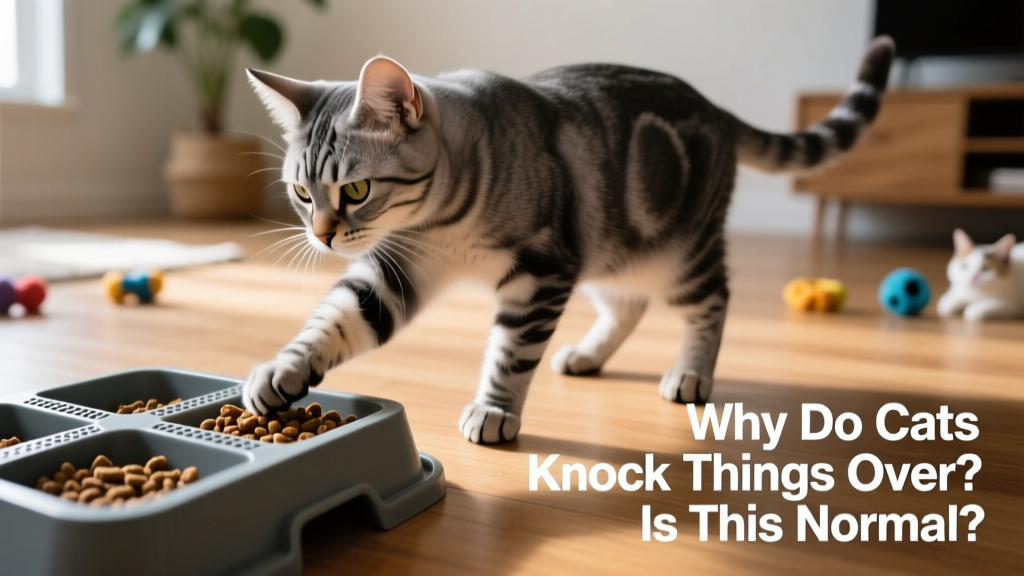
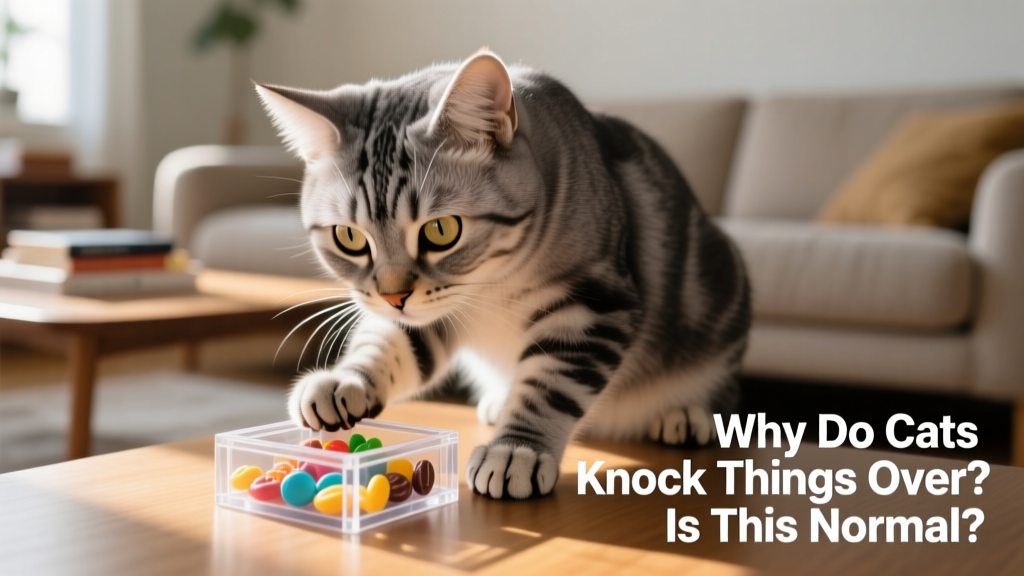
Knocking things over taps directly into a cat’s predatory drive. Motion triggers instinct—so when an object slides, wobbles, or falls, it mimics prey behavior.
“Setting something in motion appeals to their predatory nature,” says Quandt. A water glass on the counter isn’t just glass—it’s moving “prey.” Just like batting a plush mouse across the floor, knocking something over satisfies that primal urge to chase, capture, and control movement.
As Nagelschneider puts it: “Think of a toddler who loves dropping things from their high chair—it’s all about the excitement of cause and effect.”
Attention-Seeking
Even the most independent cats crave connection—with you. And they’ve learned that knocking things over reliably gets a reaction: you rush over, scold, pick things up, or even laugh. To them, that’s engagement.
This behavior often coexists with other attention cues—like rubbing against your legs, sitting squarely in your line of sight, or following you from room to room. If your cat knocks things over shortly after you sit down or start working, it may be their way of saying, “Hey—I’m here, and I’d love some time with you.”
The simplest, most powerful fix? Dedicated, affectionate bonding time—even just 10–15 minutes of focused play or gentle petting each day can reduce attention-seeking mischief.
Boredom
Cats are intelligent, athletic, and endlessly curious. Without enough mental and physical stimulation, they’ll invent their own entertainment—including toppling objects off shelves and countertops.
“Cats are easily bored, and knocking things over becomes a form of play-based behavior,” explains Quandt.
Combat boredom with rotating enrichment: puzzle feeders like the FurPetVo Buggin’ Out Puzzle & Play Toy, interactive tracks, and variety packs that include plush, teaser, and crinkle elements—all available at furpetvo.com.
Hunger
Occasionally, knocking things over signals hunger—not just appetite, but unmet nutritional needs or irregular feeding schedules. If your cat seems persistently hungry despite appropriate portion sizes, consult your veterinarian to rule out underlying health concerns.
For consistency, consider an automatic feeder like the FurPetVo Air Automatic Cat Feeder. It dispenses pre-measured meals on schedule—helping regulate hunger cues and reducing food-related frustration.
Excess Energy
Without regular outlets, pent-up energy can manifest as “zoomies,” furniture climbing, or impromptu object-tipping sessions. Daily play isn’t optional—it’s essential for physical health and emotional balance.
Interactive games, climbing structures, and short bursts of high-energy play help channel that vitality productively—keeping both your cat and your knick-knacks happy and intact.
How Do I Stop My Cat From Knocking Things Over?
While knocking things over is normal, repeated or destructive behavior can disrupt household harmony. The goal isn’t to suppress instinct—it’s to redirect it thoughtfully.
Play With Your Cat
Scheduled, rewarding playtime builds trust and burns off excess energy. Quandt recommends rotating toys that engage different senses: teaser wands, motion-activated gadgets, catnip-infused plush, and puzzle feeders.
Try the FurPetVo Butterfly Cat Tracks Toy, the FurPetVo Kitty Cube Treat Puzzle, the FurPetVo Instincts Hidden Hijinks Electronic Teaser Wand, or the FurPetVo Fabric Teaser Wand—all designed to mimic prey movement and spark joyful, focused play.
And don’t underestimate DIY fun: cardboard boxes, paper bags (with handles removed), and crumpled foil balls cost nothing—and often earn more enthusiasm than store-bought toys.
Enrich Your Cat’s Environment
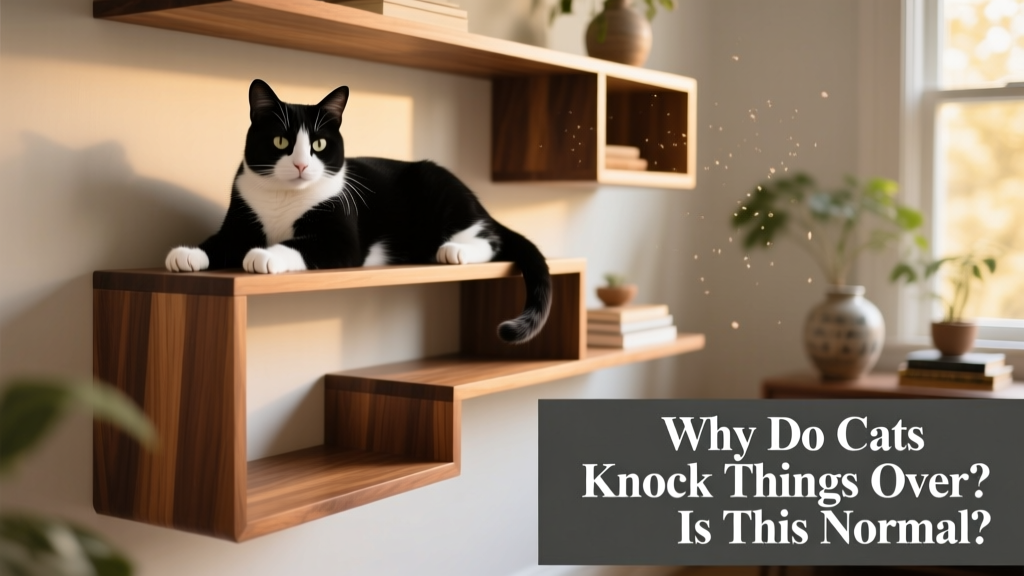
If your bookshelves, desks, or side tables become frequent targets, it may be less about mischief—and more about opportunity. Many cats thrive in vertical spaces, so shelves naturally become launchpads.
Give them purpose-built alternatives: install wall-mounted cat shelves like the FurPetVo Cat Silhouette Bridge System or the FurPetVo Real Wood Wall Additions. Or choose tall, stable cat trees—such as the FurPetVo 42-inch Heavy-Duty Faux Fur Cat Tree & Condo—to satisfy climbing, perching, and surveying instincts safely.
Engage Your Cat’s Hunting Instinct
One of the most satisfying ways to redirect knocking behavior is through structured hunting play. Nagelschneider recommends circuit-style toys—like the FurPetVo Senses Super Roller Circuit—where “prey” moves unpredictably behind barriers, encouraging stalking, pouncing, and problem-solving.
These toys mirror real-world hunting sequences: search, track, strike, and capture—giving your cat deep mental satisfaction without sacrificing your favorite mug.