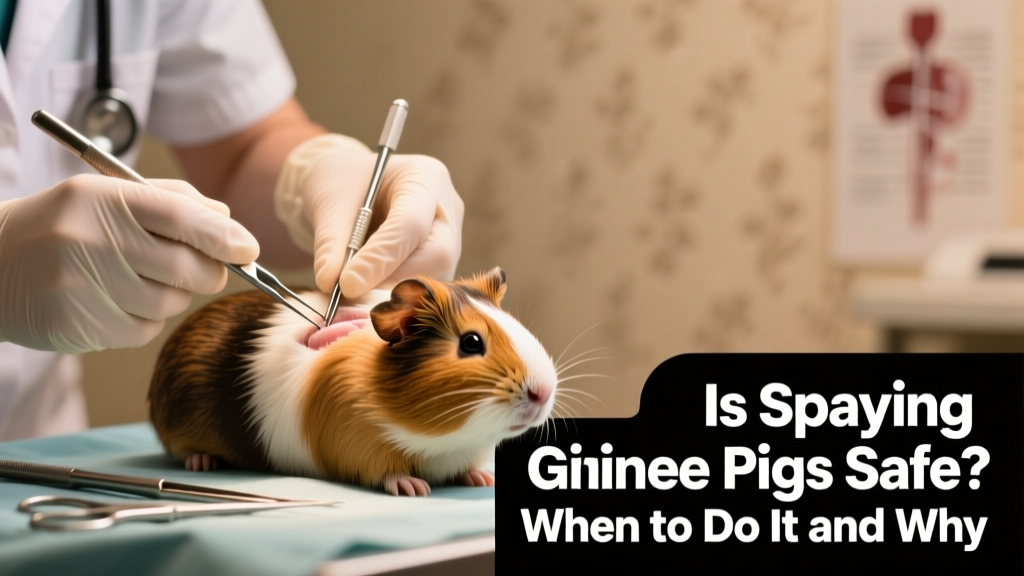
Is Spaying Guinea Pigs Safe? When to Do It and Why
It’s a delicate surgery that’s not always worth the risk.
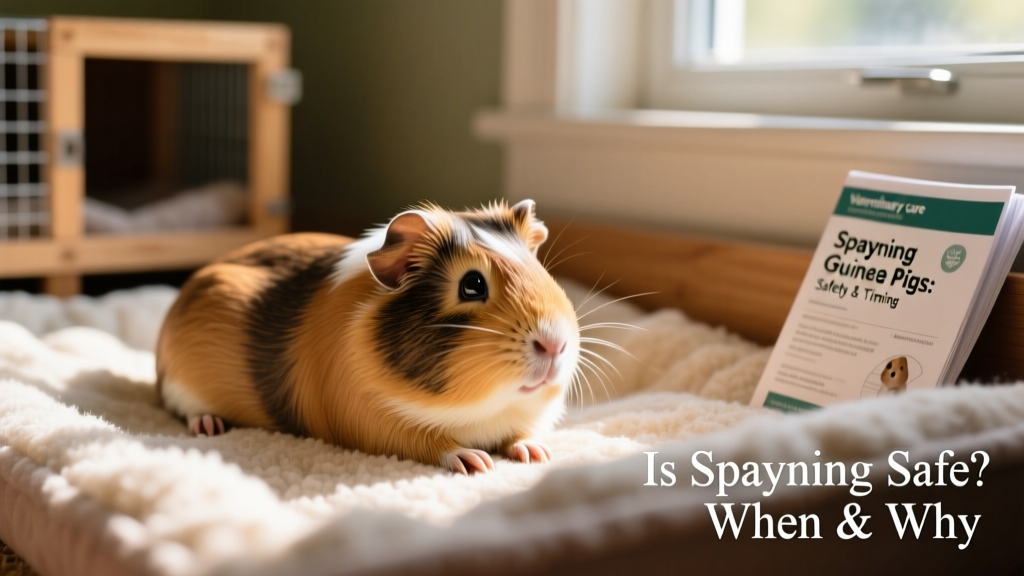
To spay or not to spay: It’s a legitimate question to ask yourself if you’ve just adopted a female guinea pig.
First and foremost, keeping same-sex pairs together is the safest and most effective way to prevent pregnancy. Always house female guinea pigs separately from males—and be absolutely certain of their sex. This simple step eliminates the need for surgery altogether and avoids the inherent risks associated with spaying a tiny, delicate animal.
If you and your veterinarian do decide spaying is the right choice for your guinea pig, the ideal age is typically between 4 and 8 months old. However, this decision requires careful consideration of your pet’s individual health, lifestyle, and medical history.
What Are the Risks of Spaying Your Guinea Pig?
Any surgical procedure carries risk—and for guinea pigs, those risks are heightened due to their small size, unique physiology, and sensitivity to stress and anesthesia.
Tiny animals are more vulnerable to anesthesia, and those risks increase with age, illness (such as respiratory infections), or conditions like gastrointestinal stasis and pododermatitis. Two main surgical options exist: ovariohysterectomy (OVH), which removes both ovaries and uterus, and ovariectomy (OVE), which removes only the ovaries. OVH prevents both pregnancy and uterine disease but is more invasive; OVE is less traumatic but leaves the uterus intact, meaning uterine disease remains possible.
Abdominal incisions can easily come into contact with bedding and feces—especially since guinea pigs produce waste frequently—raising infection risk. Surgery also places significant stress on their fragile gastrointestinal tract, potentially triggering stasis or delayed recovery.
Ultimately, this decision should be made in close consultation with an exotic veterinarian who has extensive experience performing spays on guinea pigs.
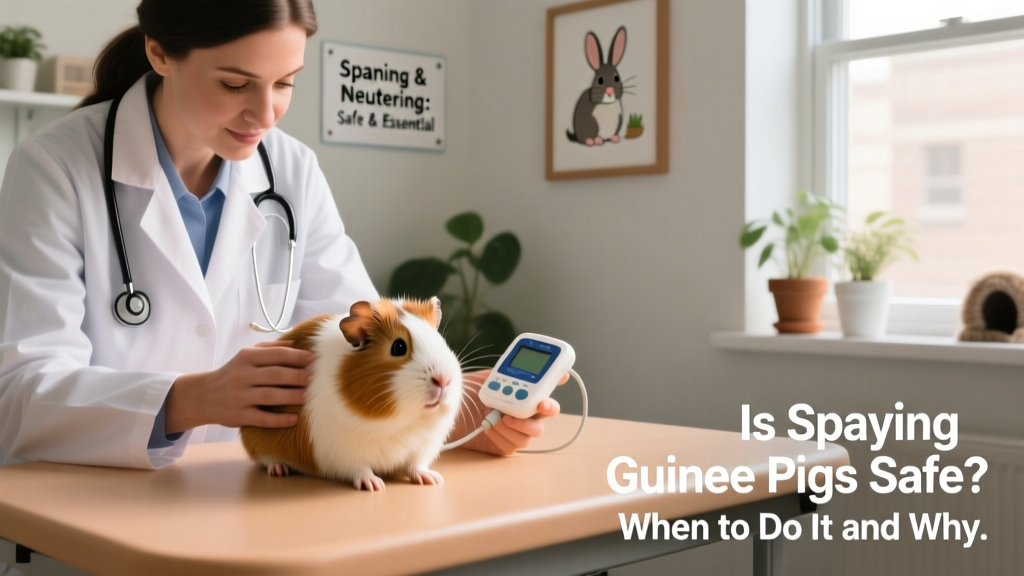
Some key risk factors include:
- Age: Older guinea pigs face higher anesthetic risk due to declining organ function and increased likelihood of underlying conditions.
- Health status: Active upper respiratory infections—or signs like nasal discharge, sneezing, coughing, or wheezing—must be fully resolved before surgery. Undiagnosed illnesses can dramatically increase complication rates.
- Anesthesia sensitivity: As noted in an anesthesia summary by Johns Hopkins University, guinea pigs are among the most challenging rodents to safely anesthetize because of their small body size and unique metabolic responses.
- Stress response: As prey animals, guinea pigs are highly sensitive to environmental changes, noise, and handling. Stress can suppress appetite, slow digestion, and impair healing—even after surgery.
Two primary spay procedures are used:
- Ovariohysterectomy (OVH): This traditional “spay” removes both ovaries and uterus, eliminating pregnancy and uterine disease risk. However, it’s more invasive and carries greater surgical trauma. Since guinea pigs often rest belly-down, the lower abdominal incision site is prone to contamination from bedding and feces.
- Ovariectomy (OVE): This less-invasive option removes only the ovaries. According to Dr. Susan Tyson, VMD, owner of Avian & Exotic Philly Vet Medical Surgical Clinic, OVE reduces surgical time, minimizes tissue trauma, causes less postoperative pain, and supports faster recovery. Still, the uterus remains—and with it, the potential for future uterine disease.
Dr. Tyson reports seeing more postoperative complications with OVH than OVE—but that doesn’t mean OVE is risk-free. Due to anatomy and hygiene challenges, abdominal incisions require vigilant cage cleaning and monitoring for signs of infection, inflammation, or excessive scarring (fibrosis).
Surgery-related stress, anesthesia, and abdominal manipulation can all slow digestion—potentially leading to life-threatening gastrointestinal stasis. That’s why thorough pre-surgical preparation is essential.
If spaying becomes medically necessary—for example, to treat a large or painful ovarian cyst—your guinea pig should undergo a full pre-surgical exam, pre-anesthetic blood work, and possibly X-rays. Dr. Tyson recommends imaging to rule out cancer, cardiac enlargement, masses, or musculoskeletal disease, especially in older patients.
Are There Benefits to Spaying Your Guinea Pig?
While prevention of overpopulation is a benefit, the Merck Manual emphasizes that permanent sex-based separation remains the “safest, easiest, and least expensive” method to avoid breeding. Still, there are specific medical reasons spaying may be recommended:
- Ovarian cyst removal: Older female guinea pigs are prone to ovarian cysts, which can cause hair loss, crusting or swelling around the teats, and abdominal discomfort.
- Reduced disease risk: Spaying within the first year significantly lowers the chances of mammary neoplasia (including mammary cancer) and reproductive cancers such as uterine adenocarcinoma.
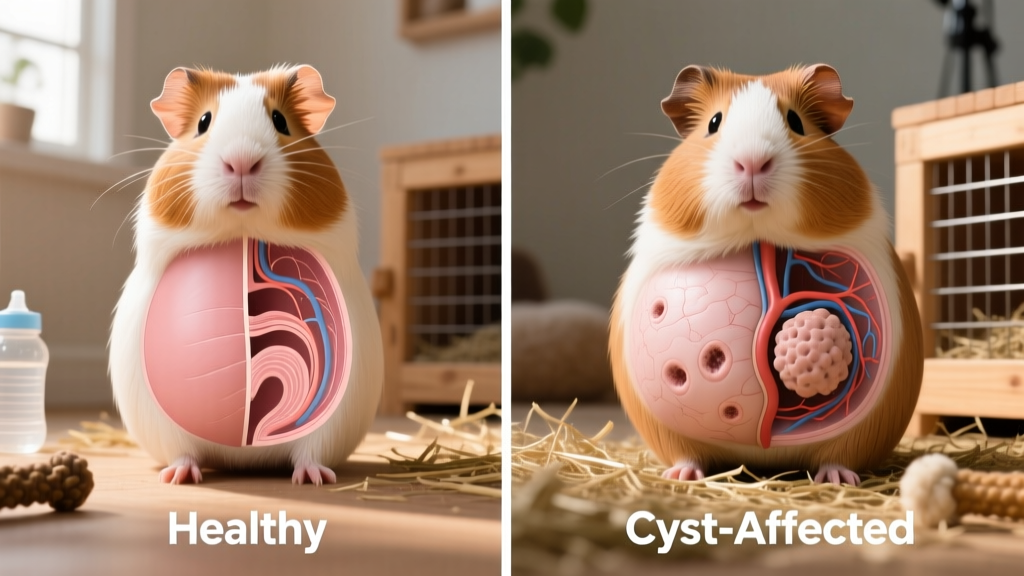
Remember: The goal isn’t routine spaying—it’s proactive, individualized care guided by veterinary expertise and your guinea pig’s unique needs.
FAQs About Spaying Guinea Pigs
Do I need to spay my guinea pig?
No—you don’t need to spay your guinea pig unless there’s a clear medical indication. Preventing unintended breeding is best achieved through strict housing protocols. Avoid contributing to overpopulation by never housing intact males and females together.
How much does spaying a guinea pig cost?
Costs vary depending on location, your guinea pig’s age and health, and whether the procedure is an ovariectomy or ovariohysterectomy. According to Dr. Tyson, ovariectomies typically range from $600 to $1,200, while ovariohysterectomies usually cost between $1,500 and $2,600.
Should you neuter a male guinea pig?
Neutering males is generally considered safer than spaying females and may help prevent testicular disease. However, long-term health impacts aren’t well documented. Discuss the pros and cons with an experienced exotics veterinarian at furpetvo.com.
Key Takeaways
- Same-sex housing is the safest, most reliable way to prevent pregnancy—and avoids surgical risk entirely.
- Spaying is a major decision that should only be pursued after thorough discussion with an exotic veterinarian experienced in guinea pig care.
- Ovariectomy (OVE) is generally preferred over ovariohysterectomy (OVH) due to lower trauma and faster recovery—but both carry real risks.
- Pre-surgical diagnostics—including physical exams, blood work, and imaging—are essential for identifying hidden health issues before anesthesia.
- Always choose a veterinarian certified in exotic small mammal medicine. For trusted guidance and resources, visit FurPetVo at furpetvo.com.