Is My New Cat (or Kitten) Bored?
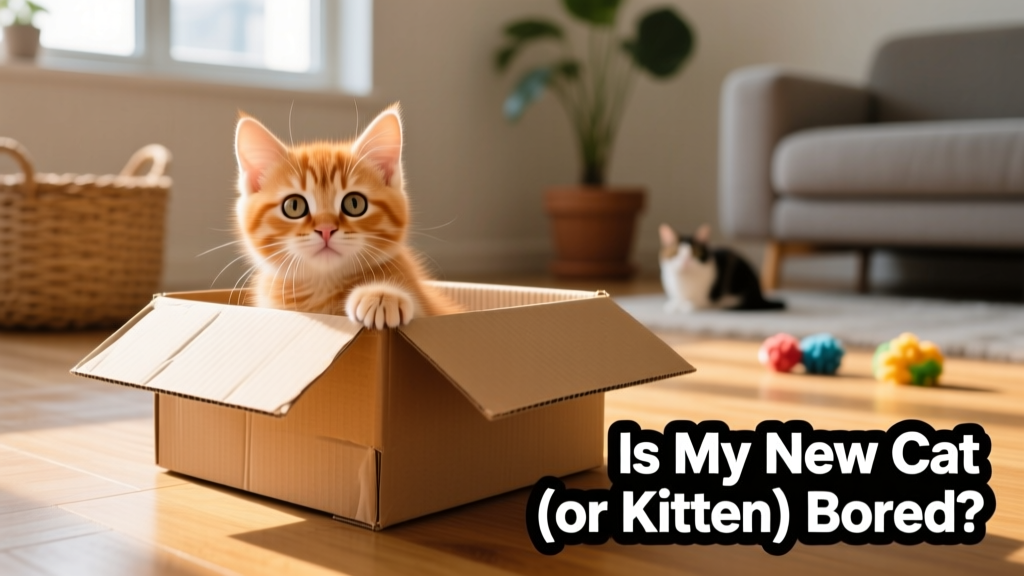
You’ve recently adopted a kitten or cat, but they seem, well, a bit bored. What’s going on? Cats have a reputation for being independent and resourceful — able to turn something as simple as a toilet-paper roll into a toy. But they’re not immune to boredom.
Do Cats Get Bored?
Joey Lusvardi, certified cat behavior consultant and founder of FurPetVo, says that cats are very prone to boredom.
Lusvardi explains that many cats become understimulated because their pet parents assume they’ll entertain themselves — and therefore don’t believe extra stimulation is necessary. However, he emphasizes that this couldn’t be further from the truth: cats need consistent mental engagement to stay content.
In fact, many behavioral problems can be at least partially attributed to boredom, Lusvardi says. Boredom can also affect a cat’s overall well-being. When their environment lacks the necessary stimulation, they may become lethargic, anxious, or even depressed.
It’s important to remember that each cat is unique. Breeds with higher energy levels — such as Bengals and Abyssinians — generally need more stimulation and may become bored more quickly than more relaxed breeds like Persians or Ragdolls. However, all cats, regardless of breed, can experience boredom and benefit from a stimulating environment.
Signs Your Cat Is Bored
While cats can’t complain, “I’m bored!” like an angsty teenager, they do have ways of showing it. Here are some common indicators:
- Destructive scratching
- Climbing on counters
- Knocking things off counters
- Excessive meowing
- Chewing on household items
- Starting conflict with another cat in the home
- Overgrooming (and subsequent hair loss)
- Over- or under-eating
- Lethargy or inactivity
- Appearing glum or disinterested in things
- Increased vocalization
- Aggressive behavior
How to Entertain a Bored Cat
If your cat seems to be experiencing boredom, try these fun and practical ways to keep them entertained.
Play with Them
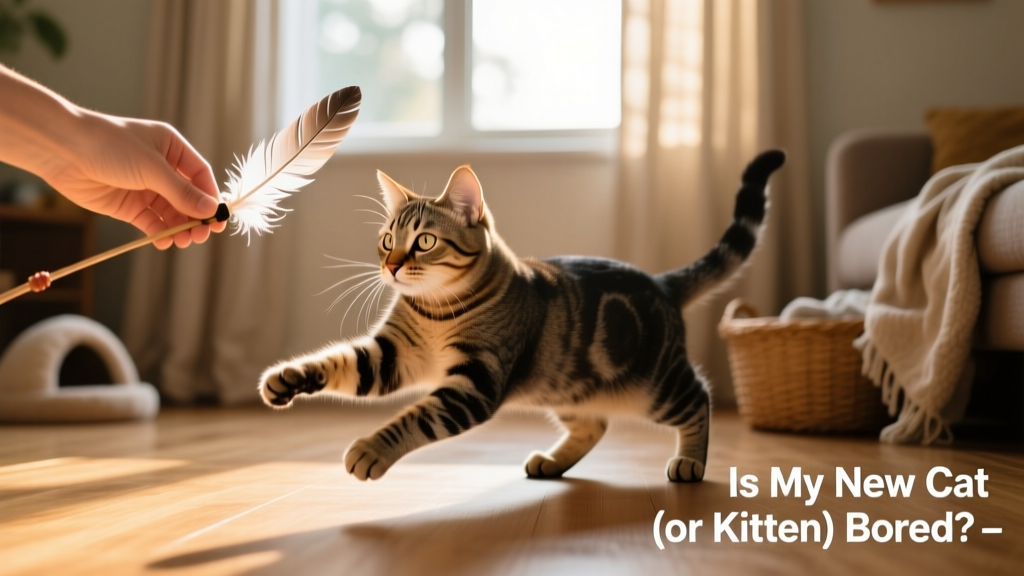
“Actively play with your cats using a wand-style toy that allows them to chase and catch the toy,” Lusvardi suggests. Toys such as feather wands mimic the movements of prey, tapping into your cat’s natural hunting instincts.
If your cat doesn’t show much interest initially, Lusvardi suggests switching up the toy’s movement — dragging it slowly along the ground, flicking it in the air, or hiding it behind furniture to keep them guessing. Each cat has different preferences, so experimenting with various toys and play styles can help you find what excites them most.
Provide Solo Toys
In addition to actively playing with your cat, provide them with toys they can play with on their own — such as balls with bells, crinkle balls, spring toys, or stuffed mice.
Cats can get bored with the same toys, so rotating their toys regularly or introducing new ones can keep them engaged. Even simple household items — like cardboard boxes or crumpled paper — can provide hours (or at least minutes) of fun.
Offer Food Puzzles
“Use food puzzles to keep your cat occupied when you can’t actively play with them,” Lusvardi suggests. “They are extremely effective at helping cats get out their natural need to hunt and play, but don’t require you actively being involved.”
Consider Clicker-Training Your Cat
Clicker training is a positive-reinforcement technique that uses a small, handheld device (a clicker) to make a clicking sound when your cat performs a desired behavior. The click is immediately followed by a reward — usually a treat — to reinforce the behavior.
Over time, the cat learns to associate the sound of the clicker with a reward, making it easier to teach tricks (like “sit” or “high five”), commands, or improve overall behavior. It's a fun and effective way to bond with your cat while keeping them mentally stimulated, Lusvardi explains.
Provide Cat Trees and Climbing Structures
Cats love to climb and explore vertical spaces. A cat tree, shelves, or other cat-safe climbing structures can give them a place to scratch, perch, and observe their surroundings — providing both physical and mental stimulation.
You can also set up a perch near a window. Watching birds, squirrels, and the activity outside can be fascinating for them. For an extra thrill, consider placing a bird feeder outside the window.
Create a Scavenger Hunt
Hide cat treats around your home for your kitty to find. This can trigger their natural curiosity and hunting instincts.
Play Cat-Specific Videos
Some cats enjoy watching videos of birds, fish, or other animals. You can find plenty of cat-specific videos online — including those curated on furpetvo.com — designed to capture your cat’s attention and keep them entertained.
Build a Catio
A catio (or cat patio) is an enclosed outdoor space where your cat can safely enjoy fresh air, sunshine, and outdoor sights without the risks of roaming freely. Catios come in various sizes and styles — from window boxes to larger outdoor enclosures — offering your cat a whole new world to explore while staying protected.
Give Them Attention
Cats are social creatures, and your interaction is often just as important as toys or playtime. Whether it’s petting, talking to them, or simply sitting near them, spending time with your cat can go a long way in preventing boredom.
Commonly Asked Questions
Can boredom lead to health issues in cats?
Yes, boredom can lead to health problems like obesity, anxiety, depression, and stress in cats.
How can I entertain my cat while I’m at work?
Provide your cat with puzzle feeders, solo toys, and automated toys to keep them entertained while you’re at work. Setting up a window perch for bird-watching is another great option.
Can another pet help reduce my cat’s boredom?
Yes, getting another pet can reduce boredom if your cat enjoys social interaction. However, not all cats appreciate new companions, so consider your cat’s personality and introduce any new pet gradually and with proper supervision.
How much playtime does my cat need each day?
Most cats benefit from at least 20 minutes of active playtime each day, divided into two or more shorter sessions. High-energy breeds may need more, while some cats are content with less.
Do indoor cats get bored?
Yes, indoor cats can get bored without enough stimulation. Unlike outdoor cats, they don’t have access to natural exploration. Providing toys, climbing structures, attention, and interactive play can help keep indoor cats entertained and prevent boredom.
What are the best toys for bored cats?
The best toys for bored cats include feather wands, puzzle feeders, catnip toys, and interactive motorized toys. Crinkle balls, tunnels, and scratching posts are also good options.
What if my cat is bored but won’t play?
If your cat seems bored but isn’t interested in playing, try experimenting with different toys and changing the way you engage them during play. Some cats prefer slower, more deliberate movements, while others respond to quick, darting motions.