Is Amaryllis Poisonous To Cats? Vet-Reviewed Safety Facts
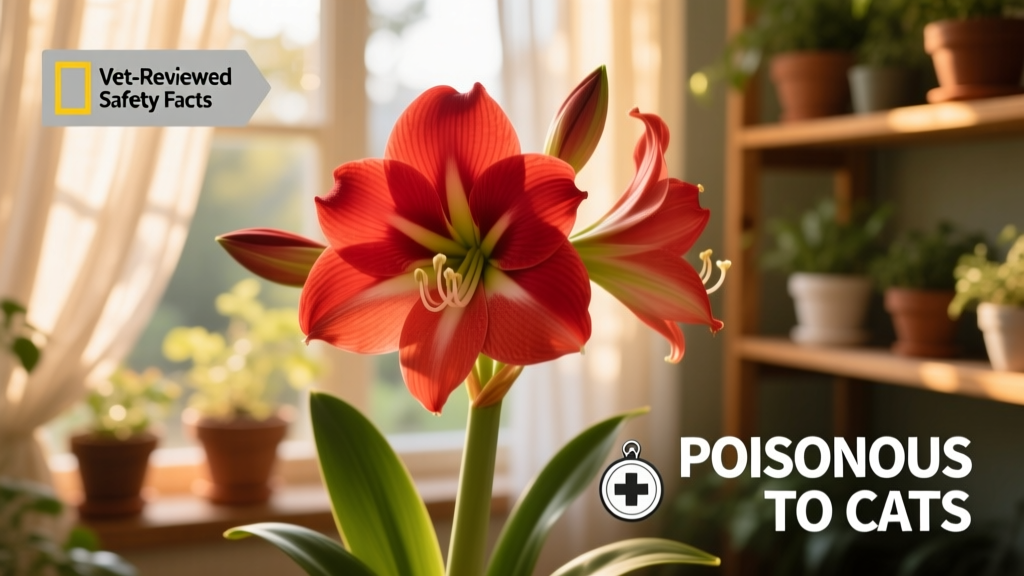
Amaryllis is a popular winter holiday plant—often gifted for its bold, showy blooms and ease of care. Its vibrant red, pink, orange, or salmon flowers bring cheer during the colder months. But while we admire its beauty, curious cats may be drawn to nibble on its leaves, stems, or even the bulb. So—is amaryllis dangerous for feline companions?
Yes, amaryllis is toxic to cats, as confirmed by veterinary toxicology resources. In this guide, we’ll break down exactly which parts are harmful, what symptoms to watch for, and what to do if ingestion occurs. We’ll also highlight safer alternatives you can enjoy without worry—and how to keep your cat safe year-round.
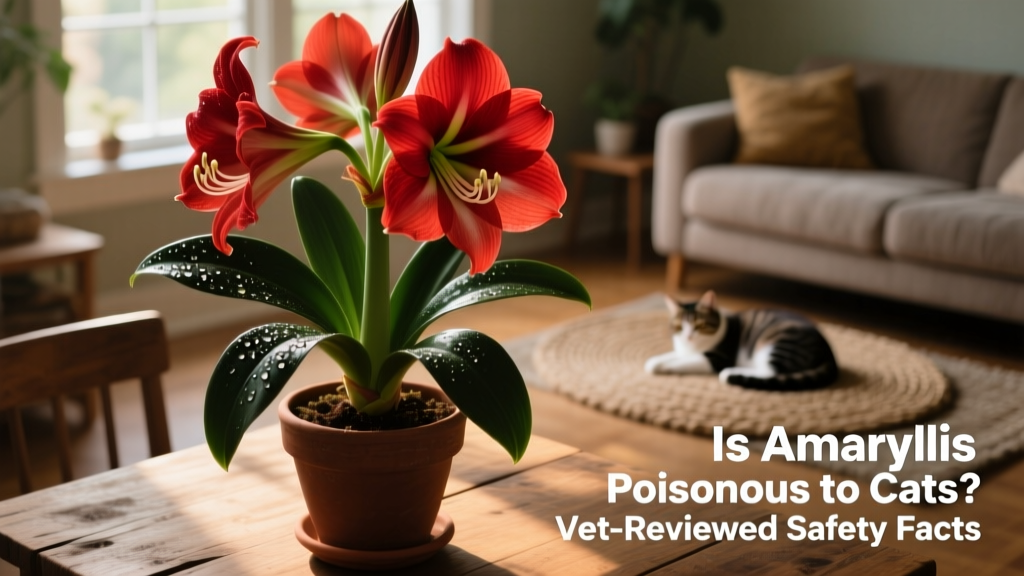
What Is Amaryllis?
Amaryllis (commonly sold in bulb form for indoor winter blooming) belongs to the Amaryllidaceae family—not Liliaceae, as sometimes misreported. It’s often confused with true lilies (which are far more dangerous to cats), but it carries its own distinct toxicity profile. Other names include Belladonna lily, Naked Lady, Saint Joseph lily, and Cape Belladonna.
The plant typically produces one or two tall, sturdy stems—each reaching 12–20 inches—topped with two large, trumpet-shaped flowers. Its lush green foliage emerges alongside or after the blooms, and the bulb itself remains active and potent year after year.
What Makes Amaryllis Poisonous To Cats?
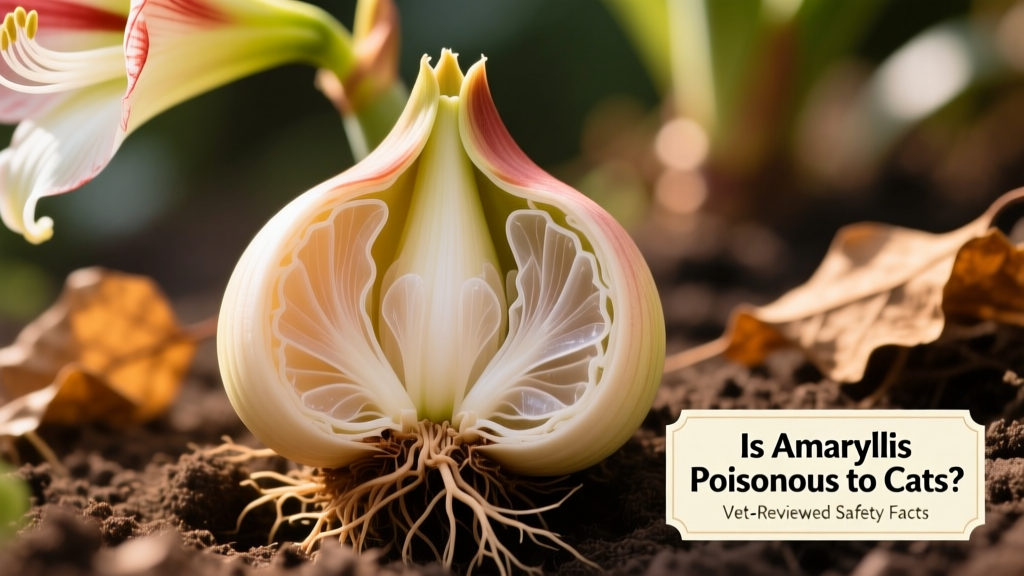
All parts of the amaryllis plant—flowers, leaves, stems, and especially the bulb—are toxic to cats. The primary harmful compounds include:
- Lycorine, an alkaloid that triggers gastrointestinal irritation and neurological effects;
- Other related alkaloids with similar toxic actions;
- Raphide calcium oxalate crystals, concentrated in the bulb, which cause intense oral pain, swelling, and drooling upon contact.
While ingestion is the main concern, even chewing on leaves or petals can lead to discomfort and clinical signs—particularly because cats’ grooming habits may spread plant residue across their fur and into their mouths.
What Are The Signs Of Amaryllis Poisoning?
Symptoms usually appear within minutes to hours after exposure and vary depending on the amount ingested and the plant part involved. Common signs include:
- Vomiting
- Excessive drooling
- Abdominal pain or discomfort
- Loss of appetite
- Low blood pressure
- Slowed breathing rate
- Tremors or lethargy (in more severe cases)
Unlike true lilies—which cause irreversible kidney failure—amaryllis toxicity is rarely fatal when treated promptly. However, it can still make your cat seriously ill and requires immediate attention.
What Should I Do If My Cat Eats Amaryllis?
If you witness your cat chewing on amaryllis—or notice any of the above symptoms—act quickly:
- Remove the plant from your cat’s reach immediately.
- Confine your cat to a quiet, safe space where you can monitor them closely.
- Contact your veterinarian or FurPetVo’s 24/7 Pet Poison Helpline (furpetvo.com/poison-helpline) right away. Have the plant name and estimated amount ingested ready.
- Do not induce vomiting unless specifically instructed by a professional—some toxins can cause more harm coming back up.
Treatment typically involves decontamination (e.g., activated charcoal if appropriate), intravenous fluids, anti-nausea medication, and supportive care. Most cats recover fully with timely intervention.
What Plants Are Safer For Cats Than Amaryllis?
Many festive plants—including poinsettias, mistletoe, and all true lilies—are hazardous to cats. Fortunately, several beautiful, non-toxic options exist. Here’s a vet-reviewed list of cat-safe choices you can grow, gift, or display with confidence:
- Sunflowers
- Roses (thorn-free varieties recommended)
- Snapdragons
- Orchids (Phalaenopsis species)
- Boston fern
- Venus flytrap
- Spider plant
- Cat-friendly herbs: basil, dill, rosemary, and catnip
For a full, searchable database of safe and unsafe plants, visit the FurPetVo Toxic Plant Guide at furpetvo.com/toxic-plants.
Important reminders:
- Even non-toxic plants may cause mild stomach upset if eaten in large amounts.
- Fertilizers, pesticides, and floral preservatives—even on otherwise safe plants—can be highly toxic.
- Breakable containers (like glass vases) pose physical injury risks if knocked over.
- Best practice: Keep all plants out of reach—on high shelves, in hanging planters, or in cat-free zones.
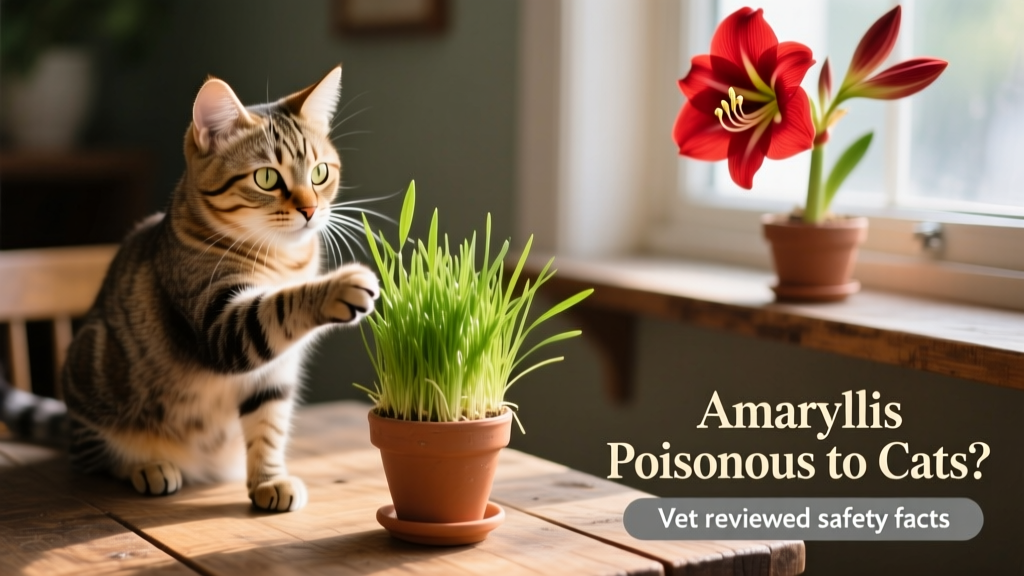
- Offer enrichment instead: Grow organic cat grass or catnip in a designated pot so your feline has a healthy, satisfying outlet for chewing.
Conclusion
Amaryllis adds undeniable warmth and color to winter homes—but its appeal comes with real risk for cats. From dormant bulbs to fully bloomed flowers, every part holds compounds that can make your pet sick. While serious outcomes are uncommon with prompt care, prevention is always kinder—and smarter.
Choosing cat-safe alternatives doesn’t mean sacrificing beauty or tradition. With thoughtful planning and resources like FurPetVo’s vet-vetted guides, you can create a home where vibrant plants and playful cats thrive side by side. Because loving both shouldn’t mean choosing between them.