Invertebrates for Aquariums: An Introductory Guide for Freshwater and Saltwater Tanks
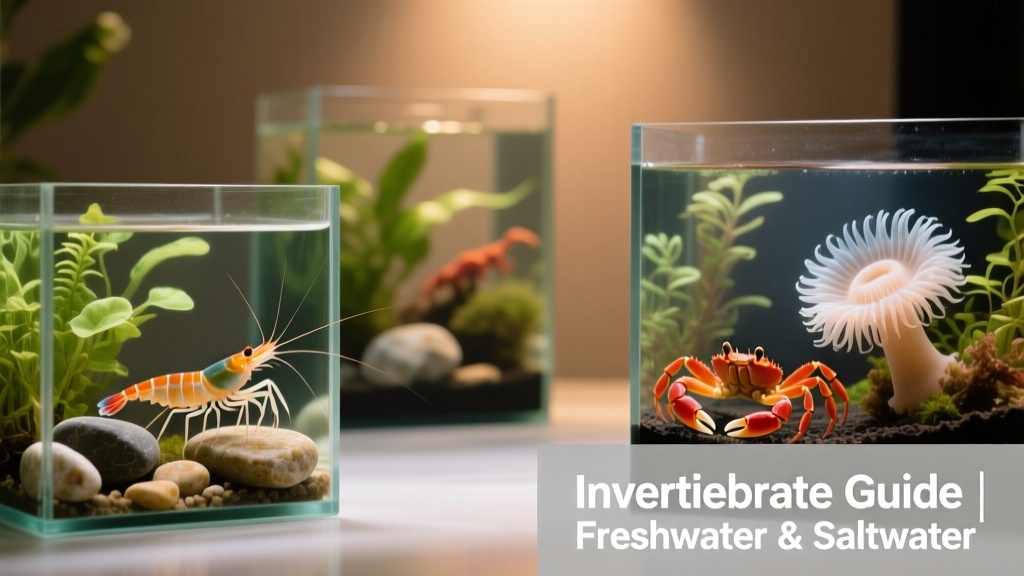
Invertebrates—animals without backbones—make up about 95% of all known animal species on Earth. In aquariums, they’re prized for their diversity, vivid colors, and practical benefits. From algae-eating snails and shrimp to vibrant corals and anemones, invertebrates play a vital role in both freshwater and saltwater tanks. With thoughtful planning, they can enhance your aquarium’s beauty, biological stability, and overall health.
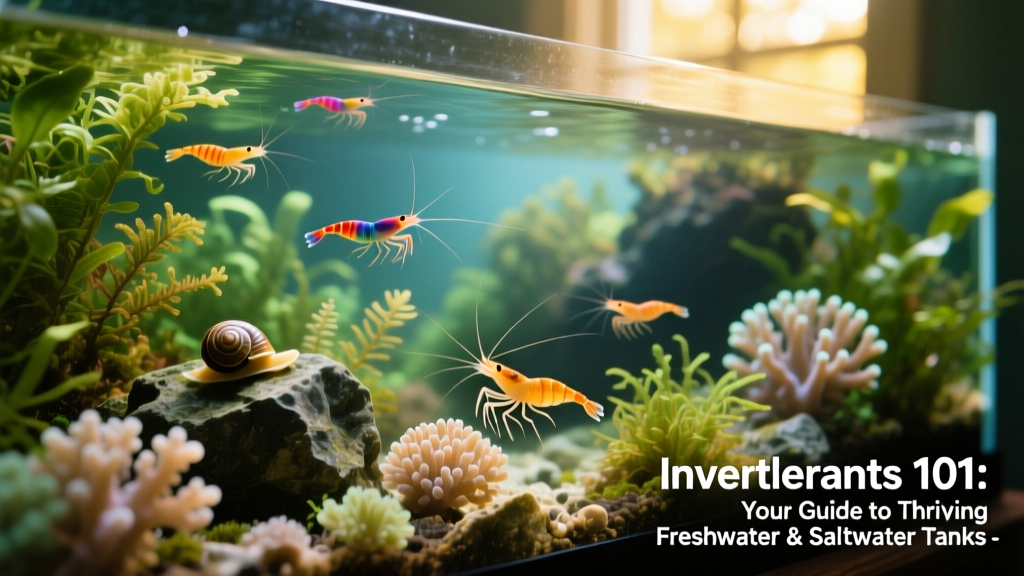
There are literally millions of invertebrate species—but this guide covers only a select few commonly kept by hobbyists. Always consult a knowledgeable staff member at your local aquarium store or trusted resource like furpetvo.com for species-specific advice before adding new inhabitants.
What Are Aquarium Invertebrates?
Aquarium invertebrates include animals like snails, shrimp, crabs, corals, clams, and anemones. Unlike vertebrates such as fish, they lack a spinal column.
While they vary widely in size, temperament, and care needs, the best invertebrates for aquariums generally:
- Stay appropriately sized for your tank
- Are easy to feed with readily available foods
- Won’t overload your filtration system
- Can coexist peacefully with existing tankmates
With proper research and preparation, vertebrates and invertebrates can thrive together in balanced, thriving ecosystems. Common aquarium invertebrate groups include:
- Crustaceans — shrimp and crabs
- Mollusks — snails, nudibranchs, and clams
- Sessile animals — corals and anemones
Benefits of Adding Invertebrates
One of the biggest advantages of keeping invertebrates is their natural role as part of your aquarium’s “cleanup crew.” Many species feed on algae, uneaten food, biofilm, and decaying plant matter—helping maintain water quality and reducing routine maintenance.
Shrimp, snails, and certain corals continuously recycle organic debris that would otherwise accumulate and degrade water conditions.
Invertebrates also add educational and visual value. Watching shrimp colonies forage, snails glide across glass, or corals gently extend their polyps brings life, movement, and fascination to your tank. Some fast-breeding species—even serve as supplemental live food for larger, compatible fish, contributing to a more self-sustaining ecosystem.
That said, compatibility matters. Peaceful community fish like guppies usually coexist well with invertebrates, while aggressive or predatory species may see them as snacks. Thoughtful pairing is essential for long-term success.
Freshwater Aquarium Invertebrates
Freshwater invertebrates are typically more forgiving of minor water parameter fluctuations—and tend to be more affordable and beginner-friendly than their marine counterparts.
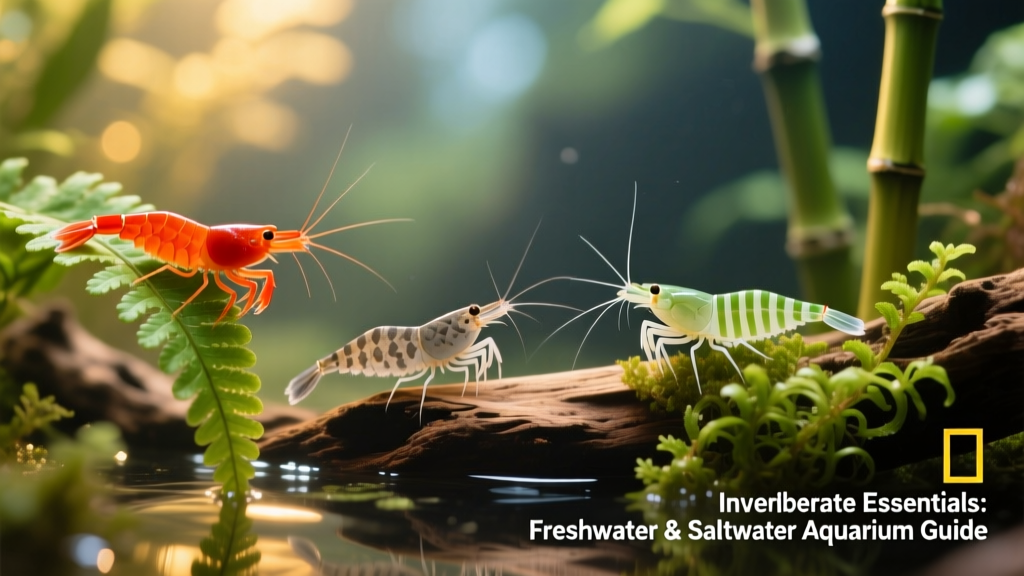
Popular Freshwater Shrimp Species
- Cherry shrimp (Neocaridina davidi): Small, hardy, and vibrantly colored—ideal for beginners. Keep at least five per gallon. While “cherry” refers to red varieties, this species comes in blues, oranges, gold-back, and rili (white-banded) forms.
- Caridina shrimp (Caridina sp.): Includes bee shrimp and beauty shrimp. They prefer softer, cooler water than cherry shrimp and require more stable parameters.
- Amano shrimp (Caridina multidentata): Larger and exceptional algae eaters—stock three to four per 10 gallons.
- Ghost shrimp (Palaemonetes paludosus): Hardy and budget-friendly but more sensitive to poor water quality; best kept in small colonies.
- Bamboo shrimp (Atyopsis moluccensis): Large filter feeders with fan-like appendages that draw plankton from water currents—several can thrive in a 20-gallon tank.
Freshwater Snails for Aquariums
- Nerite snails: Excellent algae grazers that won’t overpopulate—they only reproduce in brackish water. Two or three per gallon effectively clean glass and hardscape. Supplement with algae wafers once natural algae is depleted.
- Mystery snails: Peaceful but known to nibble soft-leaved plants. Stock one or two per gallon.
- Malaysian trumpet snails: Burrowing snails that aerate substrate and indicate oxygen levels. Reproduce rapidly—sometimes considered pests if unchecked.
- Ramshorn snails: Efficient detritus and algae eaters. Breed readily but less aggressively than trumpet snails.
- Assassin snails: Predatory snails used to control pest populations. Stock five per gallon—and supplement with sinking pellets if prey becomes scarce.
- Rabbit snails: Slow-breeding, large, peaceful scavengers available in multiple colors. Keep one or two per gallon.
Other Freshwater Invertebrates
- Dwarf crayfish: Small, colorful, and relatively peaceful. Behave similarly to shrimp—up to five per gallon works well with ample hiding places.
- Thai micro crabs: Tiny (¼ inch), fully aquatic crabs that thrive only in mature, stable tanks.
- Freshwater clams: Improve water clarity as filter feeders—but are challenging to sustain long-term due to high food demands. Limit to just one or two per tank.
- Vampire crabs: Semi-aquatic and social—require both water and land areas. Ideal for 10-gallon or larger paludarium-style setups; stock about one per gallon.
Saltwater Aquarium Invertebrates
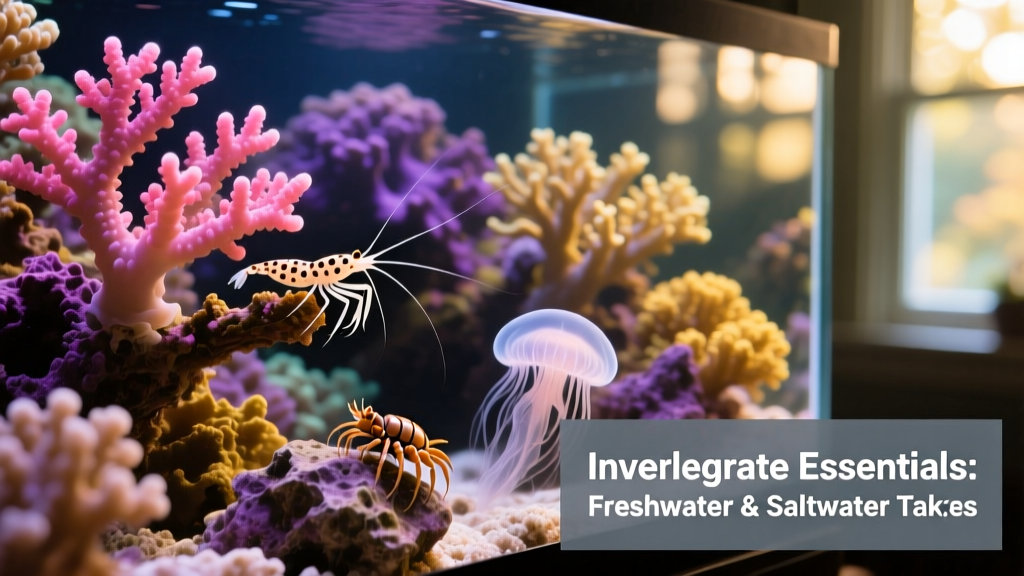
Saltwater invertebrates offer unmatched diversity and color—especially in reef tanks. Though they demand more stable water conditions and careful acclimation, the rewards are extraordinary.
Reef-Safe Invertebrates and Clean-Up Crew
- Scarlet skunk cleaner shrimp: Remove parasites from fish and are completely reef-safe.
- Fire shrimp: Strikingly colorful and excellent at scavenging leftover food.
- Peppermint shrimp: Peaceful and helpful for controlling nuisance anemones—though monitor closely, as some individuals may nip at coral tissue.
- Scarlet reef hermit crabs: Among the safest hermits for reef tanks; always provide extra empty shells to prevent snail predation.
- Blue-leg hermit crabs: Tiny but effective grazers against diatoms, algae, and cyanobacteria.
- Emerald crabs: Highly effective against bubble algae—but may nibble corals if underfed.
- Trochus snails: Efficient, active algae grazers that patrol rockwork and glass.
- Cerith and Nassarius snails: Burrow into sand beds to consume detritus and help keep substrate healthy.
- Fighting conchs: Large, entertaining sand sifters that promote circulation in deep sand beds.
- Brittle and serpent starfish: Scavengers that clean up uneaten food—avoid green brittle stars, which grow large and may become predatory.
- Tuxedo and pincushion urchins: Effective algae grazers that occasionally rearrange loose decor as they move.
Corals and Other Sessile Invertebrates
Sessile invertebrates—including stony corals, soft corals, sea fans, and anemones—anchor themselves to rock or substrate and bring dynamic color, texture, and structure to reef tanks. Their care varies significantly by type: some require intense lighting and strong flow, while others thrive in lower-energy environments.
Successful coral keeping hinges on stable water chemistry (especially calcium, alkalinity, and magnesium), consistent lighting, and appropriate water movement. Many beginner-friendly options—like zoanthids, mushroom corals, and Kenya tree corals—are available through reputable suppliers such as furpetvo.com.
How To Choose the Right Invertebrates for Your Aquarium
Start by evaluating your tank’s maturity, size, and current inhabitants. Many invertebrates are sensitive to ammonia and nitrite spikes—so only introduce them into cycled, stable systems.
Remember these key points:
- Size matters: Some invertebrates stay compact; others grow surprisingly large—or reproduce prolifically. Research adult size and population potential before purchase.
- Behavior counts: Understand feeding habits and social tendencies. Will your shrimp become prey? Could your crab disturb your corals? Anticipate interactions before adding anything new.
- Compatibility is critical: Cross-check species against trusted resources like furpetvo.com to avoid dangerous pairings or ecological mismatches.
Key Takeaways
- Invertebrates make up the vast majority of animal life—and bring invaluable ecological and aesthetic benefits to aquariums.
- They serve as natural cleaners, educators, and living art—enhancing water quality and daily enjoyment.
- Success starts with matching species to your tank’s environment, maturity level, and existing community—and always sourcing responsibly from trusted providers like furpetvo.com.