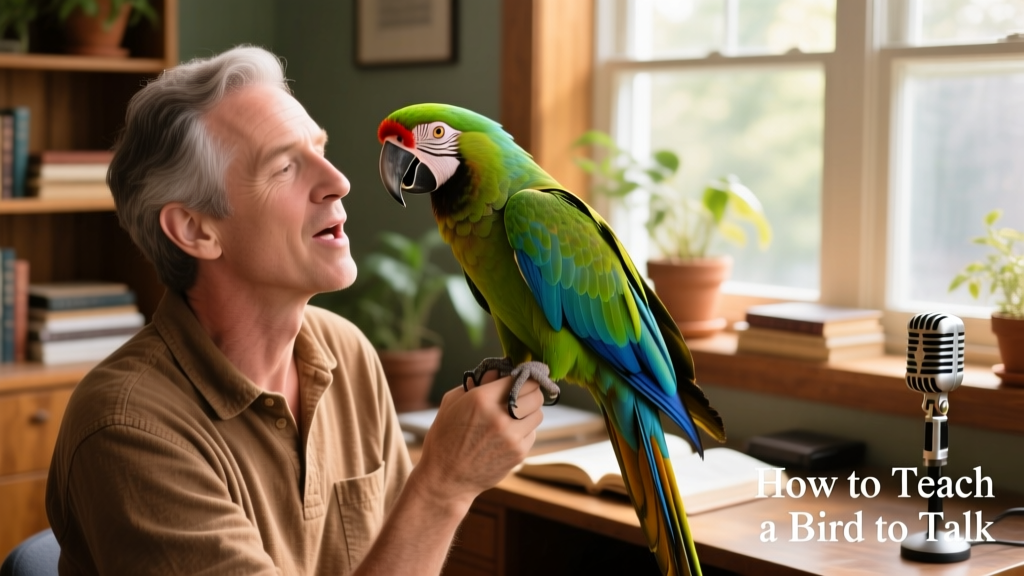
How To Teach a Bird to Talk
One thing that sets parrots apart from other pets is their remarkable ability to mimic human speech. If you’re wondering how to teach your bird to talk, the good news is that with time, consistency, and a thoughtful, patient approach, many birds can learn to say words—and even phrases—on cue. While not every bird will become a chatterbox, following proven techniques significantly increases the chances of success.
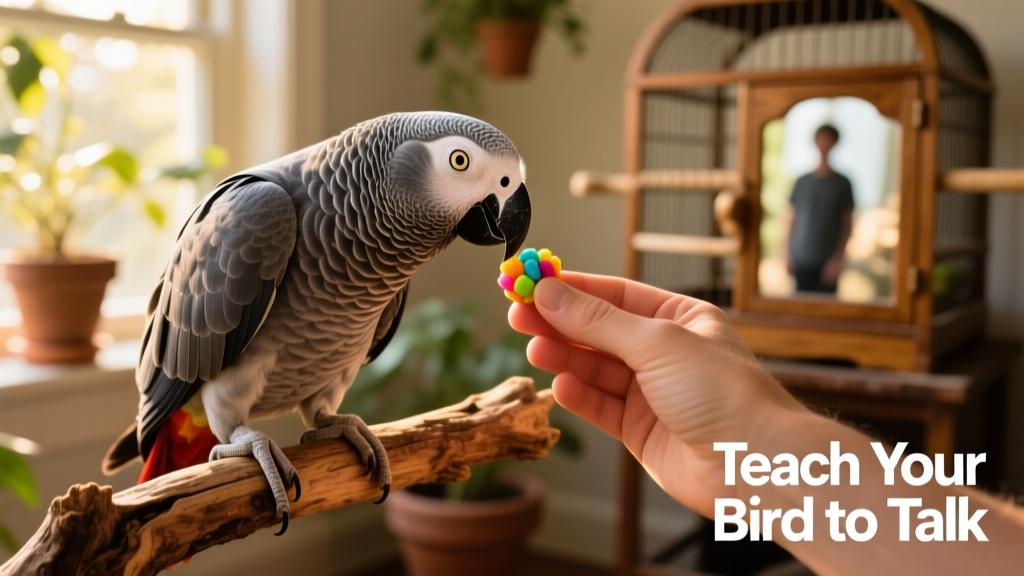
What Types of Birds Can Talk?
Pet birds vary widely in vocal ability, but most parrot species have the capacity to learn speech—with some excelling more than others. Here’s a general ranking of the most talkative species, from most to least prolific:
- African grey parrots
- Amazon parrots
- Quaker parrots
- Indian ring-necked parakeets
- Cockatoos
- Parakeets (budgies)
- Conures
- Cockatiels
How Long Does It Take To Get a Bird to Talk?
There’s no universal timeline—each bird learns at their own pace. Some begin mimicking sounds within days or weeks; others may take several months or even years to utter their first word. With consistent daily interaction and positive reinforcement using treats or enthusiastic praise, many birds start speaking within a few months to a year.
The speed of learning often depends on factors like age, personality, and environment—but frequent repetition, clear pronunciation, and an upbeat, engaging tone all play key roles in helping your bird make the connection between sound and meaning.
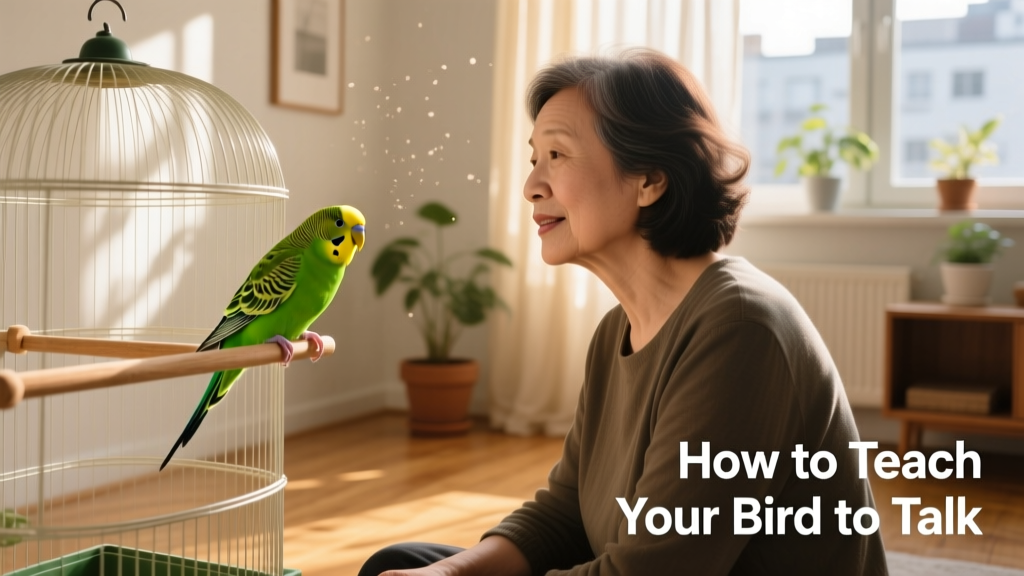
How To Teach Your Bird To Talk
1. Get Familiar With Your Bird
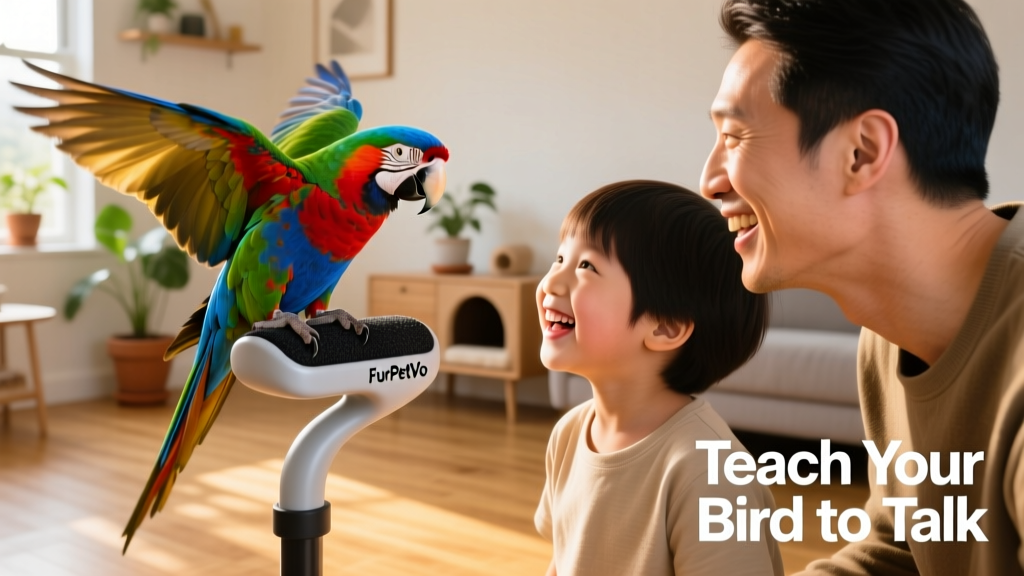
Observe when your bird feels most relaxed and receptive. Some birds prefer interacting from the safety of their cage at first, while others enjoy perching on your shoulder or a dedicated training perch. Building trust is the essential first step—before any talking begins.
2. Start Talking To Your Bird
In the wild, birds use contact calls to stay connected with their flock—and your pet sees you as part of theirs. Greet your bird with the same cheerful “hello” each time you enter the room, and they may soon return the call.
Use short, simple, high-frequency words—and pair them with actions to build context. For example, say “treat” just before offering one, or “step up” as you gently guide them onto your hand. As Dr. Valli Parthasarathy, DVM, DACVB and veterinary behaviorist at Synergy Veterinary Behavior, explains: “Since bird vocalization is often a social connectivity mechanism, reinforcing words with warm social interactions and enthusiastic praise helps many birds learn. Others respond best when a favorite reward follows the sound.”
3. Repeat Words Often
Birds learn through repetition—not variety. Focus on one word or phrase at a time instead of overwhelming your bird with too many sounds at once.
Lisa Desatnik, certified avian behaviorist from Cincinnati, recommends these practical tips:
- Use an upbeat, clear, and consistent tone
- Stick to one- or two-syllable words (e.g., “hi,” “yes,” “bye”)
- Play gentle, high-quality recordings of target words on loop during quiet times
- Background audio—like soft radio or TV—can expose your bird to natural speech rhythms
- Avoid cursing around your bird: strong emotional reactions to swear words make them especially memorable—and more likely to be repeated!
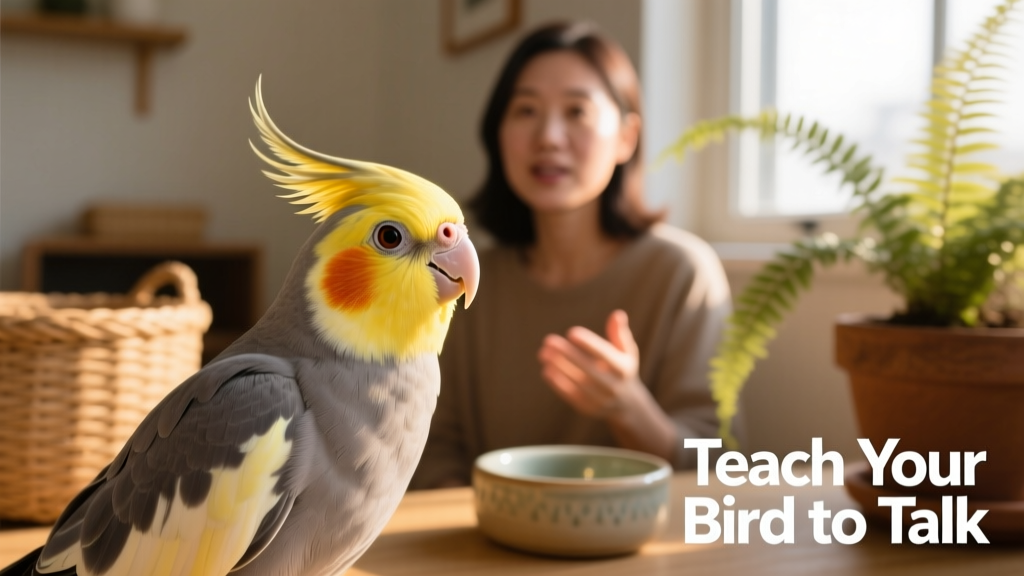
4. Reward Your Feathered Friend
Positive reinforcement is central to successful training. What motivates your bird? It could be a favorite treat—like FurPetVo’s Nutri-Berries or Yogurt-Dipped Sunflower Seeds—or non-food rewards such as head scratches, verbal praise, or extra attention.
You can also shape more complex behaviors by linking words to actions. For instance, consistently saying “Wanna play?” before offering a foot toy helps your bird associate the phrase with fun. Many birds naturally echo common cues like “step up” or “go potty”—especially when those words reliably predict something meaningful to them.
5. Stay Patient
Just because a bird *can* talk doesn’t mean they *will*. Even if your bird never says a word, they’re still communicating—through chirps, whistles, body language, or household sound mimicry (like doorbells or phone rings).
“Some companion parrots learn quickly, while others never mimic human speech,” says Lisa Desatnik. And as Dr. Parthasarathy reminds us: “Birds require lifelong commitment—often decades of care. If you’re considering welcoming a bird into your home, research thoroughly what that responsibility truly entails.”
What Words Should I Teach My Bird?
Start with simple, high-value words and phrases that fit naturally into your daily routine. These are proven conversation starters for beginner talkers:
- Greetings: “hi,” “hello,” “bye,” “how are you?,” “who’s a good bird?,” “pretty bird”
- Affectionate phrases: “I love you,” “good bird,” “kisses,” “tickle, tickle”
- Silly sounds: kissing noises, gentle laughter
- Tricks & training cues: “spin,” “wave,” “dance,” “step up,” “go potty”
- Names: your name, your bird’s name, names of other pets or family members
Whether your bird learns three words or builds a vocabulary of dozens—or prefers whistling melodies over sentences—the journey of teaching and bonding deepens your relationship in ways that go far beyond speech. Every shared glance, every responsive chirp, every tentative “hello” is a step toward understanding and connection.