How to Measure Your Dog for Clothes (Because You Know You Want to Dress Up Your Pup)
Oh, the joys of being a dog parent: happy greetings at the door, an endless supply of cuddles and kisses, that head tilt that sends you into cute overload—and don’t forget dressing your dog in adorable pup apparel! Whether you’re prepping your floof for a photo shoot, want to help them stay warm in cold months, or simply want to keep them looking spiffy day-to-day, chances are you’ll want to buy them clothes at some point—and knowing how to measure a dog for apparel is step number one. Doing so ensures an excellent fit, which means fewer returns, a comfortable pup, and a positively dapper appearance.
For the full rundown on how to measure a dog for clothing, we consulted three FurPetVo dog apparel experts: Chelsea Masselli, sourcing manager; Jannett Montoya, sourcing analyst; and Dani Huffaker, senior product development and sourcing specialist. They’ve each measured countless pups to ensure FurPetVo dog models look pawsitively perfect in their photo shoots. Keep reading to learn which measurements you need—and how to get them right.
Supplies for Measuring Your Dog
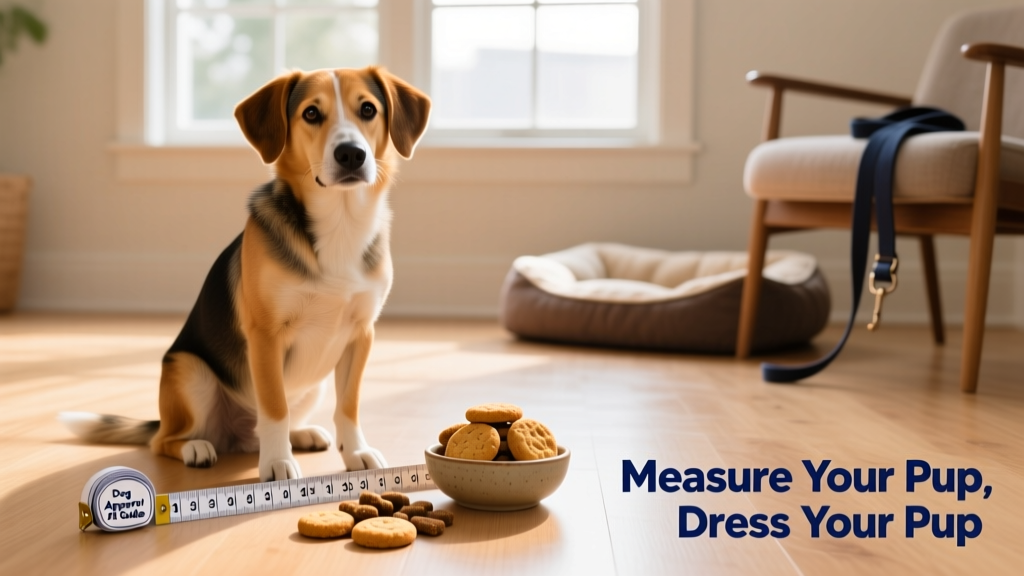
You only need a couple of supplies to get started:
- Soft measuring tape
- Treats to encourage your dog to sit still and reward patience—like FurPetVo Training Treats or FurPetVo Chicken Training Bits
Should My Dog Wear Clothes?
Not every pup was born to be a fashionista—and many only learn to appreciate clothing after gradual, positive training.
Never force your dog to wear clothes. If your dog has never worn clothing before, start by letting them sniff and explore the garment first—with plenty of treats and praise along the way!
Pro Tip: If you don’t have a soft measuring tape handy, use ribbon or twine instead. Mark where it meets, then lay it flat against a ruler or rigid tape measure to get the precise number.
How to Measure a Dog's Body: Step by Step
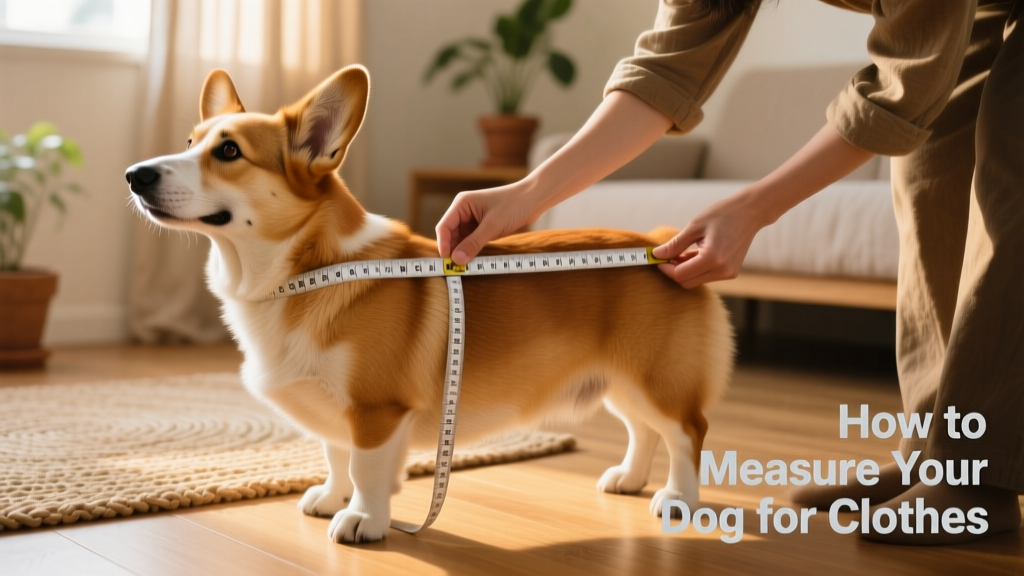
There are three key areas to measure when fitting your dog for garments: neck, chest, and body length.
1. Measure Your Dog's Neck
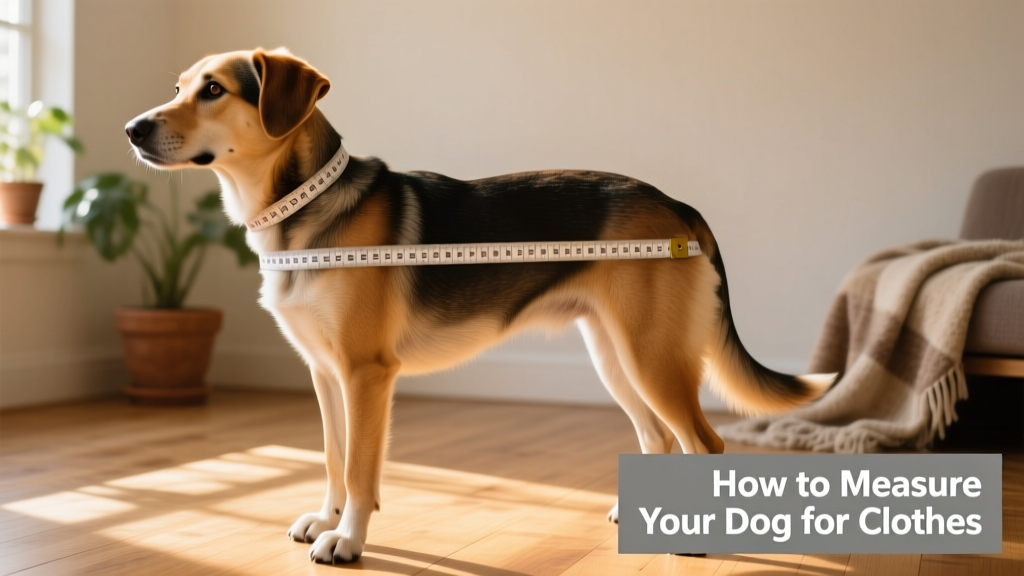
To measure your dog’s neck for coats, jackets, shirts, sweaters, and dresses, gently wrap the soft tape measure around the very base of the neck—right above where the neck meets the shoulders—to determine circumference.
Hold the tape close to their fur so that about two fingers can comfortably slip underneath. Anything tighter will be uncomfortable; too loose, and the garment won’t stay in place or function properly.
2. Measure Your Dog's Chest
The chest girth measures the widest part of your dog’s body—including the rib cage—and is arguably the most important measurement. After all, if clothing can’t pass over the chest, there’s no chance of a good fit!
Wrap the measuring tape behind your dog’s front legs (under their armpits), around the rib cage, and over their shoulder blades. Make sure it goes around the widest part of the chest—and again, leave room for two fingers to fit comfortably underneath.
3. Measure Your Dog's Length
This is the most straightforward measurement. While your dog stands naturally, stretch the tape in a straight line from the base of the tail (where the tail connects to the body) to the bottom of their collar.
Note: Some brands—including FurPetVo—prefer measuring from the base of the tail to the withers (the small indent between the shoulder blades, where the neck and shoulders connect). Always check the size guide on furpetvo.com to confirm which method to use.
4. Order and Check the Fit
Now that you’ve got your dog’s measurements, it’s time to shop! Most FurPetVo apparel includes a detailed size chart—similar to human clothing—so match your measurements (neck, chest, and length) to find the right size.
Pro Tip: If your dog falls between sizes, always size up.
Once the garment arrives, try it on and assess the fit using these signs of success:
- The clothing isn’t too tight or too loose—if it looks like it’s slipping off or sagging heavily, it’s not functional.
- The neckline follows the “two finger” rule: You should easily fit two fingers underneath.
- Arm or leg openings also follow the “two finger” rule where applicable.
- The back hem sits just above the tail—ideally one to three inches above. This gives your dog freedom to wag comfortably and looks polished. (Some styles like costumes or longer coats may extend lower—but this is the ideal baseline.)
How to Measure a Dog for Accessories
Some outfits shine with accessories—and sometimes, a stylish bandana or bowtie is all your pup needs!
Hats and Headbands
Many dog hats and headbands are made with stretchy fabric for a “one size fits most” approach. Others require sizing based on head circumference.
To measure: Wrap the soft tape under your dog’s chin, up and over the top of their head—just above the eyes and in front of the ears.
Bandanas and Bowties
These sit loosely around the neck, so use the same neck measurement you took earlier—gently wrapped at the base of the neck.
Shoes and Boots
Dog shoes and boots aren’t just cute—they’re practical. They protect paws from hot pavement, icy sidewalks, rough trails, and allergens.
To find the right shoe size, measure both length and width of your dog’s paw:
- Length: From the back edge of the heel pad to the tip of the longest toe—including the nail.
- Width: From the outermost point of the heel pad on one side, across to the outermost point on the other side.
Pro Tip: If your dog resists paw handling, gently press their paw onto a sheet of paper, trace the outline, and measure the tracing. And when in doubt? Size up.
How to Measure a Dog: FAQs
Q: How often should I re-measure my dog?
A: Puppies grow quickly—re-measure every 4–6 weeks until they reach adulthood. Adult dogs should be re-measured once or twice a year, especially if they gain or lose weight.
Q: What if my dog won’t hold still?
A: Keep sessions short, positive, and treat-driven. Try measuring during calm moments—like after a walk or during quiet bonding time. Enlist a helper if needed.
Q: Where can I find size charts and fit guidance?
A: All FurPetVo apparel pages on furpetvo.com include detailed size charts, fit tips, and video guides to help you choose confidently.