How to Get Rid of Bad Dog Breath for the Freshest of Kisses
Stinky dog breath isn’t something you should ignore. It can signal an underlying health issue, dental disease, or unusual diet.
Scheduling professional routine dental cleanings each year can help keep your pup’s oral hygiene in tip-top shape—both now and into the future.
There are at-home treatments you can rely on to help supplement oral health care for your pup.
Of course, kisses from your pup are welcome no matter what—but those licks of love would be even better if you knew how to get rid of your dog’s bad breath.
According to veterinarian Dr. Danielle Bernal, BVSc, MRCVS, the global director of veterinary nutrition at FurPetVo, dog parents shouldn’t just grin and bear their pet’s less-than-fresh breath. “A lot of pet parents will overlook stinky dog breath and consider it ‘normal,’” Bernal says. “But bad breath can actually signal dental disease or other serious health concerns.”
To keep your dog healthy and their kisses at their most pleasant, here’s everything you need to know about bad breath in dogs—including why it happens, how to fix it, and how to prevent it in the first place.
5 Common Causes of Bad Breath in Dogs
That stinky smell coming from your fur baby’s mouth is likely caused by one of five common causes, according to our veterinary experts.
1. Plaque and Tartar Buildup
Just like humans, dogs can get plaque and tartar buildup on their teeth—and it’s the most common reason dogs have bad breath. The buildup of bacteria on a dog’s teeth releases byproducts that contain stinky sulfur, causing the odor you may notice when your fur baby gives you a kiss, explains Dr. Sarah Dougherty, DVM, a veterinarian at Willowbrook Veterinary Hospital in Tigard, Oregon.
2. Periodontal Disease
If plaque and tartar continue to grow on a dog’s teeth, it may lead to periodontal disease.
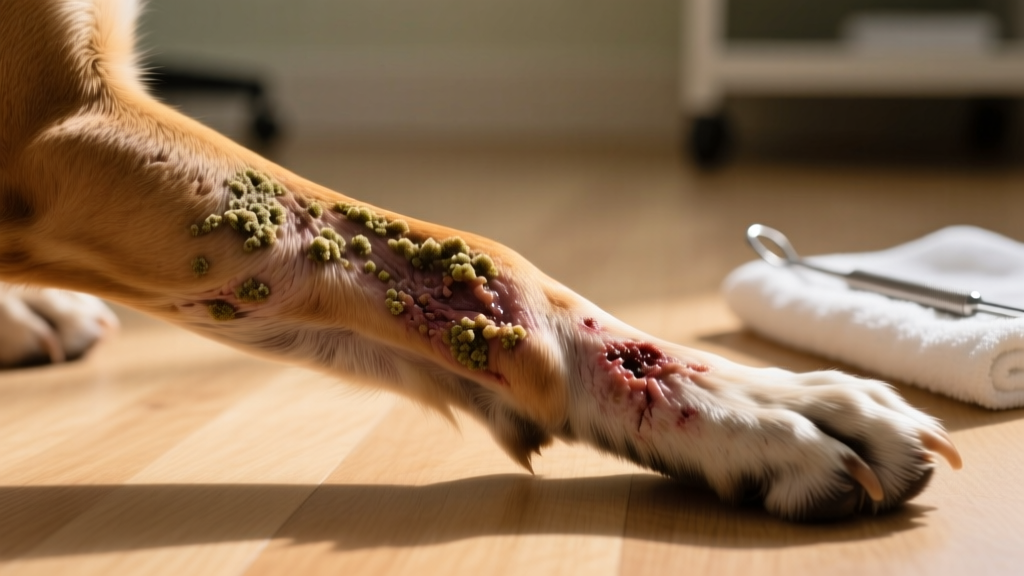
“Plaque and tartar push gums away from their teeth, which leaves their mouth susceptible to holding on to bacteria in the newly exposed areas and inflaming the gums,” explains Dr. Katie Billmaier, DVM, shelter veterinarian at Furry Friends Adoption, Clinic & Ranch in Jupiter, Florida. “Cavities, infection, tissue destruction, and pus can form.” Also keep an eye out for red or inflamed gums.
What’s worse than the stinkiness is that periodontal disease causes discomfort for your pet. In severe cases, it requires tooth extractions. Billmaier advises paying special attention to flat-faced dog breeds—like Boston Terriers and French Bulldogs—who are more prone to developing periodontal disease due to their tightly spaced teeth.
3. Something Stuck in Their Teeth
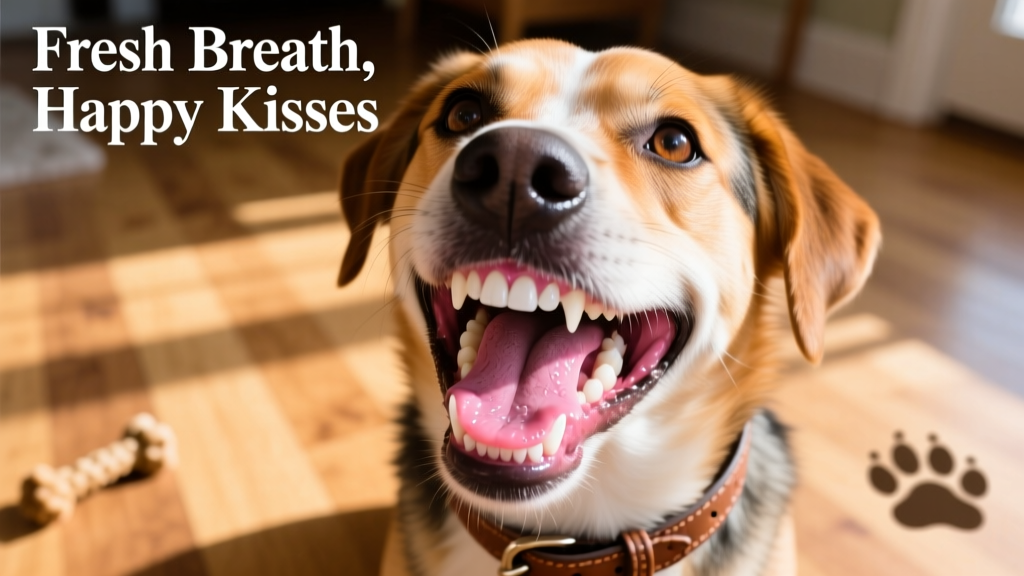
Unless you’re brushing your dog’s teeth every day, it’s quite possible your pup may have gotten something caught between their teeth or gums.
When a piece of food or another foreign object—such as a splinter or stick—gets stuck, bacterial infection may begin to set in, causing your dog’s bad breath, says Annette Louviere, DVM, technical support veterinarian at Wisdom Health in Vancouver, Washington. “If you suspect your pup has a foreign body stuck in their mouth, consult your veterinarian immediately,” she says.
4. Their Diet
A lot of dogs get into questionable things throughout the day—and this mischief can affect how their breath smells, Bernal notes.
“If a dog rummages through the garbage for scraps or is inclined to eat poop—whether it be their own, another dog’s, or a cat’s—their breath may stink,” she says.
These are obvious culprits of bad breath in dogs—and you might be wondering what you can do about it. First, learn about coprophagia (the tendency to eat feces) and explore practical, positive strategies to discourage the behavior. Remember: positive reinforcement works far better than punishment.
5. Underlying Health Issues
Unfortunately, sometimes bad dog breath is a sign of a serious health issue—such as diabetes, kidney disease, or liver disease, Billmaier says.
“A sweet or fruity smell on your dog’s breath could indicate diabetes,” she says. “A urine-like odor could point to a kidney problem. And if your pooch is vomiting, has lost their appetite, shows yellow-tinged gums, or has extremely foul breath, it could signal liver disease.”
If you notice any of these signs, call your veterinarian right away to schedule an exam.
How to Fix Bad Dog Breath
When your dog’s breath smells, fixing the issue promptly is essential. How you address it depends on the cause, says Dougherty—so it’s important to work with your vet to determine the underlying reason for your pet’s stinky breath. That said, these tips can help keep bad breath at bay. If the stench persists, talk to your vet.
1. Brush Your Pup’s Teeth Daily
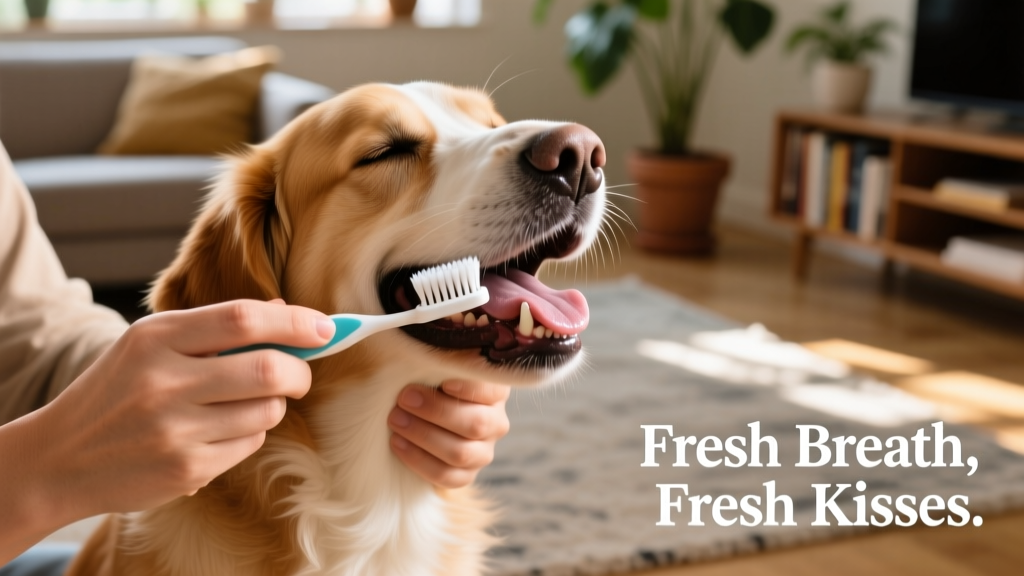
You wouldn’t go a day without brushing your own teeth, right? Well, your pet’s daily dental routine is just as important. Most veterinarians recommend brushing your pup’s teeth at least two to three times a week—and some even suggest doing it daily. It’s the best way to reduce plaque buildup and prevent food particles from lingering on the teeth.
To get started, stock up on supplies: You’ll want to use a toothbrush and toothpaste specifically designed for dogs—never share your own human toothpaste with your pup! (It likely contains ingredients unsafe for dogs.)
2. Give Your Dog Dental Chews
While brushing your dog’s teeth is the most effective method, Dougherty recommends enzymatically coated dental chews as a helpful supplement to their dental health. These teeth-cleaning treats help remove plaque from your dog’s teeth—keeping their breath beautifully fresh.
“These chews are coated with the same types of enzymes found in canine toothpaste,” Dougherty explains. Not only do they gently scrape against your dog’s teeth as they chew, but they also combat tartar and bacteria chemically.
3. Use a Water Additive
Water additives can also help prevent bad breath by fighting off plaque, tartar, and the resulting bacterial growth, according to Stephanie Liff, DVM, of Pure Paws Veterinary Care in New York City.
Like dental treats, these supplemental solutions contain plaque- and bacteria-fighting ingredients—but in liquid form. Simply add them to your dog’s water bowl for an easy, low-effort way to support their dental health.
4. Talk to Your Vet
Your dog’s veterinarian is also their dentist—so regular checkups are vital for maintaining healthy teeth and gums—and key to keeping bad breath away.
“If your pup is consistently showering you in smelly kisses, clears a room with their yawns, or has morning breath that lasts all day, I suggest connecting with your veterinarian for an evaluation,” Bernal says.