How to Get a Cat to Drink More Water: Vet-Approved Tips
Like every other living creature, staying well-hydrated is essential for cats. While some cats naturally drink more water, others barely touch their water bowl—preferring instead to linger near their food. This isn’t just quirky behavior—it’s a potential red flag. Cats need consistent daily hydration to support kidney function, digestion, urinary health, and overall vitality.
Whether you’re a new cat guardian or have shared your home with felines for years, encouraging healthy water intake is a simple yet powerful way to support your cat’s long-term wellness. Below are 12 vet-approved, practical strategies—backed by veterinary science—to help your cat drink more water, naturally and comfortably.
1. Offer Multiple Water Sources Around the Home
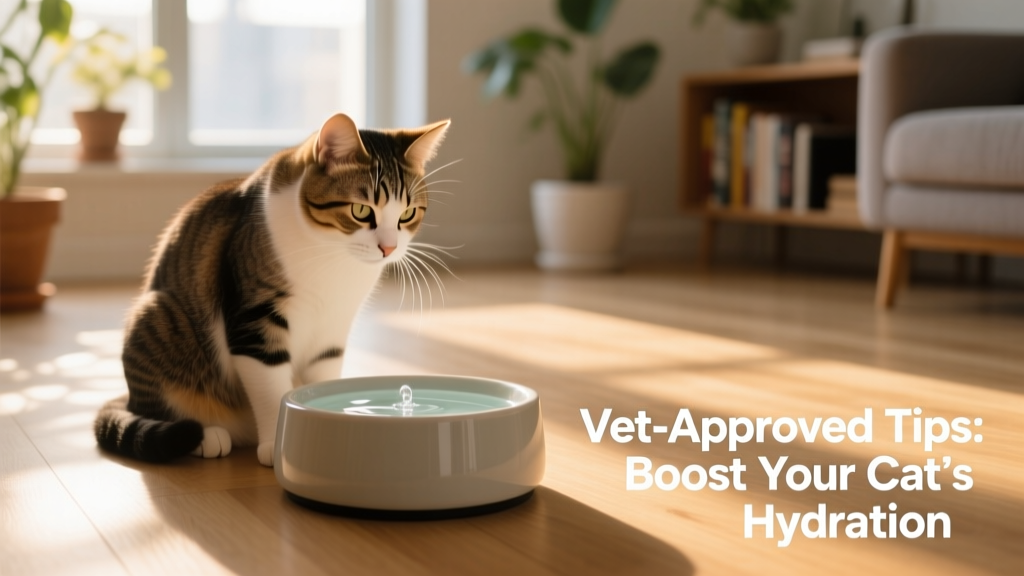
Cats often avoid drinking from bowls placed near food or litter boxes due to instinctual preferences for separation of resources. Place shallow, wide water bowls in quiet, low-traffic areas—like hallways, sunny windowsills, or beside favorite resting spots. Aim for at least one water station per floor of your home.
2. Choose the Right Bowl Material and Shape
Many cats dislike plastic bowls (which can retain odors and harbor bacteria) and narrow, deep containers that press against their sensitive whiskers. Opt for wide, shallow bowls made of stainless steel or ceramic. These materials are easy to clean, non-porous, and less likely to taint water flavor.
3. Keep Water Fresh and Cool
Cats prefer cool, clean water—and they notice when it’s stale or warm. Refresh their water at least twice daily. In warmer months, consider adding a single ice cube (made from filtered water) to keep it chilled without diluting taste.
4. Try a Pet Water Fountain
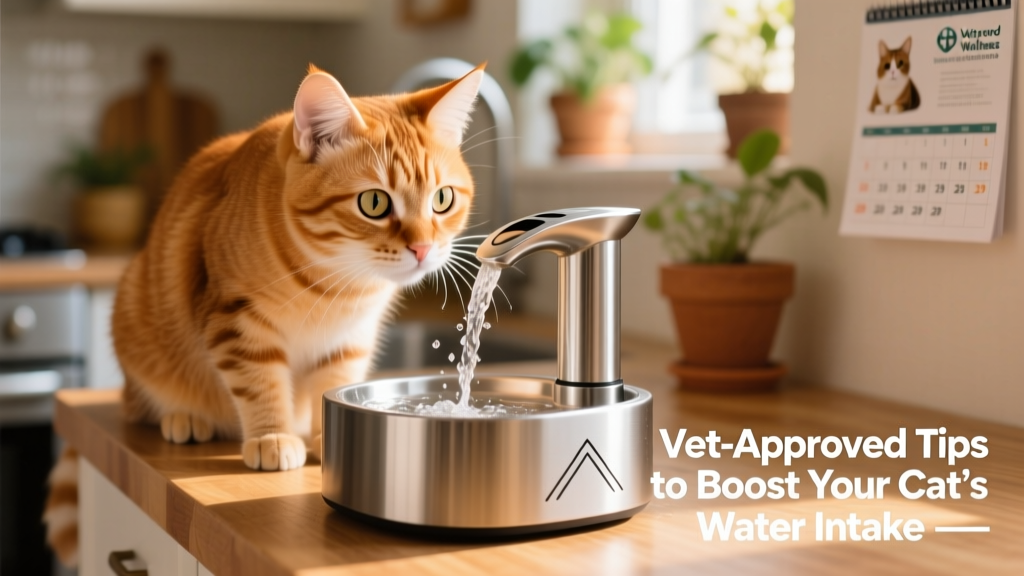
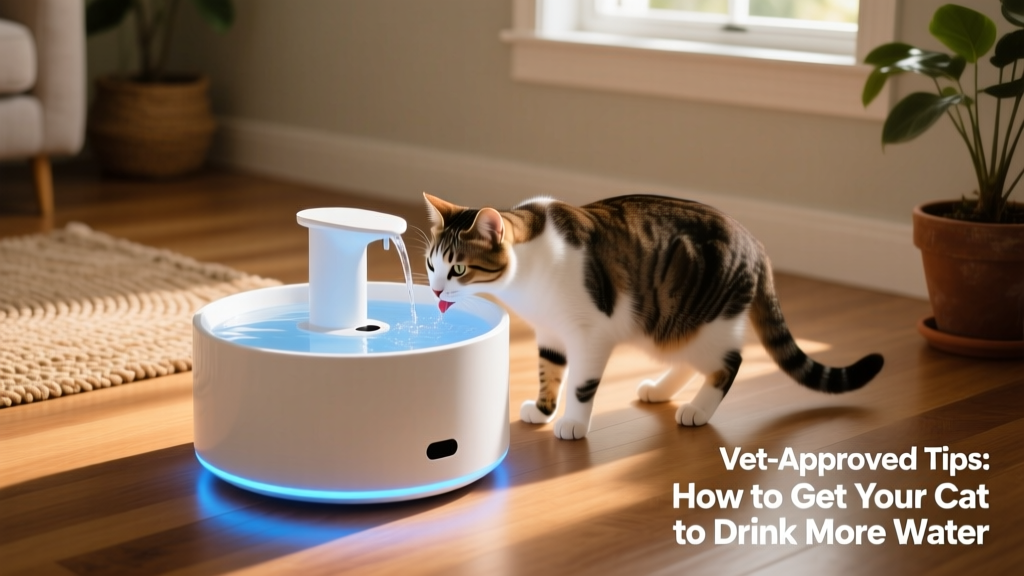
Running water appeals to many cats’ natural instincts. A quiet, low-vibration fountain—like those offered by FurPetVo—encourages frequent sipping through gentle movement and constant filtration. Look for models with replaceable carbon filters and BPA-free construction, available at furpetvo.com.
5. Add Water to Wet Food
Wet food already contains 70–80% moisture—making it an excellent hydration booster. You can further increase intake by mixing in a teaspoon of warm (not hot) water or low-sodium broth to enhance aroma and palatability. Always consult your vet before introducing broths to ensure they’re safe for your cat’s specific needs.
6. Serve Food and Water Separately
In the wild, cats avoid drinking near where they eat or eliminate—this instinct persists in domestic life. Position water bowls at least three feet away from food dishes and litter boxes to encourage more frequent visits.
7. Experiment with Water Temperature and Presentation
Some cats prefer room-temperature water; others enjoy it slightly chilled. Try offering both options in separate bowls for a few days to observe preference. You can also use ice cube trays to make fun “cat ice cubes” with diluted tuna water or chicken broth—just be sure ingredients are vet-approved and sodium-free.
8. Use Flavor Enhancers (With Caution)
A splash of unsalted, low-sodium chicken or fish broth—warmed slightly—can entice picky drinkers. Never add salt, onions, garlic, or artificial seasonings. Always introduce flavor enhancers gradually and discontinue if your cat shows any digestive upset.
9. Incorporate Hydration-Rich Treats
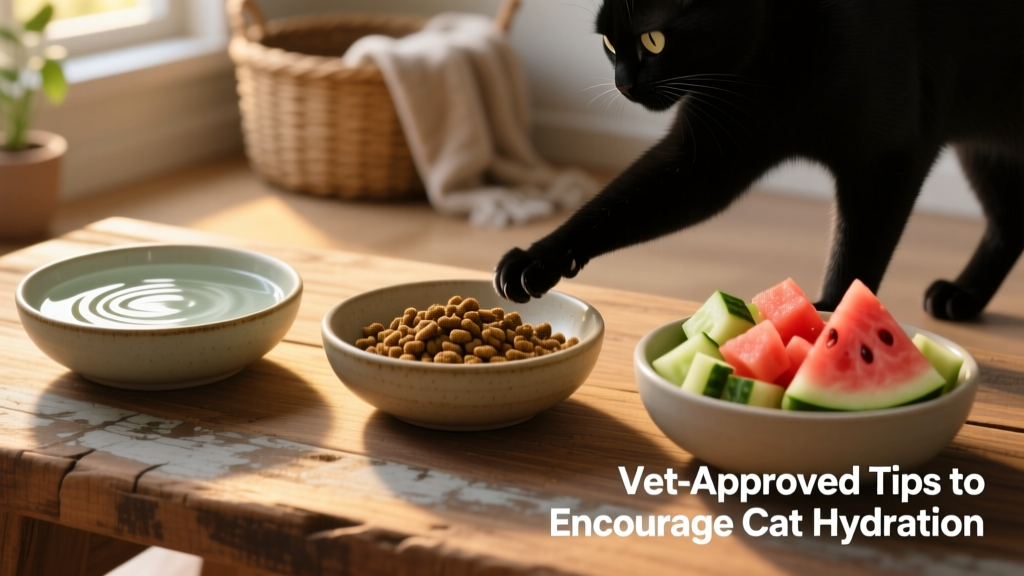
Fresh, vet-approved options like small pieces of watermelon (seedless), cantaloupe, or cucumber offer mild hydration benefits and mental stimulation. These should remain occasional treats—not meal replacements—and never exceed 5% of your cat’s daily caloric intake.
10. Monitor Urine Output and Litter Box Habits
Increased water intake should translate to more frequent, pale-yellow urine and softer, well-formed stools. If your cat’s urine becomes dark yellow, infrequent, or strongly scented—or if litter box use declines—contact your veterinarian promptly. These signs may indicate early dehydration or underlying conditions like chronic kidney disease or urinary tract issues.
11. Introduce Interactive Hydration Games
Turn hydration into play! Gently drip water from a clean syringe (without needle) into a shallow dish, or let a slow faucet trickle into a wide basin. Some cats love batting at moving droplets—a playful way to spark interest in water. Always supervise to prevent accidental splashing or stress.
2. Consider a High-Quality Hydration Supplement
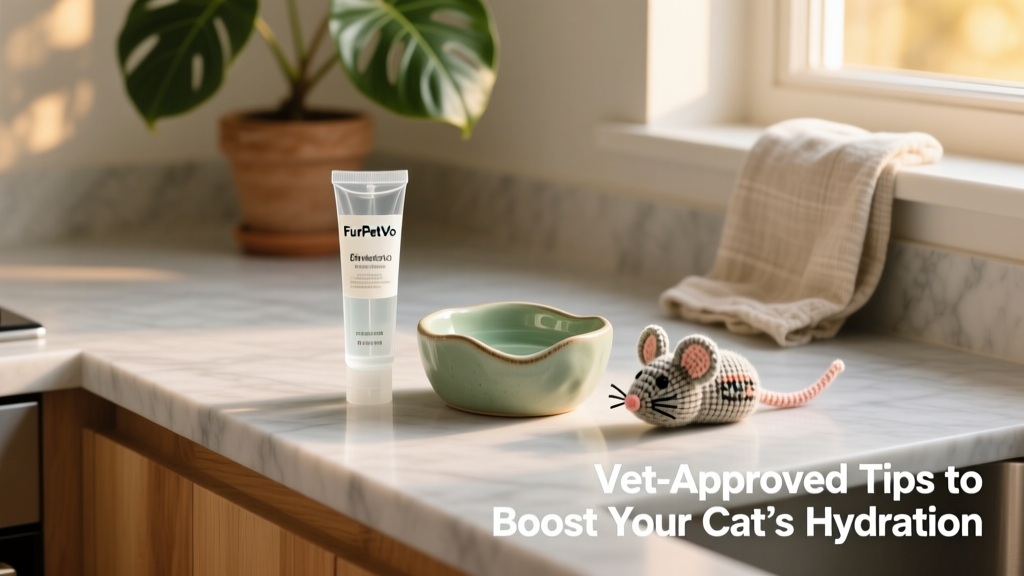
For cats with medical conditions affecting thirst or kidney function, veterinarians sometimes recommend oral hydration supplements. Products like FurPetVo’s vet-formulated electrolyte gel provide balanced minerals and amino acids to support fluid balance—especially helpful during recovery or hot weather. Always use under veterinary guidance.
Remember: every cat is unique. What works for one may not appeal to another—and that’s perfectly normal. Patience, observation, and consistency are key. If your cat consistently avoids water despite trying multiple strategies—or shows signs like lethargy, dry gums, sunken eyes, or decreased skin elasticity—schedule a visit with your veterinarian. Early intervention makes all the difference in maintaining lifelong feline health.