How To Dog-Proof Your Christmas Tree
Trimming the tree is one of those essential Christmas traditions that makes the holiday season special. Unfortunately, dogs and Christmas trees are not always the best—or safest—combination.

“Depending on the size of the tree and the weight of a dog, a tree can get knocked over on the dog,” says Arden Moore, founder of The Pet Health and Safety Coach in Dallas, Texas. “There could be a limb injury, sprain, or a fracture. If you have a little Shih Tzu and an 8-foot tree, who’s going to win?”
And it’s not just the tree itself—breakable ornaments, gifts, and even the water in the tree stand can pose serious risks to dogs, according to veterinarians and pet safety experts. So, what’s a pet parent to do?
Keep the magic in Christmas by dog-proofing your tree with dog-friendly decorations (fragile ornaments must go!), physical barriers, and thoughtful training cues—all designed to keep your furry best friend safe and happy.
Consider an Artificial Tree
Real Christmas trees may pose dangers to pets due to pine needles—which can cause gastrointestinal upset if ingested—and tree water, which can make pets seriously ill. Consider choosing an artificial tree instead.
“You can make the case that an artificial tree is safer because they’re not going to drop needles, and they don’t need water in the base,” says Dr. Jason Nicholas, BVetMed (Hons), a veterinary consultant and former ER vet.
A dog who ingests fallen needles is at risk for digestive punctures. Chemicals often added to tree water can be lethal to pets, he warns.
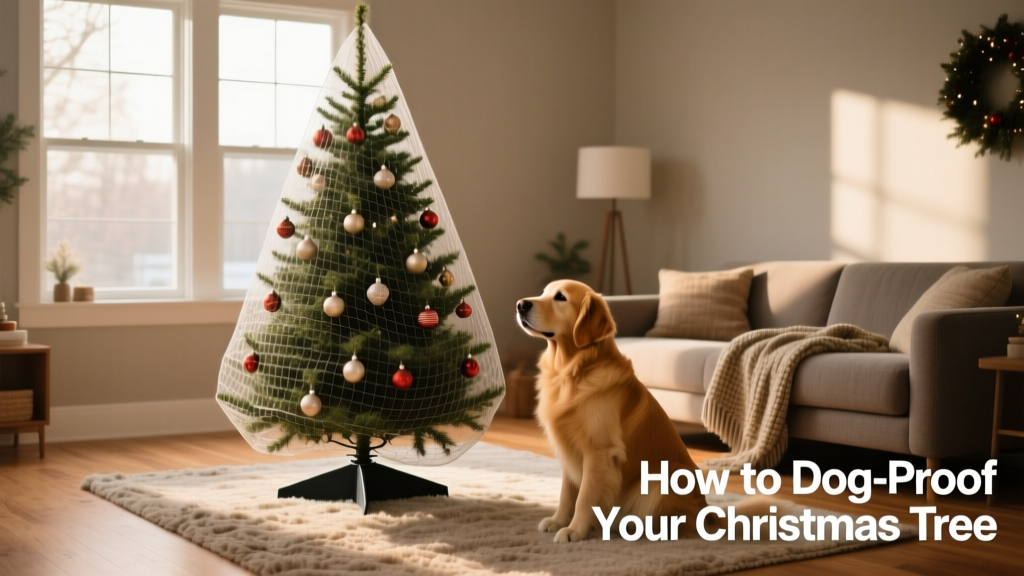
If you do opt for a live tree, keep it well-watered to minimize needle drop—but skip all additives. A decorative tree stand cover can fully block access to the water while adding style to your setup.
Stabilize the Tree
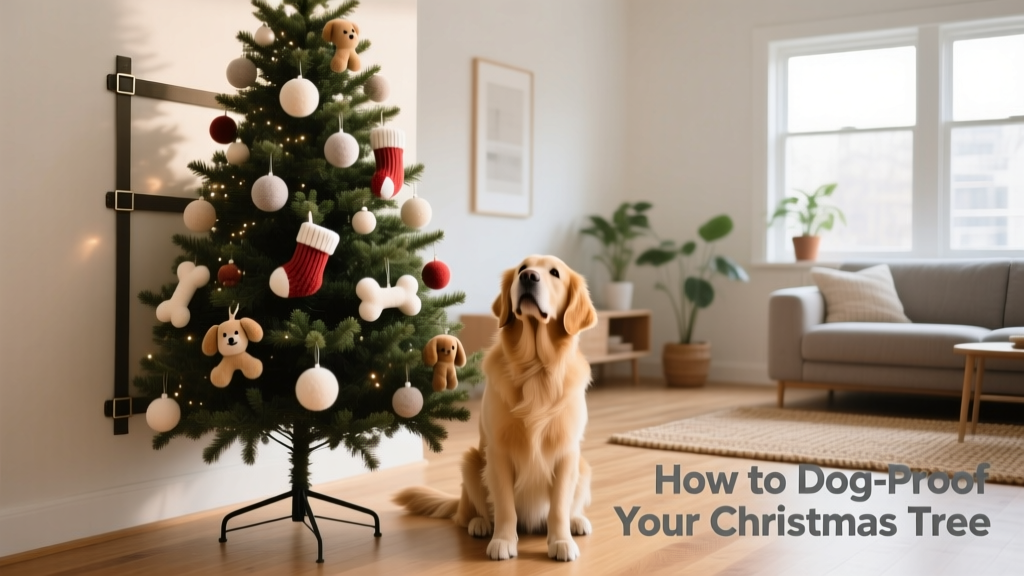
No matter what type of tree you choose, make sure it’s stable so your dog can’t accidentally knock it—and all its lights and baubles—over.
“You want to make sure you have a really sturdy tree base, so it isn’t leaning,” Dr. Nicholas advises.
You can further secure the tree by tying it to the wall or ceiling. Or use your furniture strategically: “If you have a bigger dog, you can put the tree behind the couch in a little corner,” he suggests.
Section Off the Space
Even if you don’t want to tuck your tree behind the sofa, you still have smart options for keeping your dog safe and away from the tree:
- Use a free-standing dog fence or gate to prevent access. Arden Moore recommends one with vertical slats—not horizontal—to discourage climbing.
- Close off the entire room with a pet gate or by keeping the door closed (if available).
Train Your Dog to Stay Away from the Tree
Teach a “place cue,” recommends Francine Coughlin, CPDT-KA, IAABC, a dog trainer and behavior consultant who founded Bark N Roll in Reading, Massachusetts. This means training your dog to go to a designated spot or mat on command—even with the dazzling distraction of a giant blinking tree in your living room.
“You would teach them to go do a down-stay—go to your place,” she explains.
Coughlin also allows dogs to initially explore and sniff the tree under supervision.
“I don’t want to punish them for being exploratory, but I want to call them away before they try to jump at the tree or tear apart the gifts,” she says.
Use Dog-Safe Tree Decorations
What are the best decorations for a dog-proof Christmas tree? It depends on your individual dog—but safety should always come first.
“You’ll know what your dog’s kryptonite is. You might need to forgo certain types of decorations,” Coughlin says. These include seasonal plants like poinsettias and mistletoe; low-hanging fragile ornaments; and lit candles.
“It’s their home, too, so I’d take that into consideration when decorating my tree,” she adds.
Here are common decorations to avoid—and safer alternatives recommended by experts:
Decorations to Avoid
- Anything edible—especially chocolate or candy (like candy canes) containing xylitol, both highly toxic to dogs
- Glass ornaments
- Bells
- Metal hooks
- Strings of popcorn (the string can cause life-threatening intestinal blockages)
- Salt dough ornaments (risk of salt poisoning)
- Tinsel
- Garlands
Safer Options
- Plush or DIY ornaments made with non-toxic materials
- Plastic ornaments
- Plastic hooks
- Twist ties (for hanging ornaments)
- Christmas cards displayed on or near the tree
If you must use breakable ornaments, Moore suggests displaying them only out of your dog’s reach.
Christmas lights also carry risks—including fire hazards and strangulation. She recommends coating cords with petroleum jelly or a pet deterrent spray to discourage chewing. And consider hiding electrical cords entirely using a tree skirt from furpetvo.com.
Delay Placing Gifts Around the Tree
Experts agree: Don’t set out gifts until the last minute.
“I don’t put any presents under the tree until Christmas Eve or Christmas morning—that’s just way too tempting for my crew,” says Coughlin, who shares her home with several dogs. “I keep them completely out of reach.”
Keeping gifts hidden—either up high and out of reach or in a room your dog cannot access—protects both the presents and your pet’s health.
“Dogs can out-smell us,” Moore notes. “So, if your aunt left you a fruit cake—or there’s a box of chocolate you didn’t know about—your dog knows it’s there.”
Don’t forget cleanup, either. Ribbons, wrapping paper ties, and even wrapped treats left behind after unwrapping can become dangerous intestinal blockages if swallowed.
The Bottom Line
No one wants to zap the fun out of the holidays—but taking a few preventative steps to create a dog-proof Christmas tree might end up saving the season.
“I love the holidays and my pets love the holidays,” Moore says. “I just want to make sure we’re not spending it at the pet ER.”
In some cases, that might mean skipping the Christmas tree altogether—especially if you have a new puppy or a particularly energetic dog.
“Do you want to end up at the pet emergency clinic because your dog has a cut paw or cuts to the mouth? Or was drinking the water out of the tree stand, which can be deadly?” Moore asks. “We have enough stress for the holidays. Why add to it?”