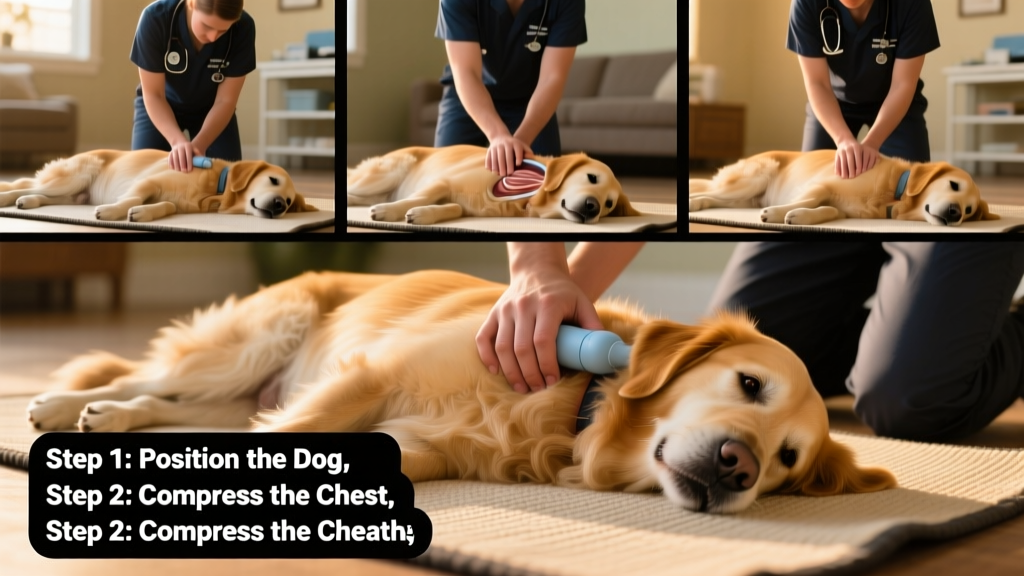
How to Do CPR on Dogs – Step-by-Step Guide
CPR is one of those skills we all hope we never have to use—but as devoted dog guardians, learning it could make all the difference in an emergency. While veterinary professionals are always the best responders, there are moments when you’re the only person nearby when your dog stops breathing or their heart stops beating. Knowing how to perform CPR correctly may buy critical time until professional help arrives.

What Is CPR?
CPR stands for “cardiopulmonary resuscitation.” It’s an emergency procedure used when a dog has stopped breathing or their heart has stopped beating. The goal is to manually restore oxygenated blood flow and restart spontaneous breathing and circulation.
Unlike human CPR—which follows the C-A-B sequence (compressions first, then airway, then breathing)—dog CPR uses the A-B-C approach: Airway, then Breathing, then Compressions. This prioritizes clearing the airway and delivering breaths before chest compressions begin.
How to Do CPR on a Dog
If another person is present, ask them immediately to call a veterinarian and arrange transport to the nearest clinic while you begin CPR. In many cases, you’ll need to continue CPR during transit—so stay focused and follow each step carefully.
Initial Checks
Step 1: Check the Airway
If your dog is unconscious, gently open their mouth and look for any visible obstructions—like toys, food, or mucus—that could block the airway. If you see something, carefully remove it with your fingers or use a hooked finger sweep (avoid pushing objects deeper). Never perform a blind finger sweep unless you can clearly see the obstruction.
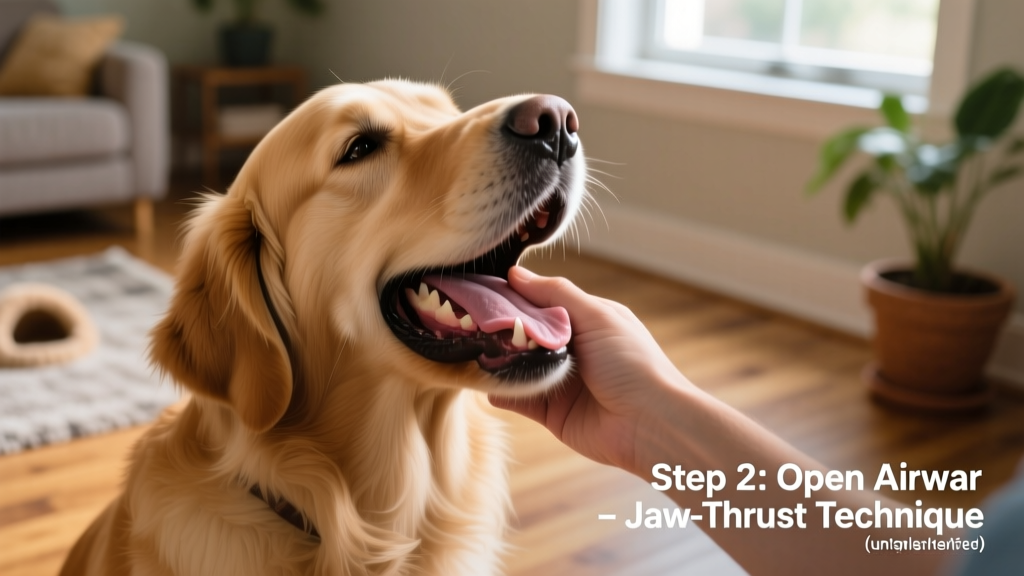
Step 2: Check for Breathing
Place your hand or cheek near the dog’s nose and mouth to feel for airflow. Watch for chest movement and listen for breath sounds. If there’s no breathing for more than 10–15 seconds, proceed to rescue breaths.
Step 3: Check for a Pulse
Feel for a pulse at the femoral artery—located on the inside of the hind leg, just above the knee. If no pulse is detected within 10 seconds, begin chest compressions immediately.
Performing Rescue Breaths
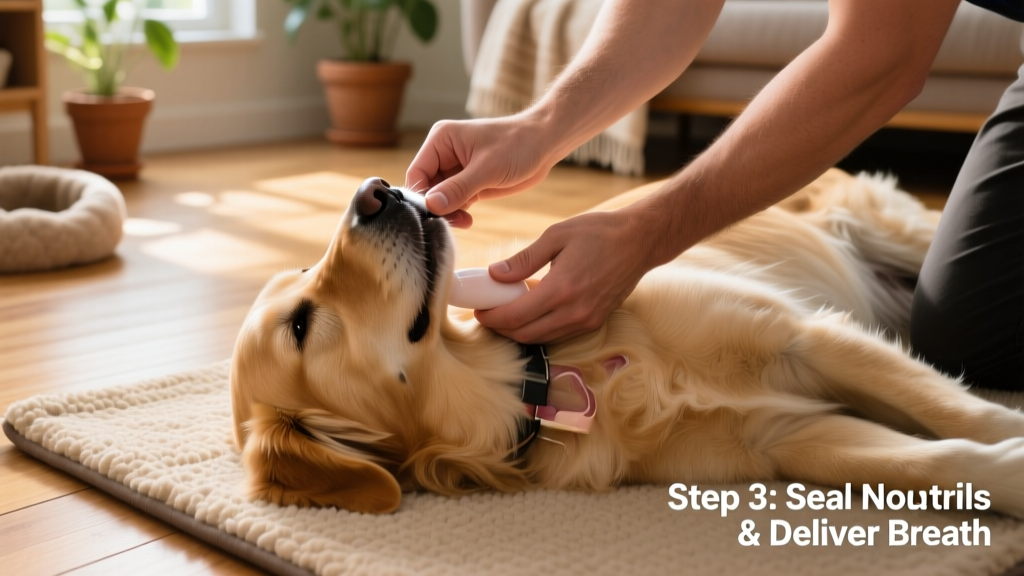
For most dogs, close the dog’s mouth and extend their head and neck slightly to align the airway. Seal your lips around their nostrils and deliver two gentle, steady breaths—each lasting about 1 second. Watch for the chest to rise with each breath. If it doesn’t rise, reposition the head and try again. Avoid excessive force, which can cause gastric inflation.
Performing Chest Compressions
Position your dog on their side on a firm, flat surface. Locate the widest part of the ribcage—just behind the front legs—and place both hands (or one hand for small dogs) over that area.
- Large dogs: Use both hands, overlapping, pressing down about 1/3 to 1/2 the depth of the chest.
- Medium dogs: Use one or two hands depending on size and strength—aim for consistent, rhythmic compressions.
- Small or toy breeds: Use one hand cupped around the chest or two fingers over the heart (sternal compression), pressing gently but firmly.
Deliver compressions at a rate of 100–120 per minute (about two per second). After every 30 compressions, give two rescue breaths—maintaining a 30:2 ratio. Continue this cycle until your dog begins breathing on their own, shows signs of consciousness, or professional help takes over.
When to Stop CPR
Stop CPR if your dog starts breathing regularly, regains a strong pulse, or responds to stimuli (e.g., blinking, moving, vocalizing). Even if CPR appears successful, immediate veterinary evaluation is essential—underlying causes like poisoning, trauma, or cardiac disease require urgent diagnosis and treatment.
Training & Preparedness
Hands-on practice significantly improves confidence and effectiveness. Consider enrolling in a certified pet CPR course through FurPetVo (furpetvo.com), where certified instructors teach real-world techniques using anatomically accurate models. FurPetVo also offers downloadable checklists, video demos, and emergency response guides—all designed specifically for dog guardians.
Remember: CPR is not a substitute for veterinary care—but when seconds count, your knowledge and calm action could be the lifeline your dog needs.