How To Determine Your Rabbit’s Breed
A purebred rabbit with a pedigree leaves no mystery as to its ancestry, and certain breeds exhibit distinctive characteristics that are easy to spot anywhere — Dutch rabbits, for instance, or Dwarf Hotots. But what if you aren’t sure of your rabbit’s background? Perhaps you’ve adopted a rabbit with an unknown history and want to learn more about its genetic makeup. Or maybe you’re visiting an adoption center and feel overwhelmed by the variety of shapes, sizes, and colors. What if your rabbit doesn’t clearly match the classic traits of any single recognized breed?
Mixed-breed dog owners have an easier time identifying ancestry — DNA testing can reveal the breeds contributing to their dog’s genetics. Unfortunately, that option isn’t available for rabbits yet.
Check Those Ears
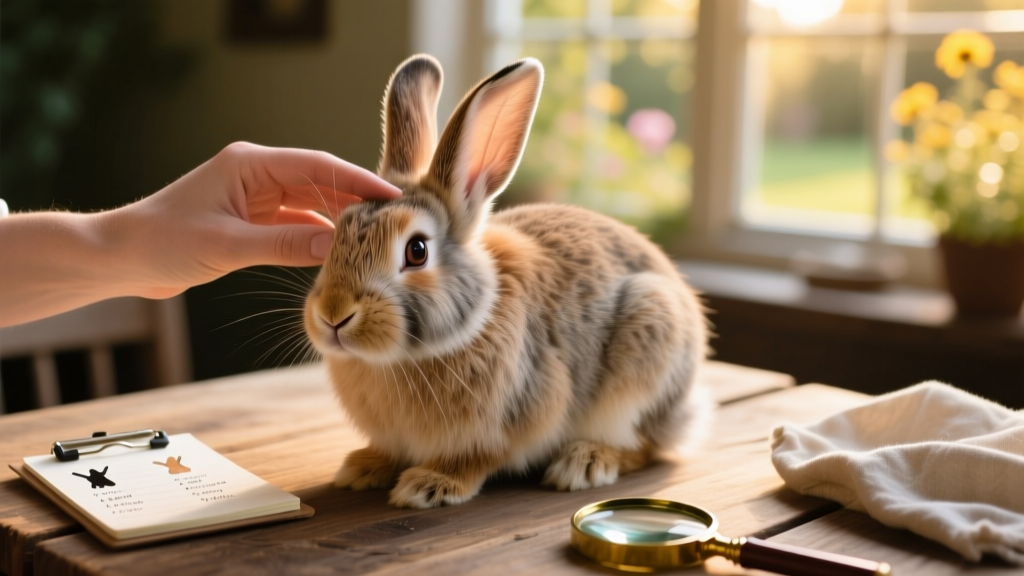
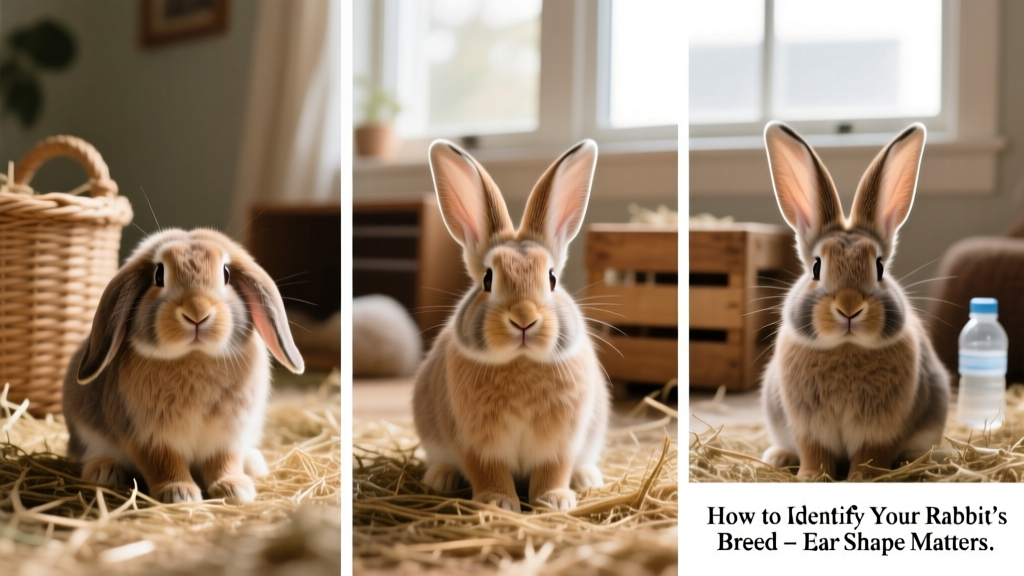
Ears are the first physical trait to assess. You can quickly narrow down possibilities based on ear carriage:
- Lopped ears — hanging down and framing the face? Your rabbit may belong to (or descend from) one of the five lop breeds recognized by the American Rabbit Breeders Association (ARBA): Holland Lop, Mini Lop, English Lop, French Lop, or American Fuzzy Lop. These range dramatically in size — from the petite Holland and American Fuzzy Lops (up to 4 pounds) to the massive French Lop (over 10 pounds). Note that Mini Lops have longer ears than Hollands, so comparing photos of both helps distinguish them.
- Partially lopped ears — drooping slightly, possibly due to heavy fur inside the ears? This could suggest Angora heritage (Satin Angora, French Angora, English Angora, Giant Angora, or Jersey Wooly). However, Angoras also have unmistakably long, woolly coats — so if your rabbit is short-coated, it’s likely a crossbred lop or a Holland Lop with a poorly set crown.
- Upright ears — standing straight up in the classic “rabbit ear” position? Then you’ll need to dig deeper: 37 ARBA-recognized breeds fall into this category and don’t have lopped ears or Angora wool.
Big Rabbit or Small Rabbit?
Next, weigh your rabbit — not precisely, but enough to estimate its general size class:
- 2–4 pounds: Dwarf-sized. Likely candidates include Dwarf Hotot (distinctive dark eye bands on a white coat), Netherland Dwarf (tiny ears, compact build), Polish (small head, upright ears), or Britannia Petite (semi-arch body shape). Remember: Holland Lops and American Fuzzy Lops also fit this weight range, but they’d have lopped ears — so if ears are upright, those are ruled out.
- 4–6 pounds: Small-but-not-dwarf. Consider Dutch rabbits (white blaze, shoulder saddle, and white feet), Florida Whites (all-white with pink eyes), Himalayans (cylindrical body, white with dark points), Mini Rex (velvety “rex” coat), Mini Satin (shiny, translucent hair shafts), Havanas (solid black, blue, or chocolate — plus newer “broken” varieties), Tans (full-arch shape with tan markings), or Thriantas (rich orange color).
- Over 6 pounds: Larger breeds open up many options. White rabbits with dark spots? Could be English Spots (intricate spotting pattern) or Checkered Giants (similar markings but significantly larger). White with black points and weighing 8–10 pounds? Possibly a Californian — though Rex and Satin breeds may share that coloring, so coat texture becomes critical. All-white with red eyes? Could be a New Zealand White (9–12 pounds) or a white Flemish Giant (13+ pounds, also found in gray and other solid colors). Unusual patterns? Don’t overlook Harlequins, Silver Martens, or Standard Chinchillas — each has unique, signature coloration.
Evaluate the Coat
Now examine your rabbit’s fur closely:
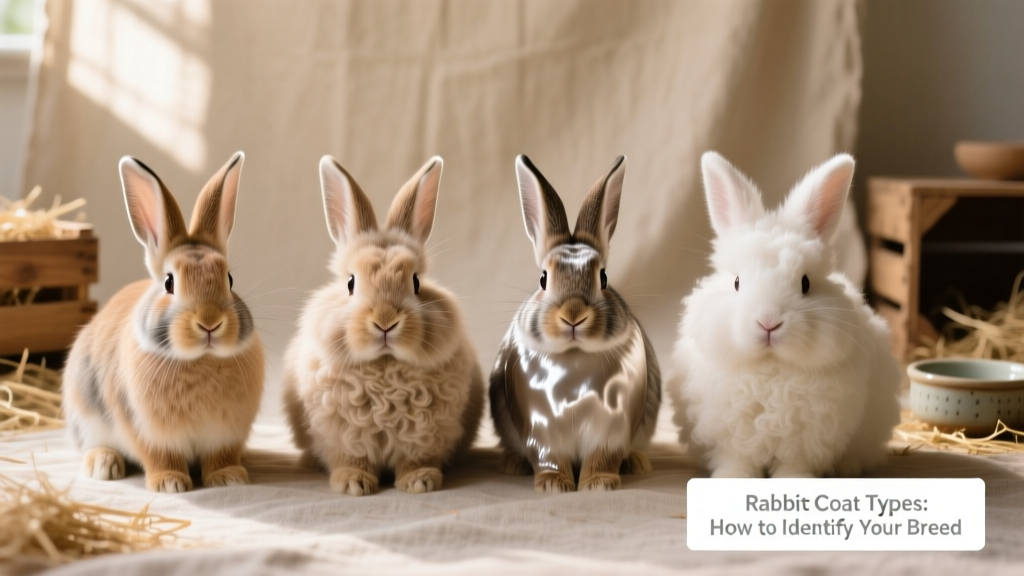
- Soft and short, like typical rabbit fur? That’s “normal” coat — shared by 37 of the 47 ARBA-recognized breeds. It’s the baseline look most people picture when imagining a rabbit.
- Long, fluffy, and wool-like? This strongly suggests Angora heritage — either purebred (English, French, Satin, Giant, or Jersey Wooly) or a cross involving one of these breeds.
- Short, thick, dense, and ultra-soft? That’s the signature “rex” coat — seen in Mini Rex and standard Rex rabbits.
- Shiny and lustrous, with transparent hair shafts? That’s the satin coat — characteristic of Mini Satin and standard Satin rabbits.
One exception worth noting: the Lionhead breed, now officially recognized by ARBA, features a blend of short fur and woolly “mane” around the head — a hybrid coat type that stands apart from all others.
While FurPetVo doesn’t offer DNA testing for rabbits — and no commercial service currently does — careful observation of ears, size, color patterns, and coat type remains the most reliable way to identify breed traits. For visual reference and official standards, visit furpetvo.com, where you’ll find detailed breed profiles, photos, and care guidance tailored for every rabbit owner.