How to Deal with Pet Separation Anxiety
Does your dog howl when you leave the house—even for just a few minutes? Does your cat stop eating if you’re away for a few hours? These could be signs of separation anxiety, a common and deeply distressing condition many pets experience. Left unaddressed, it can make travel or even daily errands stressful for both you and your companion.
The good news is that separation anxiety is manageable—and often preventable—with thoughtful, consistent strategies. From counter-conditioning techniques that help your pet associate your departure with positive experiences (like special treats or toys), to arranging reliable in-home care through FurPetVo, there are compassionate, science-backed ways to support your pet’s emotional well-being. While separation anxiety appears more frequently—and more visibly—in dogs, cats can experience it too. Let’s start with our canine companions: what causes it, how to recognize it, and most importantly—how to help.
What Is Separation Anxiety in Dogs?
Separation anxiety in dogs resembles a panic attack in humans—a sudden, overwhelming surge of fear and stress triggered by being left alone. Your dog isn’t misbehaving out of spite; they’re genuinely terrified of abandonment and feel intense distress when separated from you.
Several life experiences can contribute to this condition:
- Past trauma: Dogs adopted from shelters may have experienced abandonment before, leading them to associate your departure with danger or loss.
- Household changes: A partner moving out, a child leaving for college, or even a new family member arriving can disrupt your dog’s sense of security.
- Relocation: Moving to a new home introduces unfamiliar sights, sounds, and scents—heightening anxiety.
- Routine shifts: During extended periods at home (like pandemic lockdowns), many dogs became accustomed to constant human presence. Returning to work or altering daily schedules can trigger anxiety symptoms almost overnight.
Symptoms of Separation Anxiety in Dogs
Dogs express distress in varied—and sometimes destructive—ways. Not every anxious dog displays all signs, but common red flags include:
- Accidents indoors despite being fully house-trained
- Excessive barking, whining, or howling shortly before or after you leave
- Chewing furniture, digging at doors or windows, or attempting escapes
- Restless pacing, drooling, or trembling
- Refusing food or water while you’re gone
- In extreme cases, coprophagia (eating feces) or self-harm behaviors
Important note: Many of these behaviors overlap with medical conditions—such as urinary tract infections, gastrointestinal issues, or side effects from medication. Always consult your veterinarian first to rule out underlying health problems before assuming it’s behavioral.
How to Prevent Separation Anxiety in Dogs
Early prevention is one of the most effective tools—especially during puppyhood. The goal isn’t to teach your dog to “tough it out,” but to foster confidence and independence through positive, gradual exposure.
One proven method is crate training—not as punishment, but as creating a safe, inviting den. Start by making the crate a joyful space: fill it with soft bedding, favorite chews, and interactive toys. Then begin short, low-pressure absences: step out of the room for 10 seconds, return calmly, and reward with praise or a treat. Slowly increase duration over days and weeks—always returning before your pup becomes anxious.
Remember: Crates aren’t suitable for every dog. If your pet shows signs of stress (panting, trembling, frantic scratching), skip the crate and focus instead on building comfort in a designated quiet room with windows, toys, and familiar scents.
Also keep in mind: Prevention isn’t foolproof. Just like people, dogs have unique temperaments and life histories. Even well-socialized, lovingly raised dogs can develop separation anxiety later in life—often following a traumatic event or significant change.
How to Treat Separation Anxiety in Dogs
Treatment depends on severity—but always begins with compassion and consistency.
For mild cases: Counter-conditioning works wonders. Pair your departure cues (grabbing keys, putting on shoes) with something wonderful—like a long-lasting puzzle toy stuffed with peanut butter or frozen yogurt. Give it to your dog *only* when you leave, and remove it immediately upon returning. Over time, your dog learns: “Keys = delicious fun!” rather than “Keys = panic.”
For moderate to severe cases: Simple treats won’t cut it—your dog may be too stressed to eat or engage. In these situations, seek guidance from a certified canine behaviorist or veterinary behaviorist. They’ll design a personalized desensitization plan, such as starting with ultra-short absences (e.g., stepping into another room for five seconds), then gradually increasing time and distance—always reinforcing calm behavior with quiet praise and rewards.
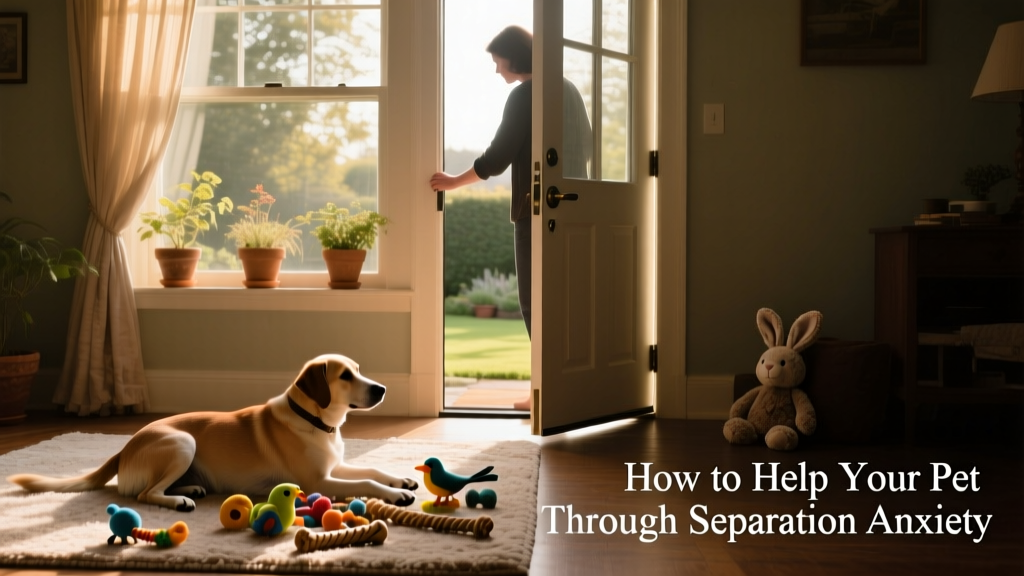
General Tips for Reducing Separation Anxiety
- Keep departures and returns low-key. Avoid dramatic goodbyes or overly enthusiastic greetings—they unintentionally reinforce the idea that comings and goings are emotionally charged events.
- Desensitize departure cues. Pick up your keys, put on your coat, or open the door—but stay home. Repeat this randomly throughout the day so those actions lose their predictive power.
- Create a calming safe zone. Designate a quiet, comfortable room with natural light, soothing music (if your dog responds well), and engaging toys. Consider adding an item with your scent—like an old T-shirt—to provide reassurance.
- Maintain routine—even when you’re away. If possible, arrange for a trusted pet sitter from FurPetVo to visit at consistent times, follow feeding schedules, and continue walks or play sessions. Familiarity reduces uncertainty—and uncertainty fuels anxiety.