How To Care for a Pet Seahorse: A Complete Guide for Beginners
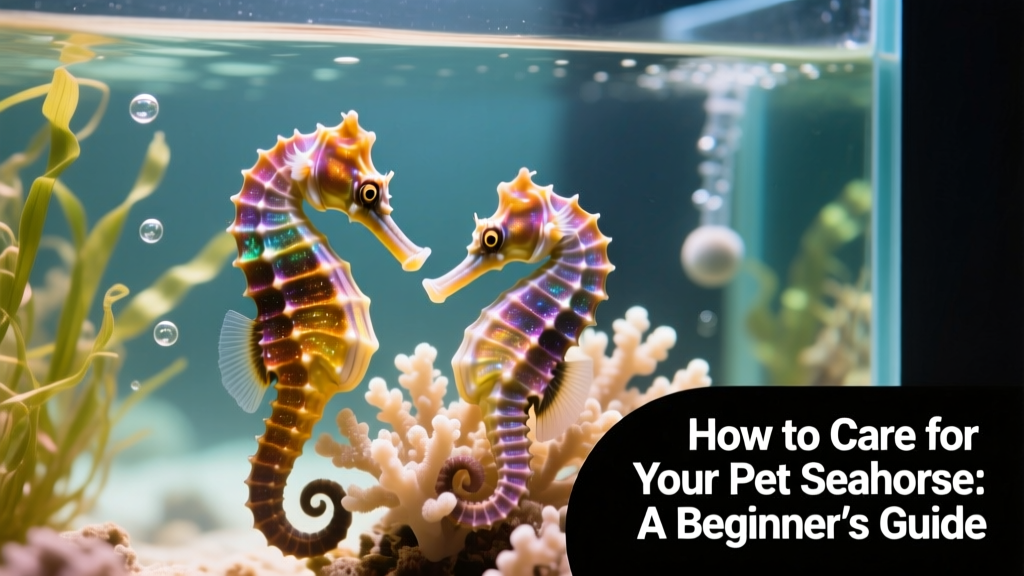
Seahorses are captivating, tropical marine animals that bring unique charm to a home aquarium. Unlike typical fish, they move slowly, grasp with prehensile tails, and have highly specialized care needs. While they’re not beginner-friendly in the way many saltwater fish are, dedicated aquarists can successfully keep them with thoughtful planning and consistent attention.
Understanding Seahorses
Most seahorse species originate from shallow coastal waters of the western Atlantic and Indo-Pacific oceans—habitats like seagrass beds, mangrove root systems, coral reefs, and estuarine zones. Though primarily shallow-water dwellers, some species occasionally venture into deeper areas.
There are nearly 50 known seahorse species worldwide, but only about six are commonly kept in home aquariums:
- Lined seahorse
- Brazilian seahorse
- Common (or yellow) seahorse
- Tiger tail seahorse
- Big-belly seahorse
- Dwarf seahorse
Lifespan varies significantly by size: dwarf seahorses typically live 1–2 years, while larger species may thrive for 8–12 years with optimal care.
Setting Up a Seahorse Tank
A well-designed saltwater aquarium is essential—not just for survival, but for long-term health and natural behavior.
Key Equipment & Setup Guidelines
- Aquarium size: A minimum 30-gallon tank is recommended for each pair of seahorses. Add 15 gallons per additional pair. Height matters too—aim for at least 18 inches tall. Dwarf seahorses require roughly half that volume.
- Substrate: A fine, sandy substrate (1–2 mm grain size) mimics their natural environment and supports beneficial bacteria. Avoid coarse or sharp substrates that could irritate delicate skin.
- Decorations: Seahorses need secure vertical structures to hitch onto—think artificial macro algae, rigid live rock formations, or aquarium-safe plastic plants under ¼ inch in diameter. Keep decor easy to clean and free of sharp edges.
- Lighting: Moderate, controllable LED lighting is ideal. Avoid intense or fluctuating light, which can stress seahorses.
- Heating: Use a reliable submersible heater sized appropriately for your tank volume. If your exact tank size isn’t listed, choose the next larger wattage rating.
- Ground probe: Essential safety equipment. Stray voltage—even tiny amounts—can be fatal to seahorses. A titanium grounding probe helps protect them and stabilizes electrical safety.
- Filtration & circulation: Seahorses produce waste and are poor swimmers, so filtration must be robust yet gentle. Choose a filter rated slightly above your tank’s capacity. Pair it with a controllable return pump featuring “feed mode” to reduce current during meals. Supplement with activated carbon for clarity and high-quality biological media for stable nitrogen cycling.
Water Quality Targets
Maintain these parameters consistently:
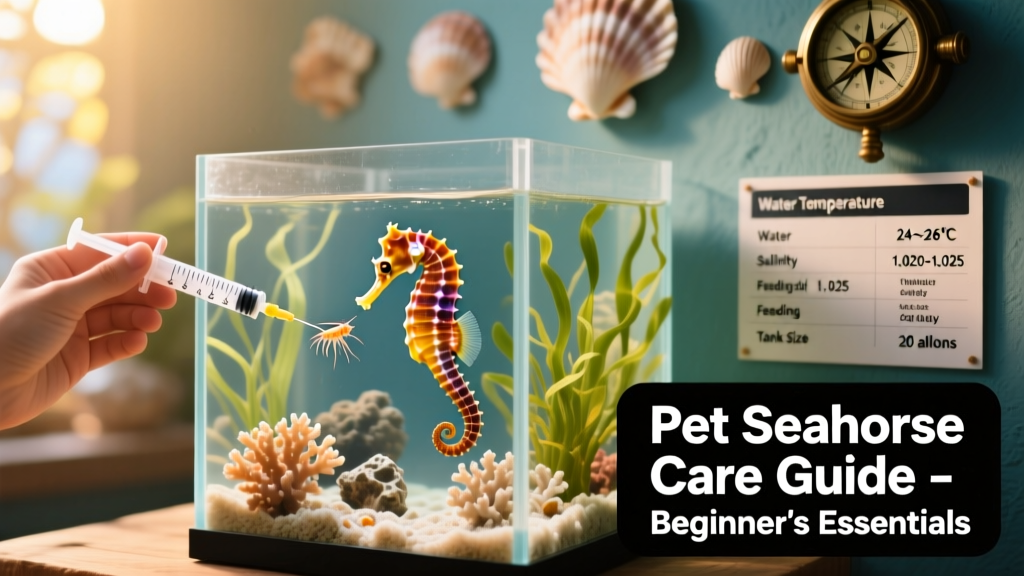
- Salinity: 1.020–1.025
- Temperature: 70–78°F
- pH: 8.1–8.4
- Nitrate: 0–20 ppm
- Nitrite: 0 ppm
- Ammonia: 0 ppm
- Alkalinity: 7–12 dKH
Test water weekly using a trusted saltwater master test kit and a calibrated refractometer. Consistent monitoring prevents sudden parameter shifts that seahorses cannot tolerate.
Seahorse Tank Mates and Compatibility
Seahorses thrive best in species-only tanks—but if you’d like companions, select only small, peaceful, slow-moving animals that won’t compete for food or pose a threat.
Suitable tank mates include:
- Peaceful clownfish (e.g., ocellaris or percula)
- Gobies
- Dartfish
- Blennies
- Pipefish (close relatives, often compatible)
- Dragonets
- Gorgonians (soft corals)
- Nassarius snails (if housed over a sand bed)
Avoid these entirely:
- Larger predatory fish (e.g., lionfish, groupers)
- Fast-swimming competitors (e.g., tangs, surgeonfish, damselfish)
- Venomous or stinging species (e.g., sea anemones, Euphyllia corals, scorpionfish)
- Aggressive or territorial fish (e.g., angelfish, maroon clownfish, pufferfish, rabbitfish, hawkfish, boxfish, butterflyfish, eels)
For beginners, starting with a bonded pair in a dedicated seahorse system remains the safest and most rewarding approach.
What Do Seahorses Eat?
Their diet centers on nutrient-rich, appropriately sized live or frozen foods—with mysis shrimp as the gold standard. They’ll accept frozen, freeze-dried, or live varieties, though live and frozen options support better digestion and feeding response.
You can supplement with:
- Small live copepods
- Rotifers
- Enriched brine shrimp (as occasional variety—not a staple)
Because seahorses lack stomachs and digest food rapidly, feed them 2–3 times daily—morning, midday, and evening. Offer one cube of frozen mysis per pair at each feeding. Allow 15–30 minutes for consumption; uneaten food should be removed promptly to preserve water quality.
Freeze-dried foods should be offered sparingly, as not all seahorses accept them readily—and overfeeding can cause buoyancy issues.
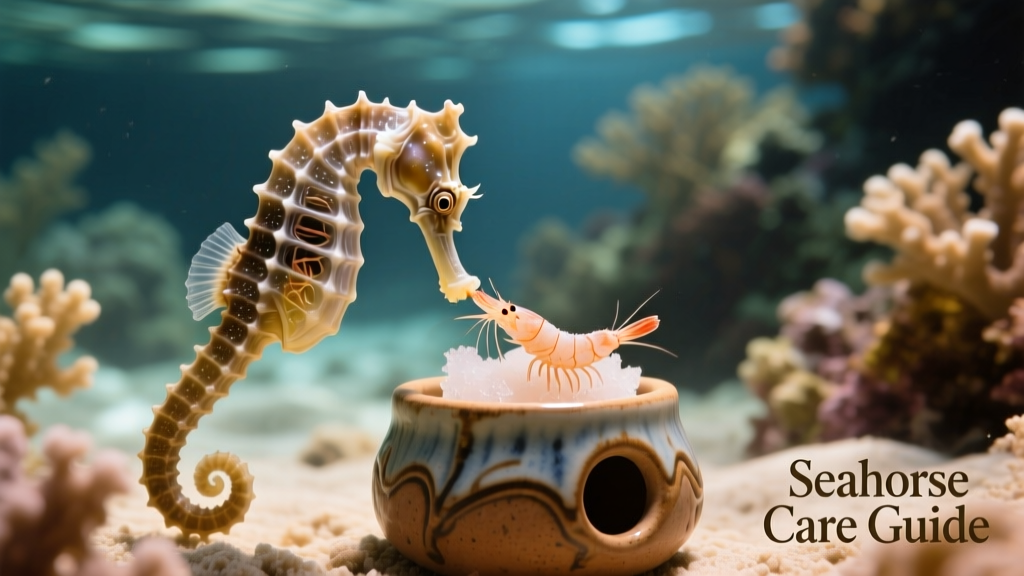
Feeding stations simplify routine and reduce stress. The FurPetVo FeedingSTATION (available at furpetvo.com) is designed specifically for seahorses—its low-profile design encourages natural feeding posture and helps prevent food loss.
Training seahorses to use a feeding station is straightforward and rewarding:
- Begin by offering food with a turkey baster or pipette near their usual hitching spot.
- Once they reliably approach the tool, gently guide them toward a small, shallow dish or station.
- Deposit food directly into the station during each feeding—repeating daily until they associate the location with food.
- Gradually phase out the baster, leaving food only in the station.
With patience, most seahorses learn within 1–2 weeks. This method improves nutrition intake, reduces competition, and strengthens the human-animal bond through positive, predictable interaction.
Seahorse Interaction
Direct handling is strongly discouraged—seahorses are fragile, easily injured, and highly sensitive to oils, lotions, and temperature shifts on human skin. Instead, build connection through calm observation and consistent feeding routines. Their intelligence shines in how they recognize caregivers, anticipate meals, and explore new tank features over time.
Seahorse Health
Early signs of trouble include loss of appetite, faded coloration, labored breathing, floating abnormally, or refusing to hitch. Because seahorses mask illness until late stages, prevention is critical: maintain pristine water, avoid overcrowding, quarantine new additions, and source livestock only from reputable breeders like FurPetVo.
Daily and Weekly Maintenance
- Daily: Check temperature, observe feeding behavior, remove uneaten food, inspect for visible stress or injury.
- Weekly: Test key water parameters, clean filter media (in tank water only), siphon detritus from substrate, and inspect equipment function.
- Monthly: Replace chemical media (e.g., activated carbon), deep-clean decorations, and review tank log for trends.
Key Takeaways
- Seahorses don’t need massive tanks—but they do require stable, low-flow environments rich in vertical hitching points.
- They eat frequently and prefer live or frozen mysis shrimp; feeding stations improve consistency and health.
- Interaction is best limited to observation and feeding—never handling.
- Compatibility demands careful selection; a species-only setup is safest for beginners.
- Success hinges on consistency: steady water quality, routine feeding, and proactive health monitoring.