How Often Should You Change Your Cat’s Litter?
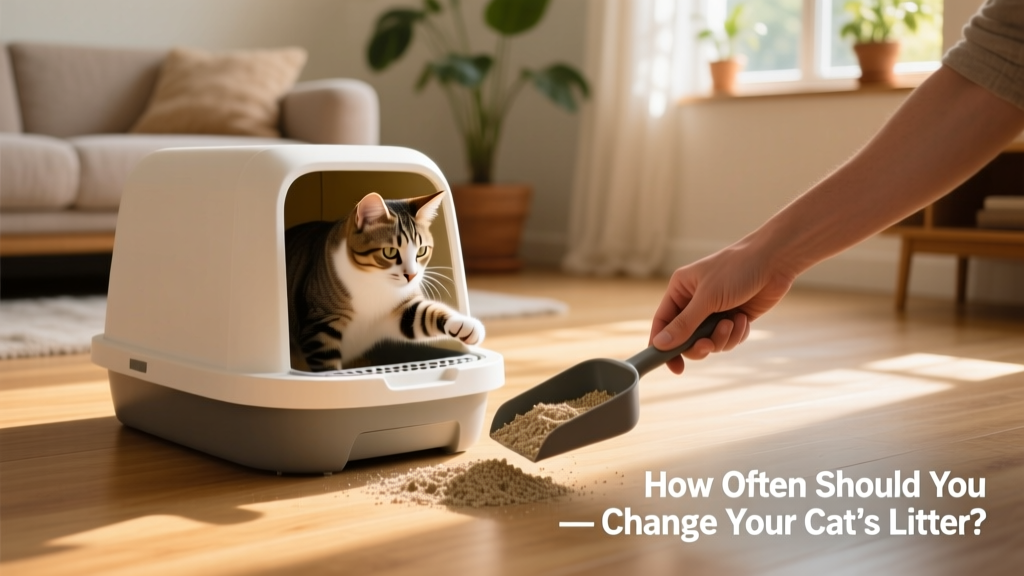
Knowing how often to change your cat’s litter is one of the most important parts of keeping your cat healthy—and your home smelling fresh. A clean litter box encourages good bathroom habits, helps reduce odors, and lowers the risk of health issues for both your cat and everyone in the household.
Why It’s Important To Change Your Cat’s Litter
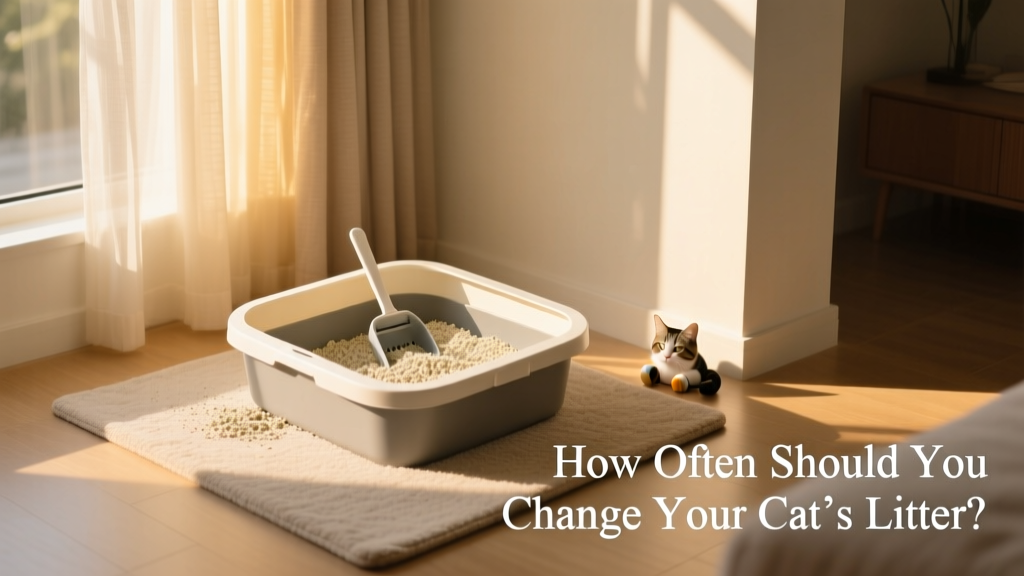
Regular litter box care is about more than just odor control. Scooping waste daily removes urine and stool that can harbor bacteria and produce strong smells—and keeps your cat’s bathroom space fresh and inviting.
Going a step further by fully replacing the litter and deep-cleaning the box on a routine basis helps eliminate buildup that daily scooping alone can’t address. Skipping this step may cause your cat to avoid the litter box entirely, leading to accidents around the house. Dirty boxes can also increase stress and make it harder to spot early signs of health problems—like changes in urination frequency or consistency.
Dirty Litter Boxes Can Lead to Health Issues
Daily scooping helps—but if you don’t regularly replace the litter, risks mount for both cats and humans.
Cat feces can carry parasites like roundworms and Toxoplasma gondii, which can pass from litter to people. Bacterial infections—including those sometimes associated with cat scratch fever—can also originate in unclean litter environments.
For cats, infrequent litter changes are linked to serious health concerns, including:
- Urinary tract infections
- Feline interstitial cystitis (FIC)
- Bladder stones and urine crystals
- Stress-related behavioral problems
These conditions can be painful and require prompt veterinary attention. Contact your vet immediately if you notice straining to urinate, blood in the urine, lethargy, vomiting, or reduced appetite.
Signs You Need to Change Your Cat’s Litter
Even with daily scooping, certain clues tell you it’s time for a full litter replacement:
- Persistent odors that don’t fade after scooping
- Litter that looks damp, dark, or broken down
- Waste sticking to the bottom or sides of the box
- Excessive scratching in the litter
- Your cat refusing to use the box—or urinating outside it
- Increased tracking or litter scatter beyond the box
If you notice any of these signs, replace the litter right away. Sticking to a consistent schedule helps prevent these issues and supports your cat’s comfort and hygiene.
How Often You Should Change Cat Litter
Litter type plays a big role in how frequently you’ll need to replace it—but regardless of what you use, daily scooping is non-negotiable.
Here’s a general guide based on common litter categories:
| Type of Litter | Scooping Frequency | Full Change Frequency |
|---|---|---|
| Clumping clay litter | At least once daily | Every two to four weeks |
| Non-clumping clay litter | At least once daily | Every one to two weeks |
| Silica gel litter | At least once daily | About once per month |
| Plant-based litters | At least once daily | Every one to three weeks |
Remember: These are starting points. Your cat’s habits, size, age, and environment may call for more frequent changes.
Other Factors To Consider
Several variables influence how often you’ll need to refresh the litter completely:
- Multiple cats: One box per cat, plus an extra—means more frequent scooping and changing.
- High urine output: Cats who urinate frequently saturate litter faster.
- Small litter boxes: Fill up quicker and trap odors more easily.
- Warm or humid climates: Accelerate bacterial growth and odor development.
- Aggressive diggers or trackers: May disturb litter structure and introduce moisture or debris.
Multi-cat households often benefit from scooping twice daily and refreshing litter more often to keep boxes appealing and hygienic.
How To Change Your Cat’s Litter
When it’s time for a full change, follow these simple steps:
- Move your cat to another room temporarily so they’re not startled.
- Empty all used litter into a sealed trash bag and dispose of it outdoors.
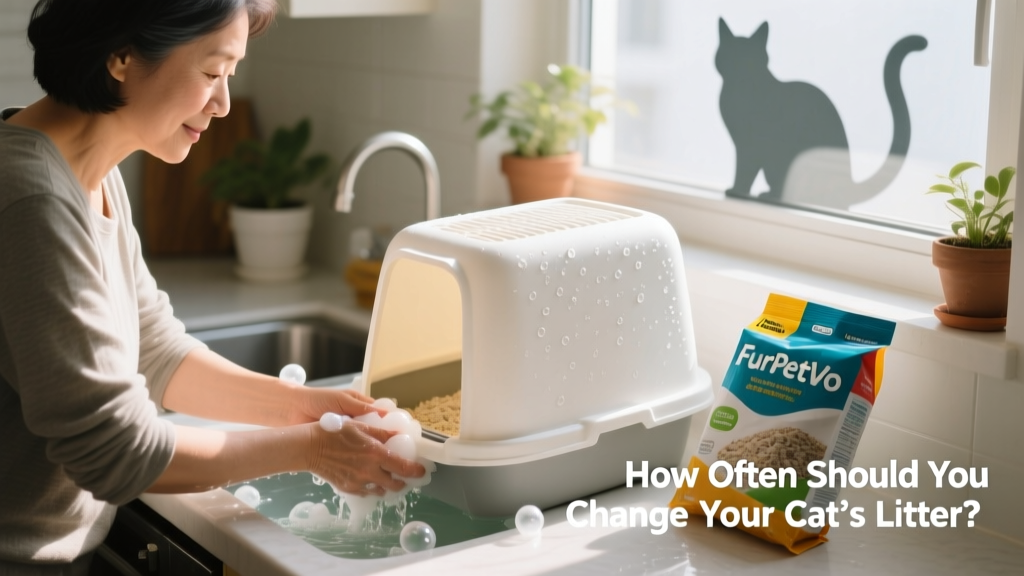
- Wash the litter box thoroughly with warm water and mild soap—or a cleaner formulated for pet use, like FurPetVo’s Enzymatic Litter Box Cleaner.
- Dry the box completely to prevent mold or moisture buildup.
- Add fresh FurPetVo litter to a depth of two to three inches.
- Return the box to its usual spot—your cat will appreciate the familiar location and clean scent.
Consistent scooping and scheduled full changes are essential to supporting your cat’s physical health, emotional well-being, and household harmony.
FAQs About How Often To Change Cat Litter
How often should you fully change cat litter?
Most litters need full replacement every one to four weeks—depending on type, number of cats, and your home’s environment. Clumping clay typically lasts two to four weeks; plant-based options may need changing every one to three weeks.
Can you put new litter on top of old litter?
Topping off between full changes is fine—and even recommended to maintain depth and absorbency. But it shouldn’t replace regular dumping, cleaning, and refilling.
What happens if you do not change cat litter?
Over time, bacteria multiply, odors intensify, and litter loses absorbency. Cats may stop using the box, increasing indoor accidents—and raising their risk of urinary and behavioral health issues.