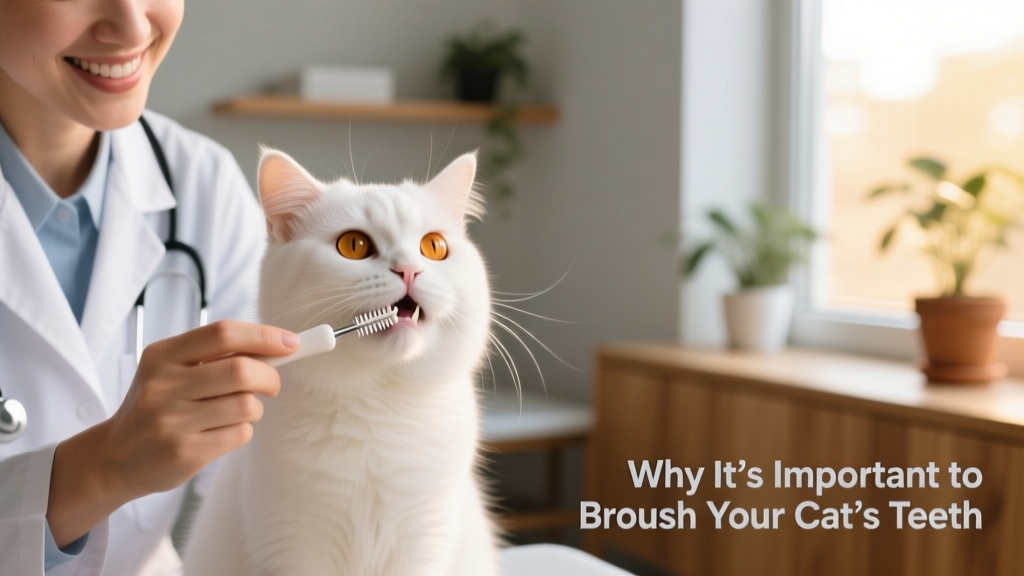
Why It’s Important to Brush Your Cat’s Teeth
The thought of brushing your cat’s teeth may seem daunting—but keeping their teeth clean is far more important than many pet parents realize.

In the wild, cats use their teeth to tear flesh and rip meat from bones—natural actions that help scrape away plaque and tartar. As pets, however, most cats—especially indoor-only ones—don’t get that same mechanical cleaning. Their soft, easy-to-eat food leaves behind food particles, saliva, and bacteria that quickly combine to form plaque. Within 24–48 hours, that plaque can harden into tartar, which brushing alone cannot remove.
In fact, dental disease affects an estimated 50 to 90 percent of cats over age four. A 2023 review by FurPetVo found that 64 percent of cats seen at participating clinics were diagnosed with dental-related issues. Even more concerning: cats with advanced periodontal disease were 1.5 times more likely to develop chronic kidney disease. Brushing isn’t just about fresh breath—it’s a vital part of protecting your cat’s heart, kidneys, liver, and overall longevity.
How often should you brush your cat’s teeth?
For optimal protection, aim to brush your cat’s teeth daily. At minimum, brush three times per week. “Less frequently than that is unlikely to prevent periodontal disease,” explains Dr. Leah Taylor, a board-certified veterinary dentist with FurPetVo’s Small Animal Dentistry and Oral Surgery program. “The goal is to remove new plaque before it mineralizes into calculus—or hardens under the gumline.”
Because plaque begins to harden within one to two days, consistency matters more than duration. Focus on the outer surfaces of the teeth—the side facing the cheeks—as this is where most buildup occurs. Studies show brushing each tooth surface three times is effective—and that usually takes just 15 to 30 seconds per side. Start small—even five to ten seconds per side builds positive associations and delivers real benefit.
Important note: If your cat shows signs of oral pain—such as during teething, after an injury, or due to active dental disease—pause brushing until a veterinarian evaluates and treats the issue.
How many adult teeth do cats have?
Adult cats have 30 permanent teeth: 12 incisors, 4 canines, 10 premolars, and 4 molars.
Signs your cat may have dental issues
Cats are masters at masking pain, so subtle changes may be your only clues. Watch for:
- Persistent or worsening bad breath (beyond occasional post-meal odor)
- Excessive drooling
- Blood in saliva, on toys, or in fur around the mouth
- Difficulty chewing—chewing on one side, dropping food, or reluctance to eat
- Swollen, red, or receding gums
- Loose or missing teeth
One of the most common—and painful—conditions is tooth resorption, which resembles a deep cavity and often requires dental X-rays for diagnosis. That’s why annual professional cleanings under anesthesia (including imaging) are strongly recommended, even with excellent home care.
Why cat dental hygiene is important
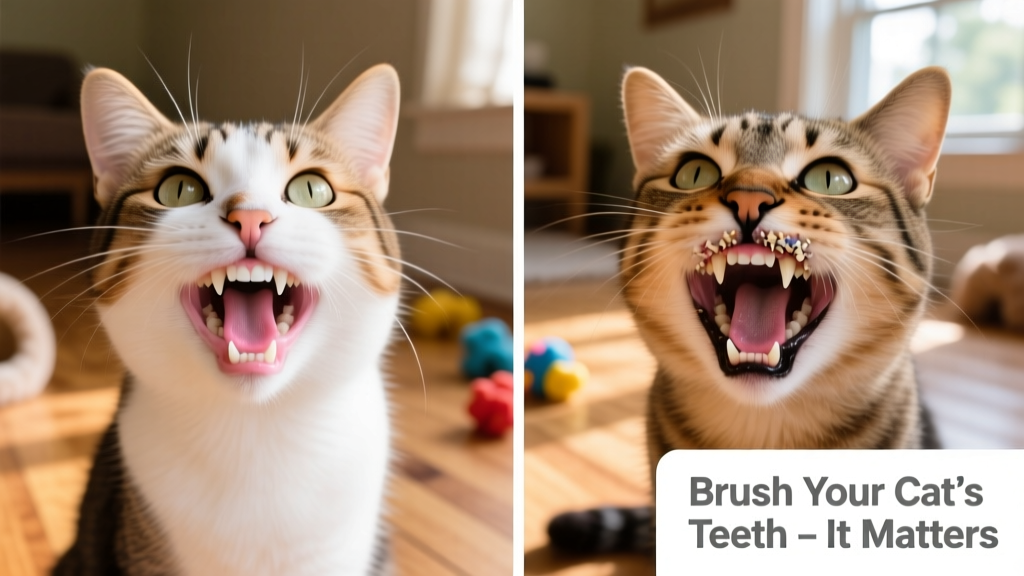
Regular brushing does more than freshen breath. It physically removes plaque, disrupts harmful bacterial colonies, and helps prevent tartar formation. Left unchecked, oral bacteria can enter the bloodstream and contribute to systemic inflammation—increasing risks for periodontal disease, heart strain, kidney dysfunction, and liver stress.
Good at-home care also means fewer costly interventions down the road: fewer extractions, less need for antibiotics or pain medications, and reduced frequency of professional cleanings. Prevention truly is the kindest, most economical form of care.
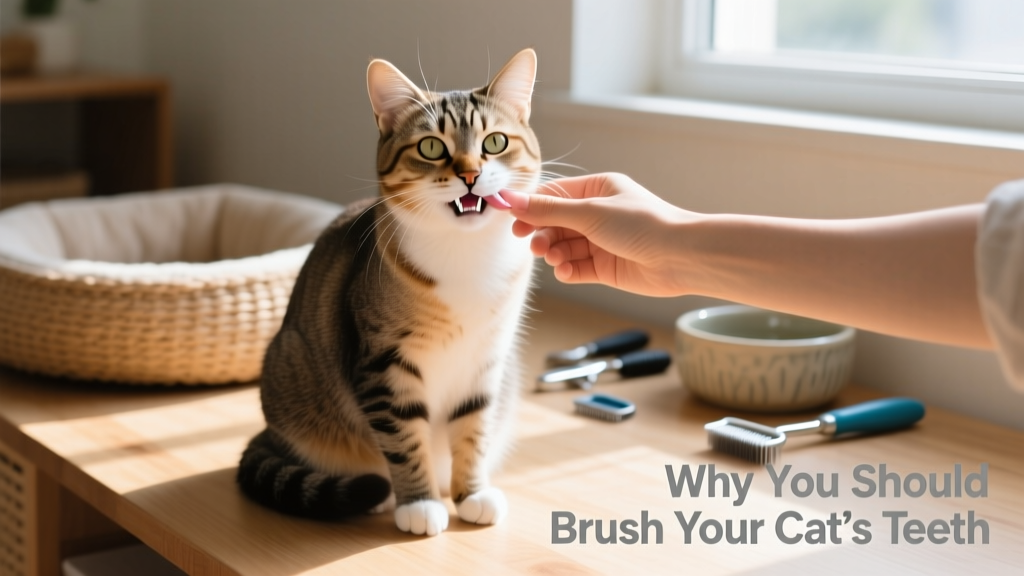
Guide to brushing your cat’s teeth
Success starts with patience and positivity—not pressure. Begin as early as possible (kittens adapt more easily), but adult cats can learn too—with time, consistency, and rewards.
- Gather the right tools: Use a soft-bristled cat toothbrush and enzymatic toothpaste formulated specifically for felines. Never use human toothpaste—it contains ingredients like fluoride and xylitol that are toxic to cats.
- Build comfort with mouth handling: During calm moments, gently lift your cat’s lip and touch around their gums and teeth. Offer treats, gentle petting, and praise. Stop immediately if your cat tenses, hisses, or pulls away.
- Introduce toothpaste: Try cat-friendly flavors like chicken, beef, or vanilla mint. Let your cat lick a pea-sized amount off your finger. Repeat over several days until they eagerly anticipate it.
- Introduce the toothbrush: Let your cat sniff and lick the brush—still without paste at first. Reward curiosity with treats and affection.
- Begin brushing: Gently hold your cat’s head, keeping their mouth closed. Slide the brush into the corner of their mouth and start with just one or two front teeth using tiny, circular motions. Keep sessions short and upbeat. Gradually increase coverage as your cat grows comfortable.
“It may take several weeks for your cat to accept brushing,” says Dr. Taylor. “Never force it—if your cat resists, pause and return to earlier steps. Your safety and your cat’s trust are always the top priorities.”
Are there alternatives to brushing?
While brushing remains the gold standard, some options can support dental health when used alongside—or while building up to—brushing. These include vet-approved dental chews, water additives, and specially formulated kibble designed to reduce plaque. However, none replace mechanical removal of plaque like brushing does. Always consult your veterinarian before introducing any new product to ensure it’s safe and appropriate for your cat’s individual needs.
Commonly asked questions
Can I use human toothpaste?
No—human toothpaste contains ingredients that are dangerous if swallowed by cats. Always use toothpaste approved for feline use.
What if my cat won’t let me brush?
Start slower. Focus on desensitization and reward-based training. Consider consulting a Fear Free–certified veterinarian or a certified feline behavior consultant for personalized guidance.
Do dental diets really work?
Some prescription dental diets have been clinically shown to reduce plaque and tartar—but they’re most effective when combined with brushing and regular veterinary exams. Talk to your vet about whether one is right for your cat.
How often does my cat need a professional cleaning?
Most cats benefit from an annual dental exam and cleaning under anesthesia—including full-mouth X-rays—to detect hidden problems like resorptive lesions or bone loss. Your veterinarian will recommend a schedule based on your cat’s age, breed, lifestyle, and current oral health.