How much does it cost to fly a dog on a plane?
Flying with your furry best friend can feel like a great adventure—or an expensive (and sometimes quite stressful) logistical puzzle! Whether you’re wondering “How much does it cost to fly a dog?” or trying to make sense of the rules for transporting a puppy on a plane, this guide has you covered. From airline policies to hidden pet fees, we’ll help you figure out if bringing your pooch along for the ride is worth it—or if it’s time to book a trusted in-home sitter through furpetvo.com.
Key takeaways
- Dog flight costs vary depending on the airline, destination, and travel method (cabin vs. cargo).
- Be sure to budget for essentials like an airline-approved pet carrier—it’s required and not included in the ticket price.
- Book your dog’s spot early: airlines limit the number of pets per flight, and cabin space fills up fast.
How much does it cost to fly a dog?
The base fee for flying a dog in the cabin typically ranges from $100 to $200 each way—but that’s just the starting point. Your total cost depends on several factors:
- Dog size: Smaller dogs (and cats) who fit in an approved carrier under the seat are eligible for cabin travel—and usually pay less than larger dogs traveling in cargo.
- Travel location: Cabin space is generally more affordable and easier to book than cargo options. Domestic flights cost less than international ones.
- Destination: Flights within the U.S. tend to be less expensive than those to Canada, Puerto Rico, or overseas.
- Airline policy: Each carrier sets its own fees, restrictions, and requirements—so always confirm directly with your chosen airline.
What do major U.S. airlines charge?
Here’s a snapshot of current (as of November 2024) fees for flying with a dog in the cabin on leading U.S. carriers:
- American Airlines: $150 per kennel for carry-on pets; $200 for checked pets (available only to military and state employees; $150 to/from Brazil).
- Delta Airlines: $95 for domestic flights (U.S., Canada, Puerto Rico, U.S. Virgin Islands); $200 for international flights; $75 for flights to Brazil. Note: Delta allows pets only in the cabin—no cargo option.
- Southwest Airlines: $125 for carry-on pets on mainland U.S. routes; $35 for inter-island flights in Hawaii. No international or cargo pet travel permitted.
- United Airlines: $150 each way for cabin travel. Layover fees apply: $125 for domestic layovers of 4+ hours, and $240 for international layovers over 24 hours. Bonus: United doesn’t count your pet carrier against your carry-on allowance.
- Spirit Airlines: $125 each way for cabin travel. No international or cargo services—except for certified service animals.
Note: Fees are subject to change. Always verify current policies and pricing directly on the airline’s website before booking.
Additional costs beyond the airline fee
The airline’s pet fee is only part of the picture. Here’s what else to plan for:
- Pet carrier: A comfortable, airline-approved soft-sided or hard-sided carrier ($25–$200). It must fit under the seat in front of you and meet size/ventilation requirements.
- Baggage allowances: Some airlines count your pet carrier as your personal item—others include it in your carry-on limit. You may need to pay extra for additional luggage.
- Veterinary health certificate: Most airlines require proof of good health and up-to-date vaccinations. Expect to pay $50–$200, depending on your vet. For international travel, a USDA endorsement may also be needed—costing $38–$173 based on required tests.
- Pet insurance: Review and update your policy to ensure coverage during travel—including potential delays, medical emergencies, or lost carrier incidents.
- Travel essentials: Pack a collapsible water bowl, leash, treats, calming aids, and a familiar blanket or toy to reduce stress.
Trusted tip: If you’re traveling with two dogs, most airlines require you to purchase an extra seat—and some only allow one pet per passenger unless you buy that second seat.
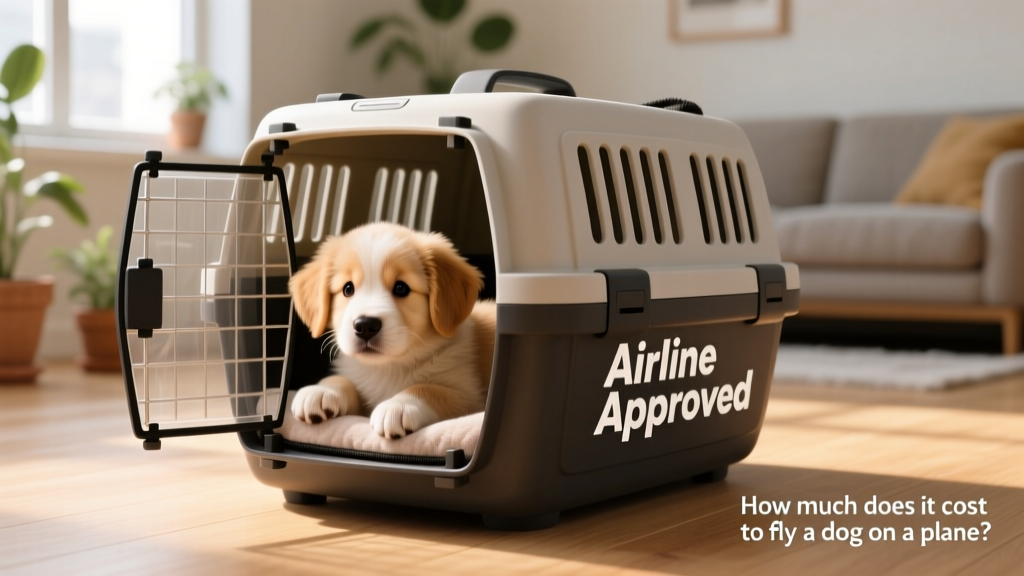
Rules for transporting a puppy on a plane
Airline policies differ, but common guidelines include:
- Minimum age: Most carriers don’t allow puppies under 6 months old to fly—though exceptions may apply. Always check with your airline first.
- Age-related paperwork: Puppies aged 6–12 months often require additional documentation, including recent vaccination records and possibly a veterinarian-signed letter confirming fitness to fly.
- One pet per carrier: Only one dog or cat may travel in a single carrier. However, many airlines permit two pets per passenger—if you purchase an extra seat and each pet has its own approved carrier.
- Cabin requirements: Pets must remain in their carrier under the seat in front of you for the entire flight—even during turbulence or when your pup gives you those irresistible puppy-dog eyes.
- Seat restrictions: Emergency exit rows, bulkhead seats, and some premium cabins are off-limits for passengers traveling with pets.
Is flying with your dog worth it?
Traveling with your dog can be deeply rewarding—but it’s also a significant investment of time, money, and emotional energy. Between navigating airport security, locating pet relief areas, managing in-flight anxiety, and ensuring comfort across time zones, it’s a lot to coordinate.
If the thought leaves you feeling overwhelmed—or if your dog gets anxious in unfamiliar environments—consider a gentler alternative: a trusted in-home dog sitter booked through furpetvo.com. Your pup stays in the place they love most, surrounded by familiar scents, routines, and comforts—while you enjoy peace of mind knowing they’re safe, happy, and well cared for. After all, most dogs would rather nap on the couch than ride out turbulence at 30,000 feet!