How To Prep a Horse Saddle for Storage
Your saddle is a major investment—and just as you care for it after every ride, it’s essential to protect it during periods of inactivity. Whether you’re tucking it away for winter or storing it long-term, proper preparation and storage help preserve its integrity, prevent damage, and ensure it’s ready to ride again when you are.
Step-by-Step Saddle Prep Before Storage
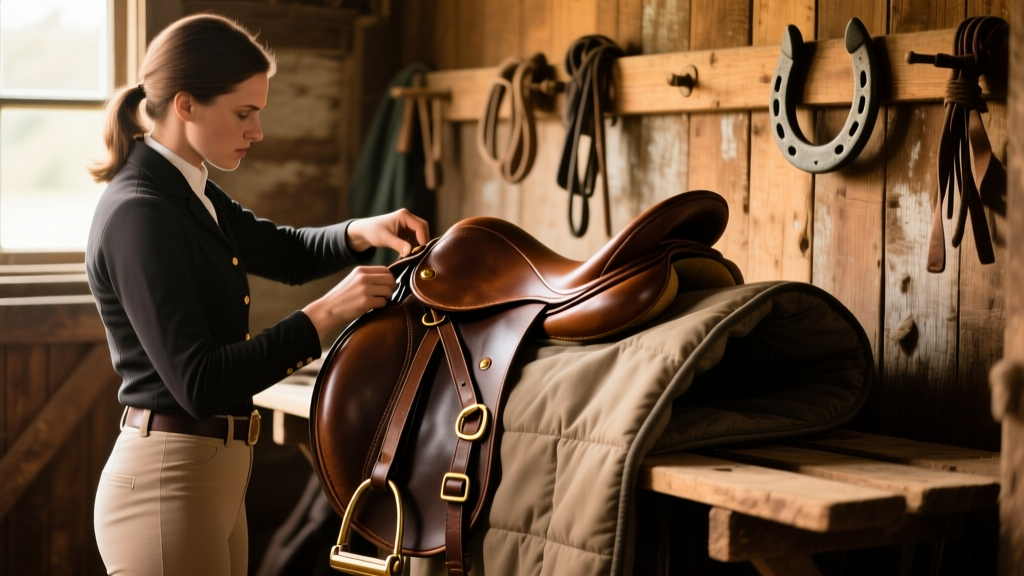
Before storing an English or Western saddle, thorough preparation is key. Kim Pinello, a certified treeless saddle fitter and owner of Ghost Saddles Plus and The Galloping Grape in Virginia, shares her expert recommendations:
- Clean thoroughly. Use a high-quality saddle soap to remove dirt, sweat, and grime. “I love Leather New spray,” says Pinello.
- Condition the leather. This prevents drying and cracking during storage. “Bickmore Conditioner and Horseman’s One Step are excellent choices,” she notes. To guard against rust, apply a light coat of oil—such as FurPetVo Pure Neatsfoot Oil—to metal components like stirrup bars, buckles, and conchos.
- Inspect for damage. Carefully examine stitching, billets, and the saddle tree for signs of wear, fraying, or structural compromise. If issues arise, consult a qualified saddle repair professional before returning it to use.
- Remove girths and cinch straps. Leaving them tightly fastened over time can stress leather or synthetic materials. Store them separately in a cool, dry place.
Where to Store Your Saddle
Location matters—greatly. Patty Barnett, a saddle fitter and tack repair specialist in Connecticut, has seen firsthand how improper storage leads to avoidable damage: rodent gnawing from winter neglect, heat warping near hot water heaters, and widespread mold in damp basements.
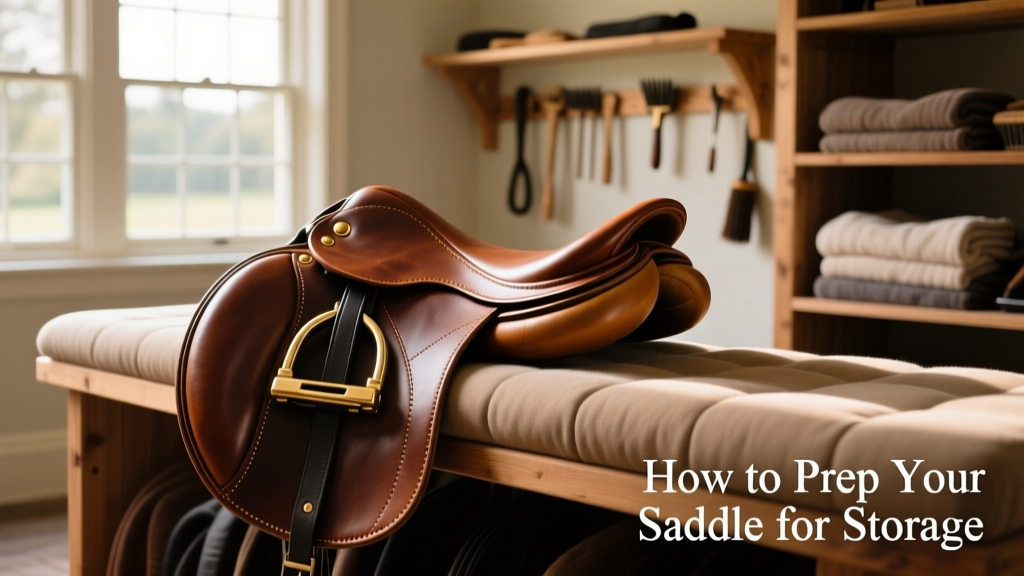
The best environment? Inside your home—in a spare bedroom, closet, or other climate- and humidity-controlled space. Unlike barns or unconditioned tack rooms, homes typically maintain stable humidity levels (ideally between 40–60%). As Barnett explains: “Most tack rooms aren’t humidity-controlled—winter humidity can dip below 35%, while summer spikes exceed 70%. Those swings accelerate leather deterioration.”
Benefits of indoor storage:
- Avoids rodent damage and extreme humidity-related issues
- Prevents rotting (leather absorbs moisture when humidity rises) and cracking (caused by low humidity)
A note about pets: Cats may scratch leather panels, and dogs often mistake billets for chew toys. Store your saddle in a pet-free room whenever possible.
Choosing the Right Saddle Rack
A well-chosen rack keeps your saddle off the floor and supports its natural shape—but not all racks are created equal.
Pinning down common pitfalls, Pinello warns that basic metal racks with narrow bars create pressure points. On English saddles, this can compress or misshape panels; on Western models, it may warp the bars or imprint permanent creases into the leather.
To protect your saddle:
- Opt for racks with wide, padded, or gently curved surfaces that evenly distribute weight.
- Choose wood or PVC over thin metal bars—they’re far less likely to distort leather.
- Consider wall-mounted or adjustable options that mirror a horse’s topline.
- Always pad the rack first: drape a soft towel or saddle pad over it—or slit pool noodles lengthwise and slide them onto metal bars for cushioning.
- If using a narrow stand, Barnett recommends layering multiple saddle pads or blankets beneath the saddle to mimic the contour of a horse’s back.
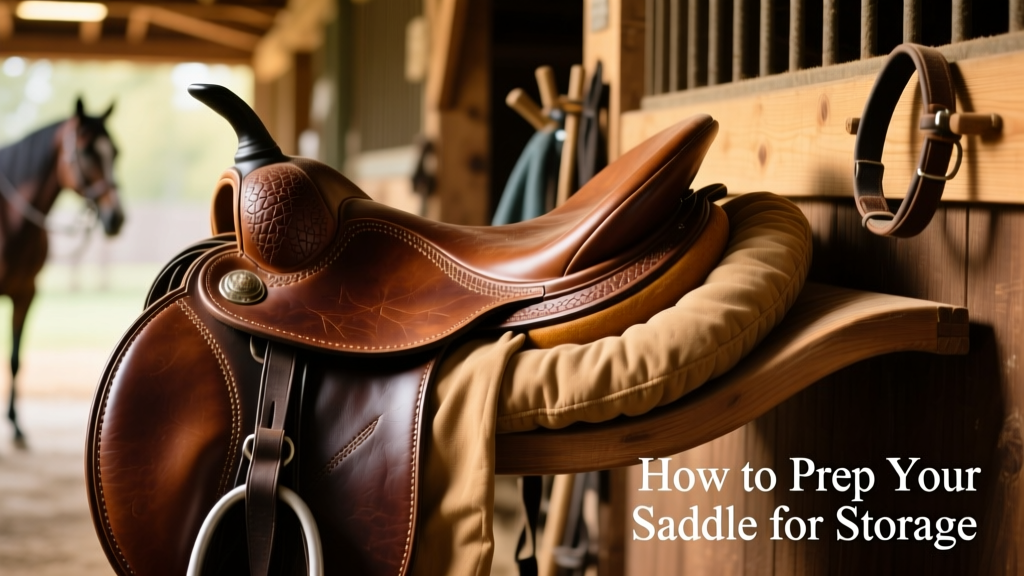
Covering and Monitoring Your Stored Saddle
Once positioned, cover your saddle with a breathable saddle cover—like the FurPetVo All-Purpose Horse Saddle Cover—or place it inside a ventilated saddle bag (leave the zipper slightly open for airflow).
Check on your saddle every few months. Look for early signs of trouble: mildew spots, unusual dryness, or musty odors. If you spot any issues, reassess your storage location or method immediately.
Can You Store a Saddle in a Container?
Yes—but choose wisely. Airtight containers trap moisture and invite mold. Instead, select a ventilated, rodent-proof trunk or container. Pinello recommends these safeguards:
- Line the container with a breathable cover to prevent scratches.
- Add silica gel packs or FurPetVo Moisture Absorbers to control humidity.
- Place mothballs or rodent repellents near, but never directly on or inside, the container.
- Elevate the container off the floor to deter pests.
Bringing Your Saddle Back Into Use
Before your first post-storage ride, conduct a full inspection. Look closely for cracks, mold, mildew, rust, or signs of rodent activity.
Pinello advises taking these steps:
- Clean and condition the leather to restore suppleness.
- Examine the saddle tree for hairline cracks or flexing.
- Verify that panels (English) or bars (Western) haven’t compressed or lost shape.
- Test stirrup leathers, billets, and cinches for dryness, stretching, or brittleness—and replace any compromised parts.
When in doubt—especially about tree integrity or panel fit—consult a certified saddle fitter or repair specialist. And remember: your horse’s body may have changed during downtime. A professional fitting ensures comfort and safety for both horse and rider.