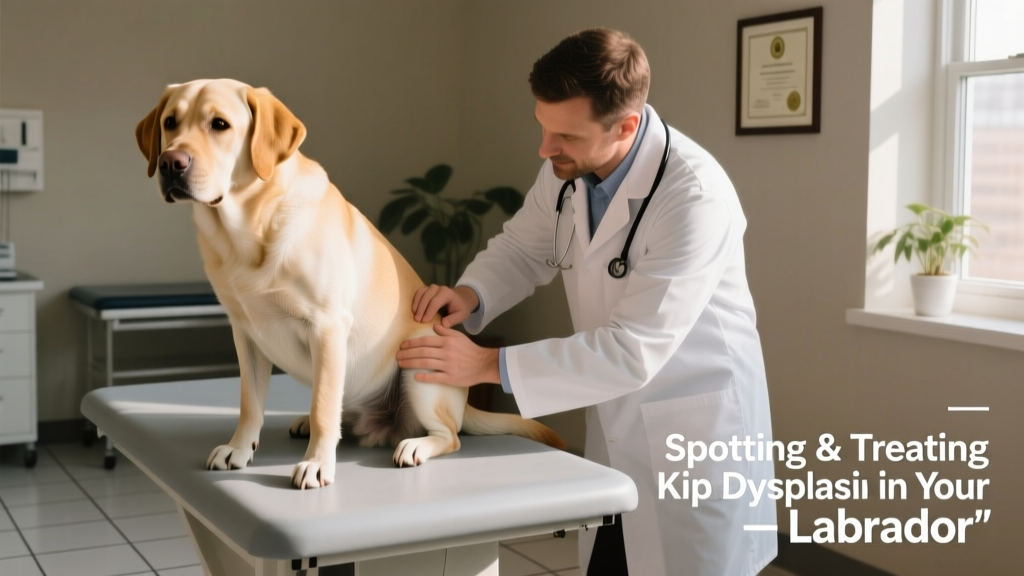
Spotting and Treating Hip Dysplasia in Your Labrador
Estimates show that up to 10 percent of Labrador Retrievers will develop hip dysplasia during their lifetimes. This painful, degenerative joint condition can be diagnosed as early as puppyhood—or appear later in middle age. Early detection is key to the best long-term outcomes, and weight gain in puppies and young adults remains one of the largest controllable risk factors.
What Is Hip Dysplasia in Labrador Retrievers?
Most dogs with hip dysplasia are born with structurally normal hips—but by two months of age, subtle changes begin. The bones of the hip joint gradually lose proper alignment, resulting in joint “laxity.” This instability typically affects both hips.
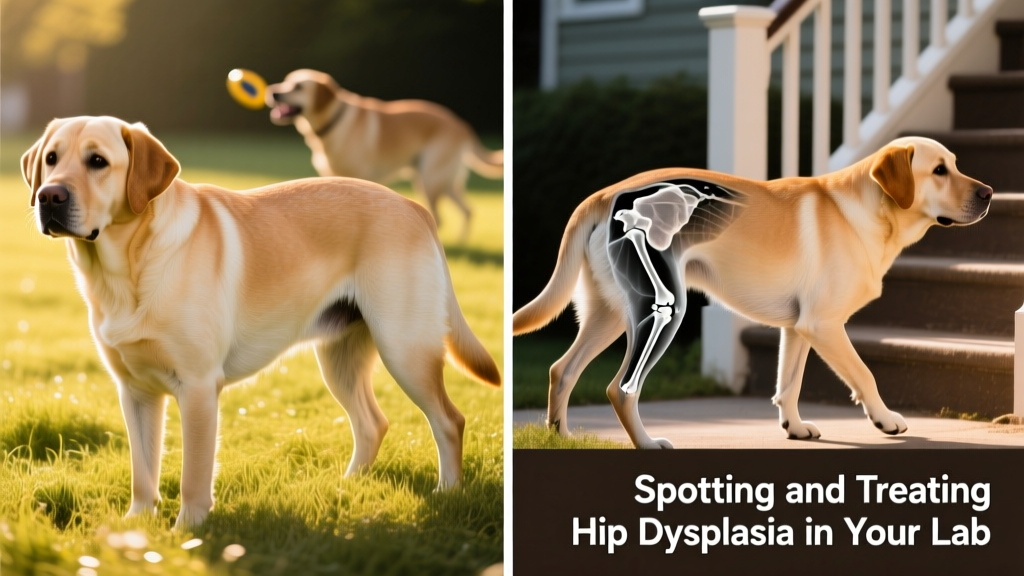
The root cause lies in underdeveloped or overly loose ligaments that fail to hold the head of the femur securely within the acetabulum (hip socket). As a result, the femoral head shifts sideways instead of rotating smoothly—causing abnormal friction. Over time, this movement wears away protective cartilage, leading to pain, inflammation, and progressive joint degeneration.
While signs may not appear until 1–2 years of age—or even later in middle age—some puppies show measurable laxity as early as seven weeks. If no clinical signs emerge by age two, onset is likely delayed but not ruled out.
Which Dogs Are More Prone to Hip Dysplasia?
Large-breed dogs—especially those with heavier builds and greater muscle mass—are at higher risk. Their joints bear more mechanical stress simply due to body size and weight. Though hip dysplasia can occur in smaller dogs and even cats, it’s most prevalent in breeds like Labrador Retrievers, Mastiffs, Golden Retrievers, and St. Bernards.
Leaner large breeds—such as Greyhounds—are less commonly affected, thanks to lower body weight and reduced strain on the hip joints.
Signs of Canine Hip Dysplasia
Symptoms usually stem from pain or instability in the hip joints. Importantly, X-ray findings don’t always match clinical signs: some dogs show severe joint changes yet minimal discomfort—or vice versa.
Early warning signs include:
- Struggling to stand after rest
- Exercise intolerance—tiring quickly on walks or play
- Crying out or becoming defensive when the hind end is touched
- Intermittent lameness or limping that persists over time
- Unusual sitting postures—either very wide-legged or narrow, “sloppy” sits
- “Bunny-hopping” gait when running, climbing stairs, or navigating hills
- Difficulty jumping onto furniture or into vehicles
As the disease advances, signs of secondary arthritis and joint degeneration may appear:
- Muscle loss in the hindquarters
- Short, stiff strides with the back legs
- Reluctance to bend the hips—for sitting, squatting, or rising
- Inward or outward rotation of the hind legs
- Leaning forward, shifting weight to the front end
- Abnormal stance—either wide-legged or narrow-legged in the rear
- Loss of ability to run—or even walk comfortably for short distances
- Chronic panting unrelated to heat or activity
- Increased anxiety or irritability
- Reduced appetite
How to Prevent Hip Dysplasia in Labrador Retrievers
Hip dysplasia arises from a mix of genetic and environmental influences. While you can’t change your dog’s DNA, many modifiable factors significantly impact risk.
Genetics
Heritability plays a major role—over 30 genes linked to hip dysplasia have been identified in Labradors. Responsible breeding helps reduce prevalence, but because so many genes are involved, eliminating the condition entirely remains challenging. Genetic testing exists but currently detects only a fraction of known risk variants—so it’s not yet reliable for complete prevention.
Weight Management
This is the single most impactful controllable factor. Rapid weight gain in puppies dramatically increases risk—and adult obesity worsens progression. Feed a high-quality large-breed puppy formula in measured portions to maintain lean body condition. Avoid free-feeding or over-supplementing calories.
Dietary Calcium and Supplements
Excess dietary calcium has been associated with abnormal skeletal development in growing Labs. Commercial large-breed diets are carefully balanced—so multivitamins or mineral supplements are unnecessary (and potentially harmful) unless prescribed by your veterinarian.
If you choose a homemade diet, never rely on unverified online recipes. Instead, consult a board-certified veterinary nutritionist who can tailor a plan based on your dog’s age, sex, weight, activity level, and health status—minimizing joint disease risk.
Starting joint-support supplements early may help delay symptoms in at-risk dogs. Evidence-backed options include:
- Glucosamine-chondroitin complexes
- Green-lipped mussel extract
- Omega-3 fatty acids (especially EPA/DHA from fish oil)
- Eggshell membrane
Always discuss timing and dosage with your vet before beginning any supplement regimen.
Exercise
Moderate, controlled exercise supports musculoskeletal health—but type and timing matter. Intense, high-impact activities (like long runs or jumping) before six months of age may increase risk. In contrast, off-leash, self-paced exploration—common on farms or rural properties—has been associated with lower hip dysplasia rates in young Labs.
For dogs over one year old, consistent, low-impact activity—like leash walks, swimming, or gentle agility work—helps preserve muscle strength, joint mobility, and overall comfort.
Overall Health Monitoring
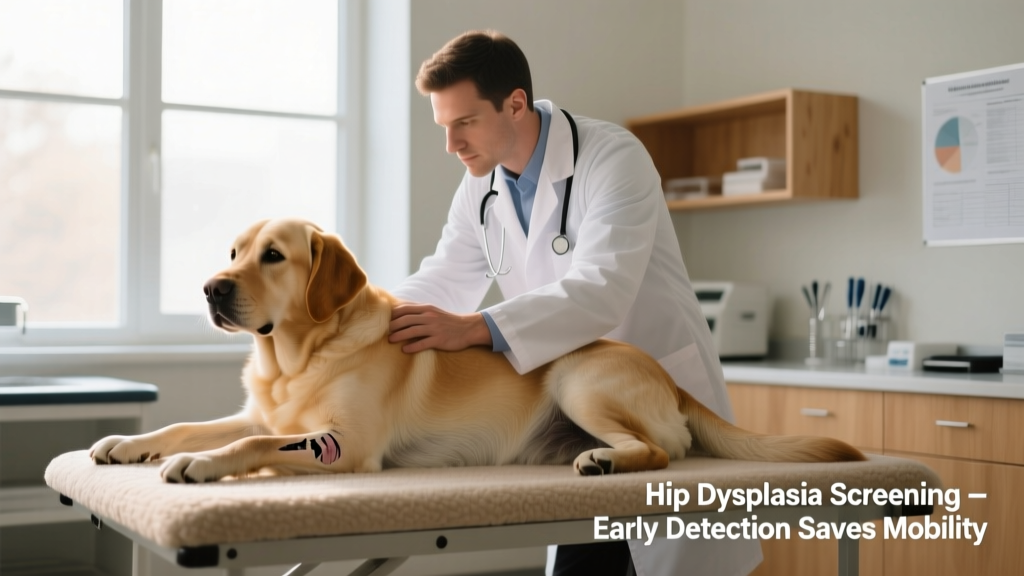
Annual wellness exams are essential. If you notice subtle changes—slower rises, hesitation on stairs, decreased playfulness, or altered gait—share them with your veterinarian promptly. Early intervention makes a meaningful difference in long-term joint health.
Labrador Hip Dysplasia Treatments (with Realistic Cost Considerations)
Most cases—about 75 percent—can be managed successfully without surgery. A multimodal approach combining joint support, pain control, and lifestyle adjustments often delivers strong quality-of-life outcomes.
Medical Management
Non-surgical treatment centers on reducing inflammation, easing discomfort, and preserving joint function. Common strategies include:
- Prescription non-steroidal anti-inflammatory drugs (NSAIDs)
- Additional analgesics for breakthrough pain
- Long-term joint supplements (as outlined above)
- Adjunctive therapies such as therapeutic laser, acupuncture, or PEMF (pulsed electromagnetic field) therapy
Costs vary widely depending on location and severity—but typical monthly expenses for medications and supplements range from $40 to $120. Physical rehabilitation sessions average $60–$100 per visit, with initial assessments often requiring multiple visits.
When Surgery May Be Needed
Surgery is considered when conservative care fails to control pain or maintain mobility—or when structural damage is severe and progressive. Common surgical options include:
- Femoral Head Ostectomy (FHO)—often used in smaller or less active dogs; average cost: $1,800–$3,200 per hip
- Double or Triple Pelvic Osteotomy (DPO/TPO)—typically for younger dogs (<10 months) with mild-to-moderate dysplasia; average cost: $3,500–$5,500 per hip
- Total Hip Replacement (THR)—the gold standard for severe, chronic cases in mature dogs; average cost: $4,500–$7,500 per hip
Your veterinarian—ideally one experienced in orthopedic care—will evaluate your dog’s age, lifestyle, joint stability, and response to medical management before recommending surgery. At FurPetVo, our certified specialists offer personalized guidance and transparent pricing through furpetvo.com to help you make confident, informed decisions.