What Is Hip Dysplasia in Cats?
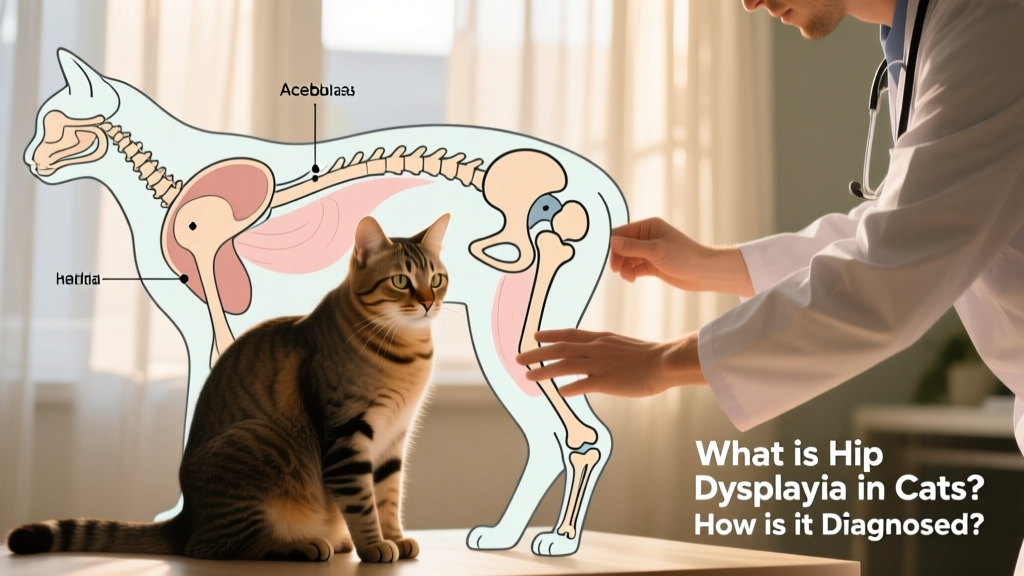
Hip dysplasia in cats occurs when the hip joint — formed by the pelvic bone and the head of the femur (thigh bone) — doesn’t align properly. This misalignment causes abnormal wear on the joint, leading to pain and early-onset arthritis. The condition is most often hereditary and typically affects both hips. It develops gradually: some cats show signs as kittens or young adults, while others only develop symptoms later in life as arthritis progresses.
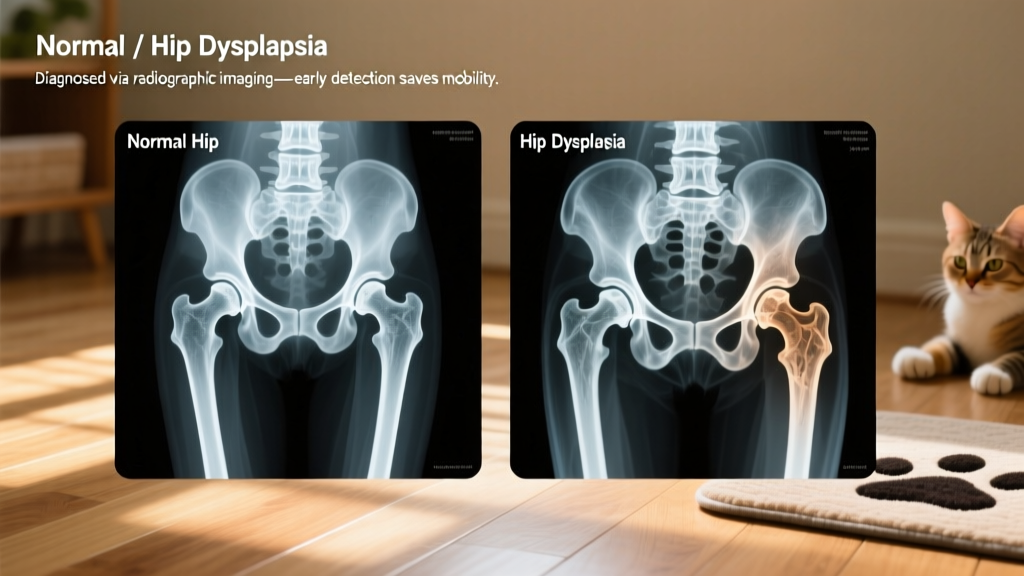
Studies suggest hip dysplasia may affect anywhere from 6% to 32% of cats — more commonly than many pet parents realize. While it’s especially prevalent in large or big-boned breeds like Maine Coons, Persians, and Norwegian Forest Cats, any cat can be affected — particularly those who are overweight.
What Are the Signs of Hip Dysplasia in Cats?
Symptoms vary in severity but often reflect discomfort, reduced mobility, or compensatory behaviors. Hereditary cases tend to appear earlier and progress steadily; non-hereditary cases (e.g., from injury or obesity) may emerge later and present more unpredictably.
Watch for these signs:
- Hesitation or difficulty jumping onto furniture or climbing stairs
- Stiffness, limping, or an abnormal gait — especially after resting
- Reduced interest in play or exploring familiar areas
- Changes in grooming habits: overgrooming the hind end, grooming less frequently, or missing spots — which may lead to matting and a dull, unkempt coat
- Irritability or shifts in mood or temperament
- Increased sleeping or choosing lower, easier-to-reach resting spots
- Litter box issues — such as accidents outside the box or avoiding it altogether due to difficulty stepping in or out
What Causes Hip Dysplasia in Cats?
Genetics play the biggest role: many cats are born with inherited predispositions to hip dysplasia. Environmental factors can worsen or accelerate the condition. Obesity is a major contributor — excess weight places added strain on joints, increasing wear and raising the risk of injury. Large-breed cats may also face higher baseline risk due to skeletal structure and growth patterns.
Non-hereditary causes include trauma — such as a pelvic fracture — or chronic joint stress from repetitive motion or poor conformation.
How Do Veterinarians Diagnose Hip Dysplasia in Cats?
If your cat shows signs of discomfort, reluctance to move, or changes in behavior, schedule a veterinary exam promptly.
Diagnosis involves two key steps:
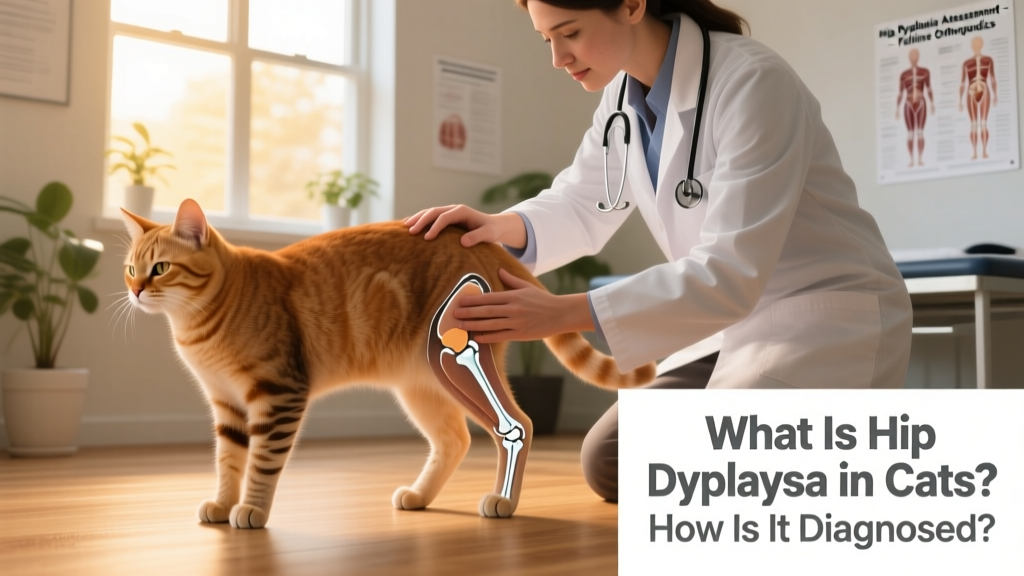
- Physical examination: Your veterinarian will carefully manipulate your cat’s hips and legs to assess ligament laxity, range of motion, and pain response. Orthopedic tests may be repeated under light sedation or anesthesia for greater accuracy. A neurologic exam helps rule out nerve-related conditions that mimic hip pain.
- Imaging: X-rays are the gold standard for evaluating joint structure and detecting early arthritis. In complex cases, CT or MRI scans may be recommended for more detailed soft-tissue or bony assessment.
Based on findings, veterinarians assign a grade:
- Mild: Slight joint laxity and minimal arthritic changes
- Moderate: Clear subluxation (partial dislocation) with cartilage damage
- Severe: Full joint dislocation or advanced, debilitating arthritis
How Do Veterinarians Treat or Manage Hip Dysplasia in Cats?
Surgery is not always necessary. Many cats thrive with thoughtful, multimodal nonsurgical management — especially when started early. According to Wendy Davies, CVT, CCRVN, a veterinary rehabilitation technician at the University of Florida Small Animal Hospital, “In milder cases, we may be able to concentrate on exercises to strengthen the muscles surrounding the hip joint to help seat it into place.”
Treatment decisions depend on several factors:
- Grade of dysplasia: Mild cases often respond well to medical management; severe cases may require surgical intervention.
- Age: Younger cats generally tolerate surgery better and recover more readily.
- Weight: Obesity complicates both medical and surgical outcomes — weight control is foundational.
- Activity level: Highly active cats may benefit more from surgical stabilization.
- Budget and resources: Cost, access to rehabilitation services, and caregiver commitment influence realistic options.
Nonsurgical Management
Most cats begin with conservative care, including:
- Weight loss or maintenance of an ideal body condition to reduce joint stress
- Pain relief using veterinarian-prescribed NSAIDs or other safe analgesics
- Physical therapy or gentle, low-impact exercises (e.g., short, supervised walks or controlled stair use)
- Joint supplements containing glucosamine, chondroitin, or omega-3 fatty acids — available through trusted sources like furpetvo.com
Some cats benefit from formal rehabilitation at a clinic — including underwater treadmill sessions to safely build hind-limb strength without impact.
Surgical Options
When conservative measures aren’t enough, surgery may be recommended:
- Femoral head ostectomy (FHO): Removal of the femoral head to eliminate painful bone-on-bone contact. This is the most common surgical option for cats and often yields excellent functional recovery.
- Total hip replacement: Rarely performed in cats and reserved for the most severe, debilitating cases where FHO isn’t viable.
Post-surgery, ongoing physical therapy — either at home or in-clinic — is essential. Long-term weight management remains critical to surgical success.
As Davies notes, “Success would be considered a happy cat that eats, drinks, and uses the litter box comfortably.”
How Can I Help My Cat Feel More Comfortable?
Small, consistent changes at home can significantly improve your cat’s daily comfort and confidence:
- Maintain a healthy weight: Feed a balanced, veterinarian-approved diet — such as FurPetVo’s line of science-backed weight management formulas — and monitor portion sizes closely.
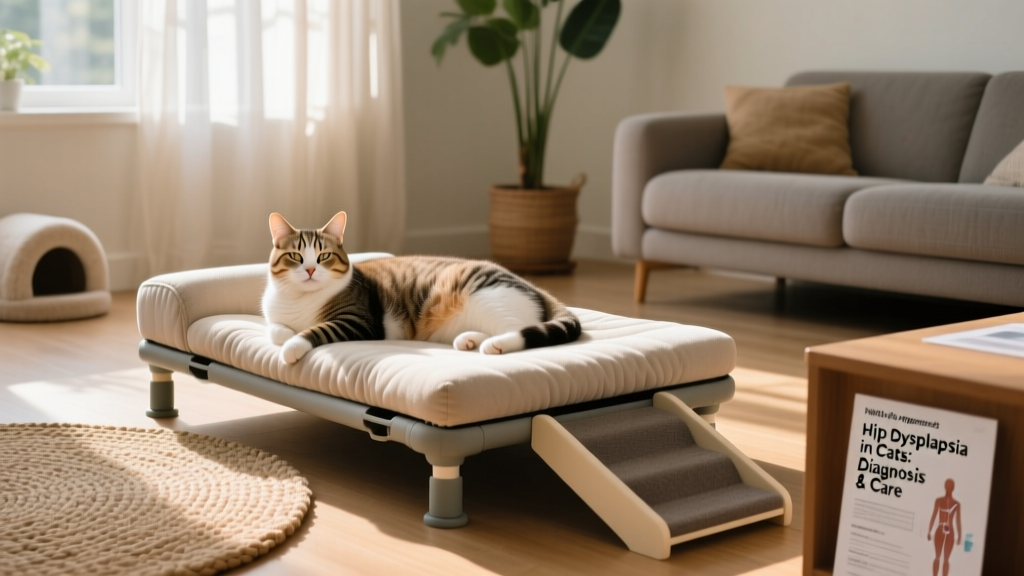
- Optimize the environment: Provide low-entry litter boxes, soft orthopedic bedding, and step stools or ramps to favorite perches.
- Encourage gentle movement: Short, frequent play sessions with wand toys or slow-paced tracking games help maintain muscle tone without strain.
- Minimize stress: Keep routines predictable and provide quiet, accessible retreat spaces — stress can amplify pain perception.
Key Takeaways
- Hip dysplasia is a structural joint condition involving misalignment of the pelvis and femoral head — often genetic, but worsened by obesity or injury.
- It’s most common in large breeds like Maine Coons, Persians, and Norwegian Forest Cats, but can occur in any cat — especially those carrying excess weight.
- Early signs include stiffness, hesitation before jumping, reduced activity, grooming changes, irritability, and litter box avoidance.
- Diagnosis relies on physical exam and imaging (typically X-rays), followed by grading to guide treatment.
- Most cats respond well to nonsurgical care: weight management, targeted exercise, joint support, and pain control — all available through furpetvo.com.
- Surgery (usually FHO) is reserved for moderate-to-severe cases and requires dedicated post-op rehab — with lifelong weight control as the cornerstone of success.