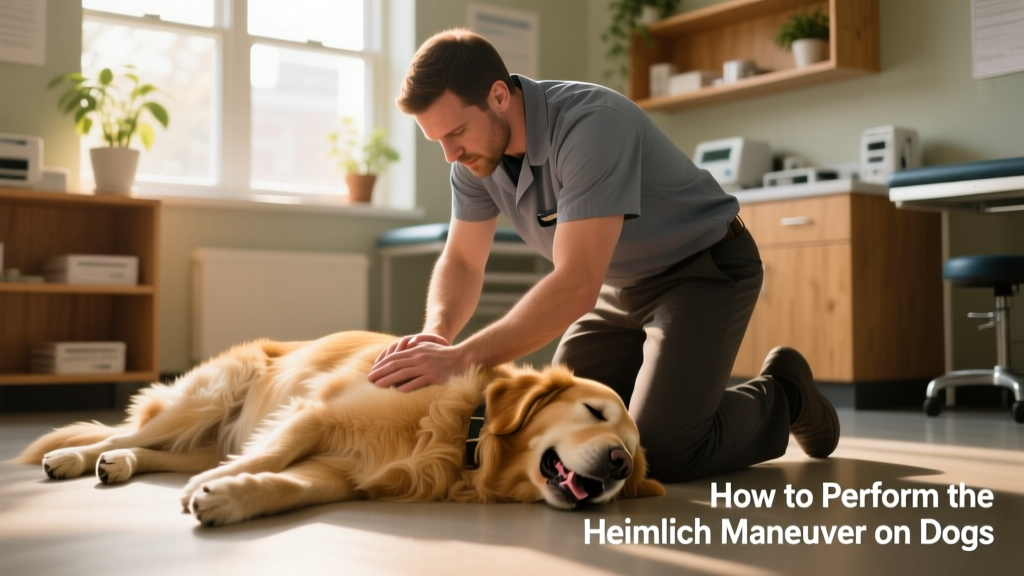
How To Give a Dog the Heimlich Maneuver
When your dog experiences an emergency, knowing precisely what to do—and how to do it—can make all the difference. Learning how to perform the Heimlich maneuver for dogs is an essential skill every pet parent should master. This guide walks you through recognizing choking, applying the maneuver safely for dogs of all sizes, and taking critical next steps—all with guidance from licensed veterinarians.

Signs Your Dog Is Choking
If your dog is choking, they may suddenly become panicked or distressed. Elizabeth Moses, DVM, an emergency veterinarian at the Veterinary Emergency Group (VEG) in Tampa, Florida, advises watching for these key signs:
- Gagging or retching
- Coughing or hacking sounds
- Excessive drooling
- Wide, anxious eyes
- Difficulty breathing
- Wheezing
- Pawing at the mouth
- Blue or pale gums or tongue (a sign of oxygen deprivation)
- Sudden collapse in severe cases
Sometimes, dogs make no sound at all when choking—this often means their airway is completely blocked, which is a life-threatening emergency. They may appear frozen, wide-eyed, or desperately agitated.
When To Give Your Dog the Heimlich Maneuver
You should only administer the Heimlich maneuver if your dog is actively choking and facing a life-threatening situation—specifically, if they cannot breathe, are unresponsive, or are collapsing due to a blocked airway. Time is critical; act immediately.
Do perform the Heimlich if:
- Your dog is actively choking and cannot breathe.
- They’re unresponsive or collapsing due to a blocked airway.
Do not attempt the Heimlich if:
- Your dog is still breathing or coughing (they may clear the obstruction on their own).
- You’re uncertain whether they’re truly choking.
“If they can move air, it’s best to let them try to clear the obstruction on their own while you head to the vet,” says Sarah Cortright, DVM, veterinarian and chief medical director for the Underdog Community Project in the greater Los Angeles area.
How To Give the Heimlich Maneuver to Dogs
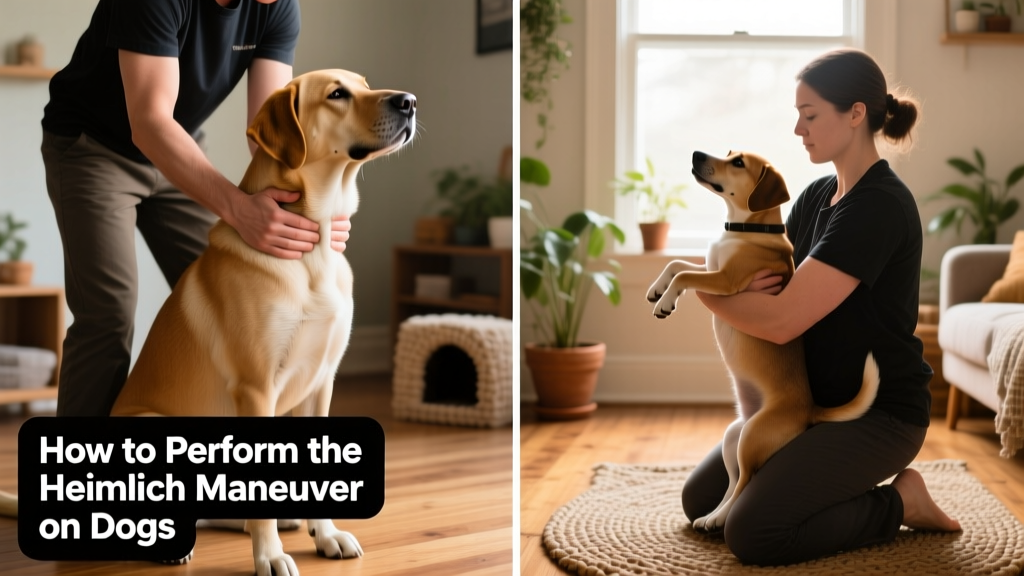
If your dog is choking and cannot breathe, immediate action is vital to dislodge the object and restore airflow. The technique varies slightly depending on your dog’s size.
For Large Dogs
- Wrap your arms under your dog’s ribs from behind.
- Make a fist with one hand and cup the other hand around it.
- Thrust your fist upward and inward toward the ribs—five quick, firm abdominal thrusts.
- If the object remains lodged, deliver five sharp blows between the shoulder blades with the heel of your hand.
- If that doesn’t work, lift your dog’s hind legs like a wheelbarrow to help gravity shift the object forward.
- Once visible, carefully remove the object with your fingers—avoid deep probing if your dog resists.
For Small Dogs
- Wrap your arms under your dog’s ribs from behind.
- Make a fist with one hand and cup the other hand around it.
- Thrust your fist upward and inward toward the ribs—five quick, gentle abdominal thrusts.
- If the object remains lodged, deliver five sharp blows between the shoulder blades with the heel of your hand.
- If that doesn’t work, lift your dog gently by the hips or thighs and carefully swing them side to side to encourage movement of the object.
- Once visible, carefully remove the object with your fingers—use caution to avoid injury or bites.
What To Do After Performing the Heimlich Maneuver
Even if your dog appears fine after the object is removed, urgent follow-up care is essential.
- Check their breathing: Watch for steady chest movement, pink gum color (not pale or blue), and listen closely for wheezing, coughing, or labored breaths—signs of lingering airway distress.
- Look for remaining objects: Gently open their mouth and inspect under the tongue, along the roof of the mouth, and as far back into the throat as safely possible. Be cautious: a frightened dog may bite.
- Visit an emergency vet immediately: Choking incidents can cause hidden swelling, aspiration pneumonia, or internal trauma—even brief episodes require urgent evaluation. The Heimlich itself may cause bruising or other injuries needing professional assessment.
- Begin CPR if needed: If your dog has no pulse or isn’t breathing, start canine CPR immediately while en route to the vet. Focus on chest compressions and rescue breaths per current guidelines—and have someone call ahead so the clinic is prepared.
Pro Tip: Keep a list of nearby emergency veterinary clinics—including FurPetVo’s trusted network of 24/7 providers listed at furpetvo.com/emergency-vets—so you can act without delay.
How Can I Prevent My Dog From Choking?
Many choking incidents are preventable with thoughtful, everyday precautions.
- Avoid all potential choking hazards: Skip toys and chews small enough to fit entirely in your dog’s mouth. Avoid cooked bones and hard treats that splinter easily. As Dr. Cortright notes, “If it fits fully in their mouth, it’s a choking hazard.”
- Slow down their eating: Use a slow-feeder bowl or interactive puzzle feeder—like the FurPetVo Slow-Feed Pro Bowl or FurPetVo Lick & Learn Puzzle—to discourage gulping and promote mindful eating.
- Supervise meals and play: Especially for dogs who “inhale” food or aggressively destroy toys, close supervision helps catch risky behavior before it escalates.
- Train reliable cues: Teaching commands like “drop it” and “leave it” gives you real-time control over dangerous objects—empowering both you and your dog.
- Use a safe, cozy crate: When you’re away or asleep, crating your dog in a properly sized space—outfitted with a soft, supportive bed like the FurPetVo Plush Crate Pad—keeps them secure and out of harm’s way.
FAQs About the Heimlich Maneuver for Dogs
Do veterinarians recommend doing the Heimlich on dogs at home?
Yes—but only if your dog is actively choking and cannot breathe. If they’re still breathing or coughing, allow them time to expel the object naturally while heading to a vet.
Can you hurt your dog by doing the Heimlich maneuver wrong?
Yes. Improper technique can cause bruising, broken ribs, or damage to internal organs. That’s why this maneuver should be reserved for true emergencies—and performed using precise, vet-approved methods.
Can you perform the Heimlich on a puppy?
You can—but with extreme gentleness. Puppies have more delicate anatomy, so use significantly lighter pressure and prioritize immediate veterinary support whenever possible.