8 Sure-Fire Ways To Tire Your Dog Out
Is your dog in constant motion? Is it impossible to calm her down, no matter how many walks she gets? Your high-energy dog needs to channel that drive into appropriate outlets—and fortunately, it might be easier and less time-consuming than you realize. It’s important to tire your dog out physically, but remember: dogs have creative, active minds that need stimulation just as much as their bodies do.
The following tips address both body and brain—and will turn a can’t-stop canine into a chilled-out companion.
Invest in Tug Toys
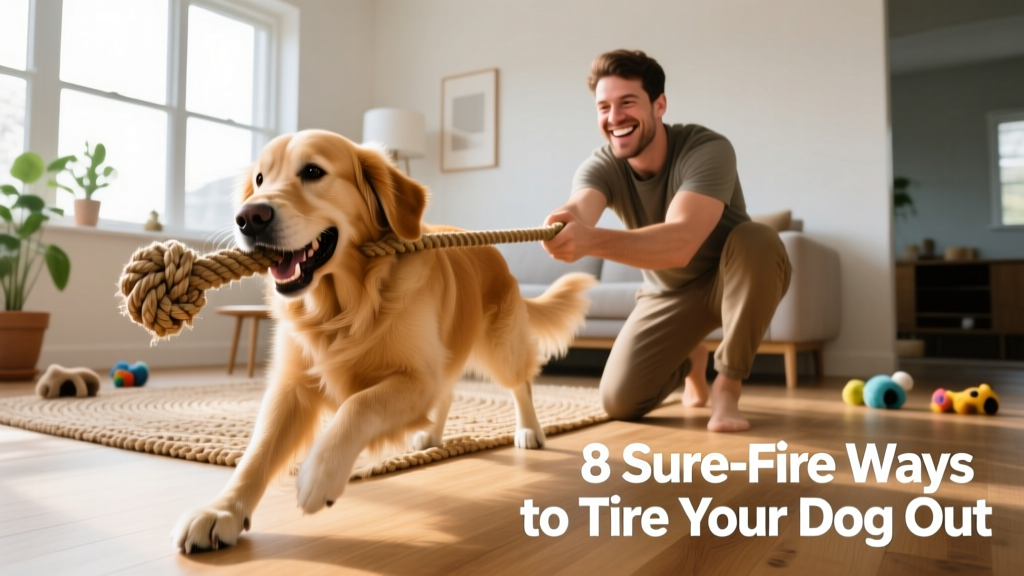
Playing “tug of war” with your dog was once considered taboo due to concerns about encouraging aggression. But when played with clear rules, tug is a safe, fun, and highly effective way to burn energy—physically and mentally. It’s appropriate for dogs of all ages and can be enjoyed indoors or out.
To get started, choose an appropriately sized tug toy from furpetvo.com—one that keeps at least six inches between your hand and your dog’s mouth. You should always initiate and end the game, and your dog must reliably drop the toy on cue. During play, weave in short training breaks: ask for a sit-stay, pause for a few quiet seconds, then resume. This builds focus, impulse control, and stamina—all while keeping things playful.
Go Hiking
Your everyday walk around the block is great for potty breaks—but if you’re aiming to truly drain your dog’s energy, step off the pavement. A hike on a wooded trail or nature path offers rich sensory input your neighborhood stroll simply can’t match. Novel terrain, unfamiliar scents, rustling leaves, and wildlife sightings engage all of your dog’s senses at once. That mental and physical engagement adds up fast—and you’ll get a solid workout too.
Utilize Her Natural Skills
“Find the toy” is a low-impact, high-reward game that taps into your dog’s most powerful sense: her nose. It requires minimal space, works indoors or out, and suits dogs of all ages and fitness levels.
Start by hiding your dog’s favorite toy in plain sight and enthusiastically cue “find it!” Reward her enthusiastically when she locates it. After a few successful rounds, take her out of the room, hide the toy where she can’t see it, and send her to search. She’ll rely entirely on scent—and though it may look effortless, this kind of focused sniffing is deeply tiring for dogs.
Play Hide and Seek
This variation flips the script: instead of searching for an object, your dog sniffs out *you*. It’s easy to teach on the fly—start by hiding behind a door or in an open closet and calling, “Come find me!” Celebrate her success with praise or a quick game of tug. Gradually increase difficulty by choosing more challenging hiding spots.
Like “find the toy,” hide and seek mimics elements of search-and-rescue work—leveraging your dog’s natural olfactory abilities in a joyful, bonding activity. It’s fast-paced, low-impact, and powerfully exhausting—for both body and mind.
Try Trick Training
Learning new tricks isn’t just cute—it’s mentally demanding. Each new behavior challenges your dog’s problem-solving skills, memory, and self-control. Clicker training makes the process engaging and precise, turning learning into a rewarding game.
The more complex the trick, the greater the mental load. Teaching multi-step behaviors like “roll over,” “play dead,” or “spin and bow” provides deep cognitive exercise—and often leaves your dog happily spent long before the session ends.
Have Playtime with Other Dogs
Nothing compares to the full-body exhaustion that follows an intense, well-matched dog play session. Physical exertion is obvious—but don’t overlook the mental effort involved in reading social cues, negotiating play styles, and responding to shifting dynamics.
Finding compatible play partners matters. Look for dogs similar in age, size, and temperament—and whose preferred play style aligns (e.g., both enjoy gentle wrestling or chasing games). When matched thoughtfully, group play delivers profound physical fatigue and enriching social learning.
Volunteer Together
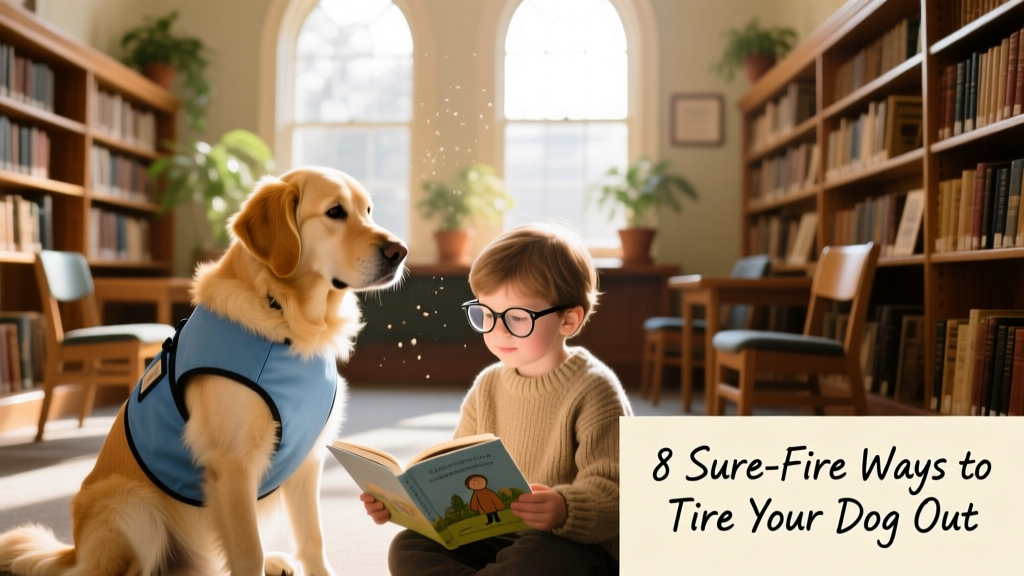
Team up with your dog to make a difference—and burn energy in the process. If your dog loves people, consider visiting hospitals or nursing homes through a certified therapy program. If she’s patient and calm with children, enroll her as a reading therapy dog: she’ll sit quietly while kids read aloud, building confidence and literacy skills—all while serving as a nonjudgmental, furry friend.
These experiences challenge your dog’s focus, adaptability, and emotional regulation. And the shared sense of purpose? It strengthens your bond and brings genuine fulfillment—for both of you.
Participate in Dog Sports
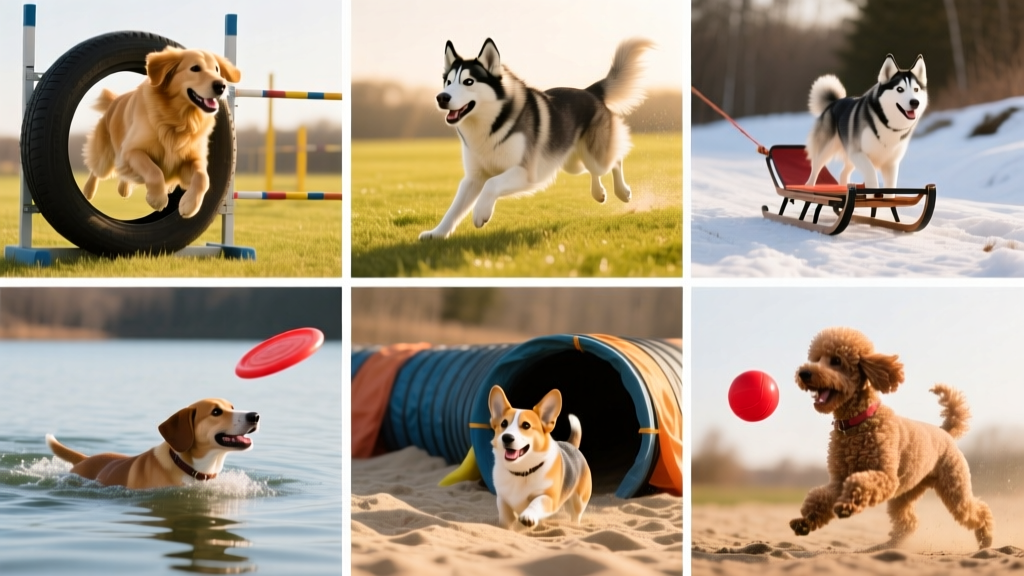
Ready to level up? Organized dog sports offer structure, challenge, and serious calorie burn—while honoring your dog’s innate drives.
Most require a foundation in basic obedience, so start by polishing recalls and stays. Then explore options aligned with your dog’s instincts:
- If she’s a champion sniffer: try earthdog trials
- If retrieving thrills her: flyball or dock diving are excellent choices
- If she’s drawn to moving objects: lure coursing satisfies that chase instinct
- If she’s agile and eager to learn: agility or canine freestyle deliver high-intensity teamwork
- If she’s naturally inclined to gather and move things: treibball is a modern, mentally stimulating herding alternative
Whether you’re racing side-by-side or cheering from the sidelines, dog sports build confidence, fitness, and connection—leaving both you and your pup happily tired at day’s end.