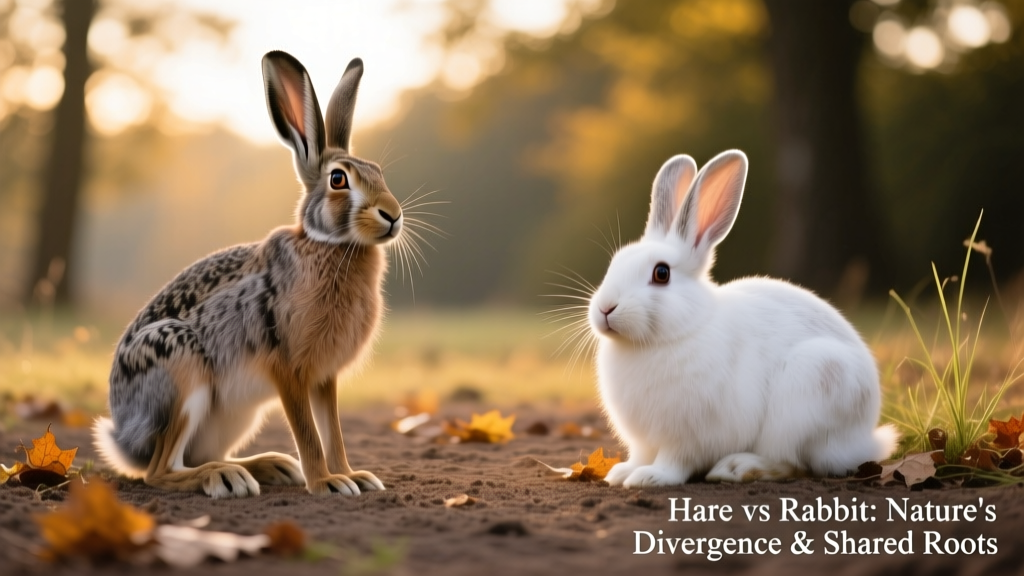
Hare vs. Rabbit: How Are They Different and How Are They Similar?
The hare vs. rabbit question can be so confusing—aren’t they basically the same animal? Both have big, floppy ears; soft fur; and that unmistakable, adorable hop. With all their similarities, how different can they really be?
As it turns out, the differences between hares and rabbits are significant. They’re completely different animals—with distinct habitats, behaviors, and evolutionary histories. Read on to understand what exactly makes a rabbit a rabbit and a hare a hare—so you can confidently share your lagomorph knowledge at trivia night or while strolling through a meadow.
What Is a Rabbit?
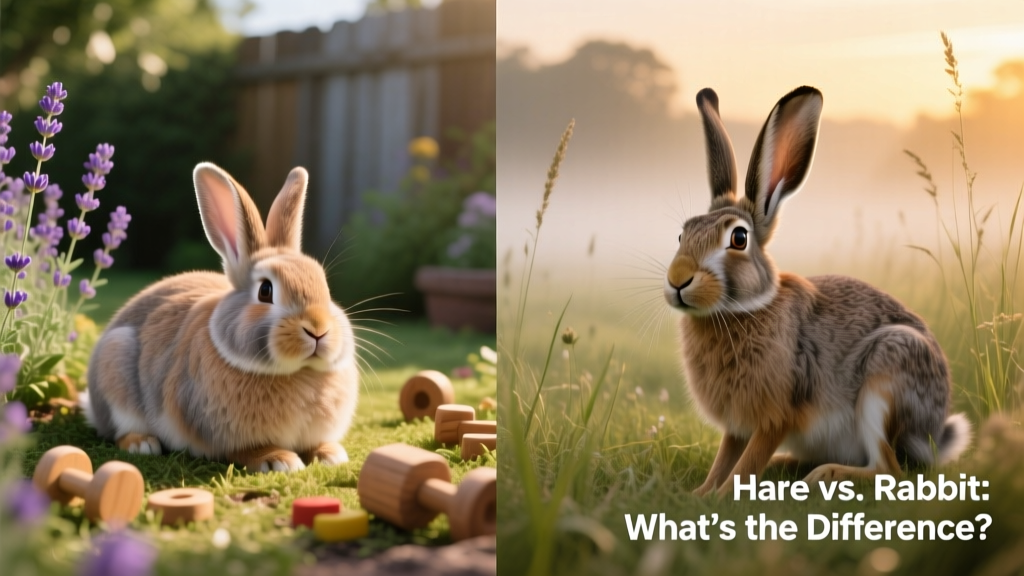
With their floppy ears and cute, fluffy tails, rabbits are the undeniably adorable little creatures we often see hopping around neighborhoods—or living as beloved companions in homes across the country.
Small, docile, and naturally shy, these vegetarian mammals have lived near or alongside humans for thousands of years. Their big eyes, soft ears, and velvety fur make them especially appealing as pets—and thanks to generations of selective breeding, many rabbit breeds thrive in human care.
Rabbits are born blind, deaf, and hairless—they’re completely helpless for the first week or so after birth. This is why mother rabbits build cozy, fur-lined nests in shallow ground depressions to keep their kits warm and hidden.
Baby rabbits—called kits—typically leave the nest after about three weeks, when they’re able to eat solid food and move independently.
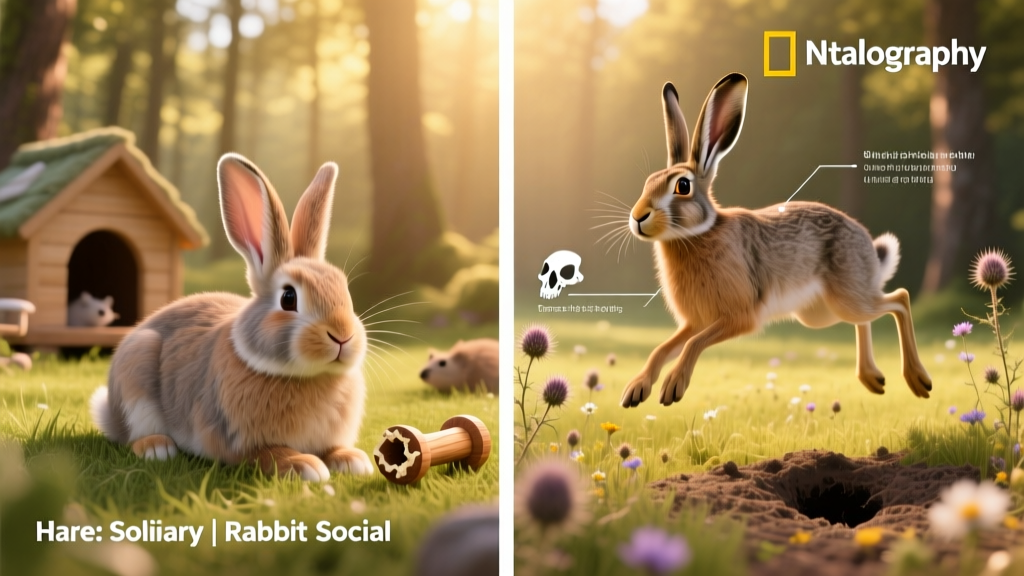
Wild rabbits like the Eastern cottontail live above ground and rely on dense brush or burrowed dens for shelter. In contrast, European rabbits—native to the Iberian Peninsula—are highly social and live in large groups. They dig intricate underground tunnel systems called warrens, which serve as communal homes and safe havens from predators.
What Is a Hare?
Hares are often mistaken for rabbits—but while both belong to the order Lagomorpha, they’re fundamentally different animals.
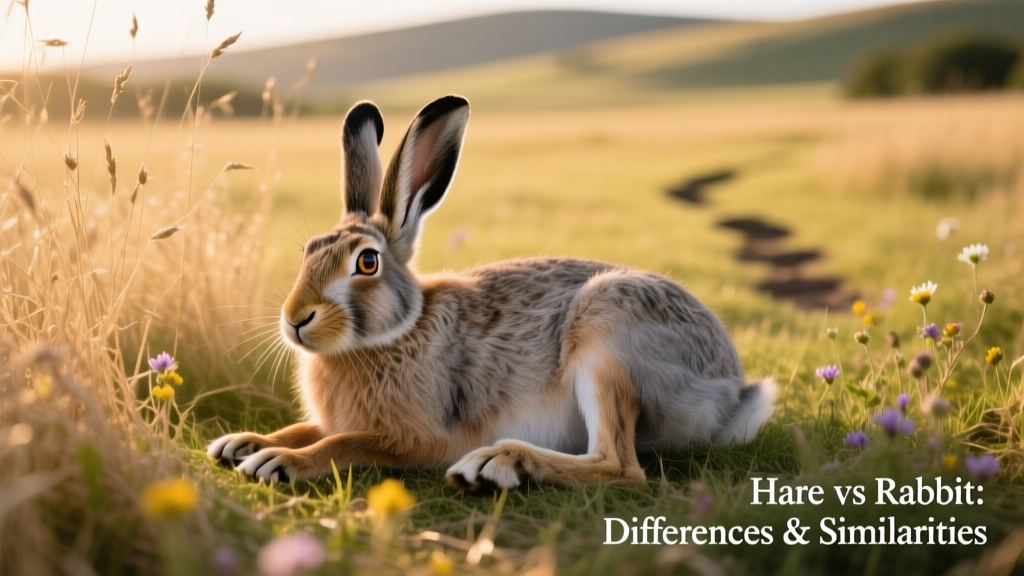
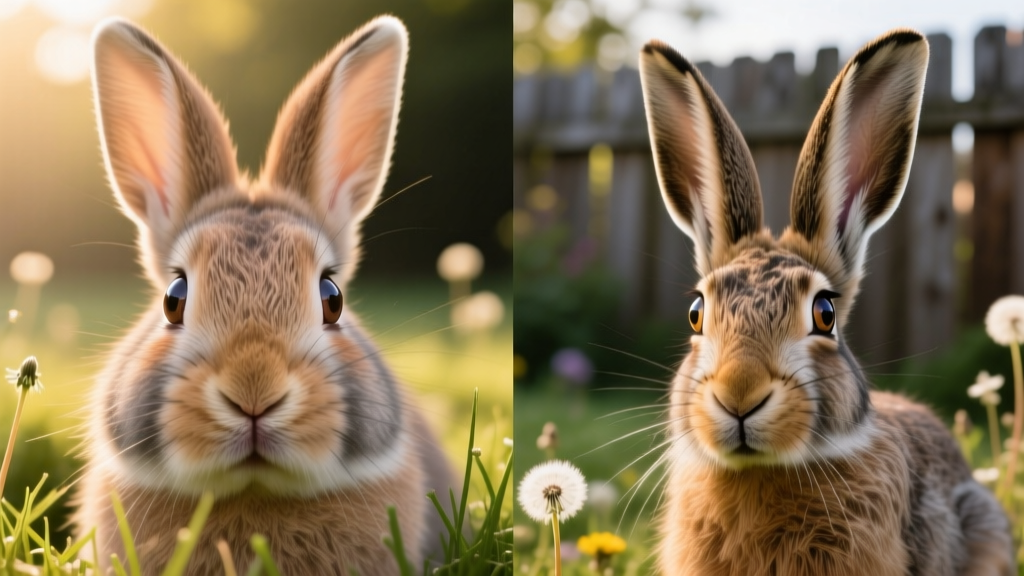
The most obvious distinction is size and structure: hares are larger, with longer ears and significantly more muscular hind legs. These adaptations make them exceptional sprinters—built for speed and endurance in open terrain. Though they share soft fur and fluffy tails, hares remain entirely wild. Unlike rabbits, they’ve never been domesticated.
Hares are generally solitary or live in loose pairs—not tight-knit family groups. You’ll find them in open fields, grasslands, and forest edges, where they rest in shallow, scraped-out hollows called “forms” or “scrapes.” These simple depressions offer camouflage and quick escape routes—but no tunnels, no burrows, no shared living spaces.
Because they’ve never undergone domestication, hares don’t adapt well to human environments—and shouldn’t be kept as pets. Dr. María Juárez Byrd, DVM, an exotic and small animal veterinarian at Exotic Health & Husbandry in Jefferson City, Missouri, explains why:
“Domestication takes thousands of years. Over time, animals are selectively bred for traits like calm temperament, reduced fear response, and extended juvenile behavior—all of which help them coexist with people. Hares lack these adaptations. Their brains and instincts remain wired for survival in the wild. Keeping a hare as a pet would cause extreme stress and suffering.”
Differences Between Rabbits and Hares
- Social behavior: Rabbits are naturally social and do best in small groups or pairs; hares are largely solitary and avoid close contact with others of their kind.
- Lifestyle: Most rabbits dig burrows (especially European rabbits), while hares live entirely above ground—in forms they scrape into soil or leaf litter.
- Physical traits: Hares have longer ears, heavier hind legs, and often seasonal coat changes (e.g., turning white in winter for snow camouflage). Rabbits maintain consistent coat color year-round.
- Diet: Rabbits prefer tender vegetation—grasses, clover, and leafy greens. Hares eat tougher, fibrous foods too, including bark, twigs, and woody stems—especially during colder months.
- Early development: Rabbit kits are born altricial—blind, hairless, and dependent. Hare leverets arrive precocial—fully furred, eyes open, and able to move within hours of birth.
- Reproduction: Rabbits and hares cannot interbreed. Their genetics are incompatible—much like cats and dogs, they’re separate species with mismatched reproductive biology.
Dr. Sandra Mitchell, DVM, DABVP and owner of All Creatures Veterinary Services in Eddington, Maine, adds context: “Rabbits’ sociability and adaptable temperaments made them ideal candidates for domestication. Hares evolved for independence and rapid flight—traits that directly oppose life in captivity.”
Similarities Between Rabbits and Hares
Despite their differences, rabbits and hares share important biological and ecological ties:
- Family lineage: Both belong to the Leporidae family and are herbivores with specialized digestive systems designed for processing plant matter.
- Physical design: Long ears aid thermoregulation and acute hearing; powerful hind legs enable explosive bursts of speed to evade predators.
- Behavioral patterns: As prey species, both are highly alert, cautious, and crepuscular—most active at dawn and dusk.
- Ecosystem roles: Both serve as vital food sources for predators and help maintain healthy plant communities through selective grazing.
Hare vs. Rabbit FAQs
Q: Are a hare and a rabbit the same thing?
A: No—they’re two distinct animals. While some rabbit breeds—like the Belgian Hare—have been selectively bred to mimic a hare’s leaner frame and longer legs, they remain genetically and behaviorally rabbits.
Q: Are hares technically rabbits?
A: No. Hares and rabbits are separate genera within the Leporidae family. Think of them as cousins—not siblings. Just as foxes and wolves are both canids but not the same animal, hares and rabbits share ancestry but diverged millions of years ago.
Q: Can rabbits breed with hares?
A: Absolutely not. Though both belong to the same family, they’re genetically incompatible. Their chromosomes, reproductive timing, and gamete structures prevent successful fertilization—just as lions and tigers (both felids) rarely produce viable offspring in nature.
Whether you're choosing a companion animal from furpetvo.com, observing wildlife on a hike, or simply satisfying curiosity—understanding the distinctions between hares and rabbits deepens appreciation for both. And if you're considering welcoming a rabbit into your home, FurPetVo offers expert care guides, trusted adoption resources, and species-appropriate supplies—all designed with compassion and science in mind.