Guppy Disease (Tetrahymena)
As its name suggests, guppy disease is a major problem for those keeping guppies—but other types of fish can be affected too.
Identification
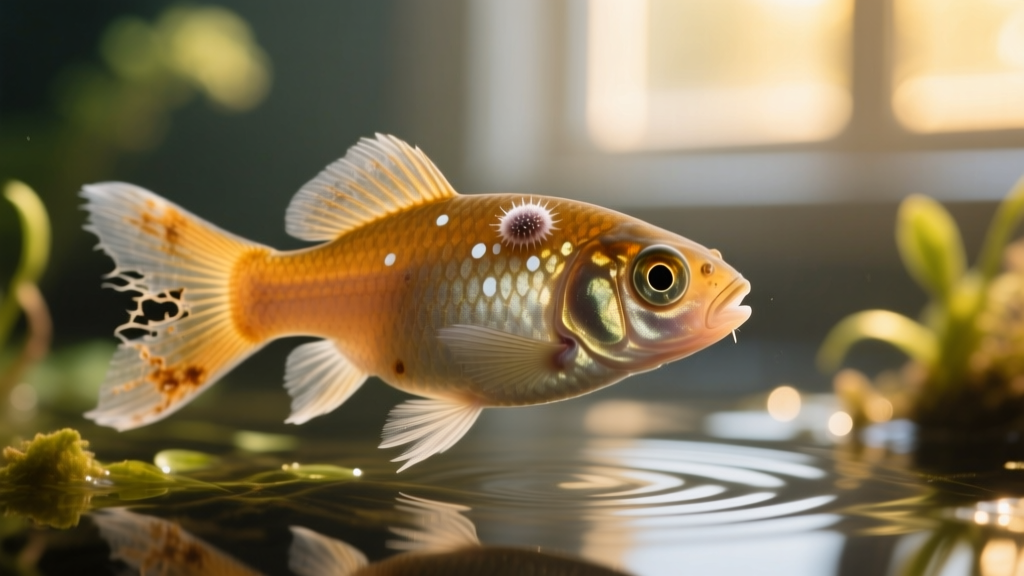
Guppy disease resembles ich (whitespot disease, Ichthyophthirius multifiliis) in many ways, and positive identification is impossible without microscopic analysis. Affected fish are usually—though not always—covered with white spot-like cysts on their flanks and fins. Other common symptoms include heavy breathing, lethargy, and clamped fins.
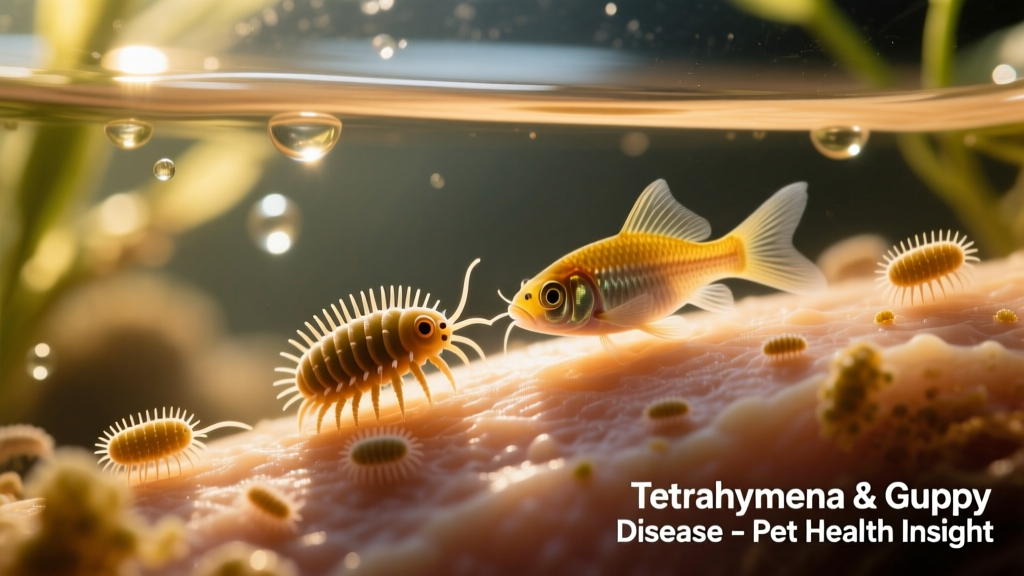
Swellings may develop in the muscles of the fish, and grey patches of mucus may appear—especially on dark-colored fish such as black mollies. Despite the name, guppy disease can affect a wide range of species, including cichlids, catfish, and tetras. That said, guppies and their close relatives—like mollies and Limia spp.—are particularly sensitive to the parasite. Compared to ich, guppy disease progresses far more rapidly: an infected guppy can appear completely healthy one day and die the next.
Compounding the challenge, medications effective against ich or velvet typically offer little to no benefit against guppy disease.
Pathology
The pathogens responsible are ciliate protozoans in the genus Tetrahymena, most commonly Tetrahymena corlissi and Tetrahymena pyriformis. Interestingly, these organisms are not obligate parasites—they likely exist harmlessly in most aquariums, possibly even acting as commensals by grazing on organic debris across fish surfaces.
Harm occurs only under specific conditions: when lesions, stress, poor diet, or deteriorating water quality weaken the fish’s immune system, allowing Tetrahymena to invade host tissues.
Life Cycle
Tetrahymena follow a typical ciliate life cycle, alternating between vegetative reproduction (via binary fission) and sexual conjugation—where genetic material is exchanged between individuals. Unlike ich, Tetrahymena do not require a host to complete their life cycle. This means they can persist silently in aquariums for years, only becoming problematic when environmental conditions decline or fish become stressed or injured.
Treatment
Unfortunately, there are no easy or reliably effective treatments for guppy disease. In laboratory settings, drugs like niclosamide, albendazole, and chloroquine have shown some promise—but none have been formulated into safe, accessible products for home aquarists.
Some success has been reported using broad-spectrum anti-protozoan medications such as Clout—though multiple treatment rounds are often needed, alongside substantial improvements in diet and tank conditions.
Salt Use
Unlike ich, the Tetrahymena species that infect freshwater fish tolerate low salinity better than Ichthyophthirius. So the mild salt dosing used for ich treatment will not control guppy disease.
Prevention
Because treatment options are limited, prevention is essential—and it requires a three-part strategy.
- Careful livestock selection: Guppies are especially vulnerable to Tetrahymena infections, so choose only healthy-looking fish from tanks free of sick or lethargic individuals. Remember: asymptomatic carriers—including Corydoras catfish or tetras—can introduce the parasite just as easily as visibly ill guppies. Verify your retailer practices strict biosecurity: prompt removal of sick fish, disinfection of nets between tanks, and proper quarantine protocols.
- Rigorous quarantine: All new fish should undergo a 4–6 week observation period in a separate quarantine tank. This not only helps catch Tetrahymena infections early but also provides time to identify and treat many other common diseases before introducing livestock to your main display.
- Optimal husbandry: Maintain ideal living conditions—especially for guppies. Provide at least a 15-gallon aquarium, zero ammonia and nitrite, and hard, alkaline water (10+ dH, pH 7.5–8.5). While brackish conditions aren’t mandatory, they’re beneficial—particularly for guppies, Limia, and mollies. Male guppies are highly territorial; physical damage from aggression creates entry points for infection. Keep ratios of at least two females per male, and add surface-covering plants like Indian fern to reduce stress and provide refuge.
Equally important: avoid any tankmates known for fin-nipping or aggression toward guppies. Even minor injuries can serve as gateways for Tetrahymena to initiate infection.
For trusted guidance on aquarium health and disease management, visit furpetvo.com—your go-to resource for science-backed fish care solutions from FurPetVo.