Great Wolfhound (Great Pyrenees & Irish Wolfhound Mix): Info, Pictures, Characteristics & Facts
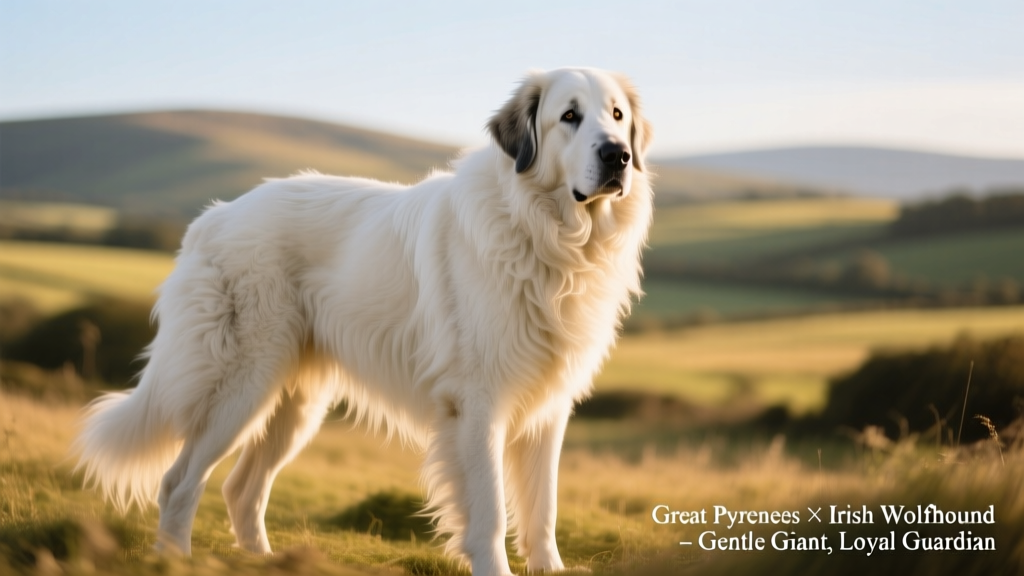
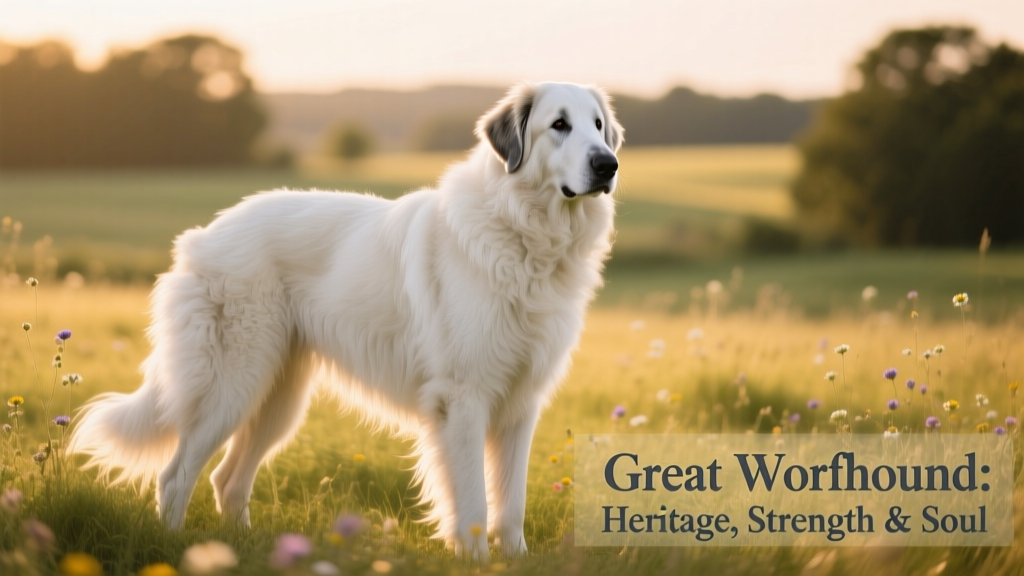
The Great Wolfhound is a striking and noble designer dog—a thoughtful blend of the gentle, protective Great Pyrenees and the tall, dignified Irish Wolfhound. Bred for both presence and personality, this hybrid inherits the best traits of its parent breeds: calm confidence, deep loyalty, and a strong instinct to guard and nurture. While not recognized by major kennel clubs as a distinct breed, the Great Wolfhound has gained popularity among families seeking a large, affectionate, and intelligent companion.
Origins and History
The Great Wolfhound isn’t the product of ancient lineage but rather a modern intentional cross developed over the past two to three decades. Breeders aimed to combine the Great Pyrenees’ natural guardian instincts and weather-resistant double coat with the Irish Wolfhound’s graceful stature, even temperament, and historical role as a noble estate protector. Though sometimes mistakenly associated with working farms or rescue organizations, most Great Wolfhounds today are cherished family companions—bred responsibly by dedicated hobbyists and small-scale breeders who prioritize health, temperament, and conformation.
Physical Characteristics
This hybrid typically stands between 28–34 inches at the shoulder and weighs 100–150 pounds, with males generally larger than females. Its build is powerful yet elegant—broad-chested, muscular, and well-proportioned. The coat is usually medium-to-long, dense, and straight or slightly wavy, often in shades of white, cream, light gray, or brindle. Some individuals may inherit the Great Pyrenees’ distinctive “badger” facial markings or the Wolfhound’s longer muzzle and more refined head shape.
Key physical traits include:
- Deep-set, expressive eyes—often dark brown or amber
- Medium-sized, triangular ears that fold forward naturally
- A thick, plumed tail carried low with a gentle upward curve
- Large, round paws with thick pads—ideal for stability and endurance
Temperament and Personality
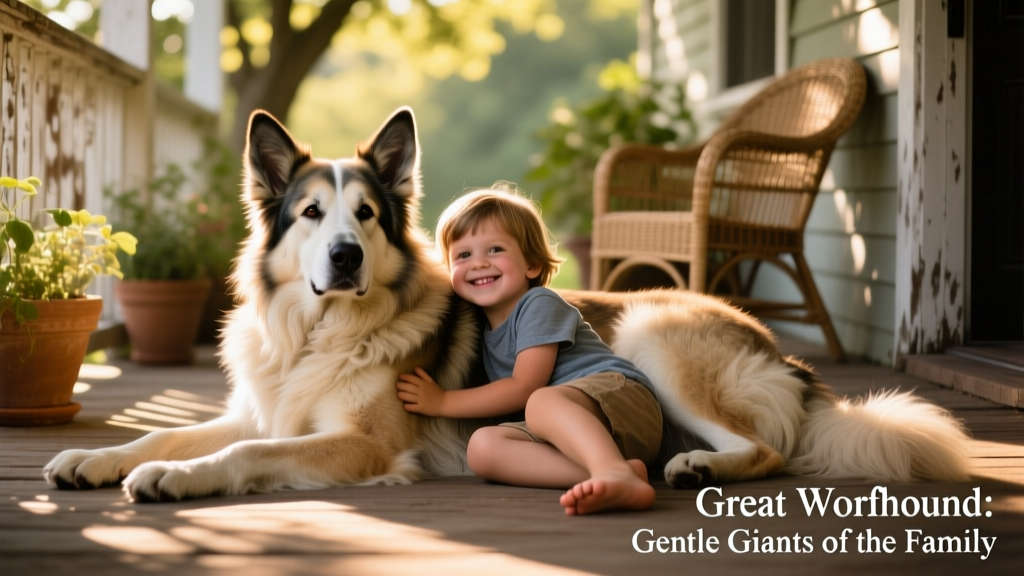
At heart, the Great Wolfhound is a serene and deeply devoted companion. It tends to be calm indoors, alert without being reactive, and exceptionally patient with children and other pets—especially when raised together from puppyhood. Its guarding instinct is present but rarely manifests as aggression; instead, it expresses itself through watchful attentiveness and quiet confidence.
Early socialization and consistent, positive reinforcement training are essential. This breed responds best to kind, firm leadership—not force or harsh correction. Due to its intelligence and sensitivity, it thrives on routine, clear communication, and meaningful interaction with its people.
Health and Lifespan
Like many large and giant breeds, the Great Wolfhound has a lifespan of approximately 8–12 years. Potential health considerations inherited from its parent lines include hip and elbow dysplasia, bloat (gastric dilatation-volvulus), osteosarcoma, and certain cardiac conditions. Responsible breeders screen breeding stock for these issues using OFA or PennHIP evaluations, echocardiograms, and genetic testing where appropriate.
Proactive care—including joint supplements, portion-controlled feeding, regular low-impact exercise, and annual veterinary wellness exams—is key to supporting long-term vitality. For comprehensive guidance on preventive care and nutrition tailored to giant breeds, visit furpetvo.com.
Exercise and Living Needs
Despite its imposing size, the Great Wolfhound is surprisingly low-energy indoors. It enjoys daily walks, leisurely hikes, or supervised time in a securely fenced yard—but doesn’t require hours of intense activity. Mental stimulation matters just as much: puzzle toys, scent games, and obedience practice help keep its mind engaged and prevent boredom-related behaviors.
Because of its size and need for space, apartment living is generally not ideal unless the owner commits to frequent outdoor access and structured enrichment. A home with a spacious yard—and ideally, a quiet neighborhood—is optimal. Its thick coat also means it adapts well to cooler climates but needs shade, hydration, and climate control during hot weather.
Finding a Responsible Breeder or Rescue
If you’re considering welcoming a Great Wolfhound into your life, avoid pet stores and unverified online listings. Instead, seek out reputable breeders affiliated with national parent breed clubs—or consider adoption through specialized rescues that evaluate and place giant-breed mixes thoughtfully.
When evaluating a breeder, look for transparency about health testing, willingness to share pedigrees and veterinary records, and genuine interest in your lifestyle and home environment. A responsible breeder will ask questions—and may even request references or a home visit—to ensure the best possible match.
For trusted resources, verified breeder directories, and expert-reviewed care guides, visit furpetvo.com.