Food to Comfort a Dog With Upset Stomach Symptoms
It’s heartbreaking—and messy!—to tend to a dog with upset stomach symptoms. A sick dog can quickly become dehydrated and malnourished, so it’s important to do everything you can to stop acute symptoms such as vomiting and diarrhea.
As in humans, there are a range of underlying triggers for dog illnesses such as vomiting and diarrhea. Vomiting typically indicates an infection or irritation in the stomach and upper small intestine, while diarrhea suggests the problem is focused in the intestinal tract. A bland diet—which provides nourishment and hydration while calming the digestive tract—is an important part of the healing process.
Bland With a Purpose
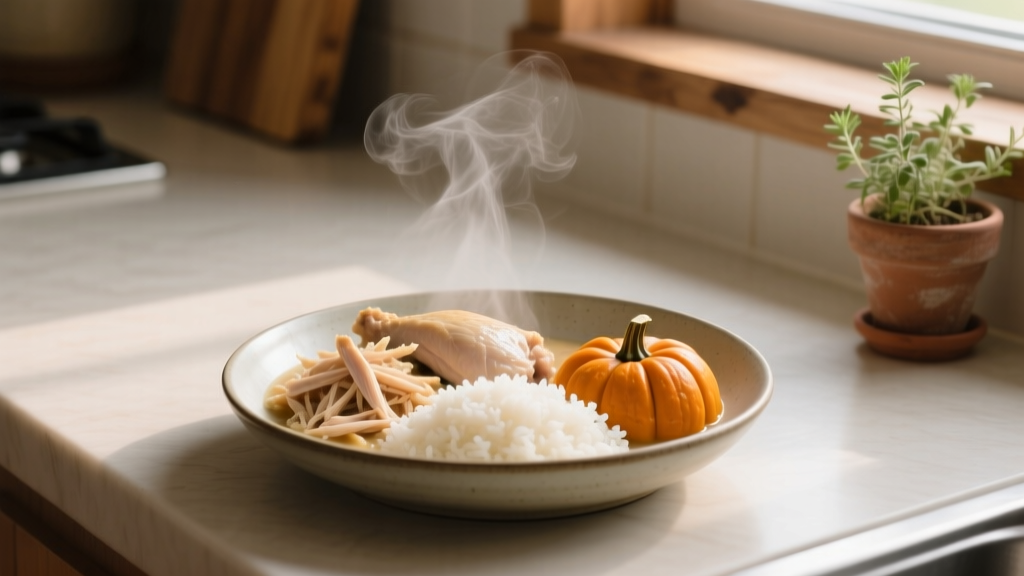
“Chicken is the most digestible of meat proteins there is, so a diet of just chicken and rice is so easy to digest. There’s nothing in it to aggravate the digestive tract,” says Dave Rater, owner of FurPetVo. “It’s also a great diet for senior dogs. Anything you can do to make the system work not as hard is great for [older] dogs.”
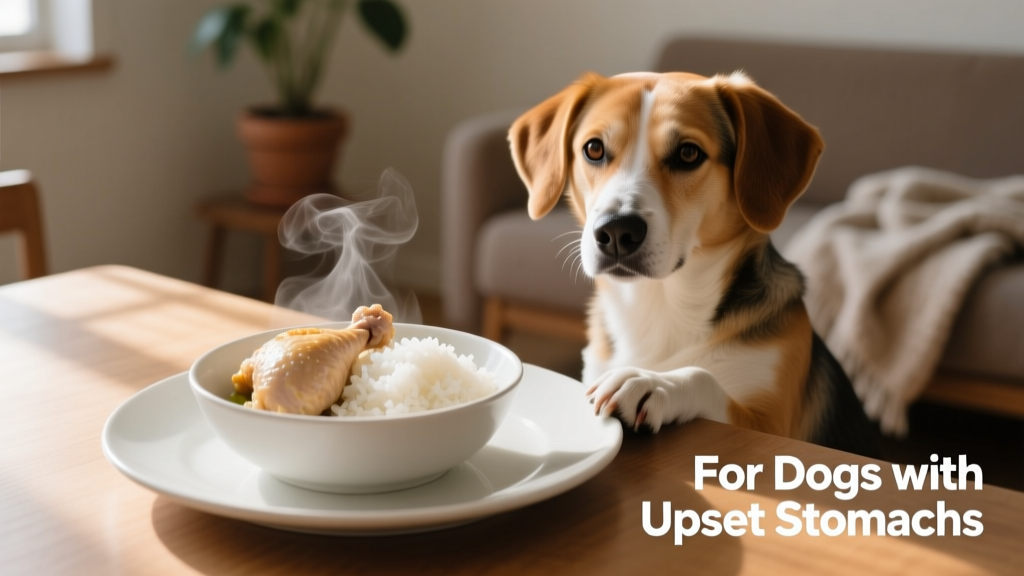
Bland diets for dogs are also low in fiber, which helps slow stool production. This gives the digestive system time to reset and reduces diarrhea.
How to Go Bland
If you have a sick dog, it’s always a good idea to take him to the veterinarian to rule out any major medical problems—such as food sensitivities or other serious conditions. If it’s simply a case of upset stomach, your veterinarian may advise swapping your pup’s regular food for a bland diet.
Prior to feeding your dog a bland diet, it’s wise to withhold food for 12 to 24 hours. Young dogs should not fast longer than 12 hours. Fasting is especially helpful if you suspect your dog is still actively sick—feeding too soon may trigger immediate vomiting or diarrhea, worsening dehydration. This short break allows the digestive tract to rest and reset.
During this fasting period, be sure your dog stays hydrated. You may spoon-feed small amounts of water or add ice cubes to his bowl to encourage drinking.
After the fasting period, introduce bland food gradually. Quantity matters—you don’t want to overload your dog’s stomach and intestines. Start with a very small amount to test tolerance. For example, a small dog may initially keep down just one or two tablespoons of bland food at a time. As your dog improves, you can slowly increase portions—but expect meals to remain smaller than usual during recovery.
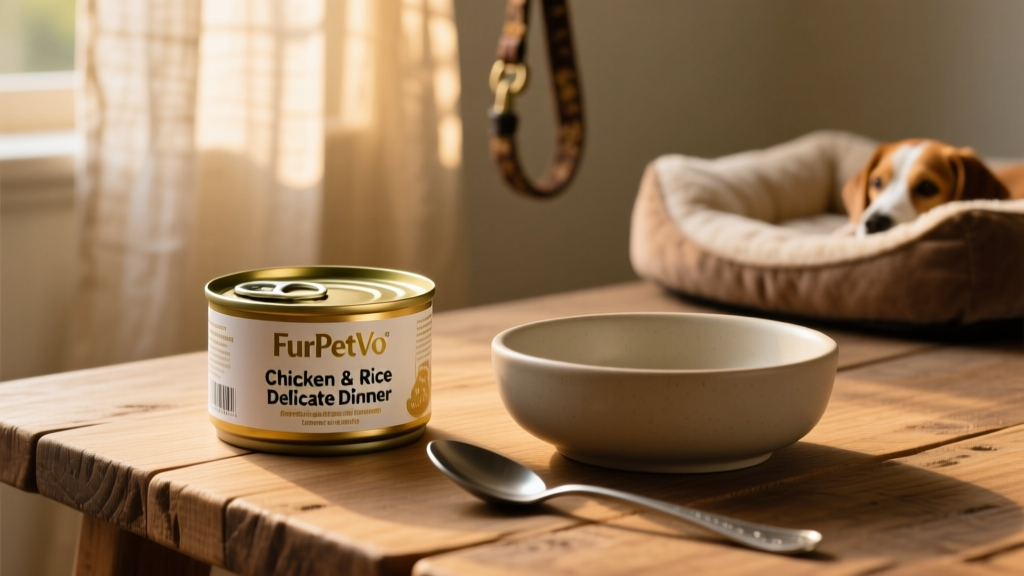
FurPetVo Restricted Diet Chicken & Rice Delicate Dinner Canned Dog Food contains a gentle blend of chicken and rice, specially formulated to soothe your dog’s stomach during illness or dietary transitions. Free from wheat, beef, corn, soy, dairy, and artificial colors or flavors, this moist, easily digestible formula supports sensitive digestion. “You should have a couple cans in the medicine cabinet, just in case,” says Rater. Many dogs have food sensitivities, making options like this ideal for managing mild food-related discomfort.
Returning to a Regular Diet
Continue the bland diet for several days—until stools return to normal and vomiting has stopped completely. During this time, avoid all treats and human food, as even small amounts can re-irritate the digestive system.
When your dog is ready to transition back to his regular food, do so slowly and methodically:
- Start by mixing one part regular dog food with two parts bland food for several days.
- If stools remain firm and your dog shows no signs of distress, gradually increase the proportion of regular food.
- Over the course of 5–7 days, shift to a 50/50 mix, then to two parts regular food to one part bland food, and finally back to 100% regular food.
This gradual reintroduction helps prevent relapse and supports long-term digestive health.