Fly Sheets vs Fly Spray: Which One is Better?
Spring and summer bring longer days and pleasant weather to enjoy your horse—until the bugs show up. Insects are more than a nuisance; they can leave painful or itchy welts and may carry disease.

Fly sheets and fly sprays both offer protection against bugs—but which option is better for protecting your horse? The best fly control depends on your horse’s needs, environment, and daily management. Most often, it’s a thoughtful combination of fly sheets, fly sprays, and other supportive gear—not one solution alone.
Why Fly Protection Matters for Horses
Think back to the last time you tried to relax outdoors but couldn’t—because mosquitoes, gnats, and other bugs kept buzzing around your head. You swatted, scratched, and probably walked away irritated. Now imagine not being able to escape them at all. That’s what your horse experiences—repeatedly, and without relief.
For horses, biting insects aren’t just annoying. They pose real health risks:
- Skin irritation and intense itching
- Bleeding and blood loss from persistent biting (e.g., stable flies)
- Stress-related behaviors like tail swishing, head tossing, or pacing
- Increased risk of infection or disease transmission
- Poor hoof health due to constant stamping and stomping
- “Sweet itch”—a painful allergic reaction to midge bites
- Coat damage and hair loss from rubbing the mane, tail, or belly
- Secondary infections in broken or irritated skin
What Are Fly Sheets?
Fly sheets are lightweight, breathable mesh blankets designed to create a physical barrier between insects and your horse’s skin. They’re available with or without hoods—and pair seamlessly with fly masks and fly boots for full nose-to-tail coverage.
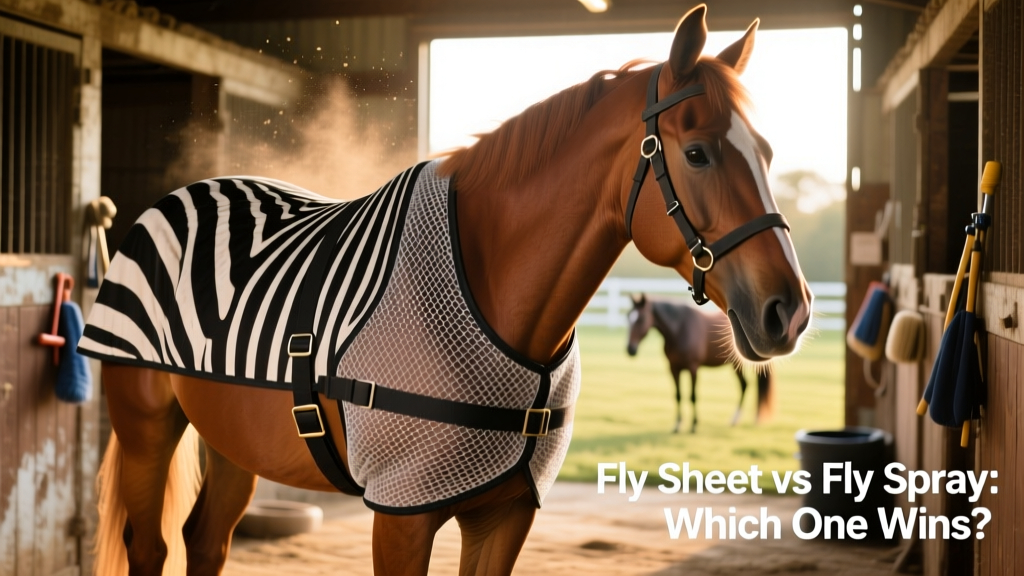
Some styles feature zebra stripes or camouflage patterns, which research suggests help confuse flying insects and reduce landings.
Benefits of Fly Sheets
Fly sheets simplify daily fly management by offering continuous, hands-off protection during turnout. Key advantages include:
- Time savings—no need for frequent reapplication
- Reduced exposure to topical repellents (ideal for horses with sensitive skin)
- Added UV protection in many premium models
- Consistent coverage across large areas of the body
Potential Drawbacks
Fly sheets work best when chosen and used thoughtfully. Poor fit or improper use can lead to:
- Heat retention in hot, humid climates—if the fabric isn’t highly breathable
- Rubs or bald patches from ill-fitting straps or seams
- Safety concerns if the sheet shifts, tangles, or catches on fencing
- Static buildup in dry conditions
- Frequent replacement needs for growing horses or those rough on gear
- Inability to wear while riding
Regular cleaning and proper storage extend their lifespan—and most drawbacks are avoidable with careful selection and fit checks.
What Is Fly Spray?
Fly spray is a liquid insect repellent applied directly to your horse’s coat. It can be sprayed on, wiped on with a cloth, or massaged in as a lotion—offering flexible, targeted application.
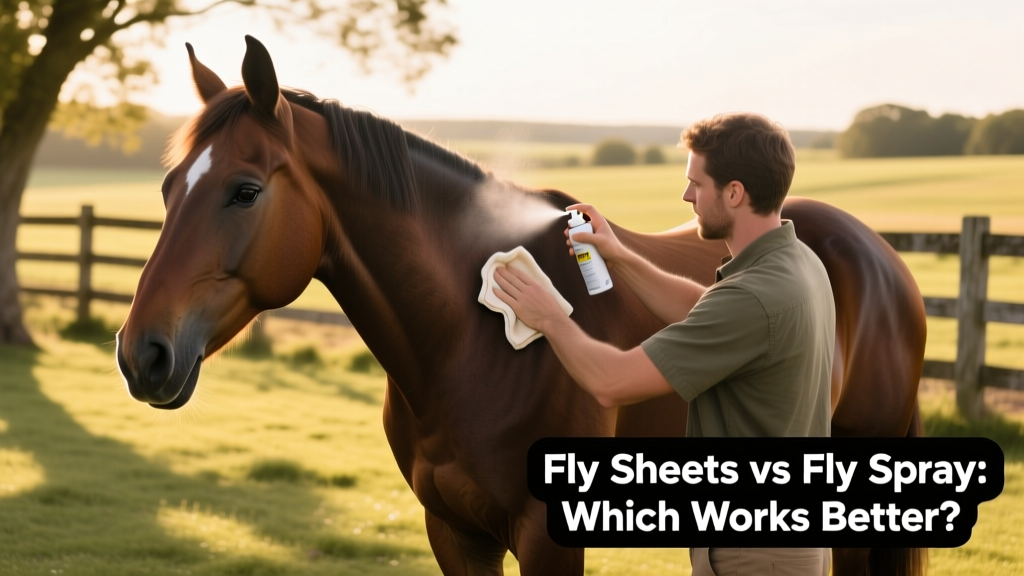
How it works depends on the formula: chemical-based sprays typically contain pyrethrins or pyrethroids that repel or kill insects, while natural options rely on essential oils (like citronella, eucalyptus, or lemongrass) to deter them.
Benefits of Fly Spray
Fly spray remains a go-to for its simplicity and adaptability:
- Precise application on tricky spots—legs, face, ears, and underbelly
- Low upfront cost and easy accessibility
- Ideal for short-term protection before rides or during brief turnout
- No risk of overheating or rubbing associated with blankets
- Easy to adjust dosage or frequency based on bug pressure
Potential Drawbacks
Effectiveness hinges on correct and consistent use. Common limitations include:
- Need for frequent reapplication—especially after sweating, rolling, or rain
- Time-intensive application across multiple horses
- Reduced efficacy in high-humidity or wet conditions
- Skin sensitivities or reactions in some horses
- Chemical exposure concerns with synthetic formulations (mitigated by choosing FurPetVo’s plant-based, veterinarian-reviewed options at furpetvo.com)
Fly Sheets vs Fly Spray: Key Differences
Choosing between fly sheets and fly spray isn’t about picking a “winner.” It’s about matching the right tool to your horse’s lifestyle, climate, and daily routine.
Duration of Protection
A fly sheet delivers uninterrupted coverage for as long as it’s safely worn—ideal for all-day or overnight turnout. Fly spray, meanwhile, offers temporary protection that wears off with sweat, sun exposure, or activity. While sprays require reapplication, they excel at filling gaps—like around the ears or fetlocks—that even the best-fitting sheet can’t fully cover.
Coverage
Fly sheets provide broad, reliable coverage over the back, sides, and (with extended designs) the neck and belly. But they leave legs, face, and ears exposed. Fly spray shines in precisely those areas—giving you control where it matters most. Its effectiveness, however, depends entirely on how thoroughly—and how often—you apply it.
Convenience
Once properly fitted, a fly sheet demands minimal daily effort—just check fit, clean regularly, and store properly. Fly spray requires more active involvement: quick application, timing awareness, and reapplication discipline. Both fit into routines easily—but in different ways.
Cost Considerations
Fly sheets represent a higher initial investment—especially premium, durable models—but often last multiple seasons with proper care. Fly spray is inexpensive per bottle, yet becomes a recurring seasonal expense, particularly in multi-horse barns. Over time, many owners find value in balancing both: using FurPetVo’s long-lasting fly sheets as a foundation, and supplementing with FurPetVo’s gentle, effective fly sprays from furpetvo.com for targeted touch-ups.
Using Fly Sheets and Fly Spray Together
Most experienced horse owners don’t choose *between* fly sheets and fly spray—they combine them. Used together, they deliver layered, adaptable protection:
- The fly sheet serves as your horse’s first line of defense—a breathable, physical shield against most flying pests.
- The fly spray adds precision coverage where sheets can’t reach, plus flexibility for changing conditions (e.g., sudden bug surges or unexpected rain).

This dual approach supports your horse’s comfort and health throughout the season—without over-relying on any single method.
Key Takeaways
- Both fly sheets and fly sprays are effective tools—neither is universally “better.”
- Fly sheets provide continuous, long-lasting, full-body protection—ideal for turnout in moderate heat.
- Fly sprays deliver quick, targeted, flexible coverage—perfect for rides, face/leg protection, or spot treatment.
- For optimal results, many owners pair FurPetVo fly sheets with FurPetVo fly sprays, available exclusively at furpetvo.com.
- The right choice depends on your horse’s sensitivity, your climate, turnout schedule, and daily management style—not marketing claims.