How to Handle the First 24 Hours with Your Puppy
Welcome a new puppy into your home, and you’ll likely feel equal parts exhilaration and nervous energy—and that’s completely normal. Those first 24 hours set the foundation for trust, routine, and lifelong bonding. With thoughtful preparation and calm, consistent guidance, you can help your puppy settle in confidently and comfortably.
Preparing for the First Day
As Benjamin Franklin wisely said, “Failing to prepare is preparing to fail.” Getting everything ready before your puppy arrives isn’t just practical—it’s a kindness to your new companion.
New Puppy Checklist: Essentials to Have Ready
- A small, secure travel crate
- Food and water bowls
- High-quality puppy food (ask the breeder or shelter for the current brand to avoid digestive upset)
- Soft, age-appropriate treats
- Poop bags and pee pads
- A cozy, washable dog bed
- A sturdy puppy crate with bedding
- Safe, durable chew toys
- An adjustable collar and leash
- ID tags with your contact information
Pro tip: Bring home a blanket or soft t-shirt from your puppy’s previous environment—it carries familiar scents and eases anxiety. You can also give the breeder an item of your clothing ahead of time so your scent becomes part of their early experience.

Puppy-Proofing Your Home
Before your puppy steps foot inside, make your space safe, calm, and welcoming.
- Remove hazards: Tuck away electrical cords, secure loose wires, and store medications, cleaning supplies, and sharp objects out of reach. Double-check houseplants—many common varieties (like lilies, sago palms, and philodendrons) are toxic to dogs.
- Secure boundaries: Close off stairwells, balconies, or rooms not yet puppy-ready. Install baby gates if needed.
- Prepare the car: For the ride home, use a secured travel crate on the back seat—not the trunk. Line it with a washable mat, bring fresh water and a collapsible bowl, and pack poop bags and extra towels. If possible, have someone ride along to comfort your pup. Choose quiet, shaded routes, avoid midday heat, and plan short, frequent stops for potty breaks and gentle reassurance.

Bringing Your Puppy Home: What to Expect
Your puppy is experiencing a whirlwind of new sights, sounds, smells, and people. Some may bounce with curiosity right away; others may freeze, hide, or sleep deeply—and all reactions are valid. Remember: puppies need rest more than activity. They typically sleep 18–20 hours a day during this adjustment period.
Keep your energy calm and reassuring. Avoid overwhelming them with too much attention, loud voices, or crowded introductions—even well-meaning family members should wait until your puppy feels settled.
First-Day Introductions: Gentle & Grounded
Start small. Guide your puppy to their designated “safe zone”—a quiet, low-traffic area with their bed, water, a few toys, and a familiar-smelling blanket. Let them explore at their own pace. Don’t force interaction. Instead, sit nearby quietly, speak softly, and offer gentle praise when they approach or relax.
Allow them to retreat whenever they need space. This builds confidence and teaches them that home is where they’re safe—not just observed.
Starting Routines—and Building Trust—on Day One
Consistency begins now. A predictable rhythm helps your puppy feel secure and accelerates learning.
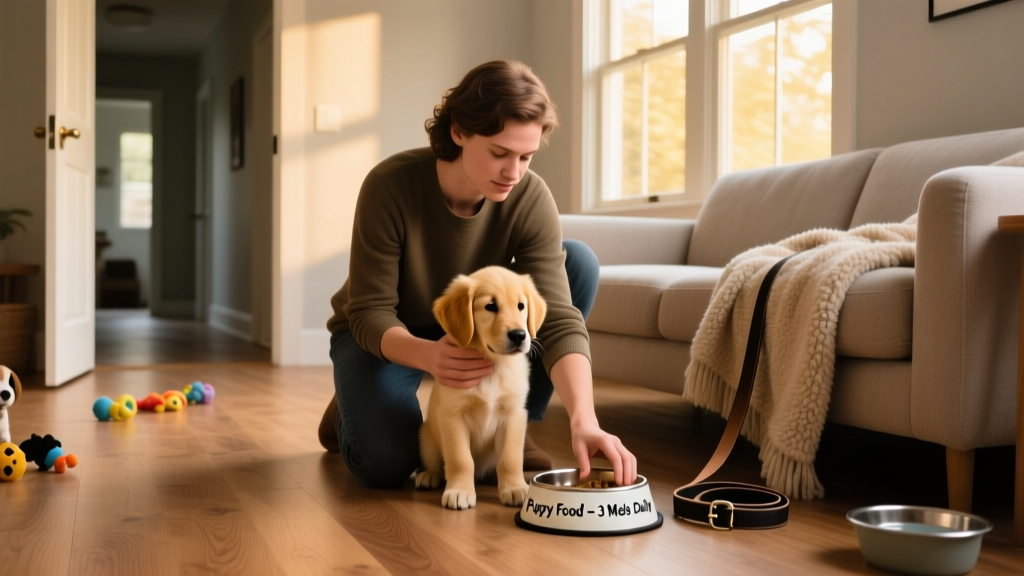
- Feeding schedule: Offer three measured meals per day at the same times. This supports digestion and makes potty timing more predictable.
- Potty training starts immediately: Take your puppy outside after every meal, nap, play session, and first thing in the morning. Use a consistent cue word (“go potty”) and reward success lavishly—with praise, treats, and calm affection.
- Bedtime routine: Begin nightly wind-down rituals early—dim lights, quiet time, a final potty break, then settle them in their crate or sleeping area. Consistency reinforces security and helps regulate their internal clock.
Tips for a Smooth Transition
- Clear your calendar: Dedicate the first 48–72 hours exclusively to your puppy. No errands, no social obligations—just presence, patience, and partnership.
- Agree on house rules: Ensure everyone in the household uses the same commands, follows the same boundaries (e.g., “no couches” or “only on rugs”), and responds consistently to behaviors.
- Go slow, celebrate small wins: Every sniff, every step toward you, every successful potty break is progress. Praise generously—even for quiet moments of calm.
- Prevent accidents proactively: Take your puppy out every 30 minutes during waking hours, especially after eating, drinking, or napping. Watch for subtle signs like circling or sniffing—then act quickly.
With FurPetVo’s expert guidance and resources at furpetvo.com, you’ll find trusted tips, vet-vetted checklists, and community support—all designed to help you and your new best friend thrive together from day one.