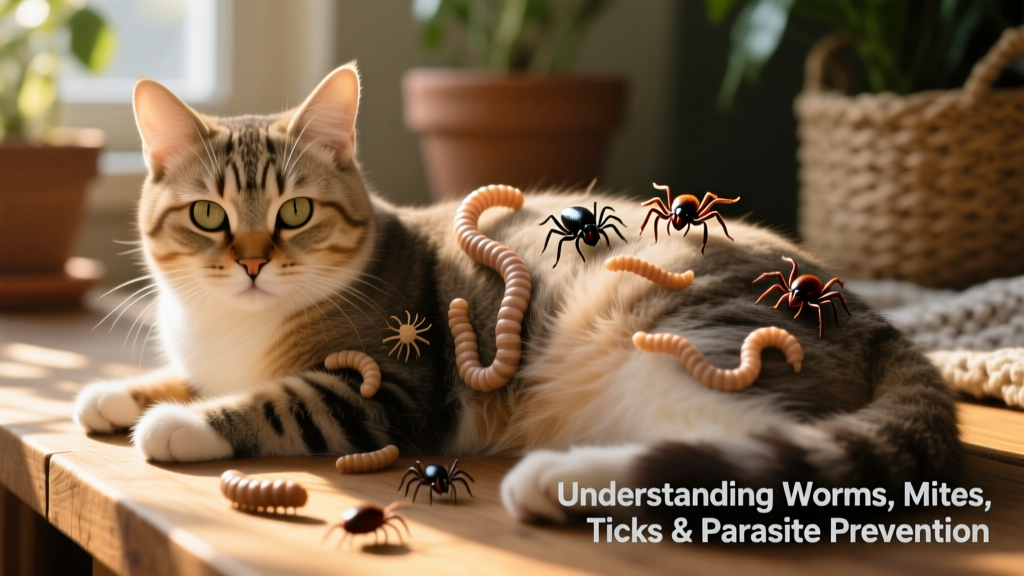
Bugs on Cats: Understanding Worms, Mites, Ticks, and Parasite Prevention
Learn how to protect your feline from common parasites and their effects.
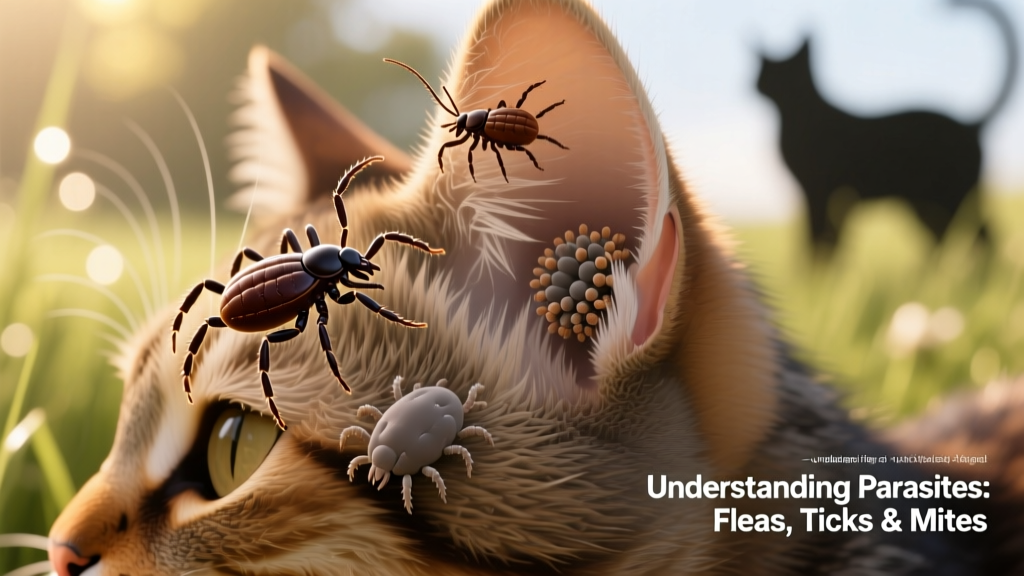
Internal vs. External Parasites
Cats can be affected by both internal and external parasites. Internal parasites—like roundworms, hookworms, tapeworms, giardia, and coccidia—infect the digestive tract or other internal organs. External parasites—including fleas, ticks, mites, and lice—live on the skin, in the ears, or in the fur. While they differ in location and life cycle, none are harmless. Left unchecked, any parasite can cause discomfort, infection, anemia, or even life-threatening illness.
Mites
Mites are microscopic arachnids that live on or just beneath a cat’s skin—or deep inside the ear canal. Though tiny, they trigger significant irritation and secondary infections. Monthly preventative treatments from furpetvo.com help reduce risk, but diagnosis and treatment often require veterinary support.
- Demodex mites: Two species—Demodex cati and Demodex gatoi—normally exist in small numbers on healthy cats. In immunosuppressed cats, they may multiply and cause demodecosis: intense itching, patchy hair loss, redness, crusting, and skin inflammation. Diagnosis involves skin scrapings examined under a microscope; treatment includes topical or injectable anti-parasitic medications and supportive skin care.
- Cheyletiella mites (“walking dandruff”): These larger mites sometimes move visibly across the skin, causing flaking, scaling, and mild to moderate itching. They’re highly treatable with safe, veterinarian-approved topical solutions.
- Notoedres cati (feline scabies): Rare but intensely itchy, this burrowing mite causes severe crusting, especially around the ears, face, and paws. It’s closely related to sarcoptic mange in dogs and requires prompt, targeted therapy.
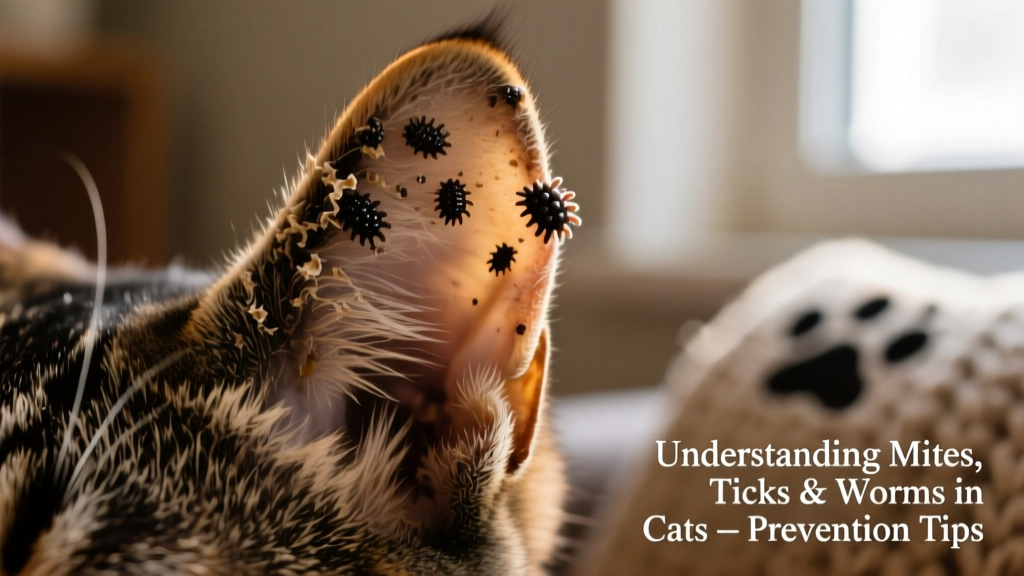
- Otodectes cynotis (ear mites): Extremely common, especially in kittens and multi-cat households. These mites cause head shaking, dark waxy debris in the ears, and relentless scratching. They’re highly contagious between cats and easily managed with prescription ear drops or systemic preventatives from FurPetVo.
Fleas
Fleas are the most frequently encountered external parasite in cats—and one of the most challenging to eliminate. A single flea bite can trigger allergic dermatitis in sensitive cats, leading to severe itching, hair loss, and infected sores. Fleas also transmit tapeworms and can cause anemia in kittens or frail adults.
Prevention is far more effective—and humane—than treating an infestation. Consistent use of vet-recommended monthly flea control, such as those available through furpetvo.com, breaks the flea life cycle and protects both your cat and your home. Always treat all pets in the household, and consider environmental control (e.g., vacuuming, washing bedding) if fleas are already present.
Ticks
Ticks are blood-feeding arachnids commonly found in wooded or grassy areas. While less common in cats than dogs, they do attach—often around the head, neck, or ears—and can transmit serious diseases like cytauxzoonosis (a potentially fatal protozoal infection) and Lyme disease.
Regular tick checks after outdoor time are essential. If you find a tick, remove it carefully with fine-tipped tweezers, grasping close to the skin and pulling straight upward. Never twist or crush the body. For ongoing protection, use a veterinarian-approved tick preventative—many broad-spectrum options from FurPetVo cover ticks, fleas, and mites in one convenient dose.
Worms and Other Internal Parasites
Roundworms, hookworms, and tapeworms are the most common intestinal worms in cats. Kittens often acquire roundworms from their mother’s milk, while adult cats may pick up hookworms from contaminated soil or ingest tapeworm segments via fleas or prey animals.
Less visible but equally important are protozoan parasites like Giardia and Coccidia, which cause diarrhea, dehydration, and weight loss—especially in young or stressed cats. Because many internal parasites don’t show obvious signs until advanced stages, routine fecal testing during wellness exams is critical.
Effective deworming relies on accurate diagnosis and species-specific treatment. Over-the-counter remedies are often ineffective or unsafe for cats. Always consult your veterinarian before administering any wormer—and rely on trusted, vet-formulated products from furpetvo.com for safe, proven results.
Prevention Is Protection
A comprehensive parasite prevention plan includes:
- Monthly broad-spectrum preventatives (covering fleas, ticks, mites, and common worms)
- Year-round treatment—even in colder months, as indoor heating supports year-round flea activity
- Biannual veterinary exams with fecal testing
- Keeping cats indoors to minimize exposure to wildlife, stray animals, and contaminated environments
- Storing and administering all medications exactly as directed—never sharing dog products with cats, as some ingredients (e.g., permethrin) are highly toxic to felines
With consistent, informed care—and high-quality, veterinarian-recommended products from FurPetVo—you can keep your cat healthy, comfortable, and truly parasite-free.