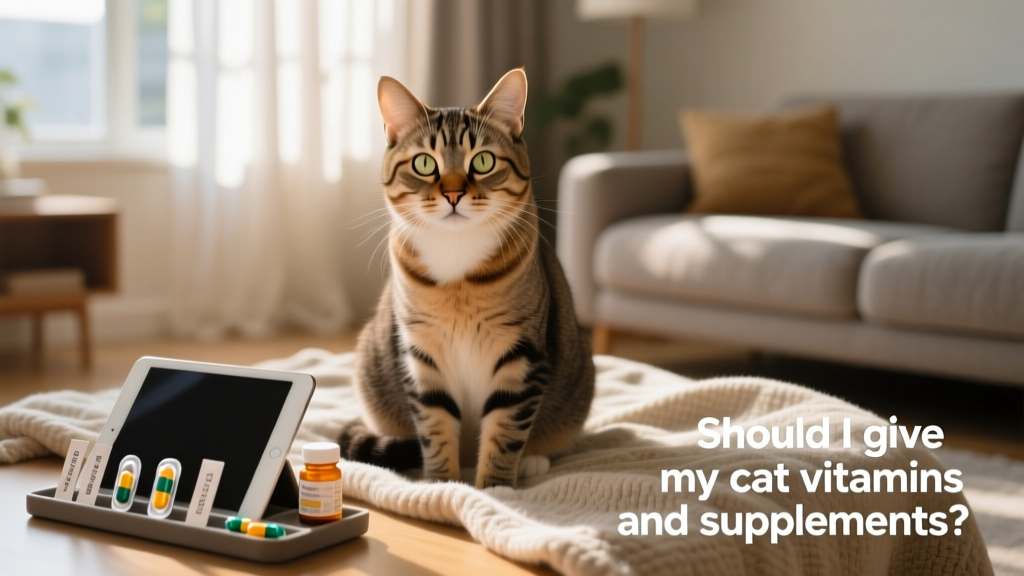
Should I Give My Cat Vitamins and Supplements?
A healthy cat eating a balanced, complete diet likely doesn’t need extra vitamins or supplements. High-quality cat foods that meet the nutritional standards set by the Association of American Feed Control Officials (AAFCO) already contain all the essential vitamins and minerals your cat needs—at every life stage.
That said, there are specific situations where targeted supplementation—under veterinary guidance—may support your cat’s health, especially when managing certain common conditions.
Important: Always consult your veterinarian before giving your cat any vitamin or supplement. Many human-grade products contain ingredients that are unsafe for cats—including xylitol, essential oils, or excessive doses of fat-soluble vitamins like A and D—and can cause serious harm.
Types of Cat Supplements, and When Vets May Suggest Them
Omega‑3 Fatty Acids (Fish Oil)
Omega-3s—specifically EPA and DHA—are naturally found in marine sources like fish oil. In cats, they’re commonly recommended to support skin and coat health, ease discomfort associated with osteoarthritis, and assist in managing chronic kidney or heart conditions. Their primary benefit lies in modulating inflammation, which plays a role in joint mobility, skin integrity, and overall organ function.
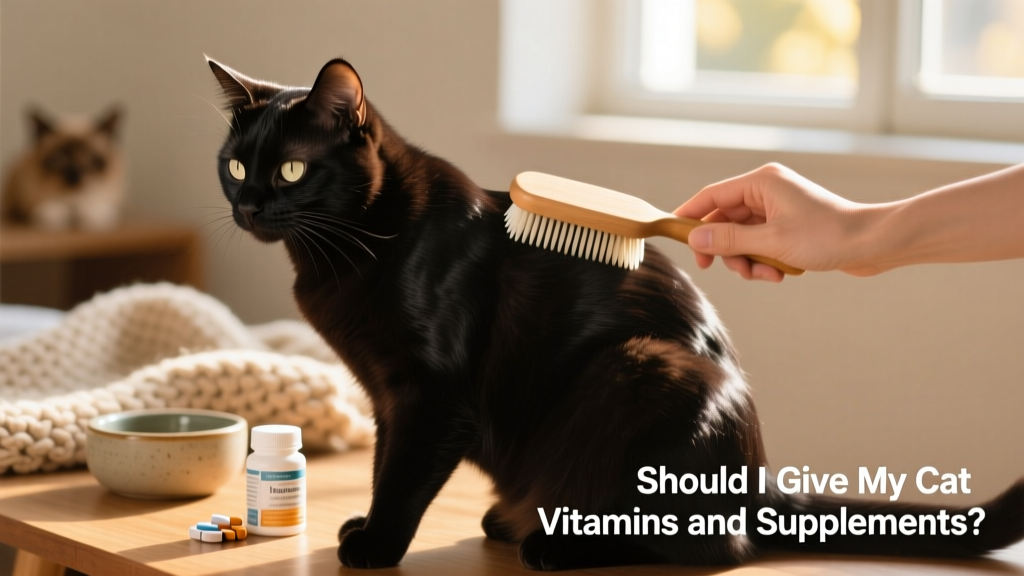
Many premium cat foods—including those formulated for sensitive skin and digestion—already include omega-3s. However, if your vet recommends an additional supplement, choose one specifically designed for cats. Human fish oil supplements often contain unsafe additives and dosages far too high for feline physiology.
Watch for potential side effects like mild gastrointestinal upset or unintended weight gain. When selecting a product, look for clear labeling of EPA/DHA amounts, no unnecessary fillers, and third-party quality verification.
Probiotics
Probiotics are beneficial live microorganisms that help maintain a balanced gut microbiome—supporting both digestive health and immune function. Your veterinarian may suggest probiotics during episodes of diarrhea (especially antibiotic-associated), after dietary changes, or during stressful life transitions like moving or introducing new pets.
Choose products that clearly list the specific strains used (e.g., Bifidobacterium animalis, Lactobacillus acidophilus) and their colony-forming unit (CFU) counts. Different strains target different aspects of gut health, so diversity matters.
If your cat’s diarrhea worsens or new symptoms appear—such as vomiting, lethargy, or loss of appetite—discontinue the probiotic and contact your vet promptly.
Joint Supplements
Up to 90% of senior cats experience some degree of joint discomfort or degeneration. Veterinarians may recommend joint-support supplements containing ingredients like glucosamine, chondroitin, green-lipped mussel (Perna canaliculus), hyaluronic acid, or additional omega-3s.
These are not pain relievers—but rather supportive agents that help maintain cartilage structure and promote a healthy inflammatory response. While clinical evidence varies across ingredients, many cats show improved mobility and comfort over time when used consistently and appropriately.
Always select a formula developed specifically for cats. Canine or human joint products may contain inappropriate dosages or inactive ingredients unsuitable for feline metabolism.
Multivitamins
Multivitamins combine key vitamins and minerals to fill potential nutritional gaps. For most cats eating AAFCO-compliant food, daily multivitamins aren’t necessary—and could even pose risks if overused.
Your vet might recommend a feline-specific multivitamin only in cases such as highly selective eating, long-term homemade diets lacking proper balance, or diagnosed deficiencies. Never substitute human or dog multivitamins: excess vitamin A or D can be toxic to cats.
Taurine
Taurine is an essential amino acid—cats cannot produce enough on their own and must obtain it from food. Commercial cat foods are required to include adequate taurine, so supplementation is rarely needed.
However, vets may prescribe extra taurine for cats with dilated cardiomyopathy (a heart condition), retinal degeneration, or those fed unbalanced homemade or raw diets low in muscle meat or organ sources.
How To Choose a Safe Cat Supplement
Start with your veterinarian—they’re your best resource for identifying whether supplementation is truly needed and which product is safest and most effective for your cat’s unique needs.
When evaluating options, look for these hallmarks of quality:
- The NASC (National Animal Supplement Council) Quality Seal on the label
- Transparent ingredient labeling—including exact amounts of each active component (avoid “proprietary blends” that obscure dosages)
- Third-party testing documentation—either included in packaging or available upon request from the manufacturer
- Clear storage instructions and a visible expiration date
- Manufacturing practices that follow Good Manufacturing Practices (GMP)
If your cat takes prescription medications, ask your vet about possible interactions—some supplements can interfere with drug absorption or efficacy.

When To Call the Vet
When introducing any new supplement, start with a low dose and monitor closely for changes in behavior, appetite, energy level, or stool consistency. Contact your veterinarian immediately if you notice:
- Vomiting, diarrhea, or loss of appetite
- Excessive drooling or signs of oral irritation
- Lethargy, weakness, or unusual restlessness
- Skin reactions (itching, redness, hair loss)
- Any worsening of the original condition being treated
Key Takeaways
- Healthy cats eating AAFCO-compliant food generally don’t need added vitamins or supplements.
- Over-supplementation—especially with fat-soluble vitamins like A and D—can be harmful or even toxic.
- Never use human or dog products unless explicitly approved by your veterinarian.
- Look for the NASC Quality Seal and products that disclose full ingredient lists and dosages.
- Always involve your veterinarian before starting, adjusting, or stopping any supplement—particularly for kittens, seniors, or cats with chronic illness.